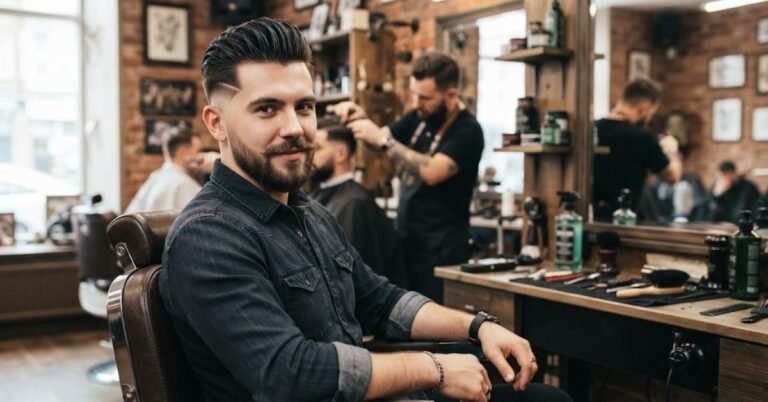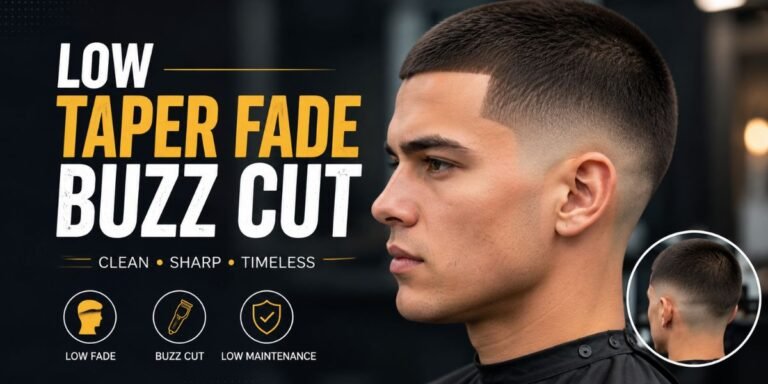
Low Taper Fade Middle Part: Top 26 Powerful Hairstyles for Men in 2026
The low taper fade middle part is one of the most requested men’s haircuts of 2026, and it is easy to see why. It blends a soft, subtle fade with a clean center part on top, giving men a look that feels modern, sharp, and effortless at the same time. Whether your hair is straight, wavy, curly, or thick, this cut adapts to almost any texture and face shape.
In this guide you will find 26 of the best low taper fade middle part styles, styling tips, product recommendations, face shape pairings, and answers to the questions barbers hear most often. Everything here is written to help you walk into your next barber appointment knowing exactly what to ask for.
What Is a Low Taper Fade Middle Part?
A low taper fade middle part combines two separate barbering techniques into one cohesive style. The sides and back of the head are trimmed with a gentle fade that starts near the ears and neckline, while the top is styled with a clean split down the center. The result is a haircut that looks polished from every angle, without feeling stiff or overly formal.
What Is a Low Taper Fade?
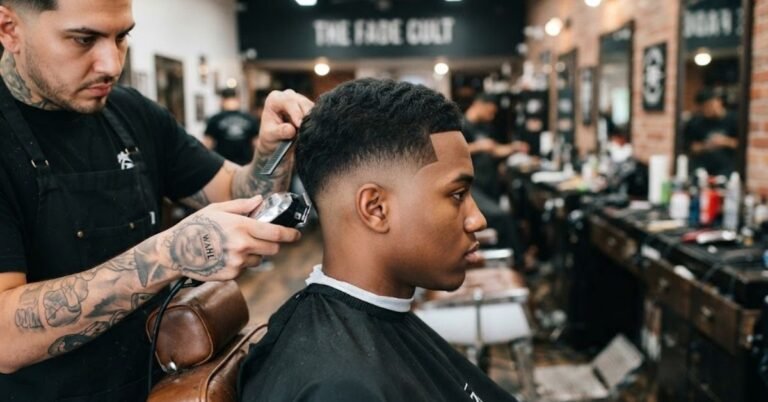
A low taper fade is a gradual blend that begins close to the hairline, usually around the ears and nape, and slowly fades into slightly longer hair as it moves up the head. Unlike a high or mid fade, a low fade keeps most of the length intact, which makes it a subtle, natural looking option. It suits almost every hair type and is often described by barbers as the most versatile fade because it pairs well with short crops, textured tops, and longer styles alike.
What Is a Middle Part Hairstyle?
A middle part is created by splitting the hair evenly down the center of the scalp, so it falls to both sides in a symmetrical shape. It has roots in vintage barbering but has come back strong thanks to social media and celebrity influence. On top of a taper fade, the middle part adds structure and frames the face in a balanced, flattering way.
Why Is the Middle Part Back in Style?
The middle part faded out of fashion for a while, replaced by side parts and slicked back looks. It made a comeback because it suits modern hair textures, especially wavy and textured hair that naturally falls open in the center. Streetwear culture, K pop influence, and a general shift toward relaxed, natural looking cuts pushed the middle part back into the spotlight, and social media played a major role by giving barbers and clients a fast way to share reference photos and spread the trend globally.
Barbers also note that a middle part gives more symmetry to the face, which photographs well and works for both casual and professional settings. Because it can be dressed up or down depending on the top length and finish, it fits neatly into a modern wardrobe of hairstyles that men rotate through rather than committing to one fixed look. In short, it never really disappeared, it just went quiet for a decade before returning stronger than before, this time paired with the low taper fade for an even more refined finish.
Benefits of a Low Taper Fade Middle Part
This haircut has earned its popularity for real reasons, not just trends. Some of the biggest advantages include:
- Works with straight, wavy, curly, and thick hair types
- Suits round, oval, square, diamond, and heart face shapes
- Keeps a low maintenance fade while allowing creative styling on top
- Grows out gracefully compared to skin fades, so fewer emergency barber trips
- Balances a professional look with a relaxed, modern edge
- Easy to adjust with length, texture, or added elements like a beard or fringe
- Reduces bulk on thick hair while adding shape and apparent density to thin hair
- Photographs well thanks to the symmetry created by the center part
- Adapts to seasonal changes, since the top can be grown out or trimmed shorter without disturbing the fade underneath
Top 26 Best Low Taper Fade Middle Part Hairstyles
Below are 26 variations of the low taper fade middle part, ranging from classic and clean to bold and trend driven. Talk through these examples with your barber to find the version that matches your hair type and lifestyle.
Classic Low Taper Fade Middle Part

The classic version keeps things timeless. The fade stays tight and close to the skin near the ears, while the top is combed evenly into a symmetrical center part. Barbers usually keep the sides simple and understated so all the attention stays on the clean split at the crown.
It suits men who want a sharp, no fuss style that works in almost any setting, from weddings to weekday meetings, and it rarely goes out of fashion because it relies on precision rather than trend driven texture.
Modern Low Taper Fade Middle Part

The modern take adds slightly more texture and volume on top compared to the classic cut. Instead of a flat, combed finish, the hair is styled with fingers and a light matte product for a natural, lived in shape that still holds structure throughout the day.
This version often includes soft layering around the crown, which gives the part a fuller, more three dimensional appearance rather than looking pressed flat against the scalp.
Textured Low Taper Fade Middle Part

Textured layers on top give this style movement and depth. A texturizing spray or clay is worked through damp hair to create separation, while the low fade keeps the sides tidy.
It is a strong choice for men with naturally thick or coarse hair, since the added texture prevents the top from looking heavy or block shaped, and it also helps hide any minor unevenness in hair growth patterns.
Messy Low Taper Fade Middle Part

This version embraces imperfection. The top is left slightly tousled, with strands falling naturally rather than being combed into place. A light sea salt spray helps create that undone, effortless look while the fade underneath keeps everything grounded.
It works particularly well for casual days, festivals, or travel, since it requires almost no touch ups once it is styled in the morning.
Straight Hair Low Taper Fade Middle Part

Straight hair holds a middle part beautifully because it falls flat and symmetrical without much effort. A light pomade or cream adds shine and keeps flyaways controlled, making this one of the easiest versions of the cut to maintain daily.
Since straight strands naturally settle into place, this variation often needs the least amount of daily product compared to other hair types.
Wavy Hair Low Taper Fade Middle Part

Waves add natural texture that makes the middle part look fuller and more dynamic. A sea salt spray or curl cream enhances the wave pattern, while the low taper fade underneath keeps the overall silhouette clean and balanced.
The slight bend in wavy hair also helps the part blend naturally into the sides, avoiding the harsh, flat line that can sometimes appear on straighter textures.
Curly Hair Low Taper Fade Middle Part

On curly hair, the middle part shows off natural coils and spirals while the fade removes bulk from the sides. Curl defining cream and a diffuser help maintain shape without frizz, giving the style a full, confident finish.
Many barbers recommend leaving slightly more length on top for curly textures, since shrinkage from curl pattern can make the part appear shorter once fully dry.
Thick Hair Low Taper Fade Middle Part

Thick hair benefits from the extra structure that a fade provides underneath, reducing weight and bulk near the ears. On top, a matte paste helps control volume so the middle part stays defined rather than puffy.
Thinning shears are sometimes used at the crown to remove excess density, which allows the part to lie flatter and hold its shape for longer between washes.
Thin Hair Low Taper Fade Middle Part

For thin hair, the low taper fade adds the illusion of density by keeping the sides tight and directing attention upward. A volumizing mousse applied at the roots helps thin strands look fuller when parted down the center.
Blow drying with a round brush before applying product also lifts the roots, which prevents the part from appearing flat or sparse.
Asian Low Taper Fade Middle Part

This variation is popular thanks to Korean and Japanese street style trends. It typically pairs thick, straight hair with a soft, blunt fringe on either side of the part, and a low taper fade that stays subtle and clean at the edges.
The style is often finished with a light wax for a soft matte texture rather than a glossy, wet look, keeping the overall vibe understated and natural.
Blonde Low Taper Fade Middle Part

Adding a blonde or bleached tone to the top makes the middle part stand out even more against the darker or natural colored fade below. This high contrast look is bold, trend forward, and often paired with textured styling for extra impact.
Since bleached hair tends to feel drier, a hydrating leave in treatment is usually recommended alongside regular touch up appointments to keep the color looking fresh.
Layered Low Taper Fade Middle Part

Layering removes weight from the top and adds shape, which is especially useful for men with thick or long hair. The layers help the hair fall naturally to each side of the part, creating soft movement rather than a flat block.
This technique also makes the style easier to blow dry, since shorter layers near the crown lift more easily than one uniform length.
Long Top Low Taper Fade Middle Part

This version keeps significant length on top, often three to five inches, while the low taper fade maintains a clean, contrasting edge on the sides.
It works well for men transitioning to a longer style without losing structure, and it offers more flexibility to switch between a middle part, slick back, or half up style depending on the occasion.
Short Low Taper Fade Middle Part

For a more low maintenance approach, the top is kept short, often around one to two inches, just long enough to create a visible part.
It requires minimal daily styling and grows out cleanly between barber visits, making it a practical choice for men with active lifestyles or limited time in the morning.
Middle Part Taper Fade

This is essentially the foundational version of the style, focused purely on the combination itself without added texture, color, or extra elements.
It is often what men reference when first asking a barber for this exact haircut, and it serves as the base template that every other variation on this list builds from.
Low Taper Fade Middle Part with Fringe

A soft fringe falls forward on both sides of the part, framing the forehead and adding a youthful, casual element to the cut.
It pairs especially well with straight or wavy hair types and works for both teens and adults who want a slightly playful update to the classic middle part.
Low Taper Fade Middle Part with Curtains

Curtains extend the fringe concept further, with longer pieces swept to each side that resemble open curtains framing the face.
This style has strong roots in nineties fashion and remains one of the most requested looks among younger men, often recreated from photos of musicians and actors from that era.
Low Taper Fade Middle Part with Beard

Pairing this haircut with a full or medium beard adds balance and masculinity to the overall look. The low fade blends smoothly into the beard line, creating a cohesive, well groomed appearance from hairline to jaw.
Keeping the beard trimmed on the same schedule as the fade helps both elements stay proportionate and sharp.
Low Taper Fade Middle Part with Volume

Extra volume is achieved by blow drying the roots upward before combing the part into place.
This creates height and fullness on top while the fade keeps the sides controlled, resulting in a fuller silhouette overall that suits thinner hair types or anyone wanting a bolder, more noticeable shape.
Professional Low Taper Fade Middle Part

For office or formal settings, the style is kept neat and controlled, with a light hold product and minimal texture.
The fade stays conservative and close to the skin, offering a polished, buttoned up appearance that reads as put together in meetings, interviews, or client facing roles.
Low Taper Fade Middle Part for Teen Boys

This is a popular first fade style for younger guys, offering a trendy look without being too extreme.
It usually pairs a soft, natural top with a subtle fade, making it easy to maintain through school and sports schedules, and it grows out gracefully enough to stretch the time between barber visits.
Natural Low Taper Fade Middle Part

This version avoids heavy products and styling, letting the hair fall as it naturally would after washing.
It suits men who prefer a relaxed, no effort routine while still enjoying the structure a low fade provides, and it works best for hair types that already have some natural texture or wave.
Low Taper Fade Middle Part with Textured Top

Texture is added through a matte clay or texturizing powder, separating strands for a piecey, dimensional look.
This style photographs particularly well and is a favorite among men who post their haircuts online, since the added texture catches light and shadow in a way that a flat, combed top does not.
Clean Low Taper Fade Middle Part

A clean version focuses on crisp lines, especially around the hairline, ears, and neckline.
The top is neatly combed into place, giving an overall sharp and put together look suitable for interviews or important events where precision matters more than trend driven texture.
Casual Low Taper Fade Middle Part

The casual take is relaxed and low effort, often air dried rather than styled with heat tools.
It suits weekends, travel, or everyday wear when you want to look good without spending much time in front of a mirror, and it typically only needs a small amount of light product to keep it looking neat.
Trending Low Taper Fade Middle Part 2026

This year’s trending version leans into soft, natural texture with a slightly longer top and a barely there fade that blends seamlessly. It reflects the broader 2026 movement toward relaxed, effortless looking men’s hairstyles, favoring subtle contrast over the sharper, high contrast fades that were popular in previous years.
How to Ask Your Barber for a Low Taper Fade Middle Part
Clear communication with your barber makes a big difference in the final result. Try using these tips during your consultation:
- Say clearly that you want a low taper fade, starting near the ears and neckline rather than higher up the head.
- Ask for the top length to be left long enough to create a visible middle part, typically two to four inches depending on your preference.
- Mention your hair type, whether it is straight, wavy, curly, or thick, so the barber can adjust technique accordingly.
- Bring a reference photo, since this reduces miscommunication and helps the barber match the exact look you want.
- Ask for the fade to blend gradually rather than leaving a harsh line, especially if you plan to grow the style out later.
Best Face Shapes
Face Shape Compatibility
Choosing the right variation for your face shape helps the haircut look intentional rather than accidental. Here is a quick reference table.
| Face Shape | Recommended Style | Why It Works |
| Oval | Classic or textured middle part | Balanced proportions suit almost any variation |
| Round | Longer top with volume | Adds length and reduces roundness |
| Square | Textured or messy middle part | Softens strong jawline angles |
| Diamond | Middle part with fringe | Balances a narrow forehead and chin |
| Heart | Curtains or side swept fringe | Softens a wider forehead |
| Oblong | Short top with volume at sides | Prevents the face from looking longer |
Oval Face
Oval faces are considered the most versatile shape, and nearly every version of this haircut suits them. A classic or textured middle part works especially well since it maintains natural balance without needing extra volume or length adjustments, and men with oval faces can experiment freely with fringe, curtains, or a longer top without worrying about awkward proportions.
Round Face
Men with round faces benefit from added height and length on top, which helps elongate the overall face shape. A longer top with volume, combined with a low taper fade, creates the illusion of a more defined, structured face. Avoiding too much width at the sides, such as a heavily flared fringe, also helps keep the face from looking wider than intended.
Square Face
Square faces have strong, angular jawlines that pair nicely with softer, textured hairstyles. A messy or textured middle part helps balance the sharp angles of the jaw without competing with them, while a very clean, blunt cut can sometimes make the jawline look even more pronounced than intended.
Diamond Face
Diamond shaped faces are widest at the cheekbones and narrower at the forehead and chin. A middle part with a soft fringe helps widen the appearance of the forehead, creating better overall facial balance, and adding light texture near the temples softens the natural angularity of this face shape.
Heart Face
Heart shaped faces are wider at the forehead and narrower at the chin. Curtains or a side swept fringe help soften the forehead area, drawing attention downward toward a more balanced jawline, and keeping some volume at chin level with a light beard can further balance the proportions.
Oblong Face
Oblong faces are longer than they are wide, so a shorter top with added volume at the sides helps prevent the face from appearing too stretched. This keeps proportions looking natural and well balanced, and avoiding excessive height at the crown is usually recommended for this face shape.
Best Hair Types
Straight Hair
Straight hair holds a middle part cleanly and requires minimal product, making it one of the easiest hair types to style with this cut. A light pomade adds shine without weighing the hair down.
Wavy Hair
Wavy hair adds natural texture and dimension to the part, giving it a fuller, more dynamic appearance. Sea salt sprays enhance the wave pattern while keeping the style looking effortless.
Curly Hair
Curly hair showcases natural volume and shape, and pairs especially well with a slightly longer top. Curl cream and diffusing help maintain definition without frizz throughout the day.
Thick Hair
Thick hair benefits from the weight reduction a fade provides on the sides, keeping the overall silhouette balanced. Matte clay helps control volume on top without making the hair feel heavy.
Thin Hair
Thin hair looks fuller when paired with a tight, low fade that draws attention upward toward the part. Volumizing products applied at the root help create the appearance of thicker, denser hair.
Medium Length Hair
Medium length hair offers the most flexibility for styling, allowing for volume, texture, or a sleek combed finish depending on the occasion. It also transitions easily between casual and formal looks.
Pros and Cons
| Pros | Cons |
| Suits nearly every hair type and face shape | Requires regular fade maintenance every 3 to 4 weeks |
| Low maintenance sides with flexible top styling | Middle part can look flat without proper technique |
| Grows out gracefully compared to skin fades | Not ideal for very fine, limp hair without volumizing products |
| Balances professional and casual settings | Styling the part correctly takes some practice |
| Works well with beards, fringe, and curtains | Humidity can affect hold in certain climates |
How to Style a Low Taper Fade Middle Part
Getting the part right takes a bit of technique, especially in the first few weeks after a fresh cut. Start with slightly damp hair, apply your chosen product evenly, and use a comb to guide the hair into place before it fully dries.
Best Styling Products
- Matte pomade for a natural, non shiny finish
- Texturizing clay for added grip and separation
- Sea salt spray for wavy or curly textures
- Volumizing mousse for thin or fine hair
- Light hold gel for controlling flyaways without stiffness
- Heat protectant spray if using a blow dryer or straightener
Step-by-Step Styling Guide
- Wash hair with a lightweight shampoo and towel dry until slightly damp.
- Apply a small amount of your chosen product evenly through the top section.
- Use a comb or your fingers to divide the hair down the center of the scalp.
- Blow dry each side outward and slightly downward to encourage natural fall.
- Smooth any flyaways with a fine tooth comb for a cleaner finish.
- Finish with a light hold spray if you want the part to stay in place all day.
How to Maintain a Low Taper Fade Middle Part
Regular upkeep keeps this haircut looking sharp. Book a fade touch up every three to four weeks to prevent the sides from growing out unevenly, since a low fade that is left too long tends to blur into an undefined, shaggy shape. Wash your hair two to three times per week with a gentle shampoo to avoid stripping natural oils, and use a leave in conditioner if your hair tends to feel dry or is prone to breakage from regular styling.
Trim the top slightly every visit to maintain the length needed for a clean, visible part, and ask your barber to clean up the neckline and around the ears between full appointments if you notice stray hairs creeping in. If you color or bleach the top, plan touch up appointments around your color schedule so the fade and the color stay in sync, and always use a heat protectant if you regularly blow dry or straighten the hair to keep it looking healthy over time.
Low Taper Fade Middle Part vs Curtains
Both styles share a center part, but curtains are longer and more face framing, often falling past the eyebrows on each side. A low taper fade middle part is generally shorter and more structured, making curtains a better choice for men who want a softer, more romantic look, while the taper fade suits those who prefer a sharper, cleaner silhouette.
Low Taper Fade Middle Part vs Side Part
The side part creates an asymmetrical look with hair swept to one direction, offering a more traditional, professional appearance. The middle part, by contrast, feels more relaxed and modern, and tends to suit textured or wavy hair better than a strict side part does.
Low Taper Fade Middle Part vs Fluffy Hair
Fluffy hairstyles rely on heavy volume and a rounded silhouette without a defined part, often achieved through blow drying and mousse. The middle part offers more structure and symmetry, making it a better option for men who want a defined, intentional style rather than an airy, undone look.
Celebrity Inspiration
Several public figures in music, sports, and entertainment have reportedly worn variations of the middle part paired with a low fade in recent years, helping push the style into mainstream popularity. Many footballers and K pop idols have been credited with popularizing the textured, slightly messy version of this cut, while actors have often opted for the cleaner, more classic take for red carpet appearances. Streetwear influencers and content creators have also played a role, frequently showcasing the trending 2026 version with its softer, more natural fade on social platforms.
Exact styling details vary by individual and stylist, and celebrity looks are often achieved with a team of professionals working with specific hair types, so treat these examples as general inspiration rather than an exact blueprint. A good approach is to bring a photo of the general shape you like to your own barber and let them adapt the proportions to suit your face shape and natural texture rather than trying to copy the look exactly strand for strand.
Common Mistakes to Avoid
- Skipping regular fade maintenance, which causes the sides to grow out unevenly and blur the clean line
- Using too much product, which weighs down the top and flattens the part instead of holding its shape
- Choosing a version that does not suit your natural hair texture, leading to a style that fights against how your hair actually grows
- Not communicating clearly with your barber about fade height and top length before the scissors come out
- Forcing a middle part on hair that is too short to hold the style, which often results in flyaways rather than a defined line
- Ignoring your face shape when picking a specific variation, which can throw off the overall balance of the haircut
- Washing hair too frequently with harsh shampoo, which can dry out the scalp and make styling more difficult
- Neglecting to trim split ends on a longer top, which makes the part look ragged over time
Conclusion
The low taper fade middle part earns its spot as one of the top men’s hairstyles of 2026 because it genuinely works for almost anyone. With 26 variations to choose from, you can adjust the top length, texture, and finishing touches to match your hair type, face shape, and personal style. Whether you prefer the classic, buttoned up version for the office or a messy, textured take for weekends, the underlying formula stays the same: a soft, low fade on the sides paired with a confident, symmetrical part on top.
Bring this guide to your next barber appointment, describe the version you want clearly, and enjoy a haircut that stays fresh, versatile, and easy to maintain for weeks at a time. With the right upkeep routine and a barber who understands your hair type, this cut can easily become your long term signature look rather than a passing trend.