Transfer Proof Lipstick: Judged on the Five Surfaces, Ranked by Film Architecture, With Every Claim Decoded
Transfer proof lipstick exists because of one specific embarrassment: perfect color at 8 in the morning, printed on a coffee cup by 8:15. The color did not fade. It moved.
That distinction runs everything here. Fading is color leaving over time. Transfer is color leaving on contact, onto cups, masks, cheeks, and collars. Different failures need different fixes.
So this page judges transfer the way life tests it: on five surfaces. The cup, the mask, the kiss, the collar, and the meal. A formula earns its claim surface by surface, not with an hour number.
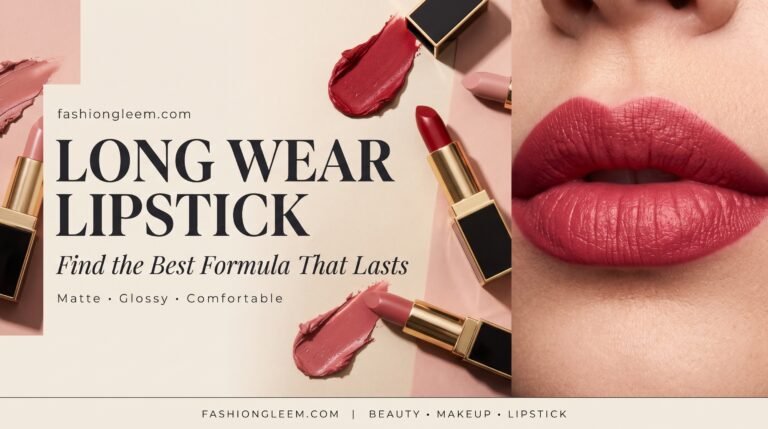
Hours belong to a different question. Our long wear lipstick guide answers how long color lasts, and the two pages are partners. This one answers whether color stays where you put it.
The method is simple. First, the mechanism: why some formulas set into a film and others sit wet forever. Then the architectures ranked, the picks matched to occasions, and the protocol that decides real world results.
One honesty rule applies throughout. Every wear hour and transfer claim below is a brand claim or a named tester report, never a laboratory fact. Where a brand footnotes its own test, the footnote is quoted as part of the claim.
Transfer Proof Lipstick at a Glance
The whole category sorts into four architectures, and architecture predicts transfer better than brand, price, or finish. Learn the four and you can judge any tube in ten seconds.
|
Architecture |
Transfer resistance |
Comfort |
Shine |
Best surfaces |
|---|---|---|---|---|
|
Set matte liquid film |
Highest |
Lowest to medium |
None |
Cup, mask, kiss |
|
Two step: color film plus seal |
High |
Highest |
Medium to high |
Cup, kiss, long days |
|
Glossy set film (vinyl, bond) |
High |
Medium |
High |
Cup, photos, dates |
|
Modern fluids and suede finishes |
Medium to high |
Medium to high |
Low to medium |
Cup, work, everyday |
|
Cream bullet |
Low by nature |
Highest |
Any |
None reliably |
|
Lip stain |
Low transfer, different mechanism |
Medium |
Low |
Light contact days |
Two reading rules for the table. First, matte is not the mechanism. A matte bullet still transfers, because nothing in it sets. What resists transfer is the set film, whatever its finish.
Second, shine is no longer disqualifying. Two step systems seal color under a separate gloss, and vinyl style films set glossy. The color layer does the resisting in both. The gloss layer is the only part that can still pick up fibers.
What Transfer Proof Actually Means
A transfer proof formula works in three stages. A liquid carrier spreads the pigment evenly. The carrier evaporates during a short dry down. The film forming polymers left behind lock the pigment into a thin, flexible film bonded to your lips.
That is why the good ones feel strange for a minute. The wet, slippery stage is the carrier working. The set stage is the film. Pressing your lips together during stage one is how people ruin stage two.
Beauty Bridge’s long wear lineup states the verdict plainly: film forming ingredients create the layer, matte liquids are the most reliable format, and traditional bullets transfer more by nature. That single paragraph is more useful than most full roundups.
The Five Ways Lipstick Actually Fails
Guides blend every failure into did not last, which makes their advice useless. There are five distinct failures, and each one has a different cause and fix.
|
Failure |
What happens |
Main cause |
First fix |
|---|---|---|---|
|
Transfer |
Color departs onto a surface |
Unset or mobile formula |
Set film, full dry down |
|
Smudge |
Color drags across your own skin |
Rubbing before set, oils on top |
Hands off until set |
|
Feathering |
Color migrates past the lip edge |
Mobile oils carrying pigment |
Liner edge, set formula |
|
Fading |
Color thins evenly over hours |
Time, moisture, talking |
Wear axis, see the sibling guide |
|
Flaking |
The film cracks and lifts in pieces |
Thick layers, dry lips, reapplying over old film |
Thin layers, prep, restart |
Read your own problem off this table before buying anything. If your lipstick prints cups but lasts all day, you need transfer help, not longer wear. If it vanishes evenly by lunch without marking anything, you need the wear axis instead.
That is also why smudge proof and transfer proof are different claims. Smudging is movement across skin. Transfer is departure onto something else. A formula can ace one and fail the other, and marketing counts on you not separating them.
The Five Surfaces: The Only Test That Matters
Forget hour claims for a moment. Your lipstick meets the world on five surfaces, each with different physics. Judge any formula against the surfaces your actual day contains.
The Cup Test, the Mask Test, the Kiss Test
The cup is the purest transfer event: pressure, warmth, a smooth surface, and steam softening the edges. Even excellent films can print a fresh cup in the first minutes. After a full set, the best leave the rim clean all morning.
The mask adds fabric friction and trapped humidity. StyleCraze’s mask proof lipstick roundup built a whole roundup on this surface, and its shelf is nearly identical to the transfer proof shelf.
That overlap is the lesson: mask proof is not a separate species, it is the same set films, and the failures are procedural, masking before the dry down ends.
The kiss is skin contact under pressure, which is why kiss proof is the category’s favorite marketing word. A set film passes the honest version of this test: a peck or a press leaves little to nothing behind.
Sustained friction is different physics, and no guide should promise it.
The Collar Test and the Meal Test
The collar is the forgotten surface: white shirts, scarves, a hug at a wedding. It punishes bold shades hardest, because deep pigment shows every contact. The transfer amount may equal a nude’s. The evidence is simply brighter.
The meal is the hardest test, and it is really two tests. Light eating and drinking barely trouble a set film. Oily food defeats every formula in the category, because oil is a solvent for the film itself.
Pizza, dressings, and buttery sauces are not wear problems. They are chemistry.
The Hand Test: Check Any Lipstick Before You Commit
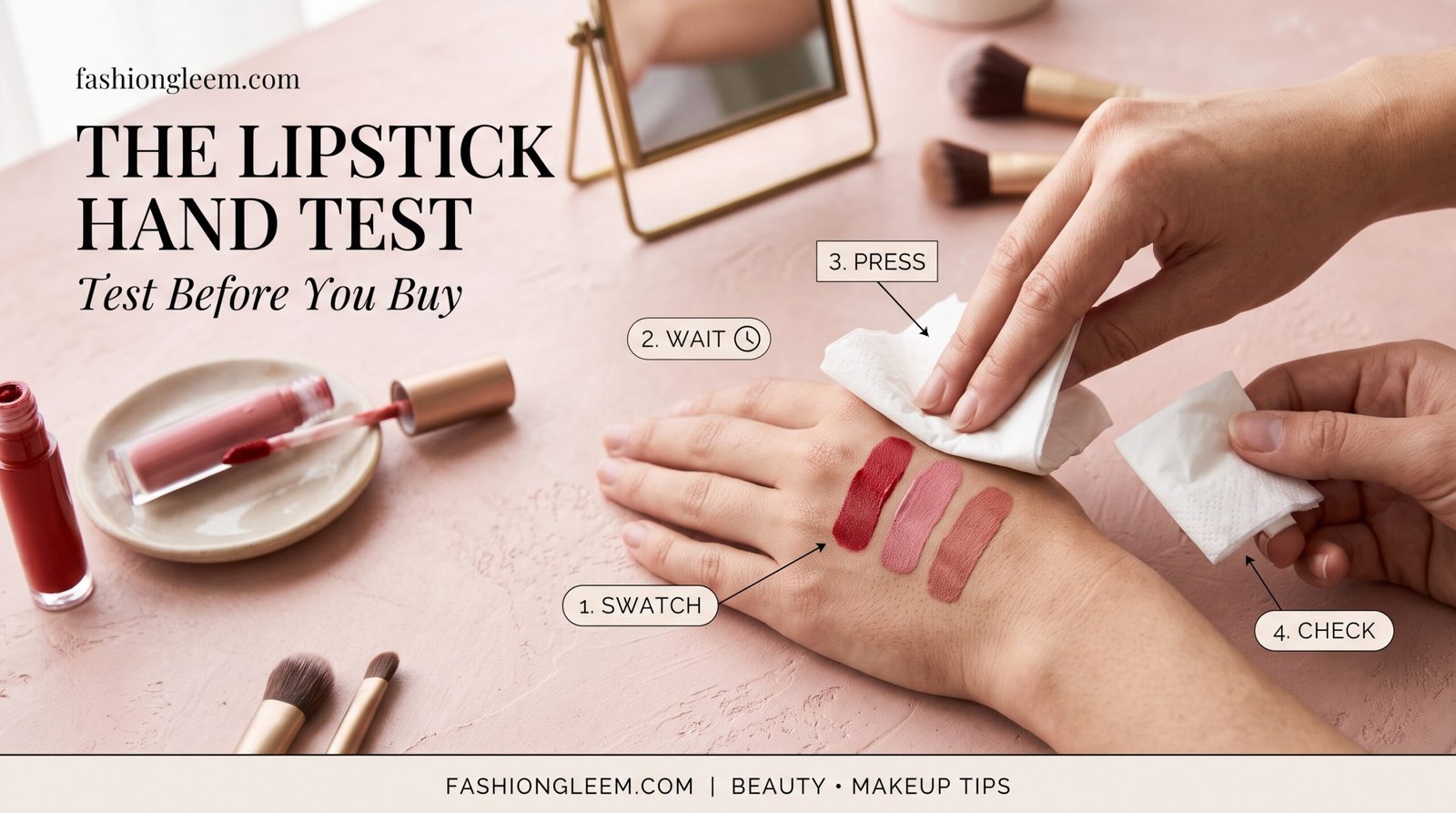
You do not need a laboratory. Testers use a hand protocol you can copy at any counter or at home inside the return window.
Step 1: Swatch. Apply the lipstick to the back of your hand or inner wrist, at the thickness you would wear.
Step 2: Wait. Give it the full set time: at least two minutes for liquids, longer for two step bases. Most transfer disappointment is born in this step.
Step 3: Press. Press a white tissue firmly against the swatch for five seconds. Check the tissue.
Step 4: Rub. Rub once across the swatch and check again. A formula that passes the press but fails the rub is friction sensitive, which tells you how it will treat masks and collars.
The Architectures, Ranked by Transfer Resistance
Set Matte Films: The Benchmark
The matte liquid is the reference architecture: thick pigment in a carrier, drying to a flexible matte film. Maybelline SuperStay Matte Ink is the product every guide measures against, the default pick in HomeWiseReview’s transfer proof roundup and overall winner in GoodGosh Beauty’s transfer proof comparison.
Tester consensus across those guides: once set, it barely transfers to cutlery, masks, or hands, even in humid weather. The brand claims up to 16 hours of wear, and that is a wear claim, a different axis from transfer.
Both can be true; neither proves the other.
The costs are known and consistent: a tacky feel while setting, and dryness that finds every flaky patch by late afternoon, especially if you applied too much. Matte Ink rewards thin layers and punishes generous ones.
Two Step Systems: Color Film Plus Seal
The two step architecture splits the job. A color coat sets like a liquid lipstick. A clear topcoat, gloss or balm, seals it and supplies the comfort and shine the film cannot.
L’Oreal Infallible Pro Last is the comfort version: color, a short set, then the included balm, so the finish reads creamy rather than flat. Testers credit it with excellent cup transfer resistance once dry, while noting oily food breaks it sooner than Matte Ink.
Rimmel Provocalips is the budget version, reported under 7 dollars by GoodGosh Beauty, with a kiss proof claim in its very name.
NYX Shine Loud is the gloss version: set the base completely, then add the clear gloss, and the color underneath stays put while the top looks vinyl smooth.
The system’s real advantage is renewal. The topcoat wears away through the day and can be reapplied alone, without disturbing the color film. No one step liquid offers that trick.
The condition is discipline. Shine Loud’s own weakness, per tester reports, is the wearer who skips the dry time or lays the base on thick. Two step systems fail procedurally more often than they fail chemically.
Glossy Films: Vinyl and Bond Finishes
For years, gloss meant guaranteed transfer, because gloss stays mobile by design. The new glossy films break that rule by making the shine part of the set film itself.
Maybelline Vinyl Ink is the mass market example: a vinyl finish that testers find resists smudging and transfer far beyond any true gloss.
Understand the limit precisely. The color film resists transfer. The glossy surface can still attract lint and mask fibers, the one complaint that follows these formulas. On cups and cheeks they behave like films. Against fabric, they behave a little like gloss.
Modern Fluids and Suede Finishes
Between the benchmark matte and the systems sits a newer class: thinner fluids and cushioned finishes chasing comfort without surrendering the film. Fenty Stunna Lip Paint is the fluid archetype, thin and inky, praised for fading gracefully rather than flaking when it finally goes.
Revlon ColorStay Suede Ink builds a primer into the bullet style format, with an 8 hour no transfer claim from the brand. KVD Everlasting Hyperlight markets comfort hardest: its listing reports that all wearers in its 32 person consumer study found it comfortable after 8 hours.
That is a brand study, quoted as one, and it is still the right way to footnote a claim.
Rouge Dior Forever Liquid is the prestige benchmark, its name carrying the claim outright. Its 12 hour wear figure is footnoted to an instrumental test on 22 subjects. Prestige money here buys finish quality and shade craft more than a different league of transfer resistance.
Bullets and Stains: The Honest Limits
A cream bullet is wax and oil in a stick, designed to stay creamy. It transfers by nature, and no technique fully changes that chemistry.
What technique can do is make a bullet transfer resistant: liner base, thin application, blotting, a second thin layer, a final blot.
A stain plays a different game entirely. Dyes tint the lip surface itself, so there is little sitting on top to transfer. The trade is uneven fade and dryness, and weak performance on the meal test.
Stains belong in the light contact row of the glance table, honestly labeled.
The Picks, Matched to Surfaces and Occasions
Buying by brand ranking is how people end up with the wrong champion. Buy by the surfaces in your day and the formula choice mostly makes itself.
|
Occasion |
Surfaces that matter |
Architecture to choose |
Notes |
|---|---|---|---|
|
Wedding day |
Kiss, photos, meal, hugs |
Matte film or two step |
Wear the shade for a full test day first |
|
Date night |
Kiss, cup, dinner |
Matte film or glossy film |
Set fully before the first drink |
|
Masked shift |
Mask, hours of wear |
Matte film, fully set |
Mask only after the full dry down |
|
Coffee heavy workday |
Cup, keyboard breaks |
Matte film or suede finish |
Same rim spot for every sip |
|
Comfort first, dry lips |
Cup, talking |
Two step with balm seal |
Renew the topcoat, not the color |
|
Shine lover |
Photos, cup |
Glossy film or two step gloss |
Keep fabric contact light |
For maximum transfer resistance at the lowest cost, the drugstore matte film remains the consensus answer, with Matte Ink at 12.99 dollars at Ulta in recent checks. Prices move, so treat every figure here as a dated snapshot, never a promise.
For comfort through a long day, the two step systems win, because the seal carries the comfort and the color never has to. For shine without the print, the glossy films are the modern answer, with the lint caveat attached.
Complete the stay put face with the site’s best vegan mascara under $20 guide. A transfer proof lip with mascara on your cheeks is a half finished strategy. The glow up routine builds full routines around looks that survive the day.
The Application Protocol: Thin, Set, Blot, Then Live
More transfer failures are application failures than formula failures. This protocol is the difference between the same product disappointing one wearer and delighting another.
1. Prep earlier, not immediately before. Exfoliate gently and moisturize during your morning routine, then blot any residue before color. Surface balm under a film is a release layer, and the film bonds to it instead of to you.
2. Line and fill if you use bullets or want fade insurance. Liner across the whole lip gives pigment a drier base and means any fade reveals a similar color, not bare lip.
3. Apply thin. One thin layer sets into a coherent film. A thick layer skins over while the inside stays wet, and wet insides are transfer waiting to happen.
4. Wait the full dry down. Thirty to sixty seconds minimum for matte liquids per tester guidance, longer for two step bases. Do not press your lips together. Do not mask. Do nothing, briefly, on purpose.
5. Blot once, gently, after set. Blotting removes the unset surface fraction that would otherwise become the first cup print. On liquids, blot after the film sets, never during.
6. Add the second layer only if needed. Thin over set, never thick over tacky. Then live your day, and reserve reapplication for the center only, where wear actually happens.
The Three Breakers and Their Fixes
Every transfer horror story in every roundup is one of three breakers. Name yours and the fix is usually already in your hand.
Breaker one: oil. Oil dissolves the film, which is why greasy meals end every formula’s day at the center of the mouth.
Fix: eat around the film where you can, blot oil from lips before it soaks, and plan the center touch up instead of a full restart.
Breaker two: friction before set. A mask, a sip, or pressed lips during the dry down means the film never formed properly in that spot. Fix: sequence your morning so lipstick goes on with time to set, and treat the set window as untouchable.
Breaker three: thickness. Layering over an unset or already cracked film builds the brittle stack that flakes and prints. Fix: thin layers, and when a film has cracked, remove and restart rather than painting over the damage.
Dry Lips, Flaking, and Comfort Management
The set film is not a moisturizer, and matte liquids are the driest format in the category. Comfort is managed by format choice and prep, in that order.
If your lips run dry, start with the two step systems, whose balm seal restores what the color film removes. Suede and fluid finishes sit next on the comfort ladder. Keep the benchmark matte for shorter, higher stakes outings instead of daily wear.
Flaking is the film fracturing over dry, peeling, or over layered lips. The prevention list is short: healed lips, gentle exfoliation, one thin layer, and never reapplying over a cracked film.
If a formula flakes on you at every thickness, it is the wrong formula for your lips, not a personal failure.
Build lip care into your beauty routine at home rather than treating it as an emergency measure. Lips that are conditioned all week forgive a matte film. Lips rescued the same morning rarely do.
Removal: Oil Dissolves the Film
Removal uses the same chemistry as the meal test. Oil breaks the film, so remove with oil: an oil based cleanser, a cleansing balm, or plain lip balm massaged in and given a minute to work, then wiped away.
Water based removers mostly polish the film while you scrub the lips underneath it raw. If color survives a gentle oil pass, repeat the pass rather than increasing force. Then moisturize, because the film was designed to resist exactly the effort most people try first.
The Claims Decoder: Proof, Resistant, Kiss Proof, and the Hour Numbers
None of the category’s big words are regulated terms with a standard test and a pass mark. Brands substantiate them with their own instrumental or consumer tests, sometimes published, often not. Read them as dialects, not verdicts.
|
Claim word |
What it usually means |
What to ask |
|---|---|---|
|
Transfer proof |
Set film, minimal print on contact once dry |
Which surfaces, tested how |
|
Transfer resistant |
Reduced transfer under normal contact |
The more honest word; same questions |
|
Kiss proof |
Transfer resistance aimed at skin contact |
No standard test exists |
|
Mask proof |
Set film that leaves fabric clean |
Was it masked after full set |
|
16 hour wear (and kin) |
A time claim under brand test conditions |
Instrumental or consumer panel, how many subjects |
The two best footnotes in the category come from retail listings, which should embarrass the editorial pages. Dior publishes its test type and panel size. KVD publishes its study size. When a guide repeats a claim without its footnote, the guide has downgraded your information.
Huda Beauty’s mask test roundup shows the other extreme: a brand roundup declaring its own product 100 percent mask proof and transfer proof. Absolute language is a marketing tell. The honest promise is narrower: little to nothing, on these surfaces, once fully set.
Transfer Proof vs Long Wear: Two Axes, Two Pages
This is the distinction the whole site cluster rests on, so it gets its own section. Long wear measures time: how many hours before color fades. Transfer proof measures contact: whether color moves when something touches it.
A stain can last ten hours and still mark a cup in the first ten minutes. A transfer proof film can print nothing all day and still fade by evening. Neither result contradicts the other, because they are different measurements.
Our long wear lipstick guide owns the time axis: formats ranked by endurance, the dryness that buys wear time, and the prep that extends it. This page owns the contact axis. Most readers need both answers eventually; start with the axis that matches your actual complaint.
For the wider routine context, FashionGleem keeps the makeup and skincare guides together, and the glow up tips page covers the finishing habits that make any look hold up in real life.
Frequently Asked Questions
What is transfer proof lipstick?
A lipstick that sets into a film instead of sitting wet: the carrier evaporates and polymers lock pigment to your lips. Once set, it leaves little or nothing on cups, masks, or skin. It measures contact, not hours.
How does transfer proof lipstick work?
In three stages: the liquid carrier spreads pigment, the carrier evaporates during the dry down, and film forming polymers remain as a thin bonded layer. Pigment inside a set film has almost nothing loose to transfer. Oils dissolve that film, which is the weakness.
What is the difference between transfer proof and long lasting lipstick?
They measure different failures. Long lasting counts hours before fading. Transfer proof measures whether color moves on contact. A stain can last ten hours and mark a cup early; a film can print nothing and fade by evening. Check the two claims separately.
What is the difference between transfer proof and smudge proof?
Smudging is color dragging across your own skin. Transfer is color leaving your lips for a surface. A set formula can be smudge proof yet print a cup pressed too early. Marketing blends the two; your mirror should not.
Is transfer proof lipstick waterproof?
Not automatically. Water resistance and transfer resistance differ: water does not dissolve the polymer film, so drinks rarely trouble it. Waterproof is its own label and test. Trust it for swimming only when the product claims it explicitly.
Which lipstick does not transfer at all?
None, absolutely, and pages promising zero transfer in all conditions are selling. The best set films transfer nothing measurable in normal contact once fully dry. Friction, heat, oil, and pressing before the set will still move some color.
What is the best transfer proof lipstick?
Tester consensus names Maybelline SuperStay Matte Ink the default: strongest resistance at a drugstore price, with tackiness as its cost. The best pick still changes with the job: two step systems for comfort, sealed gloss for shine, prestige fluids for finish.
What is the best drugstore transfer proof lipstick?
The drugstore tier leads this category: Maybelline’s Matte Ink and Vinyl Ink, Revlon ColorStay Suede Ink with its built in primer, Rimmel Provocalips as the budget two step, and L’Oreal’s Infallible two step. Figures are brand claims; shelf prices move, so check on the day.
Is Maybelline SuperStay Matte Ink transfer proof?
It is the reference product for the claim: a matte liquid that sets into a film and, in tester reports, barely transfers to cutlery, masks, or hands. The 16 hour figure is a wear claim. Its costs are tackiness while setting and dryness on flaky lips.
Is there a transfer proof lipstick with shine?
Yes. Two architectures solved it: two step systems that seal color under a separate gloss or balm (Shine Loud, Pro Last), and bond style glossy liquids like Vinyl Ink whose film sets with shine. The color layer resists; the gloss surface can still catch lint.
How do I make my lipstick transfer proof?
Improve any lipstick, perfect a true liquid: exfoliate and moisturize earlier, line and fill as a base, apply thin, let it dry down fully without pressing your lips, blot, and add a second thin layer if needed. Technique narrows the gap; only a set film closes it.
Why does my lipstick still transfer?
Usually one of four causes: a layer too thick to set through, lips pressed or a mask applied before the dry down ended, balm or gloss underneath blocking the bond, or oil from food dissolving the film. Deep shades also simply show transfer more.
Does lip liner help lipstick not transfer?
Yes, as a base strategy: lining and filling the whole lip gives pigment a drier, waxier layer to grip, and any fade reveals liner instead of bare lip. It helps bullets most. For set liquids it defines edges more than it fixes transfer.
Does setting powder make lipstick transfer proof?
It reduces transfer on traditional lipsticks by absorbing the mobile oils at the surface, usually dusted through a tissue. It cannot give a cream a set film’s chemistry, and it costs shine and comfort. On true liquids it is unnecessary and can crack the film.
How long does transfer proof lipstick last?
Brand claims run from 8 hours (Revlon’s Suede Ink) through 12 hours (Dior, footnoted to an instrumental test on 22 subjects) to 16 hours (Matte Ink). Treat each as a brand test figure. Transfer resistance usually outlasts perfect appearance: the center fades before the film starts printing.
Does transfer proof lipstick survive eating?
Light eating and drinking, yes: the set film handles cups, cutlery, and non greasy food well in tester reports. Greasy food is the exception everywhere, because oils dissolve the film and the center takes the contact. Eat carefully and plan a center only touch up.
What food breaks transfer proof lipstick?
Anything oily or greasy: dressings, pizza, burgers, fried food, buttery sauces, oily noodles. Oil is a solvent for the polymer film. Hot drinks soften some films slightly but rarely break them alone. For a meal that matters, choose the meal or accept the touch up.
Does transfer proof lipstick survive kissing?
A set film passes the honest test: a peck or press leaves little to nothing on the other person’s skin, which is why kiss proof is the favorite marketing word. Sustained friction is different physics. Apply, set completely, and a normal evening is well within its range.
Does transfer proof lipstick come off on a mask?
Once fully set, the best formulas leave little to nothing on mask fabric in tester reports. Failures are procedural: masking before the dry down ends, or gloss tops catching fibers. Give liquids their full set time, 30 to 60 seconds minimum, before the mask goes on.
How do I remove transfer proof lipstick?
With oil, the same thing that breaks it at dinner: an oil based cleanser, cleansing balm, or lip balm massaged in for a minute, then wiped away. Water based removers mostly polish the film while you scrub. Remove gently, then moisturize.
Is transfer proof lipstick drying?
The film itself does not moisturize, and matte liquids are the driest format, showing every flake. Tester consensus puts two step balm seal systems most comfortable, modern fluids next, classic matte inks driest. Manage dryness by format choice and prep, not balm under the film.
How do I stop transfer proof lipstick from flaking?
Flaking is the film fracturing, usually over dry, peeling, or over layered lips. Prevent it with prep, one thin layer, and never reapplying over a cracked film: remove and restart, or patch the center only. A formula that flakes at any thickness is simply wrong for your lips.
Can I wear lip balm under transfer proof lipstick?
Only a thin layer, fully absorbed: balm during your earlier routine, residue blotted off before color. Surface balm is a release layer that stops the film bonding. Balm over the top breaks resistance by design, except the included topcoat inside two step systems.
Can I wear gloss over transfer proof lipstick?
Over a fully set film, gloss sits on top and the color largely stays, but the gloss itself transfers, carrying a trace of color. The engineered version is the two step system. For a strict no transfer requirement, skip gloss and choose a vinyl finish film instead.
What is a two-step lipstick?
A color coat that sets like a liquid lipstick, plus a clear topcoat (gloss or balm) that seals it and supplies comfort and shine. L’Oreal Pro Last, Rimmel Provocalips, and NYX Shine Loud are the shelf examples. The topcoat can be renewed alone all day.
Transfer proof liquid lipstick vs bullet: which is better?
For transfer, the liquid wins by architecture: it sets into a film, while a bullet stays creamy and transfers by nature. Bullets win on comfort, speed, reapplication, and dry or mature lips. Choose by occasion: surfaces and hours ahead, the film; comfort and easy touch ups, the bullet.
Does matte lipstick transfer less than glossy?
Matte liquids resist most, because the film is dry and immobile. But matte is a finish, not a mechanism: a matte bullet still transfers, and modern glossy films out resist many matte bullets. Judge by whether the formula sets into a film, not the finish word.
What does kiss proof mean?
Marketing language for transfer resistance tested against skin contact: no print on a cheek or hand. It is not a regulated term and has no standard test. Treat it as a clue the formula is a set film, then look for tester reports on your real surfaces.
What does transfer resistant mean vs transfer proof?
Resistant is the weaker, more honest word: reduced transfer under normal contact. Proof is the absolute marketing form. Neither has a regulated pass mark; brands run their own tests, sometimes published. Read resistant as realistic and proof as aspirational, and let tester reports arbitrate.
Why does my lipstick transfer to my cup?
A cup is the purest transfer event: pressure, warmth, a smooth surface, and steam working at the film’s edges, especially in the first minutes. Even good films can print a fresh cup early. Fixes: full dry down, thin layers, and one rim spot for every sip.
How do I stop lipstick transferring to cups?
Set first: thin layer, complete dry down, one gentle blot. Then manage contact: same rim spot each sip, lids for hot drinks, oily food kept apart from drinking moments. For zero marks at formal events, a set matte liquid or two step system is the honest answer.
Does transfer proof lipstick feather or bleed?
Set films feather far less than creams, because set color cannot migrate; feather resistance is even a named claim on some lines. Feathering returns when oils sit on the film and give pigment a vehicle. Liner at the edge plus a set formula is the strongest protection.
Is transfer proof lipstick safe?
These are regulated cosmetics from retailers, using film formers and solvents that evaporate or sit on the surface. Realistic cautions: any product can irritate someone, cracked lips are a reason to pause long wear films, and stinging means remove it. General information only, not medical advice.
Can I reapply transfer proof lipstick over itself?
Fresh liquid over a set film often grabs unevenly and builds the thickness that flakes. Touch up only where wear shows, usually the center, with a thin layer, or remove everything and restart. Two step systems are the exception: their topcoat is designed to be renewed alone.
Why does transfer proof lipstick fade in the middle first?
The center takes the day: food contact, drink contact, lip pressing, and the mouth’s own moisture concentrate there while the outer film sits untouched. Center fade with an intact outline is every formula’s normal end state. Fixes: eating technique, center touch ups, and a liner base underneath.
What shades transfer least visibly?
Amount and visibility are different questions. Nudes and mid tones near your natural lip color print the faintest marks; deep reds and berries announce every contact. Formula decides how much moves; shade decides how much it shows. For bold color on high contact days, the film matters more.
Is there a transfer proof lipstick for dry lips?
Yes, with format discipline: two step systems whose balm seal restores comfort, suede and velvet finishes with more emollient, and comfort marketed fluids. KVD’s listing cites its 32 person study on 8 hour comfort, a brand figure. Plus the essentials: healed, exfoliated, moisturized lips first.
Transfer proof lipstick for weddings: what should I choose?
Choose by the day’s surfaces: photographs, the kiss, hours of talking, and a meal. Most bridal artists use a matte liquid or two step system, applied thin, fully set, with the same product kept for center only repairs. Test the shade for a full day first.
How much does transfer proof lipstick cost?
The category is democratic: budget two steps (Provocalips reported under 7 dollars by one guide), the drugstore core around 10 to 13 dollars (Matte Ink was 12.99 dollars at Ulta recently), and prestige fluids above that. Dated snapshots; verify on the day.
Does blotting make lipstick last longer?
Blotting removes the unset, mobile top layer, exactly the part that would transfer first. On bullets it is core technique: apply, blot, reapply, blot. On liquids, blot only after the film sets, gently, or you lift the film. It improves wear and transfer behavior for almost no cost.
Can I make regular lipstick transfer proof?
You can make it transfer resistant, not proof: liner base over the lip, thin application, blot, second thin layer, blot, powder through a tissue if you accept matte. That protocol survives coffee and meetings with minimal marks. For true no transfer events, the formula must change.
How do I test a lipstick for transfer before buying?
Use the hand protocol: swatch on your hand, wait the full set time, two minutes minimum, press a white tissue for five seconds, check it, then rub once and check again. Even a home swatch inside the return window beats the claim on the box.
Conclusion
Transfer proof lipstick rewards the reader who tests it the way life does: on surfaces, not slogans. Learn the four architectures, respect the dry down, and the right tube for your day becomes an easy, almost mechanical choice.
Remember the split that organizes everything: time is the wear axis, contact is the transfer axis, and the strongest routines respect both. When your complaint is hours, the sibling guide has your answer. When your complaint is evidence on cups, masks, and collars, this page does.
Pick your formula by your next occasion, and run the hand test before you commit. Let the claims keep their footnotes attached.
Apply it thin, set it fully, and then forget your lips exist. That forgetfulness is the real product being sold, and now you know how to buy it on purpose.

Dilawar is a contributing writer at Fashiongleem.com, focusing on beauty, hairstyles, skincare, fashion accessories, and personal grooming. He creates informative, easy-to-follow articles that help readers explore new looks, understand popular beauty trends, and improve their everyday styling routines. His writing emphasizes practical advice, useful product information, and accessible fashion inspiration for modern readers.