Picking a haircut shouldn’t feel like a gamble. You want something that looks intentional in the mirror, holds up between barber visits, and actually works with the hair you were born with. That’s exactly why the mid fade has become the go-to request in barbershops right now.
It sits in that sweet spot between subtle and bold. Not as quiet as a low fade, not as loud as a high fade. It’s the haircut equivalent of a well-tailored jacket: sharp enough to notice, versatile enough to wear anywhere.
In this guide, you’ll find 37+ mid fade haircuts organized by top style, face shape, and hair texture, plus straight answers on what a mid fade actually is, how it compares to a taper, and how to talk to your barber so you leave the chair with exactly what you asked for.
Best Mid Fade Haircut Styles to Try This Year
Every style below pairs a mid-height fade with a different top section, so you can match one to your hair type, your face shape, and how much time you’re willing to spend styling in the morning.
Mid Fade with Comb Over
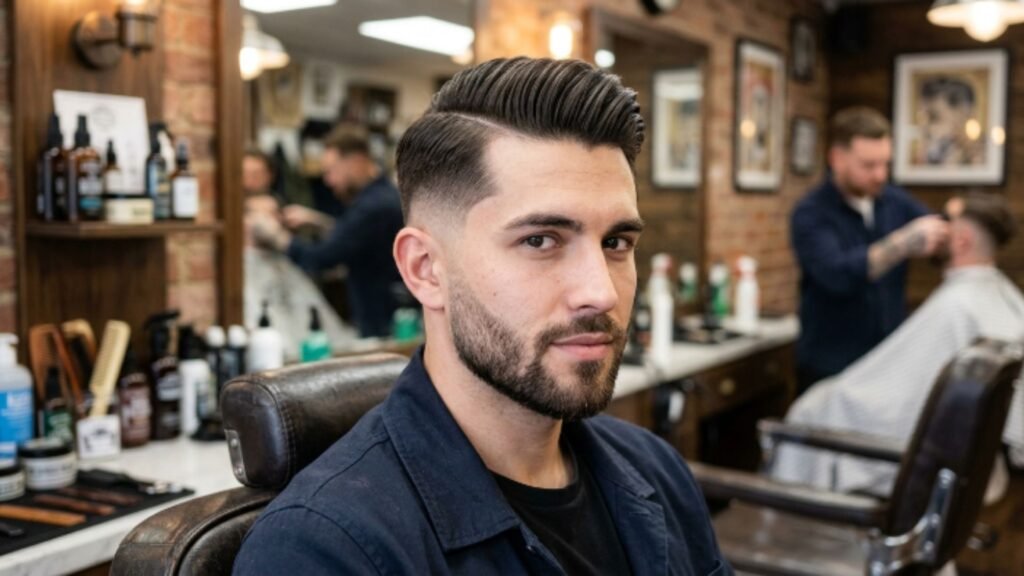
The comb over mid fade takes longer hair on top and sweeps it to one side over a clean, gradual fade at the temples. It reads polished without feeling stiff, which is why it’s a staple in office settings and formal events alike.
This style suits straight to slightly wavy hair best, since the strands need to lie flat for the comb-over effect to hold. Round and square faces benefit the most, as the side-swept volume adds subtle height and length to the face.
- Apply a light pomade to damp hair for shine and hold
- Comb the top section in one direction using a fine-tooth comb
- Blend the part line into the fade with a blow dryer on low heat
- Maintenance: fade touch-up every 2 to 3 weeks
Mid Fade with Textured Crop
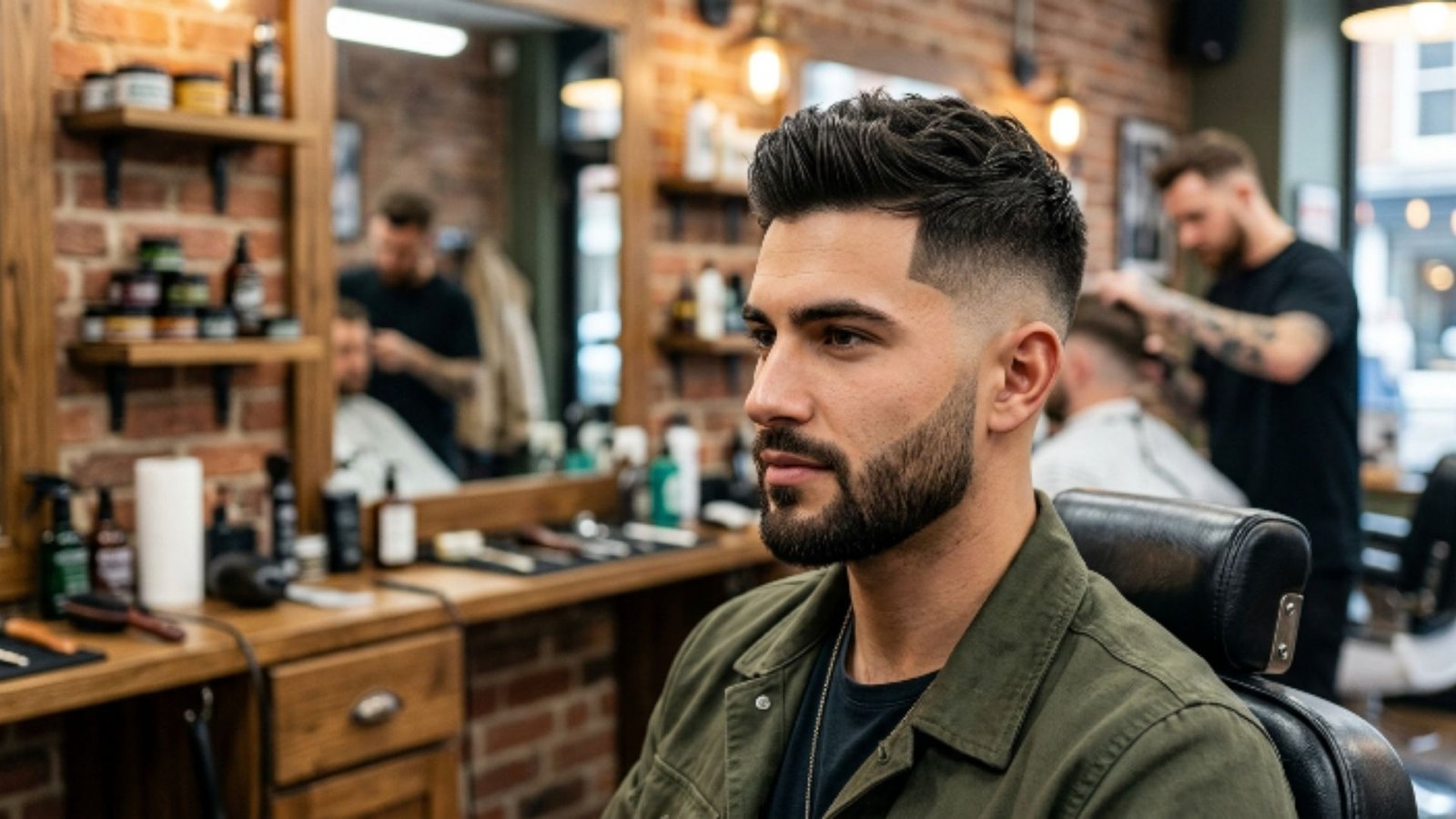
A textured crop keeps the top short, choppy, and full of movement, while the mid fade cleans up the sides underneath it. It’s low effort, high payoff, which makes it one of the most requested mid fade haircuts for men who don’t want a long styling routine.
Thick and coarse hair textures work particularly well here since the natural volume creates the choppy texture on its own. Oval and square face shapes suit this crop especially well.
- Work a matte clay through towel-dried hair
- Push fingers upward from the roots to create separation
- Avoid heavy creams that weigh the texture down
- Maintenance: trim the top every 4 to 6 weeks, fade every 2 to 3 weeks
Mid Fade with Quiff
The quiff brushes hair up and back from the forehead, creating height and volume that a mid fade balances out underneath. It’s a versatile combination that shifts from casual to sharp depending on how much product you use.
This pairing suits nearly every hair texture, though straight hair needs a blow dryer and matte clay to hold the shape, while wavy or curly hair can be styled with curl cream and left to air dry.
- Blow-dry the roots upward while brushing hair back
- Finish with a strong-hold paste for all-day structure
- Best for oval or angular face shapes seeking a youthful edge
Mid Fade with Spiky Hair
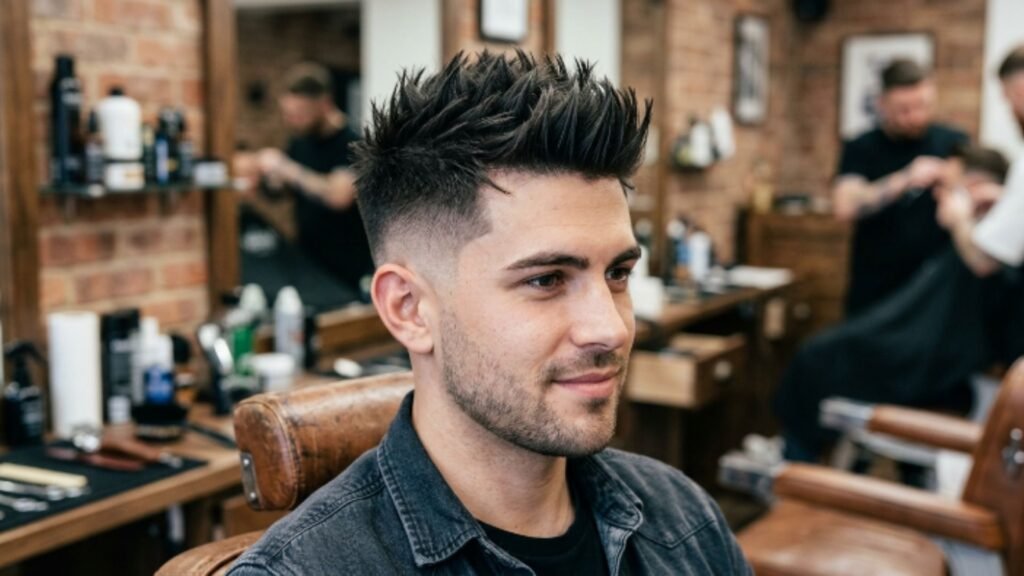
Spiky hair on top paired with a mid fade gives an energetic, textured finish that works well for casual and creative environments. The shorter length on top means less daily maintenance than a quiff or pompadour.
Fine to medium hair holds spikes better than very thick hair, since thinner strands respond faster to styling wax.
- Apply a small amount of strong-hold wax to dry hair
- Pull small sections upward between your fingers
- Keep the top between one and two inches for the cleanest spikes
Mid Fade with Side Swept Fringe
This look takes a longer fringe and sweeps it across the forehead at an angle, landing just above the eyebrow. Combined with a mid fade, it creates a soft, styled contrast that suits both formal and everyday wear.
Straight and wavy hair textures show off the sweep best. This style flatters round faces by breaking up width across the forehead.
- Blow-dry the fringe in the direction you want it to fall
- Use a lightweight cream, not a heavy gel, to avoid a stiff look
- Maintenance: fringe trim every 3 to 4 weeks
Mid Fade with Curly Top
Curly hair on top left long and natural, with a mid fade tightening the sides, is one of the lowest-maintenance combinations on this list because the curls do most of the styling work themselves. It’s a favorite for men who want texture without daily effort.
This works across nearly all curl patterns, from loose waves to tight coils.
- Apply curl cream or a leave-in conditioner to damp hair
- Scrunch upward and let curls air dry or diffuse on low heat
- Avoid brushing dry curls, as it can create frizz
- Maintenance: fade every 2 to 3 weeks, curl trims sparingly to preserve shape
Mid Fade with Brushed Forward Waves
Brushed forward waves push the top section down and forward over the forehead, creating a rounded, textured silhouette above a mid fade. It’s a modern take that photographs well and suits younger, trend-forward styling.
Wavy and straight hair textures respond best. Square and oval faces carry this look most naturally.
- Apply a light wax while hair is slightly damp
- Brush forward in small sections rather than all at once
- Maintenance: fade every 2 to 3 weeks
Mid Drop Fade
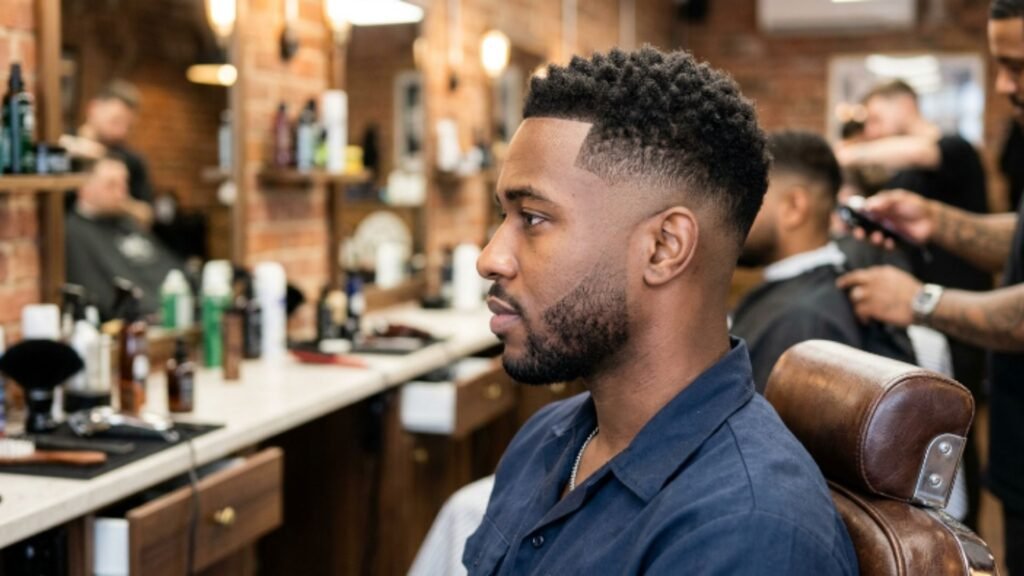
A drop fade curves downward behind the ear instead of staying level around the head, adding a subtle contour that follows the natural shape of the skull. Paired with a mid-height start, it gives a bit more visual interest than a standard straight-line fade without going as bold as a full skin fade.
This works best on curly and wavy hair types and is a good option for men who want something slightly different from a classic fade without committing to a burst or design.
- Tell your barber: “Mid drop fade, temple height on the sides, curve the line down behind the ear”
- Maintenance: every 2 to 3 weeks to keep the curve defined
Buzz Cut with Mid Fade and Beard
A buzz cut on top paired with a mid fade and a full beard is about as low-maintenance as a sharp haircut gets. The uniform length on top requires no styling products at all, while the beard balances the shortness with fullness at the jaw.
This combination works for every hair type and is especially practical for men in active jobs or hot climates.
- Keep the top between a guard 2 and guard 4 depending on preference
- Trim the beard weekly to keep the blend between hair and facial hair clean
- Maintenance: buzz and fade together every 2 weeks
Mid Fade with Hard Part
A hard part is a thin shaved line cut along your natural part, adding a crisp, deliberate edge above a mid fade. It’s a small detail that makes the whole cut look more precise and works especially well on straight, fine hair where a natural part tends to fade or shift throughout the day.
- Ask your barber to shave the line with a fine trimmer, not clippers
- Maintain the line every 1 to 2 weeks, since it grows out faster than the fade itself
- Best for oval and rectangular face shapes
Mid Burst Fade
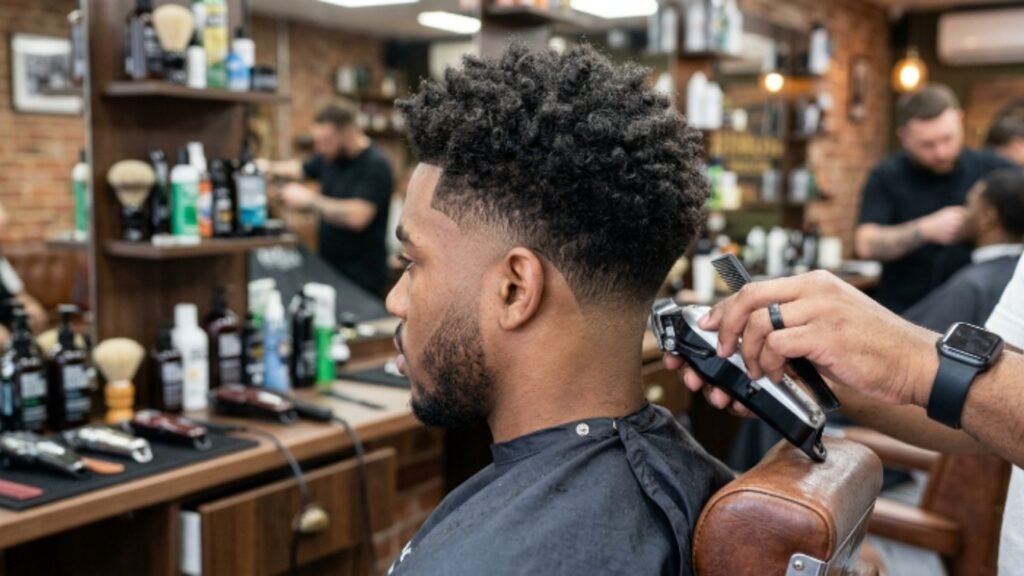
The burst fade curves in a semicircle around the ear rather than running in a straight line down the side of the head. Starting this burst at mid height keeps the contrast noticeable without looking as extreme as a high burst fade. It’s especially popular with mohawks, faux hawks, and textured curly tops, since the curved shape frames the top section instead of cutting straight across it.
- Tell your barber: “Mid burst fade, arc it around the ear at temple height”
- Best for thick, dark hair, where the transition shows up clearly
- Maintenance: every 2 to 3 weeks
High Volume Brush Back with Mid Skin Fade and Beard
This style takes a generous amount of hair on top, brushes it straight back for height and volume, and pairs it with a mid skin fade and a groomed beard. It’s a bold, mature look that works well for men who want a statement style for formal or professional settings.
- Blow-dry hair backward while brushing against the direction of growth for lift
- Set with a strong-hold pomade
- Keep the beard trimmed to a consistent length that blends into the fade at the sideburns
Long Curly Hair with Mid Skin Fade
Keeping the top long and curly while shaving the sides down to skin at mid height creates one of the sharpest contrasts on this list. The length on top stays free to move and bounce, while the skin fade underneath keeps things clean.
- Use a diffuser on low heat to dry curls without disrupting the pattern
- Apply a curl-defining cream to damp hair before drying
- Maintenance: skin fade every 2 weeks, curl trims every 8 to 10 weeks
Side Part with Mid Fade
A side part with a mid fade is one of the more timeless combinations on this list, offering a clean, professional division between longer top hair and shorter faded sides. It works in almost any setting, from job interviews to weddings.
- Comb hair to one side while damp, using a light-hold cream
- Define the part with a fine-tooth comb before it dries
- Best for oval, square, and heart-shaped faces
Mid Fade with Pompadour
The pompadour lifts hair up and back from the face with more volume at the front than a quiff, and a mid fade underneath keeps the sides from competing with that height. It’s a bold, retro-modern combination that suits thick, straight, or wavy hair best.
- Blow-dry the front section upward and back using a round brush
- Finish with a firm-hold pomade for shine and structure
- Maintenance: fade every 2 to 3 weeks
Mid Fade with Undercut
Technically, an undercut is any style where the sides and back are cut dramatically shorter than the top, and a mid fade is simply a blended version of that concept. This combination gives you the sharp contrast of an undercut with a smoother, more gradual transition than a disconnected undercut offers.
- Works with nearly any top style: slicked back, textured, or curly
- Best for men who want contrast without a harsh, disconnected line
- Maintenance: every 2 to 3 weeks
Modern Mullet with Mid Fade
The modern mullet keeps length at the back while fading the sides at mid height, updating a retro cut into something that reads current rather than costume-like. It’s grown into one of the more requested trend cuts in the past couple of years.
- Best for straight to wavy hair, where the back length lies flat
- Ask your barber to blend the fade evenly into the longer nape
- Maintenance: fade every 2 to 3 weeks, back trim every 6 to 8 weeks
Short Hair with Mid Fade
For men who want the simplest possible haircut, keeping the top short and uniform with a mid fade underneath removes almost all styling time from the morning routine. It’s a clean, low-maintenance option that still looks deliberate.
- Ideal for round faces, since tighter sides add visual length
- A small amount of matte paste can add texture if desired
- Maintenance: every 2 to 3 weeks
Mid Fade with Line Up
A line up, also called an edge up, sharpens the hairline at the front and temples with a straight razor or trimmer, adding crisp definition above a mid fade. It’s often paired with short or cropped styles like the Caesar cut.
- Best maintained by a barber rather than at home, since precision matters
- Works with nearly any texture, from straight to coily
- Maintenance: every 1 to 2 weeks to keep the line sharp
Mid Temp Fade
“Mid temp” is shorthand for a fade that starts at the temples and is one of the most common ways to describe mid fade placement to a barber. It’s a flexible base that pairs with almost any top length or texture.
- Tell your barber: “Fade starting at the temples, blending upward”
- Suits straight, wavy, and curly hair equally well
Mid Taper Fade
A mid taper fade blends more gradually than a mid skin fade, keeping some length on the sides rather than going all the way to bare skin. It’s the more conservative version of a mid fade, offering a polished look that grows out more gracefully between cuts.
- Best for men who want a subtler transition or have thinning hair
- Lower maintenance than a skin fade, often lasting 3 to 5 weeks
- Works well in professional and conservative settings
Spiky Hair with Mid Taper Fade
Combining spiky texture on top with the softer blend of a mid taper fade balances an energetic top with a understated side profile. It’s a good middle-ground choice for men who like texture but don’t want a stark contrast at the sides.
- Apply strong-hold wax to dry hair and pull sections upward
- Best for fine to medium hair textures
Mid Fade with Design
Adding a shaved design, whether a simple line, a geometric shape, or something more elaborate, turns a mid fade into a personal style statement. Designs are typically shaved into the fade area itself, using the contrast between skin and hair as the canvas.
- Best done by an experienced barber using detail trimmers
- Works on any hair texture, though designs show up most clearly on dark hair against light skin or vice versa
- Maintenance: every 1 to 2 weeks, since designs grow out faster than the surrounding fade
Trendy Parted Style with Mid Fade
A trendy parted style takes the classic side part and modernizes it with more texture and a slightly looser finish, rather than the slicked-down formality of a traditional side part. A mid fade underneath keeps it current.
- Use a texturizing cream instead of a heavy gel for a more natural finish
- Best for oval and square face shapes
Long Textured Fringe with Mid Fade
A longer, choppy fringe left to fall naturally over the forehead pairs well with a mid fade for a laid-back, textured look. It’s a popular choice for men who want length up front without the formality of a comb over.
- Apply a matte paste and scrunch the fringe forward
- Best for straight to wavy hair
- Maintenance: fringe trim every 4 to 6 weeks
Short Slick Back with Mid Fade and Beard
A short slick back keeps the top brief but combed straight back with a light shine, paired with a mid fade and a well-groomed beard for a sharp, mature finish. It’s a strong option for business settings.
- Apply a small amount of pomade and comb straight back while damp
- Keep the beard lined up to blend cleanly with the fade at the sideburns
Mid Skin Fade
A mid skin fade takes the fade all the way down to bare skin, starting around the temple. It creates the boldest possible contrast at mid height and pairs well with almost any top style, from a textured crop to a long curly top.
- Requires more frequent barber visits than a taper, roughly every 2 weeks
- Best for straight hair, which shows the sharpest line against the skin
Mid Fade with Waves
Waves, the rippled texture pattern popular with short, brushed hair, pair naturally with a mid fade since the shorter sides let the wave pattern on top take center stage. This look works best for oval or square faces where the taper highlights facial symmetry.
- Brush in a consistent direction daily to train the wave pattern
- Apply moisturizer or wave pomade after brushing
- Maintenance: fade every 2 weeks
Mid Fade with Beard Blend
A beard blend connects the hair on the sides seamlessly into a full beard, avoiding a harsh line between the two. Paired with a mid fade, it creates a cohesive, intentional look from hairline to jawline.
- Ask your barber to fade the beard at the same guard length as the sides
- Works with any top style
- Maintenance: every 2 to 3 weeks to keep both the fade and beard blend sharp
Mohawk with Burst Mid Fade
A mohawk paired with a burst fade at mid height keeps a strip of longer hair down the center while the sides curve away in a rounded pattern around the ear. It’s a bolder statement than a standard mohawk fade, since the burst shape adds movement to the sides instead of a straight taper line.
- Best for oval and square face shapes
- Style the center strip upward with a strong-hold gel or wax
- Maintenance: every 2 to 3 weeks
Mid Fade with Messy Texture
A deliberately messy, tousled top over a mid fade gives an effortless, undone quality that still looks put together thanks to the clean sides underneath. It’s one of the more forgiving styles for growing-out hair.
- Apply a matte paste to dry or slightly damp hair
- Scrunch and tousle with fingers rather than a comb
- Best for oval and heart-shaped faces
Mid Fade with Short Fringe
A short, blunt fringe paired with a mid fade gives a clean, boyish finish that works well for men who prefer a minimal styling routine. The Caesar cut is the most recognizable example of this pairing.
- Apply a small amount of matte paste to define the fringe if desired
- Best for round faces, since the tighter sides lengthen the profile
Mid Fade with Tapered Back
Keeping the back tapered rather than faded to skin, while fading the sides at mid height, softens the overall look and gives more coverage at the nape. It’s a common choice for men who want a fade look without an overly dramatic back profile.
- Best for men with thinning hair at the crown or nape
- Maintenance: every 3 to 4 weeks
Mid Fade with Natural Volume
Some hair simply has enough natural body that all it needs is a mid fade underneath to look finished, without any additional styling on top. This is a great option for men who want the contrast of a fade without adding a daily routine.
- Works best with medium to thick hair textures
- A light sea salt spray can enhance natural texture without stiffness
Mid Fade with Clean Crop Top
A clean crop keeps the top short, straight across, and free of heavy texture, creating a neat, minimalist finish above a mid fade. It’s a modern update to the classic crew cut.
- Style with a small amount of matte cream for a soft finish
- Best for oval, square, and diamond face shapes
- Maintenance: every 3 to 4 weeks
What is a Mid Fade?
A mid fade is a men’s haircut where the fade begins around the temple, roughly halfway up the side and back of the head, then gradually blends into longer hair on top. It sits directly between a low fade, which starts near the ears, and a high fade, which starts several inches above them.
What makes the mid fade so widely requested is its balance. It’s bold enough to look modern and deliberate, but restrained enough to work in a business setting, at a wedding, or on a night out. It also adapts to nearly any hair type, whether that’s straight, wavy, curly, or coily, and to nearly any top style, from a short crop to a long, brushed-back pompadour.
Types of Mid Fade Haircuts
Not every mid fade looks or grows out the same way. The differences mostly come down to where the fade ends at the bottom and how the line is shaped. The main variations include:
- Mid skin fade: the sides fade all the way down to bare skin for maximum contrast
- Mid taper fade: the sides keep some length rather than going to skin, for a softer, more gradual blend
- Mid drop fade: the fade line curves downward behind the ear instead of running straight
- Mid burst fade: the fade curves in a rounded shape around the ear rather than a straight line down the side
- Mid temp fade: shorthand for any fade that starts at the temple, used interchangeably with the general mid fade term
Choosing between these often comes down to hair thickness and how much upkeep you’re willing to commit to. Thicker, coarser hair tends to suit a skin fade well since it reduces bulk, while fine or thinning hair usually looks fuller with a taper, since it retains some coverage on the sides.
Mid Taper vs. Mid Skin Fade
The core difference between these two comes down to how far the fade goes and how it grows out.
A mid taper fade blends gradually and keeps visible length on the sides, rather than reducing hair all the way to skin. It reads as more subtle, more classic, and grows out more gracefully, which means you can typically go 3 to 5 weeks between cuts without it looking unkempt.
A mid skin fade, on the other hand, takes the sides down to bare skin for a sharper, higher-contrast finish. It looks crisper right after a cut, but that contrast fades quickly as the hair grows, so most men need a touch-up every 2 to 3 weeks to keep it sharp.
Neither option is objectively better. A mid taper fade tends to suit fine or thinning hair, oblong and longer face shapes, and men who prefer lower-maintenance grooming. A mid skin fade tends to suit thicker, coarser hair, straight textures where the line reads cleanest, and men who don’t mind more frequent barbershop visits.
Our Thoughts about Mid Fade Haircuts
After looking at dozens of variations, the mid fade earns its popularity honestly. It’s rare to find a haircut that works this well across so many hair types, face shapes, and lifestyles without losing its identity in the process.
If you’re new to fades altogether, a mid taper fade with a simple textured crop or side part is the easiest entry point, since it’s forgiving between barber visits and works in almost any setting. If you already know you like a sharper look, a mid skin fade with a design, burst, or drop shape gives you room to get more specific and personal with the style.
The real advantage of the mid fade is that it’s rarely a mistake. Bring a reference photo, be specific about where you want the fade to start and how short you want the bottom to go, and you’ll walk out with a haircut that looks intentional from every angle.
FAQ’s: What Makes Mid Fade Haircuts So Popular
What’s better, mid-fade or taper?
Neither is universally better. A mid fade gives sharper contrast, while a taper offers a softer, lower-maintenance blend that suits thinning or fine hair.
What is a mid taper fade?
It’s a fade that starts at the temple and blends gradually down the sides without going to bare skin, keeping some length for a softer finish.
Do mid fades look good?
Yes, mid fades suit nearly every face shape and hair type, making them one of the most versatile and consistently flattering fade options available.
Is a mid fade good for straight hair?
Yes, straight hair actually shows the cleanest, sharpest fade line, especially with a mid skin fade, since the flat strands cut precisely against the skin.
What haircut suits straight hair with a mid fade?
A side part, comb over, textured crop, or quiff all work well with straight hair, since these styles rely on hair lying flat and holding a defined shape.

Elena Hartwell is a hair and beauty writer passionate about hairstyles, hair care, and the latest beauty trends. She shares practical tips, styling inspiration, and easy ideas to help readers feel confident and look their best.