
Wispy Cat-Eye Lashes: The Texture, The Map and The Specs
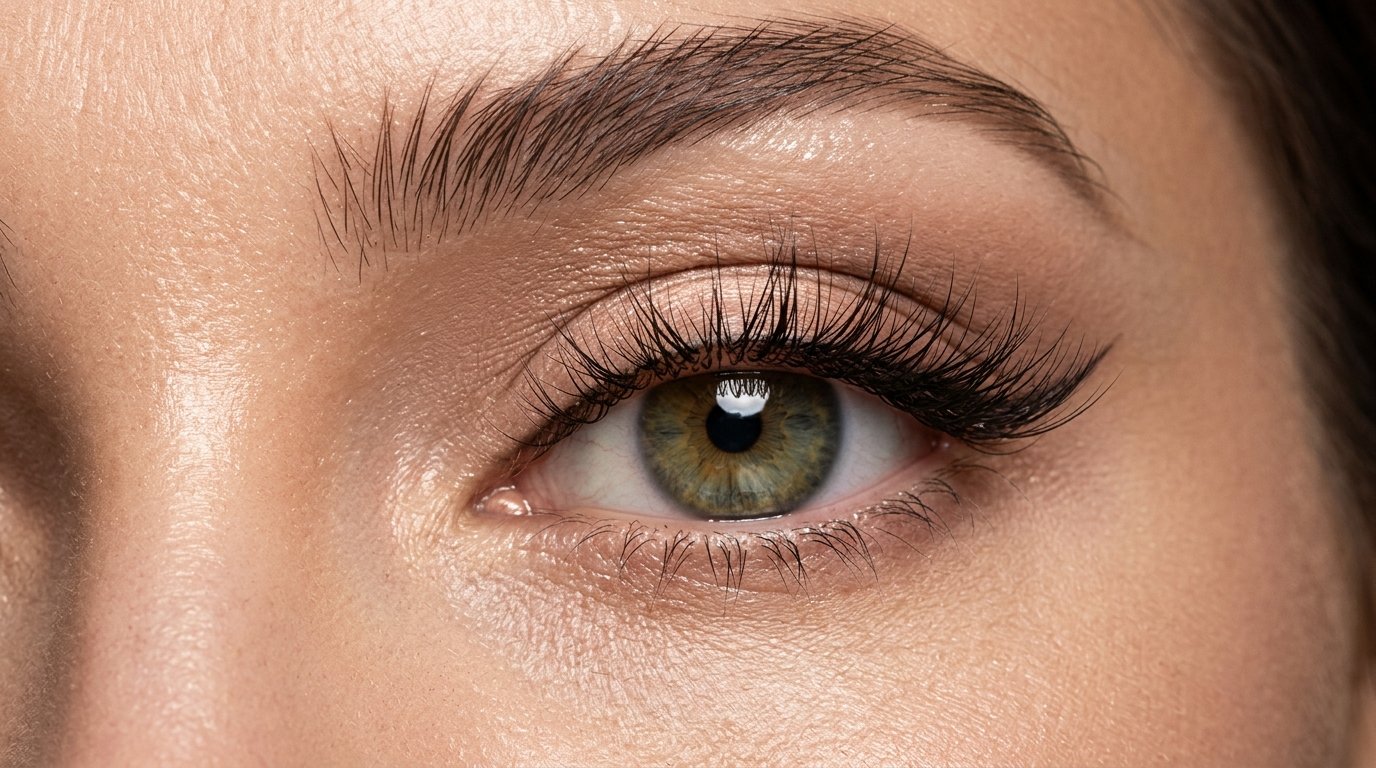
Wispy cat-eye lashes pair a length gradient that peaks in the outer third with a feathery, uneven texture. The shape elongates the eye; the texture keeps it soft.
Most buying mistakes happen because shoppers read wispy as a length or a volume. It is neither: wispy describes varied lengths, tapered tips and planned spikes over a lighter base.
This guide teaches the two ideas separately, then shows how to buy by spec: peak length, curl, band type, fiber and spike structure, across strips, clusters and extensions.
What Wispy Cat-Eye Lashes Are: Shape Plus Texture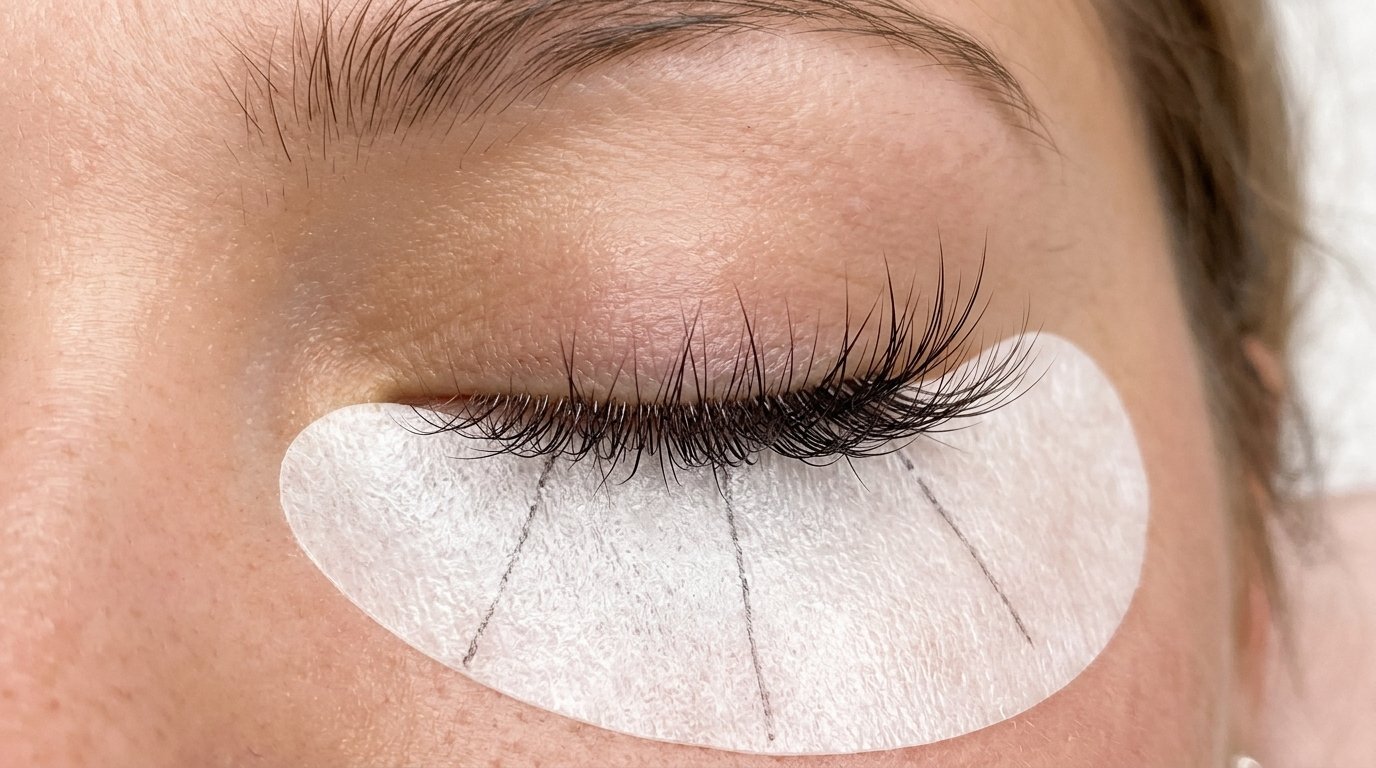
The Two Dials: Cat-Eye Shape and Wispy Texture
Think of the look as two dials you set independently. Dial one is the cat-eye shape: short inner lengths rising to the longest zone in the outer third.
Dial two is the wispy texture: fibers of deliberately different lengths, feathered tips, and spikes standing proud of a shorter base. Turn texture up and the same shape reads softer.
A uniform row of identical fibers fails the texture dial completely. Even at high volume, it reads as a solid bar, not as the staggered outline in wispy photographs.
The Four Construction Levers Behind Wispy
Wispy is built from four levers: length variation, tapered tip shape, a spike layer, and density restraint. A set using only one lever usually reads as ordinary volume.
Density restraint is the lever buyers miss most. Professional mapping guidance from Swaniya’s wispy lash map guide describes leaving intentional gaps, because the air between groups creates the feathery outline.
Check all four levers before you check any packaging claim. Variation, tips, spikes and air are visible in product photos once you know to look for them.
Quick Answer: The Spec in One Table
|
Element |
What to look for |
|---|---|
|
Shape |
Short inner corner, longest zone in the outer third |
|
Texture |
Mixed lengths, tapered tips, spikes above a shorter base |
|
Everyday peak |
About 12 to 14mm at the longest zone |
|
Statement peak |
15 to 16mm spikes, or longer strip styles |
|
Band (strips) |
Thin cotton or clear, flexible enough to curve |
That table is the whole buying logic in miniature. Every later section expands one row of it, so you can judge any product or salon map against it.
The Three Registers: Natural, Everyday Glam and Statement
Published lash maps disagree on lengths because they describe different registers, not one correct chart. Sorted by peak length, the strands form a ladder rather than a contradiction.
|
Register |
Peak length |
Base and density |
Spike premium |
|---|---|---|---|
|
Natural |
Up to about 12mm |
Thin diameters, light fans, C or CC curl |
Spikes 1 to 2mm above base |
|
Everyday glam |
13 to 14mm peaks |
Light to medium fans, CC base |
D curl spikes carry the effect |
|
Statement |
15 to 16mm spikes |
Fuller fans, D curl spikes |
Longest spikes, strongest contrast |
The natural register follows the diameter discipline in professional natural guides: fine diameters around 0.05 to 0.10mm and a ceiling near 12mm keep the set believable at conversation distance.
The glam register is where most salon wispy sets live. Base fans run longer, spikes reach 13 to 16mm, and one widely shared map names 14mm as the signature spike.
Statement lengths exist mainly in strip lashes, where 18 to 25mm styles appear as product claims. They photograph dramatically and wear heavily, so treat them as occasion specs.
Which Register Matches Your Real Life
Choose the register by your calendar, not by the boldest photo. Daily wear, glasses and close-up work all push you down the ladder toward shorter peaks.
If you are new to the style, start at natural or low glam. You can lengthen the next set; you cannot make an over-long set feel lighter mid-wear.
Choose Your Format: Strips, Clusters or Extensions
Three formats deliver the same map with very different commitment levels. Strips last a day, clusters last days per brand claims, and extensions are a salon set maintained with fills.
|
Format |
Wear pattern |
Skill needed |
Removal |
|---|---|---|---|
|
Strip lashes |
One day, removed nightly |
Beginner friendly |
Peel off after loosening glue |
|
DIY clusters |
Days, per brand claims |
Intermediate, bond system |
System remover on a closed eye |
|
Extensions |
Weeks, with fills |
Professional application |
Professional remover at a salon |
Strips are the training format: one piece, same-day removal, and mistakes you can fix in minutes. Most beginners should prove they like the shape here first.
Clusters translate the extension map to home use. Segments sit under the natural lashes on a micro-band with a bond and seal system, which is why they look more seamless.
Extensions give the most precise map, placed lash by lash by a technician. They also carry the highest cost in money, maintenance and aftercare discipline.
What Each Format Costs in Time and Upkeep
Strips ask for five minutes and a nightly removal. Clusters ask for a careful first application, then gentle handling and no oil-based products near the bond.
Extensions ask for fill appointments as natural lashes shed, commonly every two to three weeks in salon guidance. Budget the maintenance before you fall for the first set.
Wear-time numbers on cluster packaging are brand claims, and social feedback sometimes reports shorter real wear. This guide reports both directions and promises neither.
Buy by Spec, Not by Brand
The word wispy on a box guarantees nothing measurable. Two products with the same label can differ by 6mm of peak length, opposite curl behaviour and completely different bands.
Strip Lash Specs: Gradient, Band and Fiber
- Gradient: lengths should rise toward the outer third; one widely sold strand states 7 to 15mm inner to outer.
- Band: thin cotton or clear bands dominate wispy styles; flexibility decides corner comfort and lift.
- Fiber: faux mink leads the segment; classic strands also use human hair on a thin band.
- Peak length: everyday strips peak near 12 to 15mm; longer styles are statement specs.
Reusability is a claim per style, never a category fact. Check the individual product listing, and judge value per pair when multipacks run from five pairs upward.
Cluster Specs: Segment Lengths and Bond Systems
Cluster trays translate the map directly: each segment is one zone. Retail wispy trays commonly span 8 to 16mm, which covers inner, middle and outer-third zones in one pack.
Bond systems are not interchangeable between brands. Buy the bond, seal and remover made for your segments, and never substitute professional extension glue, a point covered again under safety.
Extension Specs: Diameter, Curl and Fan Type
For salon sets, spec means diameter, curl and fan construction. Fine diameters keep the natural register feathery; C curl is soft, CC adds lift, and D curl makes spikes stand out.
A common professional build pairs C or CC curl base fans with D curl spikes. Ask for the build in those terms and your technician can reproduce it exactly.
Prices: Dated Retailer Strands Only
Prices below were read on a US retailer page on 27 November 2026: strands at that date, not permanent facts. See the KISS Falscara wispy multipack listing at Ulta Beauty for cluster specs beside prices.
|
Retailer strand, checked 27 Nov 2026 |
Listed price |
|---|---|
|
KISS Falscara Mink Wispy multipack, 50 count, 10 to 16mm |
$13.99 |
|
KISS Falscara Soft Wispy variant, 8 to 14mm |
$13.99 |
|
KISS Falscara Faux Mink Natural variant |
$12.99 |
|
KISS Falscara Soft Wispy starter kit |
$19.99 |
No salon extension price appears in this guide. No primary US salon price list for a wispy cat-eye set was verified, so the figure is left absent rather than estimated.
The Wispy Cat-Eye Maps
Extension Map: Base Fans Plus Spikes
Extension maps must stay attributed, because sources build different registers on purpose. Read each strand below as one professional or creator approach, not as a universal chart.
The glam creator map builds base fans of 10 to 15mm in CC or D curl, with D curl spikes of 13 to 16mm placed over them, naming 14mm as the signature spike.
The soft creator map keeps fans at 8 to 12mm and places spikes 1 to 2mm longer than their neighbours. It translates most easily to DIY cluster trays at home.
The supplier natural map, from Swaniya’s professional wispy mapping guidance, alternates base lengths in a broken pattern, uses C curl fans with CC or D spikes, and protects the gaps on purpose.
Swaniya also stresses there is no universal spike difference. Curl, projection and placement matter as much as printed length, so treat the 1 to 2mm figure as a working range.
Cluster Map: Segment by Segment
- Inner corner: shortest segments, about 10mm, kept clean and light.
- Middle zones: mid lengths rising gradually, with no jump over about 2mm.
- Outer third: the longest segments, 14 to 16mm where your tray offers them.
- Final segment: one shorter piece to close the corner with a taper.
Four to six segments per eye covers most maps. Segment width changes the count, so follow the zone pattern rather than chasing an exact piece number.
The Shared Taper Rule
One technique is shared with the dramatic sibling, and it is stated here once: peak in the outer third, then drop the final segment by 1 to 2mm so the corner is not dragged down.
That rule, and the full drama gradient behind it, live on our dramatic cat-eye lashes page. This page applies the taper to a lighter texture and teaches texture from here.
Eye Shapes: Adjustments That Matter
The textbook map fits almond eyes with the fewest changes. Every other shape needs one specific adjustment, and the table below gives the adjustment instead of generic praise.
|
Eye shape |
Adjustment |
|---|---|
|
Almond |
Textbook map, peak in the outer third |
|
Round |
Peak elongates well; avoid extra center length |
|
Hooded |
Stronger curl, peak slightly inward, low density |
|
Downturned |
Final segment taper is mandatory; consider kitten peak |
|
Monolid |
Curl projection matters more than added length |
|
Deep-set |
Lighter density so texture reads, not shadow |
|
Small |
Scale the whole ladder down; skip 16mm spikes |
|
Mature |
Thinner diameters, shorter peaks, brown fiber option |
Hooded, Downturned and Round Eyes
Hooded eyes need lift that survives an open eye. Keep lengths short enough not to fold under the hood, and place the peak just before the outer corner.
Downturned eyes are the taper test case. If the longest fibers sit on the final lashes, the corner reads lower, however pretty the rest of the set looks.
Round eyes gain the most visible elongation from this map. Resist adding center length, which rounds them further and fights the cat-eye direction you bought.
Monolid, Deep-Set, Small and Mature Eyes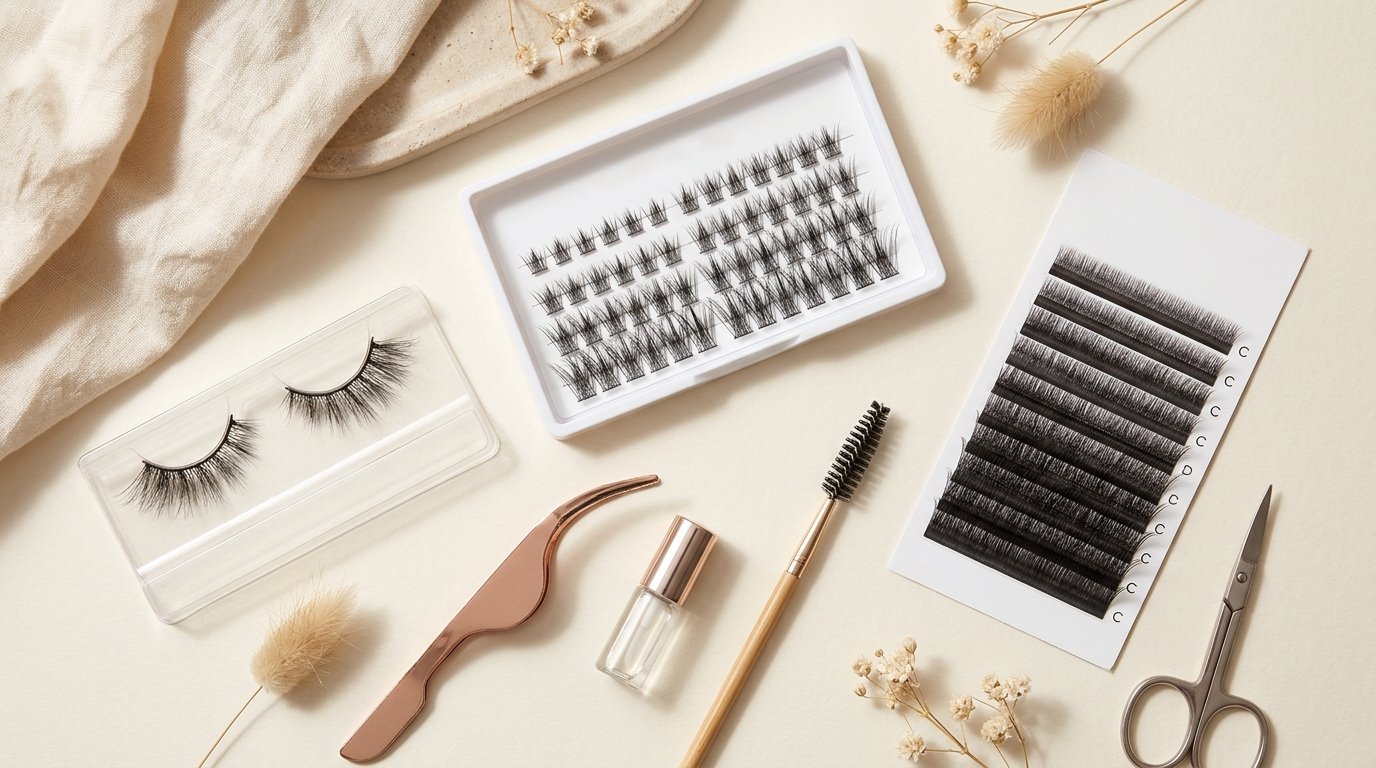
Monolid eyes often need curl projection more than length, because the lash line sits flatter. A stronger curl lifts fibers into view before any extra millimeters help.
Small eyes should scale every register down. Copying a 16mm spike map onto a small eye is the most common beginner error in the social content reviewed for this guide.
Mature eyes pair the wispy register with restraint: thinner diameters, shorter peaks and brown fibers reduce contrast and weight while keeping the feathery outline.
Glasses and Contact Lens Wearers
For glasses, the peak must clear your lenses. Shorter builds, roughly up to 14mm at the peak for many frames, are the safer start; statement lengths brush lenses and smudge.
Contact lens wearers should apply lashes after inserting lenses and keep adhesive off the lens surface. Any persistent irritation means removing the set, not enduring it.
Application Steps
Strip Application in Six Steps
- Measure the strip against your eye before any glue touches it.
- Trim from the outer end if needed, so the inner gradient survives.
- Apply a thin glue line and wait until it turns tacky.
- Place the center first, just above your natural lash line.
- Anchor inner and outer corners, keeping the longest section over the outer third.
- Press the band into the line with tweezers or an applicator.
Trimming from the outer end surprises beginners, but it protects the short inner lengths the map depends on. Anchor the outer corner last so the peak lands in place.
Cluster Application in Six Steps
- Start with clean, dry natural lashes and your map in front of you.
- Brush bond at the base only, never along the full lash.
- Pick up each segment by its tip to keep the fibers clean.
- Place segments underneath the lash line, inner to outer, following the map.
- Finish with the shorter taper segment at the very corner.
- Apply seal at the base only, and avoid stacking segments for density.
Bond discipline is the whole skill here. Bond or seal painted along the fibers clumps the texture you paid for and shortens comfortable wear.
What to Tell Your Lash Tech: The Spec Script
Bring a spec script, not just a photo: wispy cat-eye map, base fans in C or CC curl, D curl spikes about 2mm above the base, longest zone in the outer third.
Add the closing lines: final segment tapered 1 to 2mm, density light to medium. Agree the peak position before the set starts, while changes are still free.
Show a photo of texture, not only shape. Wispy means different densities to different artists, and the script plus texture photo removes that guesswork.
Removal, Cleaning and Reuse
Removal is a safety step, not a chore. Soak a cotton pad with an oil-free or system-specific remover, hold it on the closed eye, and slide the lash off once the bond releases.
Never rip a bonded segment away dry. Pulling can take natural lashes with it, and professional extensions should come off with professional remover at a salon, never picked off at home.
To reuse strips, peel old glue from the band with tweezers, clean fibers gently with a lash-safe cleanser on a cotton swab, dry fully, and store the pair on its original tray.
For extensions, the care rules that survive sourcing are daily gentle cleansing, no rubbing or pulling, and spoolie brushing suited to the texture. Dirty lashes are a hygiene problem first.
Safety: Adhesives, Allergies and Eye Health
False lashes, extensions and their adhesives are cosmetic products, not pre-approved devices. The FDA eye cosmetic safety guidance sets out the hygiene and labeling rules that apply to all three formats.
The American Academy of Ophthalmology eyelash extension safety page is the source for extension-specific risks, and for the rule that pain, itching, redness or swelling means an eye doctor, not wait-and-see.
One boundary is absolute: professional cyanoacrylate extension glue is never a DIY cluster adhesive. Cluster systems ship with their own bond for a reason, and the systems are not interchangeable.
Allergy vs Irritation: Timing Clues
Timing separates the two in most safety coverage. Fume irritation tends to burn or water immediately; adhesive allergy usually builds over hours to a day or two, and repeats with each new set.
Allergic contact dermatitis can appear after months of tolerated sets, which is why a patch test is a sensible caution step and never a guarantee. Persistent symptoms need an examination, not a diagnosis from an article.
When to See an Eye Doctor
- Pain, swelling or discharge after any lash application.
- Vision changes of any kind while wearing a set.
- Redness or itching that builds over a day or two, or repeats per set.
- A stye, sore or crusting along the lash line that does not settle.
This section is general information only. It does not diagnose your symptoms, and an eye professional who can examine you always outranks general guidance.
Troubleshooting: Messy, Droopy, Lifting, Falling
Messy instead of feathery usually means random spike spacing or a base too dense for spikes to read. Wispy is planned contrast: controlled base, spikes at planned intervals, clean inner corner.
Droopy outer corners mean the longest fibers sit on the final lashes. Move the peak one zone inward and taper the last segment, the adjustment professional guides teach.
Professional cat-eye mapping guidance from Swaniya’s cat-eye lash guide separates cat, kitten and squirrel maps by peak placement, which is the same fix: position first, length second.
Lifting corners on strips usually trace to glue placed before it turned tacky, or a band too stiff for your eye curve. Flex the band before application and re-anchor the corner last.
Clusters falling early usually trace to bond painted too far up the lash, oil exposure, or segments stacked for density. Rebuild one clean layer and judge wear honestly against brand claims.
Makeup That Pairs With the Texture
A thin liner pressed into the lash line hides a strip band, and a soft wing extends the cat-eye direction. Looks like our grunge eyeliner looks show how liner weight changes the whole read.
Keep inner-corner shadow light so the gradient reads. Heavy liner plus maximum lashes closes the eye down, which is why wispy pairs best with balanced makeup.
Mascara has one narrow job here: a light coat on your natural lashes before strip application helps blending. Our best brown mascara guide covers the softer shades that suit natural-register sets.
For a full routine frame around the lashes, the glow up routine on FashionGleem sequences base, eyes and finish in the order makeup artists actually apply them.
Key Takeaways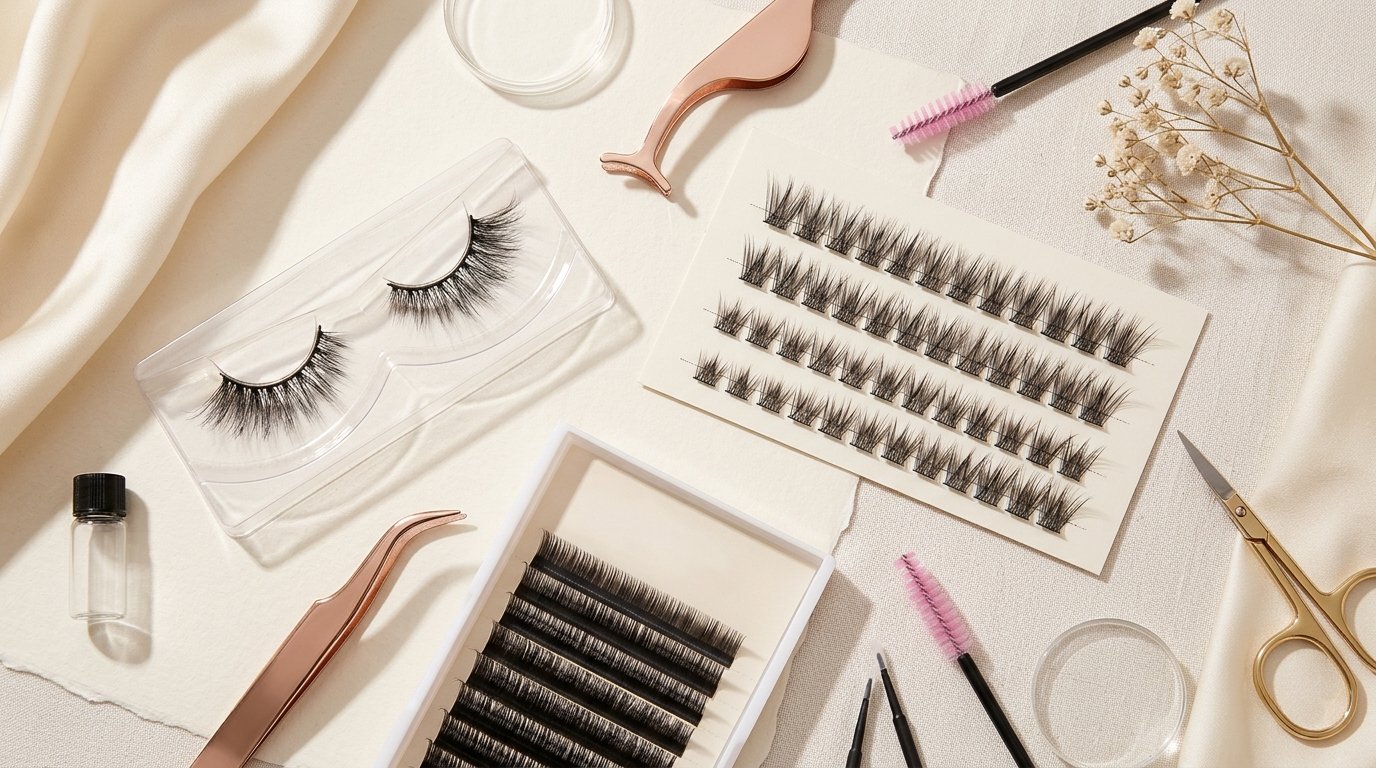
- Wispy is a texture, not a length: varied lengths, tapered tips, spikes, density restraint.
- Cat eye is the shape: short inner, peak in the outer third, tapered final segment.
- Buy by spec: peak mm, curl, band, fiber and spike structure, never by the word wispy.
- Registers are a ladder: natural near 12mm, glam spikes 13 to 16mm, statement strips beyond.
- Safety scales with format: strips are beginner-safe territory; extensions need professional hands.
Frequently Asked Questions
What are wispy cat-eye lashes?
Wispy cat-eye lashes combine two design ideas: a cat-eye length gradient that runs short at the inner corner and longest in the outer third, and a wispy texture built from varied lengths, tapered tips and visible spikes that break up the fan line. The result elongates the eye while looking feathery instead of uniform.
What does wispy actually mean in lashes?
Wispy describes texture, not volume. It means intentional variation: alternating lengths, lighter density, tapered or criss-cross fibers and longer spikes sitting above a shorter base. A uniform row of identical fibers is the opposite of wispy, even when the set is sold as volume.
What is the difference between wispy and dramatic cat-eye lashes?
Both share the outer-third length peak. Dramatic cat-eye builds maximum density and contrast toward that peak, while wispy keeps the base lighter and lets uneven spikes carry the effect. Wispy sits in the natural-to-glam middle register; dramatic is the statement end of the same map family.
What lash map do I ask my lash tech for?
Ask for a wispy cat-eye map by zones: short and clean inner corners, a controlled rise through the middle, the longest zone in the outer third, and the final outer segment tapered down 1 to 2mm so the corner does not droop. Bring a screenshot map and agree the peak position before the set starts.
What lengths are used in a wispy cat-eye extension map?
Published maps vary by source and must be labelled. One widely shared map uses base fans of 10 to 15mm in CC or D curl with D curl spikes of 13 to 16mm. A softer map keeps fans at 8 to 12mm with spikes 1 to 2mm longer. Your natural lash length and strength set the safe ceiling, not the chart.
How much longer should spikes be than the base fans?
Most pro sources work with spikes about 1 to 2mm longer than the surrounding base so the peaks stay visible without looking detached. Swaniya, a professional lash supplier guide, stresses there is no universal millimeter difference and that curl, projection and placement matter as much as printed length.
Which curl is best for wispy cat-eye lashes?
C curl is the soft, everyday choice, CC adds lift, and D curl makes spikes stand out. A common build is C or CC curl fans with D curl spikes. L curl appears in some cat-eye extension guides for outer zones. The right curl depends on natural lash direction and eyelid clearance.
Are wispy cat-eye lashes natural looking?
They can be, at the lighter end: shorter lengths, thinner diameters, brown or clear-band formats and fewer spikes read as natural. The same map at longer lengths and denser fans becomes soft glam or statement. Natural is a spec choice, not a property of the style name.
Who suits wispy cat-eye lashes?
Almond and round eyes are the classic fit because the outer peak elongates them. Hooded eyes often suit a lighter, lifted version with the peak moved slightly inward. Downturned eyes need the final segment taper so the corner is not pulled lower. Monolid and deep-set eyes need individual assessment rather than a copied chart.
Do wispy cat-eye lashes suit hooded eyes?
Usually yes, in a lighter build. Keep density low, choose a curl with real lift, and place the longest zone just before the outer corner so the peak stays visible when the eye is open. Very long outer lengths can disappear under the hood or brush the lid.
Can wispy cat-eye lashes make downturned eyes look droopy?
Yes, if the longest fibers sit on the very last outer lashes. The fix used by the dramatic sibling page and by pro mapping guides is the same: peak in the outer third, then drop the final segment by 1 to 2mm. That taper rule is shared technique, applied here to a lighter texture.
Strip lashes, clusters or extensions: which should I choose?
Choose strips for one-day wear and the lowest commitment, DIY clusters for a customizable under-lash extension look that lasts days per brand claims, and professional extensions for a mapped set maintained with fills every few weeks. Cost, skill, removal and safety profiles differ sharply across the three formats.
What spec should I look for in wispy cat-eye strip lashes?
Shop by spec, not by brand name: a length gradient that ends longest at the outer third, mixed fiber lengths with tapered tips, a thin or clear flexible band, and a stated maximum length in your comfort range. Everyday wispy strips usually peak around 12 to 15mm; 18 to 25mm styles are statement lengths.
What are DIY lash clusters and how do they map a cat eye?
Clusters are small pre-made segments placed under the natural lashes with a bond and seal system. A cat-eye cluster map places shorter segments at the inner corner, medium segments through the middle, the longest segments in the outer third, and one shorter segment at the very end to taper the corner.
How many cluster segments does each eye need?
Most DIY maps use about four to six segments per eye, depending on segment width and eye size. Wider segments need fewer pieces. The map matters more than the count: inner short, middle medium, outer-third longest, final segment shorter.
How long do DIY cluster lashes last?
Brand wear claims vary and must be labelled as claims. KISS describes its Falscara system as an at-home extension look, and retailer listings for wispy multipacks checked on 27 November 2026 show cluster lengths from 8 to 16mm. Real wear depends on bond, seal, oil exposure and sleep habits, so treat any day count on packaging as a product claim, not a promise.
How do I apply wispy cat-eye strip lashes step by step?
Measure the strip against your eye and trim from the outer end if needed. Apply a thin glue line, wait until tacky, place the center first, then anchor the inner and outer corners just above your natural lash line. Keep the longest section over the outer third, and press the band into the line with tweezers or an applicator.
How do I apply lash clusters for a cat-eye map?
Brush bond at the base of clean natural lashes, pick up each segment by its tip, and place segments underneath the lash line following your map from inner to outer. Finish with the shorter taper segment, then apply seal at the base only. Follow your specific system’s instructions, because bond systems are not interchangeable.
Can beginners wear wispy cat-eye lashes?
Yes. Strips are the beginner format: one piece, removable the same day, and easy to correct. Start with a lighter wispy style with a clear or thin band and a peak length near 12 to 14mm. Clusters are the second step once strip placement feels easy.
Are wispy cat-eye lashes reusable?
Many strip lashes are sold as reusable, and that is a product claim to check per style. Reuse depends on careful removal, peeling old glue from the band, and storing the pair on its tray. Cluster segments are generally treated as single-wear or short-cycle pieces within their system.
How do I remove strip lashes and clusters safely?
Soak a cotton pad with an oil-free or system-specific remover, hold it on the closed eye to loosen the adhesive, then slide the lash off without pulling. Never rip a bonded segment away dry. Professional extensions should be removed by a technician with professional remover, not picked off at home.
How do I clean and store reusable wispy lashes?
Remove glue residue from the band with tweezers, clean the fibers gently with a lash-safe cleanser or micellar water on a cotton swab, let them dry fully, and store them on their original tray in a closed case. Dirty storage is a hygiene problem, not just a cosmetic one.
What is the difference between faux mink, silk and human hair lashes?
These are fiber descriptions, not quality grades. Faux mink is a synthetic fiber shaped for a soft, tapered finish. Silk lashes in modern ranges are also usually synthetic with a lighter feel. Human hair lashes, such as the classic Ardell Demi Wispies strand reported by roundups, use real hair on a thin band. Check each product’s own material listing.
Are wispy cat-eye lashes good for glasses wearers?
They can be, if the peak length clears your lenses. Shorter wispy builds, roughly up to 14mm at the peak for many frames, are the safer start. Long statement lengths can brush lenses, push frames down and smudge. Bring your glasses to the decision, not just the mirror.
Can I wear wispy cat-eye lashes every day?
Strips and clusters are designed for repeat wear, and lighter wispy specs are the everyday end of the range. Daily extension wear is a maintenance commitment with fills. Whatever the format, daily cleansing and days off after any irritation are part of the routine, and eye symptoms always override the look.
What makeup pairs well with wispy cat-eye lashes?
A thin liner pressed into the lash line hides a strip band, and a soft wing extends the cat-eye direction. Keep inner-corner shadow light so the gradient reads. Heavy liner plus maximum lashes can close the eye down, which is why the wispy register pairs best with balanced, not maximal, makeup.
Do I need eyeliner with wispy cat-eye lashes?
No. Clear-band and under-lash cluster formats are built to work without liner. With black-band strips, a thin line or tightlining helps the band disappear. The lashes themselves supply the elongation, so liner is camouflage, not a requirement.
Can I use mascara with wispy lashes or extensions?
With strip lashes, a light coat on your natural lashes before application helps blending. Mascara on professional extensions is generally discouraged by lash artists because it clumps fans, is hard to clean and shortens retention. Cluster systems publish their own rules; follow the system you bought.
How long does a professional wispy cat-eye set last?
Extensions shed with your natural lash cycle and are maintained with fills, commonly every 2 to 3 weeks in salon guidance such as the extension guides reviewed for this report. Exact retention varies with aftercare, oil exposure and natural shedding, so any fixed week count is a salon strand, not a guarantee.
What should I tell my lash tech to get this look?
Use a spec script: wispy cat-eye map, base fans in C or CC curl, spikes in D curl about 2mm longer than the base, longest zone in the outer third, final segment tapered 1 to 2mm, and density kept light-to-medium. Show a photo of texture, not just shape, because wispy means different densities to different artists.
Are wispy cat-eye lashes safe?
They are cosmetics used at the eye, so safety is about product, hygiene and reaction awareness. The FDA treats false lashes, extensions and their adhesives as cosmetic products that must meet cosmetic safety and labeling rules, and it is not a pre-approval system. Stop use and seek care for pain, swelling, discharge or vision change.
What are the signs of a lash glue allergy?
An adhesive allergy is usually delayed: itching, redness and swelling that build over hours to a day or two after application, often repeating with each new set. Irritation from fumes tends to be immediate burning or watering. Only an examination can separate allergy, irritation and eyelid conditions, so persistent symptoms need an eye doctor.
Should I patch test lash adhesive?
A skin spot test is a sensible caution step recommended across lash safety coverage, but it is not a guarantee, because eyelid skin is thinner and reactions can appear after repeated exposure. Anyone with known adhesive sensitivity, eyelid eczema or eye allergies should discuss extensions with a clinician first.
Can lash extensions damage natural lashes?
Poorly applied or overly heavy sets can stress natural lashes, and picking or pulling extensions off can pull natural lashes out. Correct isolation, weight matched to the natural lash, and professional removal are the safeguards named by ophthalmology and lash sources. Damage risk is a technique and weight issue, not an automatic outcome.
What is the difference between wispy and wet look lashes?
Wet look sets use closed, glossy spikes for a spiky, just-wet finish across the whole line. Wispy sets mix open fans with spikes for a feathery, uneven outline. They share spike tools but read very differently: wet is graphic and spiky, wispy is soft and textured.
What is the difference between cat eye, kitten eye and squirrel maps?
Cat eye peaks in the outer third for strong elongation. Kitten eye is a softer, shorter rise with an earlier taper. Squirrel peaks just before the outermost zone and then drops clearly, which suits some downturned or deep-set eyes. Swaniya’s professional mapping guide separates the three by peak placement, not by length alone.
Are brown wispy cat-eye lashes softer than black?
Yes, visually. Brown fibers lower the contrast against fair skin and light natural lashes, so the same map reads more natural. Brown kitten and wispy sets appear in current mapping content as the everyday option. Black remains the choice when you want the wing to read clearly in photos.
How much do wispy cat-eye lashes cost?
Prices checked on US retailer pages on 27 November 2026 are strands, not permanent facts: a KISS Falscara wispy multipack listed at Ulta Beauty at 13.99 dollars, with a starter kit at 19.99 dollars. Drugstore strip multipacks in roundup coverage ranged from about 3 to 12 dollars per pack. Salon extension pricing was not verified from a primary US source for this report and is not stated.
Can I get a wispy cat-eye look without falsies?
Partly. Mascara concentrated at the outer third, a lifted outer-corner curl and a tight wing liner can suggest the direction, and a lash lift changes curl but not length distribution. The feathery multi-length texture, though, is what falsies, clusters and extensions physically add.
Why do my wispy lashes look messy instead of feathery?
Usually because spike spacing is random, the base is too dense for the spikes to read, or lengths jump without a gradient. Wispy is planned contrast: a controlled shorter base, spikes placed at planned intervals, and a clean inner corner. Random variation reads as messy; patterned variation reads as wispy.
Why does the outer corner of my cat-eye set droop?
The longest or heaviest fibers are sitting on the final outer lashes, which are often finer and angled downward. Move the peak one zone inward and taper the last segment 1 to 2mm shorter, exactly the adjustment professional cat-eye mapping guides and the dramatic sibling page both teach.
Where can I buy wispy cat-eye lashes in the USA?
US options verified in this research include Ulta Beauty for KISS Falscara wispy cluster systems, drugstore and Amazon listings for Ardell and KISS strip styles, and brand stores from lash specialists. Buy by spec wherever you shop: gradient, peak length, band type, fiber and spike structure, not by the word wispy alone.
Conclusion
Wispy cat-eye lashes reward the shopper who reads spec before packaging: set the shape dial, set the texture dial, then pick the format your week can maintain.
Start with one natural or low glam strip set, judge the peak against your own eye shape, and only then climb the register ladder or book the mapped salon version.
For more eye-led looks, explore the Beauty Makeup collection on FashionGleem, where liner, mascara and lash guides are built to work together as one routine.

Dilawar is a contributing writer at Fashiongleem.com, focusing on beauty, hairstyles, skincare, fashion accessories, and personal grooming. He creates informative, easy-to-follow articles that help readers explore new looks, understand popular beauty trends, and improve their everyday styling routines. His writing emphasizes practical advice, useful product information, and accessible fashion inspiration for modern readers.