How to Stay Fit at Home: The Weekly System That Actually Sticks
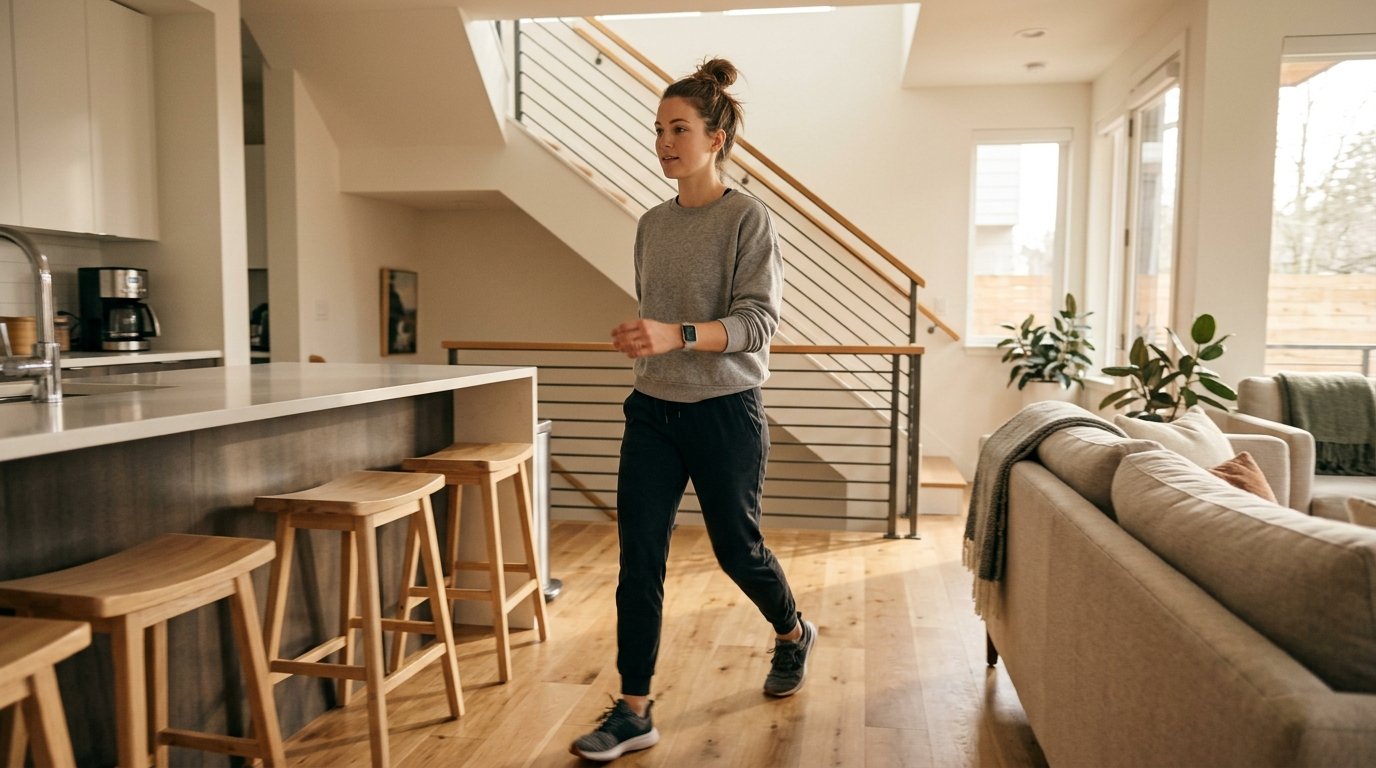
How to stay fit at home is not really an exercise problem. It is a weekly system problem: enough active minutes, two strength days, daily movement, decent sleep, repeated without drama.
Home removes the gym commute and the membership fee. It also removes the appointment, the class time and the training partner that quietly kept gym routines alive.
That trade explains most failures. The fix is not more equipment or harder workouts, but a system designed for consistency: fixed slots, a movement background, and a plan for missed days.
Quick Answer: What Staying Fit at Home Really Takes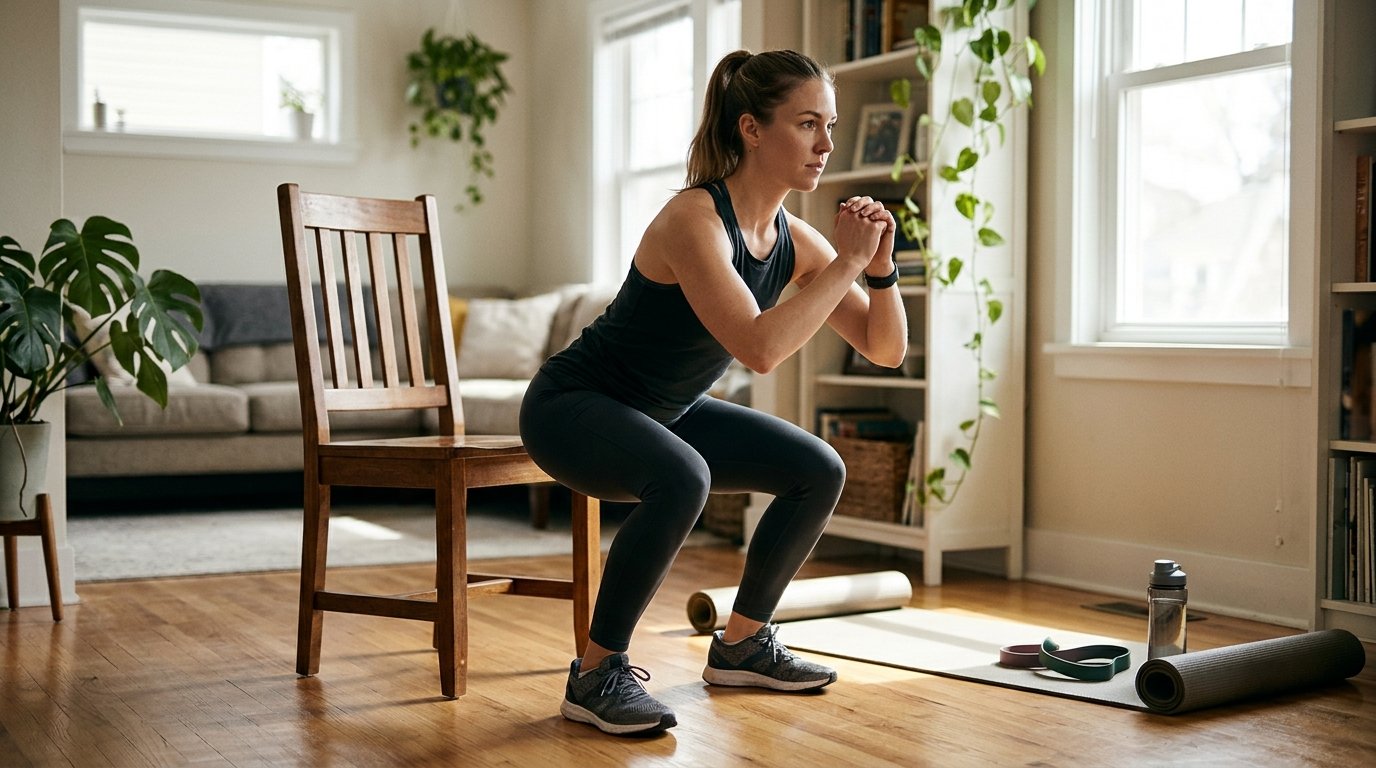
Quick answer: adults need 150 minutes of moderate activity a week, or 75 minutes vigorous, plus muscle strengthening on two days, daily steps, and at least seven hours of sleep.
Those targets come from the Physical Activity Guidelines for Americans, the federal guidance summarized in the CDC adult activity overview. They are health targets, not a transformation promise, and some activity always beats none.
|
System part |
Weekly target |
Home example |
|---|---|---|
|
Aerobic activity |
150 minutes moderate, or 75 vigorous |
Brisk walks, dance, cycling in place |
|
Strength |
2 or more days, all major muscle groups |
Bodyweight or band sessions at home |
|
Daily movement |
Move more, sit less, all week |
Steps, chores, standing and walking breaks |
|
Mobility and balance |
Short slots, extra focus after 60 |
Stretching, chair supported balance practice |
|
Recovery and fuel |
At least 7 hours of sleep, regular meals |
Fixed bedtime, protein at meals, water nearby |
Read the table as one system, not five separate projects. Each part supports the others, and the sections below build them in that order, starting with the target itself.
The Target: How Much Activity Adults Actually Need
The guideline floor is 150 to 300 minutes of moderate aerobic activity a week. The vigorous range is 75 to 150 minutes, and a mix of both counts fully.
Above the floor, more activity brings more benefit, within reason and recovery. Below it, the guidance is still encouraging: some activity is better than none, especially for inactive starters.
The same guidelines add muscle strengthening on two or more days a week. That second half is the part home routines most often skip, and this system never does.
Moderate vs Vigorous: The Talk Test at Home
Use the talk test instead of a heart rate chart. At moderate intensity you can talk in phrases but not sing; at vigorous intensity, only a few words come out.
|
Intensity |
Talk test cue |
Home examples |
|---|---|---|
|
Moderate |
Can talk, cannot sing |
Brisk walking, active chores, easy cycling |
|
Vigorous |
Only a few words at a time |
Running in place intervals, fast stair climbs, dance cardio |
|
Light |
Can talk and sing |
Slow walking, gentle stretching, tidying |
Light activity still matters as background movement, covered next under NEAT. It simply does not count toward the 150 moderate minutes, and honest counting keeps the system trustworthy.
The Two Strength Days and the Major Muscle Groups
Strength days should work all major muscle groups: legs, hips, back, abdomen, chest, shoulders and arms. The CDC example uses 8 to 12 repetitions as one set per activity.
Treat the two days as calendar appointments first and exercise menus second. Scheduling is the adherence problem; move selection is simple, and this page keeps it deliberately brief.
Our feature on how lifting weights changed fashion shows how strength work reshaped everyday style. The cultural shift is real: strong is a normal goal for home trainees, not a gym only identity.
Older Adults: Add Balance and Multicomponent Activity
Older adults follow the same aerobic and strength targets, then add multicomponent activity with balance training. Fall prevention is the practical reason, and independence is the real prize.
Children and teens sit under a different target entirely: 60 minutes of activity daily. Never blend that figure into the adult system, and never hand children an adult plan.
The Weekly Builder: Assembling 150 Minutes at Home
The arithmetic is friendlier than it looks. Five 30 minute brisk walks reach the floor alone, and shorter pieces count too, because current guidance has no minimum bout length.
The CDC adult activity overview shows example weeks built exactly this way. Copy that logic: anchor pieces first, then fill gaps with walks, chores and short sessions until the total lands.
|
Day |
Aerobic piece |
Strength or support |
|---|---|---|
|
Monday |
30 minute brisk walk |
Strength day 1, 20 minutes |
|
Tuesday |
Movement snacks and chores |
Mobility, 10 minutes |
|
Wednesday |
30 minute dance or cycle session |
Balance practice, 5 minutes |
|
Thursday |
30 minute brisk walk |
Strength day 2, 20 minutes |
|
Friday |
Movement snacks and stairs |
Mobility, 10 minutes |
|
Saturday |
45 minute longer walk or ride |
Family activity counts too |
|
Sunday |
15 minute easy walk |
Rest, plan next week |
That example week totals about 180 active minutes with two strength days. It is an illustration, not a prescription, and beginners should build toward it over several weeks.
- Book the anchors. Put two strength days and three walks in the calendar before the week starts.
- Fill with background. Add steps, chores and movement snacks around the anchors on busy days.
- Count honestly. Log moderate minutes only; keep light movement in the steps column instead.
- Review for five minutes. End the week by checking minutes, strength days and average steps.
Notice what the builder never does: it never asks for a perfect week. A week at 120 minutes with both strength days still beats a heroic week followed by quitting.
Move All Day: NEAT, Steps and Sitting Breaks
What NEAT Is and What It Is Not
NEAT means non exercise activity thermogenesis: the energy used for everything except sleeping, eating and planned exercise. Fidgeting, chores, stairs, gardening and walking to the mailbox all live here.
NEAT is the system’s background layer, and it genuinely matters for health and daily energy use. It does not replace the aerobic target or the strength days, ever.
Pages that sell chores as a complete fitness plan overstate the case. This system gives NEAT its own honest job: shrink sitting time and raise the daily step baseline.
Steps: What the Evidence Actually Supports
The famous 10,000 steps began in 1965 as a marketing name, Manpo-kei, a Japanese pedometer brand. It was a memorable slogan, not a research finding, as the Harvard T.H. Chan School summary of the step research explains.
Cohort evidence tells a kinder story. In older women, benefits appeared from about 4,400 steps a day and levelled near 7,500, in observational data that shows association, not proof of cause.
Pooled cohort work suggests benefits rise to roughly 8,000 to 10,000 steps for younger adults, and 6,000 to 8,000 after 60. Set your goal from your baseline, not a slogan.
A practical rule: measure your current average for one week, then add about 500 to 1,000 steps a day. Small increments stick; heroic jumps fade by the second weekend.
The Home NEAT Menu: Rooms, Chores and Routines
|
Moment |
Movement snack |
Why it helps |
|---|---|---|
|
Work call |
Walk the room or pace slowly |
Turns sitting time into steps |
|
Kettle boils |
Counter push ups or calf raises |
Adds strength touches without a session |
|
TV break |
March in place for two minutes |
Breaks long sitting spells |
|
After meals |
Ten minute easy walk |
Supports digestion and step totals |
|
Cleaning hour |
Brisk vacuuming, mopping, yard work |
Moderate effort when done briskly |
Add a sitting break rule to the menu: stand and move for a few minutes each hour you sit. Timers help until the habit runs on its own cues.
Our guide to the best healthy habits for women builds the wider routine around movement like this. Fitness sticks when it rides on habits you already keep, not beside them.
Strength at Home Without a Tutorial Library
The Minimum Strength Week
A minimum strength session covers five patterns: a squat or sit to stand, a push, a hinge, a pull or row, and a core brace like a plank or dead bug.
Twenty focused minutes, twice a week, meets the guideline shape for most beginners. Work at a level where the last two repetitions feel challenging but form stays clean.
No equipment is required to start. Bodyweight, a sturdy chair, a wall and stairs cover the patterns, and a pair of resistance bands is the first upgrade worth buying.
Progressing Bodyweight Moves Safely
Progress by lever and range first: wall push ups become counter, then floor versions. Add repetitions before adding load, and change one variable at a time each week.
That slow ladder is progressive overload in home form. It protects joints, keeps soreness manageable, and gives the weekly review something real to record and celebrate.
Mobility and Balance: The Maintenance Layer
Mobility work keeps joints moving through comfortable ranges so strength and walking stay easy. Ten minutes attached to a warm up or cool down is enough for most people.
Balance practice deserves a daily micro slot, especially after 60. Stand near a counter, practise heel to toe stands and sit to stands, and keep support within reach always.
Stop any balance drill that causes pain, dizziness or fear of falling. Those signals move the conversation to a clinician or physical therapist, not to a harder drill.
Sleep, Food and Recovery: The Support Layer
Sleep: The CDC Floor and a Simple Routine
The CDC sleep guidance sets the adult floor at at least 7 hours a night. The wider 7 to 9 hour range is a sleep medicine consensus figure, labelled as consensus here.
Sleep belongs inside the fitness system because poor sleep kills next day energy to train. It is an adherence variable first, and a general health topic second.
Keep the routine boring: same wake time, a cool dark room, screens off before bed, and caffeine kept to the earlier hours of the day.
Our piece on how skin, hair and sleep can change after quitting alcohol shows how visibly sleep changes show up in skin, hair and energy. Treat that as motivation, never as a medical claim.
Eating to Support an Active Week
Food supports the system as a pattern, not a prescription: regular meals, a protein containing food at each meal, vegetables and whole grains often, and water within reach during sessions.
No calorie target and no gram promise appears here, because needs vary by body, health and medication. Readers who need personal numbers belong with a registered dietitian or clinician.
The kitchen environment matters as much as willpower. Keep fruit visible, workout water ready, and meal defaults easy, a theme our healthy lifestyle tips guide develops in full.
Consistency Design: Why Home Fitness Fails and How to Fix It
Home routines rarely fail on exercise selection. They fail on friction: no fixed time, kit buried in a cupboard, and a daily negotiation that decision fatigue usually wins.
The American Heart Association guide to staying fit from home names consistency first among its home fitness keys, ahead of any equipment. Expert framing agrees with the system view: the repeat is the workout.
Schedule It Like an Appointment
Give sessions a time, a place and a duration in the calendar, like a meeting you would not casually skip. Vague intentions to exercise later almost never survive a busy day.
Defend the slot socially too. Tell the household when the living room is booked, and keep a shorter backup version ready for days that collapse around you.
Environment Design and Habit Stacking
Habit stacking attaches movement to an existing cue: squats while the kettle boils, a walk after lunch, balance practice while brushing teeth beside the counter each morning.
Design the room as a reminder. Keep the mat and bands visible, shoes by the door, and the tracker charging where you will see it every single morning.
Small visible systems compound quietly. Our roundup of daily lifestyle habits for confidence shows how modest daily habits change how capable people feel within a few steady weeks.
The Minimum Viable Workout and the Two Day Rule
Define a minimum viable workout before you need it: ten minutes, three moves, done at home in normal clothes. On bad days, the minimum keeps the chain unbroken.
Then adopt the two day rule: never let two planned days pass completely inactive. One missed day is life; the second is where routines quietly go to die.
Track Three Numbers, Review for Five Minutes
- Weekly active minutes against the 150 minute floor.
- Strength days done, aiming for two every week.
- Average daily steps, compared with your own baseline only.
Review those three numbers for five minutes weekly, ideally while planning the next week’s anchors. Anything more elaborate becomes another chore, and chores are what this system removes.
Start Safely: Screening, Warm Up and Warning Signs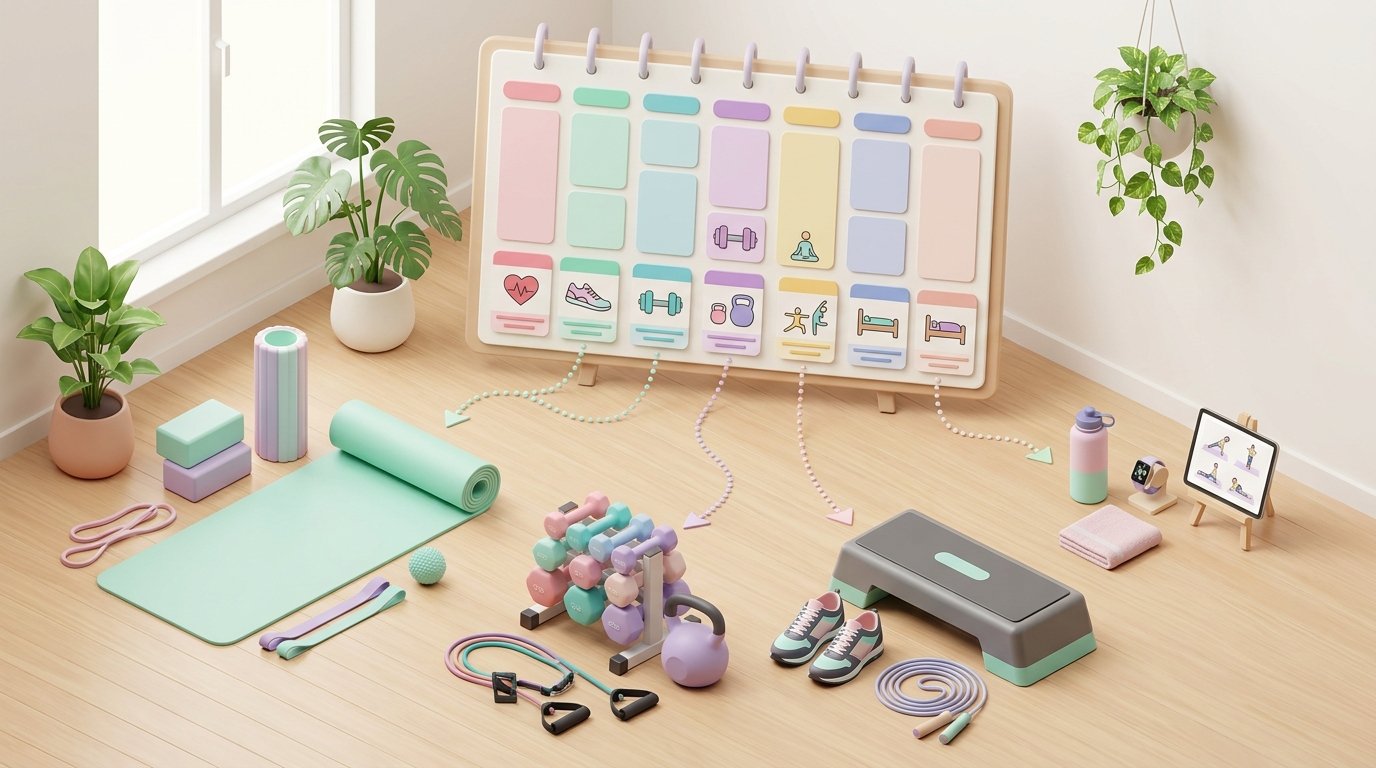
Start gradually after any long inactive stretch. The first two weeks should feel almost too easy, because confidence and tissue tolerance both need a gentle on ramp.
Warm up for three to five minutes with easy marching, arm circles and gentle joint movement. Cool down the same way, and let breathing settle before you sit.
- Talk to a clinician first if you have a chronic condition, a disability, or are pregnant.
- Stop and seek advice for chest pain, severe breathlessness, dizziness or sharp joint pain.
- Build in rest days from the start; recovery is scheduled, not earned.
That caution is general information, not personal medical advice. Your own clinician knows your history, medications and limits, and their guidance always outranks a general article.
Staying Fit at Home by Situation
Working From Home at a Desk All Day
Desk workers carry the system’s biggest risk: eight or more sitting hours wrapped around a short workout. Fix the background first with hourly breaks, walking calls and a lunchtime walk.
A walking pad can help some home offices, but it is an optional tool, not the system itself. The free version is a timer, a hallway and a standing break habit.
Small Apartment, Low Noise
Small spaces rule out jumping, not fitness. Choose marching in place, step touches, chair strength work and slow controlled moves that keep neighbours and sleeping children undisturbed.
Store the kit in one visible corner: a mat, bands and one pair of dumbbells. A corner you see daily beats a garage gym you visit monthly.
Busy Parents and Caregivers
Parents should plan for interrupted sessions from the start. Ten minute blocks count, active play with children counts, and a pram walk is a legitimate aerobic anchor.
Protect one non negotiable slot a week, even a short one. Our lifestyle tips for women page covers the wider scheduling reality for women balancing home, work and family demands.
Restarting After a Long Break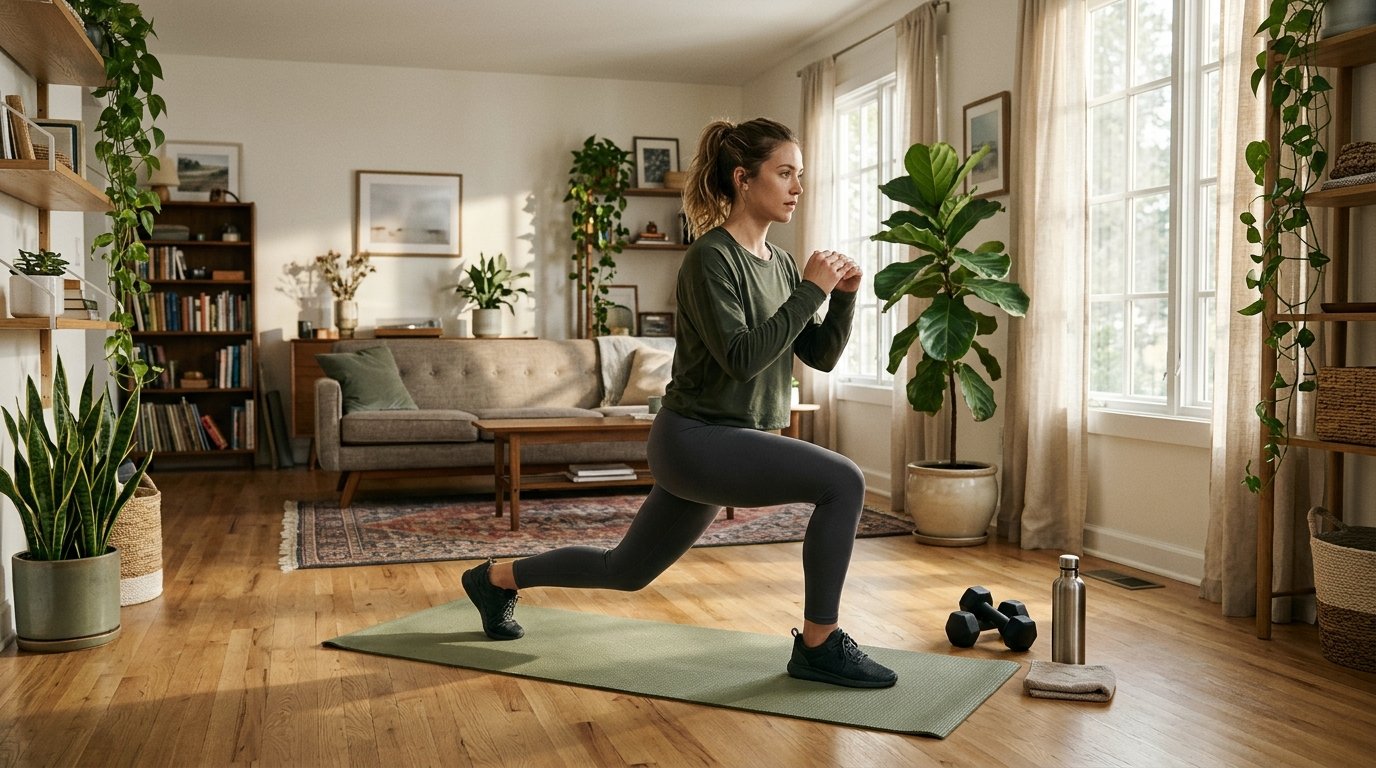
Restart at half your old level and rebuild over four to six weeks. Former fitness is a memory, not a current capacity, and respecting that gap prevents the classic week one injury.
Judge the restart by attendance, not intensity. Four easy weeks in a row will do more for your year than one ambitious week followed by another long stop.
Buying Equipment in the Right Order
Buy for the system part that is failing, in this order: free bodyweight first, then bands, then one load you will actually store and use near your workout corner.
|
Step |
Buy |
Who should skip it |
|---|---|---|
|
1 |
Nothing: bodyweight, chair, stairs, floor |
Nobody; this is the default start |
|
2 |
Resistance bands or mini bands set |
Anyone whose bodyweight work still challenges them |
|
3 |
Adjustable dumbbells or one kettlebell |
Small homes without storage near the workout spot |
|
4 |
Fitness tracker or smartwatch |
Anyone who already tracks minutes and steps happily by phone |
|
5 |
Walking pad or stationary bike |
Anyone whose walking route already works well |
Each row should pass the receipt test: name the system part, the session it serves, and the review date. If you cannot, the purchase is hope, not equipment.
Home Fitness vs the Gym: An Honest Comparison
|
Factor |
At home |
At a gym |
|---|---|---|
|
Friction |
Lowest: no travel, no queue |
Higher: travel, crowds, opening hours |
|
Cost shape |
Free to modest kit costs |
Ongoing membership fees |
|
Accountability |
Self designed; the weak point |
Classes, partners and staff help |
|
Equipment range |
Limited but sufficient for guidelines |
Widest range and heavy loads |
|
Best for |
Consistency, busy schedules, privacy |
Heavy lifting goals, social training |
Neither setting wins outright. Home wins on friction and cost, gyms win on load range and built in accountability, and many people keep fitness longest by mixing both.
Mistakes That Quietly Break the System
- Starting at full intensity after months away, then quitting sore.
- Counting light chores toward the 150 moderate minutes.
- Skipping the strength days because cardio feels more productive.
- Chasing 10,000 steps from a 3,000 step baseline in week one.
- Buying equipment to replace a scheduling problem.
- Changing the whole plan weekly, so nothing ever compounds.
Every mistake attacks consistency or honest counting, never exercise choice. Fix the calendar and the counting first, and most home systems repair themselves within a month.
Key Takeaways
- Fitness is a weekly system, not a single workout: minutes, strength, movement, recovery.
- The adult target is 150 moderate minutes plus two strength days, per federal guidance.
- NEAT and steps shrink sitting and raise the baseline, but never replace planned activity.
- 10,000 steps is a marketing figure; evidence supports lower, age aware goals.
- Consistency design – appointments, stacking, minimum sessions – is the real home advantage.
Frequently Asked Questions
How can I stay fit at home without a gym?
Build the weekly system: 150 minutes of moderate activity, two strength days, daily steps and movement breaks, plus at least 7 hours of sleep. Walking, stairs, dance, bodyweight training and household activity can fill every part at home. A gym adds equipment and accountability, but the guideline targets themselves need neither.
How much exercise do adults need each week?
Federal guidance for adults is 150 to 300 minutes of moderate intensity aerobic activity a week, or 75 to 150 minutes vigorous, or an equivalent mix. Adults also need muscle strengthening activities on 2 or more days a week, working all major muscle groups. Some activity is better than none.
Can I get fit with home workouts only?
Yes, for general fitness as the guidelines define it. Home training can deliver the full aerobic target, progressive strength work with bodyweight, bands or dumbbells, and balance and mobility practice. What home training cannot easily match is very heavy loading or supervised rehabilitation, which are specific goals rather than general fitness.
How often should I work out at home?
Spread activity across the week rather than compressing it. A workable pattern is planned movement on most days: three to five aerobic sessions, two of them paired with strength work, plus daily background movement. Rest days still include light activity like walking, because the target is a weekly system, not daily workouts.
What is the minimum workout that still counts?
Any moderate or vigorous movement counts toward the weekly minutes, because current guidance sets no minimum bout length. For a planned session, a practical minimum is about 10 minutes: enough to raise breathing, work major muscles or practise balance with intent. Minimum sessions keep the habit alive on hard days.
Do short workouts and movement snacks really add up?
Yes. Short bouts of activity accumulate toward the weekly total, and brief movement breaks also interrupt long sitting spells, which the guidelines treat as a separate concern. A two minute march, a stair climb or a short walk each hour builds real volume across a working day at home.
How many steps a day do I actually need?
There is no official step target in the federal guidelines, which are written in minutes. Cohort research associates lower mortality with totals well below 10,000 steps, rising from around 4,400 a day in older women. A sensible approach is to measure your baseline, then add 500 to 1,000 steps a day.
Is 10,000 steps a day a real health target?
No. The figure began in 1965 as the marketing name of a Japanese pedometer, Manpo-kei, meaning 10,000 steps meter. Later cohort studies found benefits levelling near 7,500 steps in older women and around 6,000 to 10,000 depending on age in pooled data. Those findings are observational associations, not a prescription.
What counts as moderate intensity exercise at home?
Moderate intensity means you can talk in phrases but not sing while doing it. At home that includes brisk walking, marching in place with effort, active housework done briskly, easy cycling and most dance sessions. If you can sing comfortably, it is light activity, which still helps your step count.
How do I use the talk test at home?
While exercising, try to speak a full sentence. If you can talk but not sing, the effort is moderate. If only a few words come out before you need a breath, it is vigorous. If you can sing, it is light. Recheck every few minutes, because home sessions drift easily.
What strength exercises can I do with no equipment?
Cover five patterns: sit to stands or squats for legs, wall or floor push ups for chest and arms, a hip hinge or glute bridge for the back of the body, a towel or band row for the back, and a plank or dead bug for the core. Two short sessions weekly meet the guideline shape.
How do I build a weekly home fitness schedule?
Start with anchors: book two strength days and three aerobic sessions in the calendar. Add background movement rules, like a walk after lunch and hourly breaks. Total the planned moderate minutes and adjust until they approach 150. Finish with a five minute weekly review of minutes, strength days and steps.
Can household chores count as exercise?
Some can. Brisk vacuuming, mopping, raking, shovelling and carrying shopping raise breathing enough to count as moderate activity for many people, and all chores add NEAT and steps. Gentle tidying and slow dusting are light activity. Count honestly: if you could sing through it, log it as background movement.
How do I stay consistent with home workouts?
Design for consistency rather than relying on motivation. Fix session times like appointments, keep equipment visible, stack movement onto existing habits, define a 10 minute minimum session for bad days, and never miss two planned days in a row. Track three numbers weekly and review them for five minutes.
What should I do on rest days at home?
Rest days are for recovery, not for sitting all day. Walk, stretch gently, do light chores and keep your step baseline ticking over. Avoid hard strength work on the same muscles and avoid intense sessions that leave you drained. Good rest days make the next training day easier, not harder.
Do I need equipment to stay fit at home?
No. Bodyweight training, walking, stairs, chairs and floor space cover the whole guideline system. Equipment becomes useful later: resistance bands add pulling movements, one pair of dumbbells adds load, and a tracker can support self monitoring. Buy in that order, and only when a specific system part needs it.
What is the best first equipment to buy for home workouts?
For most people, a set of resistance bands, because they add rows and pulls that bodyweight cannot easily provide, store in a drawer and cost little. A yoga or exercise mat comes first instead if your floors are hard or slippery. Skip large machines until the weekly habit is proven.
How do I exercise in a small apartment quietly?
Choose low impact, low noise moves: marching in place, step touches, slow squats, wall push ups, chair stands and controlled core work. Avoid jumping and dropped weights. Train on a mat, keep one clear corner as your workout spot, and schedule louder sessions, if any, for reasonable hours.
How can desk workers stay fit while working from home?
Attack the sitting first: stand or walk for a few minutes every hour, take calls walking, and add a lunchtime walk. Then anchor two strength days and three aerobic sessions outside work hours. A walking pad helps some people, but timers, hallways and stairs deliver the same breaks for free.
What balance exercises help older adults at home?
Start supported: heel to toe stands beside a counter, sit to stands from a sturdy chair, gentle weight shifts and short tandem walks along a hallway. Keep support within reach, wear firm shoes and stop if you feel dizzy or unsafe. Older adults with fall history should ask a clinician first.
How does sleep affect fitness and recovery?
Sleep is when much of the body’s repair and adaptation happens, and poor sleep reliably reduces next day energy and willingness to train. The CDC floor for adults is at least 7 hours a night. Treat bedtime as part of the training plan, not a separate lifestyle topic.
What should I eat to support staying fit at home?
Support the system with a pattern: regular meals, a protein containing food at each meal, vegetables, fruit and whole grains most days, and water available during sessions. This article gives no calorie target or gram promise, because individual needs vary. Personal nutrition targets belong with a clinician or registered dietitian.
How much protein do active adults need?
General guidance for active adults is often expressed as a range per kilogram of body weight, and it varies by source, age and training load. Rather than printing one number, this page advises protein containing foods at each meal and a clinician or dietitian conversation for anyone who wants a personal target.
Can I stay fit at home after 50 or 60?
Yes. The same aerobic and strength targets apply, with extra value on balance and multicomponent activity after 60, when fall prevention and independence matter most. Start gradually, progress more slowly, keep support nearby for balance work, and involve a clinician where conditions, joint replacements or long inactivity are part of the picture.
How do I start again after months of inactivity?
Restart at about half your former level and rebuild across four to six weeks. Begin with walking and one short strength session, add minutes before intensity, and judge success by attendance rather than performance. If inactivity followed illness, surgery or a new diagnosis, check with a clinician before restarting.
When should I talk to a doctor before exercising at home?
Talk to a clinician first if you have a chronic condition, a disability, are pregnant, have been inactive for a long period, or get symptoms like chest pain, severe breathlessness or dizziness with exertion. That is general information, not personal advice, and your clinician’s guidance always outranks a general article.
Does stretching count toward my weekly exercise minutes?
Gentle stretching is light activity, so it does not count toward the 150 moderate minutes. It still earns its place in the system for mobility, comfort and warm up and cool down routines. Vigorous yoga flows that pass the talk test can count as aerobic minutes, judged by effort, not by name.
Can yoga or Pilates meet the strength guideline?
They can contribute. Yoga and Pilates sessions that load all major muscle groups to a challenging level can count toward strengthening, and they also train balance and mobility. Gentle flexibility classes usually do not load muscles enough. Judge by effort and coverage: all major groups, worked hard enough to feel challenged.
How long before home fitness shows results?
Energy, sleep and mood often feel different within a few weeks of consistent activity. Strength and endurance changes build across two to three months of regular sessions, and guideline level fitness is a longer project. Judge progress by your three tracked numbers and how daily tasks feel, not by appearance promises.
Why do I keep quitting home workout programs?
Usually the design, not the person. Programs fail at home when sessions have no fixed time, equipment is stored away, the plan demands daily perfection, or the first week is far too hard. Rebuild with appointments, visible kit, a 10 minute minimum session and the two day rule, and most people stop quitting.
What is NEAT and why does it matter at home?
NEAT is non exercise activity thermogenesis: energy used for everything except sleeping, eating and planned exercise. Chores, stairs, fidgeting, gardening and short walks all count. At home it matters because it decides whether your day outside workouts is active or sedentary, but it supports the weekly targets rather than replacing them.
How do I progress bodyweight exercises when they get easy?
Change one variable at a time: move from wall to counter to floor push ups, slow the lowering phase, increase range, add repetitions, then add load with a band or dumbbell. Progress when the harder version stays clean for two sessions. That gradual ladder is progressive overload in home form.
Are fitness apps and free videos enough structure?
They can be, if they sit inside a weekly system. An app supplies sessions, but you still need fixed times, the two strength days, background movement and a weekly review. Without that frame, most people collect saved videos instead of training. Choose one source and follow it for a month before judging.
How do I avoid injury when exercising at home?
Warm up, progress gradually, keep form clean and stop sets when technique breaks down. Clear the floor, use sturdy furniture only, wear suitable footwear or go barefoot on a mat, and respect pain signals. Most home injuries come from doing too much, too soon, on a cluttered floor, with tired form.
Should I exercise when I am sore or tired?
Mild muscle soreness after a new session is common and usually settles within a few days; light walking and gentle movement are fine. Sharp pain, joint pain, illness with fever or exhaustion are stop signals. When in doubt, take the minimum session or a rest day and review the week honestly.
What is a good morning movement routine at home?
Keep it short and repeatable: two minutes of easy marching, gentle joint circles, five sit to stands, a short balance hold beside the counter and a minute of relaxed breathing. Five to ten minutes total. Its job is to start the day moving and anchor the habit, not to replace planned sessions.
How can families stay active together at home?
Build activity into family time: walks after meals, dance sessions in the living room, active chores with music, stair games for older children and weekend outings on foot. Children aged 6 to 17 need 60 minutes of activity daily, a separate target from the adult system, and active play is how most reach it.
Does standing all day count as exercise?
Standing is better than sitting and adds a little NEAT, but it is light activity and does not count toward the 150 moderate minutes. It also is not strengthening or balance training. Use standing as one background tool among several, and add walking breaks, because movement, not posture alone, drives the benefit.
How do I know if my home routine is balanced across the week?
Check five boxes weekly: moderate minutes near 150, two strength days covering all major muscle groups, daily steps near your personal goal, at least one mobility or balance slot, and sleep averaging at least 7 hours. If one box fails repeatedly, that part, not your effort, is what to redesign.
What is the two day rule for missed workouts?
Never let two planned activity days pass completely inactive. One missed day is normal life; on the second day, do at least the 10 minute minimum session or a solid walk. The rule protects the habit chain without demanding perfection, and it is the simplest consistency tool in this whole system.
Can walking in place really count as exercise?
Yes, when the effort passes the talk test. Marching in place briskly, adding arm swings or knee lifts, can reach moderate intensity, especially for beginners and apartment dwellers. Slow stepping while watching television is light activity and counts as background movement instead. Judge by breathing and effort, not by location.
How do I fit fitness around caregiving and family life?
Plan for interruption: keep sessions modular in 10 minute blocks, count active play and pram walks honestly, and protect one short non negotiable slot each week. Stack movement onto care routines, like walks after school drop off. Progress will be uneven, and the weekly review should judge the system kindly but honestly.
Conclusion
How to stay fit at home comes down to a weekly system that repeats: 150 active minutes, two strength days, daily movement, and sleep that lets you do it again next week.
Start this week with one anchor: book your two strength days, add a daily walk, and explore more everyday routine ideas in the Lifestyle collection on FashionGleem. Review your three numbers after seven days, then build the next week on what actually happened.

Dilawar is a contributing writer at Fashiongleem.com, focusing on beauty, hairstyles, skincare, fashion accessories, and personal grooming. He creates informative, easy-to-follow articles that help readers explore new looks, understand popular beauty trends, and improve their everyday styling routines. His writing emphasizes practical advice, useful product information, and accessible fashion inspiration for modern readers.