
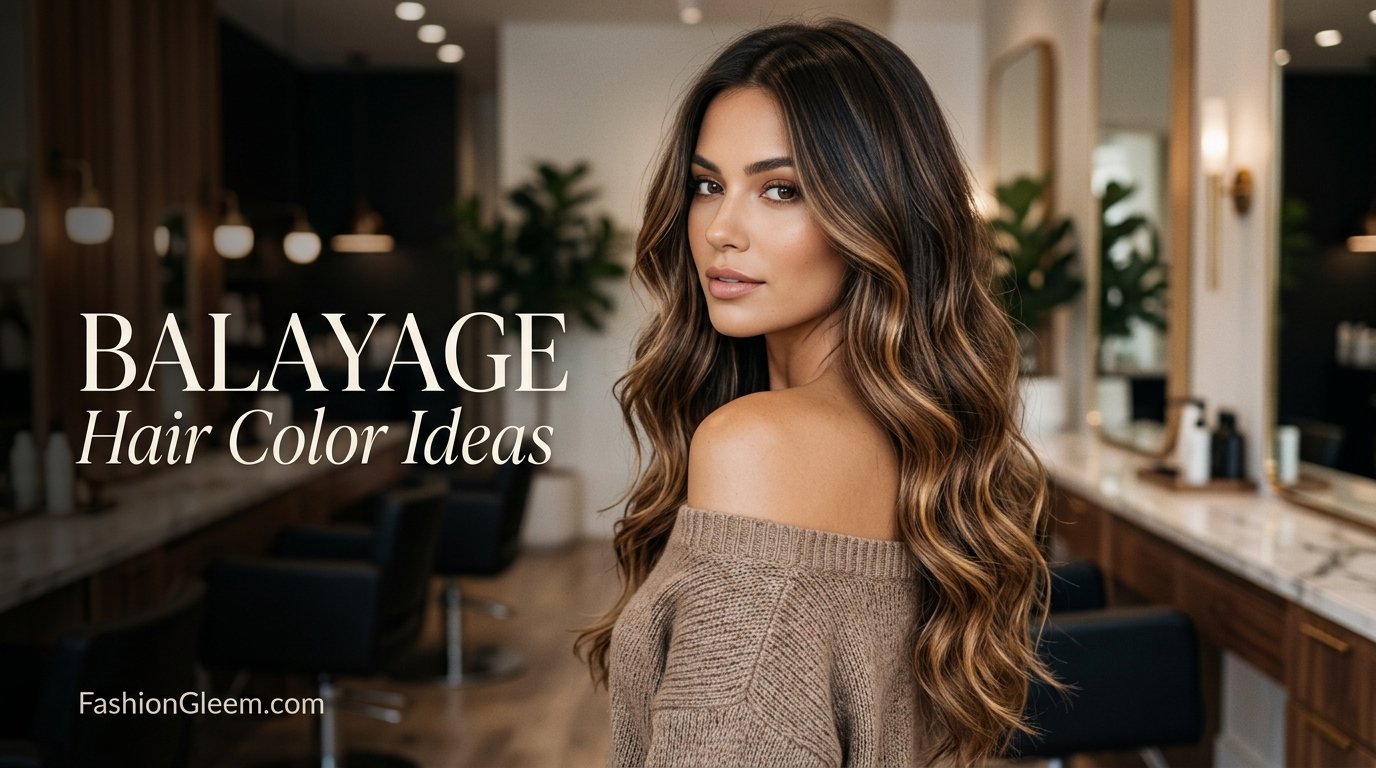
Balayage Hair Color Ideas Sorted by Your Base, Your Lift and Your Upkeep
Balayage hair color ideas work best when you choose them like a colorist, not like a photo album. Your starting base, your realistic lift and your upkeep budget decide the result.
Most galleries sort photos by how pretty they look. This page sorts ideas by base color, lift level and shade family, so the photo you save is one your hair can actually reach.
Balayage itself is a placement, not a color. The same painted technique can deliver caramel ribbons, icy blonde ends, copper dimension or soft grey blending, depending on where the lightener lands.
What Balayage Actually Is: A Technique, Not a Color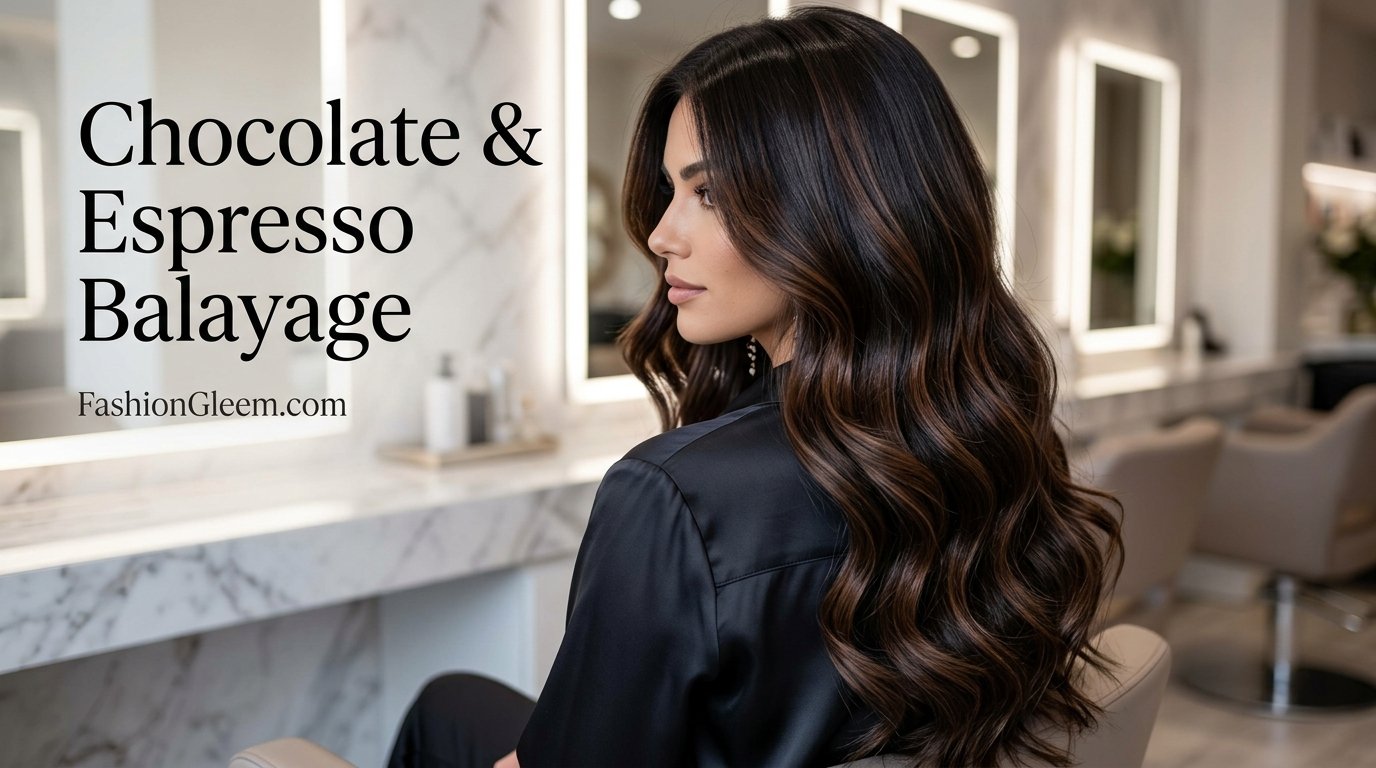
Balayage is a freehand painting technique where a colorist sweeps lightener onto the surface of the hair. The word comes from French, meaning to sweep or to paint.
The professional definition from Matrix, explained by colorist George Papanikolas, describes hand-painted sections that mimic how the sun lightens hair naturally. Color concentrates through mid-lengths and ends.
Because the lightener sits off the scalp and skips the root zone, grow-out stays soft. There is no hard line of regrowth, which is the whole reason the technique became famous.
Balayage Is a Technique, Ombre Is a Look
This distinction confuses almost everyone. Balayage names how color is applied, while ombre names the finished effect, a darker root fading into lighter ends.
You can create an ombre effect using balayage painting. You can also create a soft, blended finish with balayage that looks nothing like classic ombre at all.
Highlights are different again: they are strands lightened inside foils, usually from root to tip. Foils trap heat, lift higher and brighter, and grow out with a visible line.
Why Placement Beats Shade Names
Two clients can ask for honey balayage and leave with completely different hair. The shade name stays the same, but the placement, saturation and lift change everything.
That is why this guide asks three questions before naming any shade. What is your natural level, how many levels can you lift safely, and how much contrast do you actually want?
Answer those, and the shade family almost chooses itself. Skip them, and you are gambling on a photo taken on someone else’s base, texture and color history.
The Lift Ladder: What Your Base Can Do in One Session
Lightener removes pigment in a fixed order. Dark hair passes through red, then orange, then gold before it ever reaches pale yellow, the stage where clean blonde tones live.
This ladder is not a flaw in your hair. It is underlying pigment revealing itself as the darker pigment lifts away, and every colorist plans around it.
The salon strand citing the American Academy of Dermatology notes that lightening more than three shades needs higher peroxide and causes more damage. That is why reputable colorists stage dark-to-blonde journeys.
One Session vs Two Sessions, by Starting Base
|
Starting Base |
Realistic One-Session Result |
Needs a Second Session |
|---|---|---|
|
Black, levels 1 to 2 |
Warm caramel, bronze, espresso dimension |
Ash blonde, platinum, icy tones |
|
Dark brown, levels 3 to 4 |
Honey, caramel, chestnut, soft copper |
Clean beige blonde, high-contrast blonde |
|
Medium brown, level 5 |
Beige blonde, golden blonde, bronde |
Platinum and icy silver finishes |
|
Light brown, level 6 |
Blonde balayage in most families |
Only extreme platinum needs staging |
|
Natural blonde, levels 7 to 8 |
Platinum, champagne, icy ends |
Rarely, mainly for fashion pastels |
|
Red bases |
Brighter copper, strawberry dimension |
Cool tones fight the warm base |
Read the table honestly before your consultation. A warm result in one session usually beats a damaged, patchy attempt at a cool result that needed two.
Previously dyed hair changes the ladder completely. Box dye and old color do not lift like virgin hair, and dark dyed hair heading toward blonde is a color correction, not a standard appointment.
Shade Ideas for Brunettes: The Widest Playground
Brunette bases have the most range of any starting color. You can lift one or two levels for richness, or build real brightness while keeping a deep, grounded root.
Caramel, Honey and Toffee Ribbons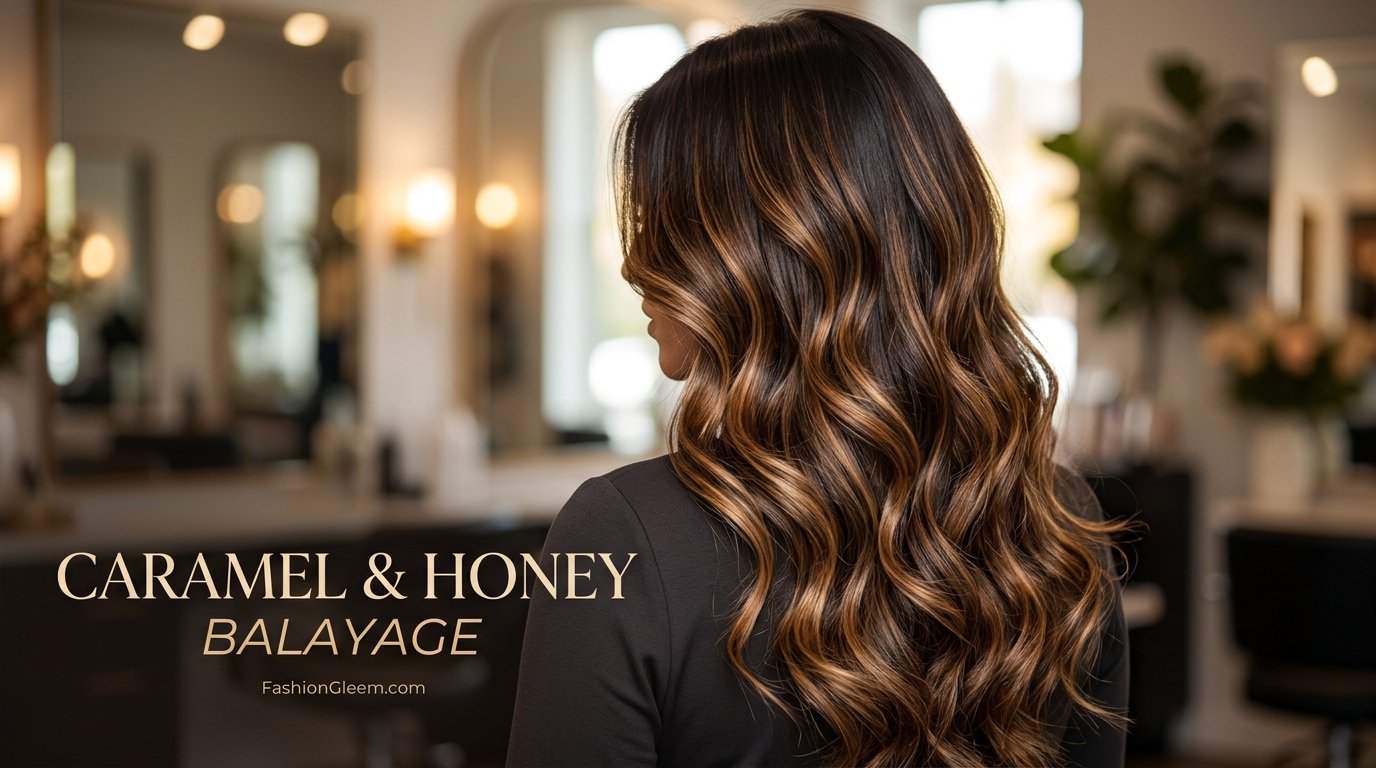
Caramel balayage paints warm golden-brown ribbons through a dark base. It brightens the face, reads expensive rather than obvious, and grows out with almost no visible line.
Honey balayage sits one step lighter and brighter. It flatters warm skin tones beautifully, and medium brown bases usually reach it comfortably in a single session.
Keep the pieces one to two levels above your base for the softest effect. Push further and the look shifts from dimensional brunette toward an overall blonde identity.
Chocolate, Espresso and Chestnut Depth
Not every brunette wants to go lighter overall. Chocolate and espresso pieces woven through a dark base add shine, movement and depth without any blonde commitment.
Chestnut and cinnamon bring a red-brown warmth that glows in sunlight. These families suit brunettes who find blonde tones wash them out but still want visible dimension.
For readers who want one brunette shade family explored in real depth, the dedicated mocha balayage guide covers levels, formulas and upkeep for that single family.
Mushroom and Ash: The Cool Brunette Route
Mushroom balayage blends smoky, grey-brown tones for people who dislike warmth. It looks modern and muted, but cool tones fade fastest and need disciplined toning at home.
Ash results on dark bases are the hardest ask in this whole guide. Lifting past the orange stage cleanly takes time, toner and often a second session.
Shade Ideas for Blondes: Dimension Without Flatness
Blondes use balayage to fix a different problem: flat, one-note color. Painted pieces add depth at the root and brightness at the ends, so blonde looks expensive again.
Beige, Champagne and Butter Blonde
Beige blonde balayage is the neutral middle ground, neither golden nor icy. It suits many skin tones and fades gracefully because it never fights the hair’s natural warmth hard.
Champagne and vanilla finishes lean cooler and brighter through the ends. They need a purple shampoo routine to stop yellow tones creeping back between appointments.
Butter and golden blonde lean warm and sunny. They are forgiving to maintain, because the fade direction matches the tone instead of fighting it.
Rooted Blonde and Bronde
Rooted blonde keeps a deliberately darker root, painted or smudged, so regrowth blends for months. It is the smartest route for natural brunettes who love being blonde but hate appointments.
Bronde splits the difference between brown and blonde entirely. If you keep changing your mind about going lighter or darker, bronde is usually the honest answer.
Pair these shades with a cut that shows dimension. The soft movement of a wolf cut or long layers keeps painted pieces visible instead of hidden.
Balayage on Black Hair: Rich Tones First
Black hair carries beautiful balayage, but it demands patience and honesty. The lift ladder is longest here, and promising icy blonde in one sitting is how hair gets ruined.
What Works in One Session
Aim for espresso, mocha, cinnamon and deep caramel on a first appointment. These rich tones look intentional, keep the hair healthy and photograph beautifully against a dark base.
Copper and bronze pieces are the bold option that still respects the ladder. They work with the warm stages your hair passes through instead of fighting them.
A face-framing money piece in a warm tone gives the brightness payoff near your face. The rest of the head can stay subtle while the front reads transformed.
The Gradual Blonde Plan
If blonde is the real goal, plan it as a journey across sessions. Session one builds warm dimension, session two lifts further, and the hair gets bond care between visits.
This staged approach is exactly what the AAD lightening strand points toward: bigger jumps need stronger peroxide, so spacing them protects the hair’s structure.
Dark hair also shows dryness faster after lightening. Budget for masks and trims as part of the plan, not as an optional extra you skip.
Balayage for Red Hair and Copper Families
Red bases are already warm, so balayage should amplify rather than fight them. Painted pieces in copper, strawberry and gold make red hair look lit from inside.
Copper, Auburn and Strawberry Dimension
Copper balayage layers bright copper over auburn and red-brown bases. The result is fiery in sunlight and rich indoors, with grow-out that stays soft for months.
Strawberry tones soften the effect for lighter red and dark blonde bases. They fade toward a pretty peach, which makes the in-between weeks easier to live with.
If copper shades are your direction, the soft copper blonde guide covers that warm blonde-copper border in detail, including who it flatters most.
Ruby and Red Velvet for Deeper Bases
Ruby and red velvet pieces over dark brown or black bases give drama without full lightening. Because the lift needed is modest, these shades are kind to hair condition.
Red pigment fades faster than any other family, so plan on gloss refreshes. A color-depositing mask at home stretches the salon tone noticeably between visits.
Grey Blending and Fashion Shades
Balayage has two quieter superpowers: blending early grey and carrying fashion color softly. Both work because painted placement disguises regrowth better than solid color ever could.
Grey Blending: Blend, Not Cover
Painted highlights around grey growth blur the contrast between silver strands and your natural base. The line of regrowth softens, and appointments stretch out comfortably.
Be honest about the limit: balayage blends grey, it does not fully cover resistant grey. Full coverage still needs a root color, sometimes combined with painted pieces.
The base-by-base guide at Stilavie is useful here, because it treats grey and greying hair as its own starting point rather than an afterthought.
Silver, Rose and Watercolor Finishes
Silver and grey balayage turns natural greying into the design itself. It needs a light enough base, so dark hair reaches it only through staged lifting.
Rose gold and rose pieces sit beautifully over blonde and light brown bases. They fade within weeks, which fans treat as part of the fun rather than a flaw.
Watercolor pastels in muted pink, violet or blue need near-platinum canvas hair. Choose them knowing the upkeep is closer to a hobby than a routine.
Seasonal Balayage Ideas: Small Shifts, Big Effect
Balayage rarely needs a full reinvention each season. Because the placement stays, most people simply shift the toner direction as the light and their wardrobe change.
Spring and Summer: Brighter and Warmer
Spring refreshes usually add a few extra face-framing pieces and a warmer gloss. Summer leans sun-kissed: golden, honey and sandy tones that look believable against tanned skin and bright light.
This is also the season to protect your investment hardest. Sun, salt water and chlorine all fade toner quickly, so hats and rinse-before-swimming habits genuinely extend your color.
Fall and Winter: Deeper and Cooler
Fall shifts toward caramel, chestnut and espresso richness, often with a slightly deeper gloss over the same summer placement. The hair reads warmer and more polished in softer light.
Winter suits cool mushroom, icy ends and silver blending for those who wear them. A root smudge this season also stretches appointments across the busy holiday months comfortably.
The Placement Decision: Partial, Full, Face Frame, Reverse
Shade family gets the attention, but placement decides the price, the appointment length and how the color grows out. This is the decision to make before you sit down.
Partial vs Full Balayage
|
Factor |
Partial Balayage |
Full Balayage |
|---|---|---|
|
Coverage |
Top, sides and face frame |
Whole head, including underneath |
|
Best for |
First-timers, subtle brightness |
Major change, thick hair, full brightness |
|
Chair time |
Shorter end of session strands |
Longer end of session strands |
|
Grow-out |
Very soft, root area untouched |
Soft, but more overall lightness |
|
Underneath color |
Stays natural |
Lightened, visible in updos |
|
Budget fit |
Lower service cost |
Higher service cost |
Choose partial if you wear your hair down, want a cautious first step or mainly need brightness around the face. It is the most forgiving entry point.
Choose full if your hair is thick, you wear it up often, or the underneath layers looking dark would bother you. Ponytails expose exactly what partial leaves natural.
Face-Framing Pieces and the Money Piece
Face-framing balayage concentrates brightness on the front sections. A stronger money piece goes bolder still, with thick light ribbons that transform selfies and video calls instantly.
The money piece grows out more visibly than the rest of the head. Budget a small front-section refresh between full appointments if you choose the bold version.
Reverse Balayage: Adding Depth Back
Reverse balayage paints darker lowlights into hair that has gone too light or too flat. It restores contrast, depth and the illusion of thicker, healthier hair.
It is the fix for over-highlighted blondes and for summer hair that needs grounding for winter. Grow-out is gentle because the added depth sits away from the root line.
Technique Variants: Foilayage, Babylights, Teasylights
Sometimes classic open-air painting is not the right tool. These variants exist to solve specific lift and texture problems, not because they are trendier names for the same thing.
Foilayage: When Open Air Cannot Lift Enough
Foilayage paints freehand like balayage, then wraps sections in foil. The trapped heat lifts dark hair brighter and cooler than open-air painting usually manages.
Ask for it when your base is dark and your goal is genuinely blonde. It costs more time in the chair, but it prevents the brassy halfway result nobody wanted.
Babylights and Teasylights for Fine Hair
Babylights are micro-fine painted or foiled strands that mimic childhood hair. On fine hair they add brightness without any single piece looking stripy or heavy.
Teasylights tease the hair before lightening, so the blend at the root is extra soft. Fine, thin or fragile hair usually does best with these gentler variants.
Fine-haired readers should also think about the cut underneath the color. The guide to the best haircut for scanty hair pairs well with light, airy placement choices.
Balayage vs Highlights vs Ombre: The Full Comparison
|
Feature |
Balayage |
Foil Highlights |
Ombre |
|---|---|---|---|
|
What it is |
Painting technique |
Foiled strand technique |
A finished look or effect |
|
Application |
Freehand, off the scalp |
Foil-wrapped, root to tip |
Blended horizontal gradient |
|
Brightness |
Soft to moderate |
Highest, most uniform |
Bold at the ends |
|
Root line |
None, melts in |
Visible regrowth line |
Root stays dark by design |
|
Upkeep strands |
8 to 12 weeks, or 3 to 4 months |
4 to 6 weeks, or 6 to 10 weeks |
12 to 16 weeks, or 12 to 20 weeks |
|
Damage load |
Lower, less hair lightened |
Higher, more hair lightened |
Concentrated on ends |
|
Best for |
Natural dimension, low upkeep |
Maximum blonde, precision |
Drama with lazy roots |
Notice the upkeep row prints two strands side by side for highlights and ombre. Sources disagree, so this guide shows both rather than inventing one tidy number.
The decision-focused comparison at Evora reaches a similar shape, weighing definition, cost and aftercare together. Use both tables, then decide by your calendar, not the photo.
If you want root-to-tip blonde, highlights win honestly. If you want brightness that forgives a busy season, balayage or ombre will treat you better.
Ideas by Texture and Length
Placement should follow your hair texture, because the same painting reads completely differently on straight, wavy, curly and coily hair.
Curly and Wavy Hair
On curls, colorists paint curl by curl, placing brightness where each coil catches light. Painted dimension makes curl patterns look deeper and more defined instantly.
Curly hair is drier by nature, and lightening adds to that. The curly butterfly cut layers well with painted pieces, since both are built around movement.
Wavy hair is the easiest canvas of all. The natural bend shows the gradient beautifully, which is why so many reference photos feature loose waves.
Straight, Fine and Thick Hair
Straight hair shows every blend line, so feathering and root smudging matter most here. Ask your colorist how they will melt the top of each painted section.
Fine hair needs less saturation, finer pieces and honest talk about breakage. Thick hair needs full coverage underneath, or the top looks done and the rest looks forgotten.
Hair condition decides how far any of this can go. The high porosity hair guide explains why porous hair grabs toner fast and fades it just as fast.
Short Hair, Bobs and Long Hair
Balayage on a bob concentrates brightness at the front and ends, giving short hair movement it cannot get from length. It is one of the highest-impact small changes in salons.
An angled cut like the asymmetrical lob shows painted dimension especially well, because the longer front pieces carry the lightest tones.
Long hair offers the full gradient runway, from shadow root to bright ends. It also costs the most product and time, which the cost section below handles honestly.
How Much Balayage Costs: Strands, Not Averages
No honest national average exists for balayage, because salons price by stylist level, region, hair length and product used. So this guide prints the main published strands separately.
|
Cost Strand |
Source Label |
Figure |
|---|---|---|
|
Strand A |
Evora, citing Curl Centric |
Balayage about $70 to $300 in the US |
|
Strand A comparison |
Evora, citing Curl Centric |
Full highlights about $75 to $150 |
|
Strand B |
HairstyleCamp |
$150 to $400 |
|
Strand C |
Leethub |
Balayage $200 to $450 first time |
|
Strand D, single salon menu |
Lee Graves Salon, Carrollton, Texas |
Full $250 to $290, partial $210 to $250 |
|
Strand D gloss |
Lee Graves Salon menu |
Gloss $65 to $85 |
|
Gloss strand |
PrimeHairPicks |
Gloss refresh $45 to $85 |
Read the spread as information, not confusion. A partial in a small market and a full correction-style balayage in a city salon are simply different services sharing one name.
Cost Per Year: The Fairer Comparison
Session price alone misleads. Balayage costs more per visit than basic color but needs fewer visits, while foils cost less per visit and demand far more of them.
One comparison source does this annual math explicitly and lands balayage and highlights in a similar yearly band. Treat that as that source’s math, labelled, not as a universal figure.
Your real annual number is simple to build: your salon’s session price times your visits, plus gloss refreshes. Ask for both numbers at the consultation and write them down.
The Maintenance Split: Placement in Months, Toner in Weeks
Here is the fact galleries almost never state cleanly. Your balayage has two different lifespans running at once, and confusing them causes most disappointment.
The Two Clocks
|
Element |
Lifespan |
What Ends It |
|---|---|---|
|
Painted placement |
Months, strands below |
Haircut, new growth, re-lightening choice |
|
Toner and gloss tone |
About 6 to 8 weeks, Evora strand |
Washing, heat, sun, porous hair |
|
Refresh strand A |
8 to 12 weeks |
BalayageNotes and GlossyLocks strands |
|
Touch-up strand B |
3 to 4 months |
Evora strand |
|
Refresh strand C |
12 to 16 weeks |
Leethub strand |
The lightened pieces are permanent until they are cut off. What fades is the toner sitting on them, which is why hair drifts warm and brassy over time.
So the smart schedule is a gloss refresh between full sessions, not a full re-lighten every time the tone fades. It is cheaper, faster and far kinder to your hair.
Session Time: Two Strands
Plan your day with both published strands in mind. The timing guide at Balayage Notes puts a full chair session at 90 minutes to 3 hours, longer on thick or very long hair.
A second strand, from Hairstory, puts balayage at 2 to 5 hours. Long hair, corrections and staged blonde work explain the top of that range.
Your Care Routine Between Appointments
Wait 48 to 72 hours before the first wash, per common salon aftercare guidance. Then switch to sulfate-free, color-safe shampoo and conditioner to slow fading.
Use purple or blue shampoo about once a week if brassiness appears, and no more. Overuse dulls the color and can leave a grey cast on porous ends.
Add a weekly mask and consider a bond-building treatment for lightened pieces. Heat protectant before every hot tool is non-negotiable, because heat fades toner fastest.
At home, a shine gloss between appointments genuinely helps. The Kristin Ess hair gloss review covers how at-home gloss refreshes tone without a salon visit.
At-Home Balayage: The Honest Risk Section
Kits make DIY balayage look easy, and some people manage a soft result on virgin, light hair. Everyone else should understand exactly what goes wrong most often.
What Usually Goes Wrong
Uneven saturation is the classic failure: the surface gets lightener, the inside of the section does not, and the result is patchy stripes that need professional correction.
Banding happens when sections overlap old color unevenly. On previously dyed dark hair, home lightening commonly stalls at orange and stays there, stubbornly.
Correction appointments cost more than the original service would have. That math, plus the damage risk, is why colorists recommend a salon for any lift beyond one level.
If You Still Try It
Do a strand test and a patch test first, every time, following the product instructions exactly. Work on virgin hair only, keep expectations at one level of lift, and stop if the strand feels stretchy.
Never overlap lightener onto previously bleached ends. That overlap point is where breakage happens, usually a few washes later when it is too late to undo.
Mistakes to Avoid When Choosing Balayage
Mistake one: bringing a photo of platinum balayage on a blonde model when your base is black. The photo is a destination, not a one-session promise.
Mistake two: hiding your color history. Old box dye decides your result more than your natural color does, and your colorist cannot plan around what they do not know.
Mistake three: booking the cheapest quote without asking what it includes. Toner, gloss, bond treatment and a cut may or may not be inside that number.
Mistake four: washing daily with hot water and harsh shampoo, then blaming the color. Most early fading is a home routine problem, not a salon problem.
Mistake five: skipping the gloss refresh and re-lightening instead. Repeated lightening on the same pieces is the fastest route to dry, breaking ends.
What to Tell Your Colorist: The Consultation Checklist
A great result starts with a clear brief. Stylist roundups like the one at Real Simple keep returning to the same point: reference photos plus honest history.
Your Five-Point Brief
- Your starting point: natural level, plus every color or treatment in the last two years, honestly listed.
- Your goal photos: two or three images on bases close to yours, not on models four levels lighter.
- Your contrast choice: subtle dimension, clear brightness, or bold face frame, stated in plain words.
- Your upkeep budget: how many salon visits a year you will actually make, and whether gloss refreshes fit.
- Your red lines: maximum length you will cut, tones you hate, and any workplace rules your color must respect.
Ask directly whether your goal needs one session or two, and what the second session costs. A colorist who answers clearly is a colorist you can trust.
Also ask what the quote includes: lightener, toner, gloss, bond care, blowout and trim. Surprises at the register are usually just questions nobody asked at the start.
For more everyday style reading between appointments, the FashionGleem home page collects the site’s hair, beauty and style guides in one place.
Frequently Asked Questions
What is balayage hair color?
Balayage is a freehand painting technique that sweeps lightener through mid-lengths and ends. It creates soft, sun-kissed dimension with no hard root line as it grows out.
Is balayage a technique or a look?
Balayage is a technique, a way of applying color. Ombre is a look, and highlights are foiled strands, so the three words are not interchangeable.
What does balayage mean in French?
The word comes from French and means to sweep or to paint. That sweeping brush motion is exactly what the colorist does during the service.
How long does a balayage appointment take?
Published strands differ: one guide says 90 minutes to 3 hours, another says 2 to 5 hours. Long, thick or corrective work sits at the top.
How much does balayage cost in the USA?
Strands range from about $70 to $300 in one guide to $200 to $450 for a first session in another. Your salon, region and hair length decide.
How long does balayage last before a refresh?
Refresh strands run 8 to 12 weeks, 3 to 4 months and 12 to 16 weeks across sources. The soft grow-out lets many people stretch comfortably.
How often does balayage toner or gloss need refreshing?
One widely used strand says every 6 to 8 weeks. Toner fades far sooner than the painted placement itself, which lasts until it is cut off.
Is balayage lower maintenance than highlights?
Yes, for most people. Balayage skips the root, so regrowth melts in softly, while foil highlights show a clear line and need visits every few weeks.
What is the difference between balayage and highlights?
Balayage is painted freehand off the scalp for a soft gradient. Highlights are foiled strands from root to tip, brighter and more uniform, with more upkeep.
What is the difference between balayage and ombre?
Balayage is the application technique, ombre is the finished gradient look. Balayage painting can create an ombre effect, but not all balayage looks like ombre.
What is the difference between balayage and foilayage?
Foilayage paints like balayage, then wraps sections in foil. The trapped heat lifts dark hair brighter and cooler than open-air painting usually can.
What is partial vs full balayage?
Partial covers the top, sides and face frame only. Full covers the whole head, including underneath layers, for maximum brightness and a higher price.
Can balayage be done on black hair in one session?
Yes, for warm dimension like caramel, bronze and cinnamon. Cool blonde results on black hair need a staged plan across two or more sessions.
Why does dark hair lift orange and gold first?
Lightener removes pigment in a fixed order: red, orange, then gold. Those warm stages are the hair’s underlying pigment showing as darker pigment lifts away.
Can you get platinum balayage from dark brown hair in one visit?
Usually not safely. Platinum needs the hair lifted to pale yellow first, and dark bases typically need two sessions with bond care between them.
Does balayage need bleach?
Going lighter than your base needs lightener, which is bleach based. Deposit-only color cannot lift, though it can deepen or enrich existing tones.
Can balayage damage hair?
Any lightening can cause dryness and breakage if overdone. Strand tests, staged lift and bond treatments keep the risk low, per the AAD lightening strand.
Can balayage cover grey hair or only blend it?
Balayage blends grey by blurring contrast around regrowth. It does not fully cover resistant grey, which still needs a root color service.
What is reverse balayage and who is it for?
Reverse balayage paints darker lowlights into hair that has gone too light or flat. It restores depth and suits over-highlighted blondes perfectly.
What are babylights and teasylights in balayage?
Babylights are micro-fine strands mimicking childhood hair. Teasylights tease hair before lightening for an extra soft root blend, ideal on fine hair.
What is a money piece in balayage?
A money piece is a bold, bright face frame at the front hairline. It delivers instant brightness but grows out more visibly than other sections.
What balayage suits curly hair?
Colorists paint curl by curl, placing brightness where coils catch light. Curly hair needs extra moisture care, because lightening adds to natural dryness.
What balayage suits a bob or short hair?
Brightness concentrates at the front and ends, giving short hair movement and lift. A bob with a strong face frame is a high-impact, low-commitment change.
What is the best balayage for brunettes?
Caramel, honey and chocolate families are the most versatile. The best choice lifts one to two levels above your base for richness without constant upkeep.
What is the best balayage for blondes who want less upkeep?
Rooted blonde with a smudged, darker root. It keeps blonde brightness through the ends while regrowth stays invisible for months at a time.
What balayage works on red hair?
Copper, strawberry and golden pieces amplify red bases instead of fighting them. Expect faster fading, so plan gloss refreshes to keep the fire alive.
Warm or cool balayage: how do you choose?
Match your skin undertone and your tolerance for upkeep. Warm tones fade forgivingly, while cool ash tones look modern but fade fastest of all.
What should you ask your colorist for balayage?
Ask for your placement, lift target and session count in plain words. Confirm whether toner, gloss and bond care are included in the quoted price.
What photos should you bring to a balayage appointment?
Bring two or three photos on bases close to your own. A goal photo on hair four levels lighter sets up disappointment, not inspiration.
Can you do balayage at home safely?
Soft results are possible on virgin, light hair only. Dyed or dark hair commonly turns patchy or stalls at orange, and corrections cost more than salons.
Why does balayage turn brassy?
The toner fades first, exposing the warm underlying pigment underneath. Heat, sun, hard water and harsh shampoo all speed that fade up significantly.
How do you maintain balayage at home?
Use sulfate-free color-safe care, a weekly mask and heat protectant. Add purple or blue shampoo about once a week if warmth starts showing.
What shampoo is best for balayage?
A sulfate-free, color-safe shampoo for regular washing. Pair it with a purple or blue shampoo used sparingly, only when brassiness appears.
How much does balayage cost per year?
Multiply your salon’s session price by your yearly visits, then add gloss refreshes. Balayage usually means fewer, pricier visits than foil highlights.
Is balayage worth it compared with foils?
If you value soft grow-out and fewer appointments, yes. If you want maximum root-to-tip blonde, foils deliver that better and more predictably.
Does balayage work on fine or thin hair?
Yes, with fine pieces and gentle variants like teasylights. Heavy saturation can overwhelm fine hair, so placement restraint matters more than brightness.
What is mushroom or ash balayage?
It is a cool, smoky brown family with grey-brown tones. It looks muted and modern, but cool tones fade fastest and need regular toning.
What is bronde balayage?
Bronde blends brown depth with blonde brightness in one look. It suits anyone torn between going lighter or darker, and grows out very softly.
When is foilayage better than open-air balayage?
When a dark base wants a genuinely blonde result. Foil heat delivers the extra lift that open-air painting cannot reach on its own.
How do you fix patchy or uneven balayage?
A colorist rebalances with targeted lowlights, toner and re-painting the missed sections. It is priced as a correction, so get an in-person assessment first.
What is a shadow root with balayage?
A shadow root smudges a darker shade over the root area after lightening. It deepens the melt, hides any blend lines and extends grow-out time.
Is balayage a good first hair color?
Yes, especially a partial placement near your natural shade. It is subtle, forgiving and easy to grow out if you decide color is not for you.
Conclusion
Balayage hair color ideas stop being overwhelming once you sort them the colorist’s way: base first, lift second, shade family third, placement fourth, upkeep always.
Start with what your hair can honestly do in one session, and the right family becomes obvious. Caramel on brunette, rooted blonde, copper on red, blended grey: each is just the ladder, respected.
Respect the maintenance split too. Your placement will last for months, your toner for weeks, and a simple gloss refresh keeps the two in sync without re-lightening.
When you are ready, book a consultation and bring base photos, goal photos on similar bases and your full color history. That one honest conversation is what turns a saved photo into hair you love.
If your taste runs to following great hair and style blogs while you plan, our roundup of the best lifestyle blogs to follow is a good companion read.

Dilawar is a contributing writer at Fashiongleem.com, focusing on beauty, hairstyles, skincare, fashion accessories, and personal grooming. He creates informative, easy-to-follow articles that help readers explore new looks, understand popular beauty trends, and improve their everyday styling routines. His writing emphasizes practical advice, useful product information, and accessible fashion inspiration for modern readers.


4 Comments