
Best Haircut for Scanty Hair: Cuts That Make Thin Hair Look Fuller
The best haircut for scanty hair is a blunt bob. One length, even ends stop the hair looking wispy and make it appear thicker.
Scanty hair means sparse, low density hair. Fewer strands cover your scalp, so styles fall flat and the scalp shows through.
The right cut cannot add hair. It redistributes the hair you have so light, shadow, and shape work in your favour.
This guide works like a good salon consultation. First diagnose your pattern, then pick the cut, then learn its upkeep honestly.
Every recommendation here follows working stylist consensus, checked against dermatology facts where health questions appear. Nothing promises regrowth, because cuts cannot regrow hair.
Quick Answer: The 5 Best Cuts for Scanty Hair
|
Cut |
Best for |
Length kept |
Upkeep |
|---|---|---|---|
|
Blunt bob |
Wispy, see through ends |
Chin to jaw |
Trim every 6 to 8 weeks |
|
Lob (long bob) |
Wanting length without stringiness |
Collarbone to shoulder |
Trim every 8 weeks |
|
Textured pixie |
Flat roots, no lift |
Very short |
Trim every 4 to 6 weeks |
|
French bob with fringe |
Sparse front hairline |
Jaw length |
Fringe trims often |
|
Soft shag |
Movement on wavy hair |
Medium |
Forgiving between trims |
Short on time? Start with the blunt bob. It is the cut stylists name first for thin hair, across almost every expert source.
What Is Scanty Hair?
Three similar words cause most of the confusion here. Scanty, fine, and thinning describe three different things about hair.
Scanty Means Low Density
Scanty hair has fewer strands per square inch of scalp. Each strand may be perfectly healthy; there simply are not many.
With fewer strands, styles lose their structure fast. Hair clumps, separates, and flattens, and the scalp starts showing through.
The word scanty is common in South Asian English. American readers usually search the same problem as thin hair instead.
Fine Means Thin Strands
Fine hair describes strand diameter, not strand count. A fine strand is narrower and lighter than a coarse one.
You can have a full head of fine hair. You can also have coarse strands but very few of them, which is scanty.
Fine strands break more easily and tangle faster. Scanty coverage is a density problem; fine texture is a strength problem.
Thinning Means Active Loss
Thinning describes a process, not a state. Hair that was fuller last year and keeps reducing is thinning hair.
The American Academy of Dermatology puts normal shedding at 50 to 100 hairs a day, which surprises most readers.
The same source counts about 100,000 follicles on the head, growing roughly half an inch per month on average.
Their hair loss guidance from the American Academy of Dermatology explains when shedding stops being normal and needs a doctor.
Genetics causes most lifelong scanty hair. Ageing, hormones, illness, and stress shedding can all reduce density at any age.
A Quick Self Check: Which One Are You?

Run this thirty second check before choosing any cut. It tells you whether your problem is diameter, density, or loss.
Grip a single strand between your fingers. If you can barely feel it, your strands are fine, whatever your density is.
Look at your part in bright light. If the line keeps widening over months, you are dealing with thinning, not just texture.
Compare photos from two years apart. Stable coverage means lifelong scanty hair; clear reduction means active thinning worth diagnosing.
Choose Your Cut by What Bothers You Most
Scanty hair fails in four predictable places. Match your main problem to its proven fixes before choosing a style photo.
|
Your main problem |
Best cuts |
Avoid |
|---|---|---|
|
Flat roots, no lift on top |
Textured pixie, graduated bob, shag |
Long heavy one length hair |
|
See through, wispy ends |
Blunt bob, blunt lob |
Thinning shears, heavy layers |
|
Sparse front hairline |
French bob with fringe, curtain bangs |
Slicked back styles |
|
Thinning crown, widening part |
Pixie, graduated bob, side part styles |
Centre part on long hair |
Flat Roots and No Lift on Top
Weight is the enemy of lift. Every extra inch pulls the roots down and pastes hair against the scalp.
Shorter cuts win here by physics. A pixie or graduated bob removes the weight so roots can stand up.
See Through, Wispy Ends
Ends look thin when they taper to nothing. Blunt cutting keeps every strand ending at the same line, building visible density.
This is why the perimeter matters so much. The last inch of your haircut carries most of its visual fullness.
A Sparse Front Hairline
A fringe borrows density from further back. Hair that would hang thinly at the sides becomes a full looking front edge.
Curtain bangs offer the softer version. They frame the face and grow out gently when you want change.
A Thinning Crown or Widening Part
Coverage at the crown improves with lift and broken part lines. A deep side part or zigzag part hides the scalp line.
Shorter crown layers in a graduated cut push hair up and over the thinnest zone instead of parting around it.
The Best Haircuts for Scanty Hair, One by One
Eight cuts cover almost every scanty pattern. Each entry gives the honest trade off, not just the flattering photo version.
Blunt Bob: The Density Champion
The blunt bob is cut to one length, usually between the chin and jaw, with a clean, even baseline.
Celebrity stylist DJ Quintero gives the core rule plainly. A blunt cut makes hair feel thicker on the ends, creating fullness.
His comments anchor NewBeauty’s expert guide to haircuts for thinning hair, alongside fellow stylist Dimitris Giannetos.
The bob works because nothing tapers away. Every strand ends at full strength, so the bottom edge reads as solid.
Style it sleek for polish or tousled for width. Both finishes keep the blunt baseline doing the density work.
Book trims every six to eight weeks. Once the baseline grows uneven, the wispy look creeps back quickly.
Lob: The Shoulder Length Compromise
The lob is the bob’s longer sibling, ending around the collarbone or shoulders. It keeps length while dodging stringiness.
Ask for the same blunt perimeter. The lob fails only when stylists add too many layers to lighten it up.
It suits readers who fear very short hair. The shape still reads modern and full, with ponytail length preserved.
Upkeep is gentler than a bob’s. Eight weeks between trims is realistic, which makes the lob the low maintenance champion.
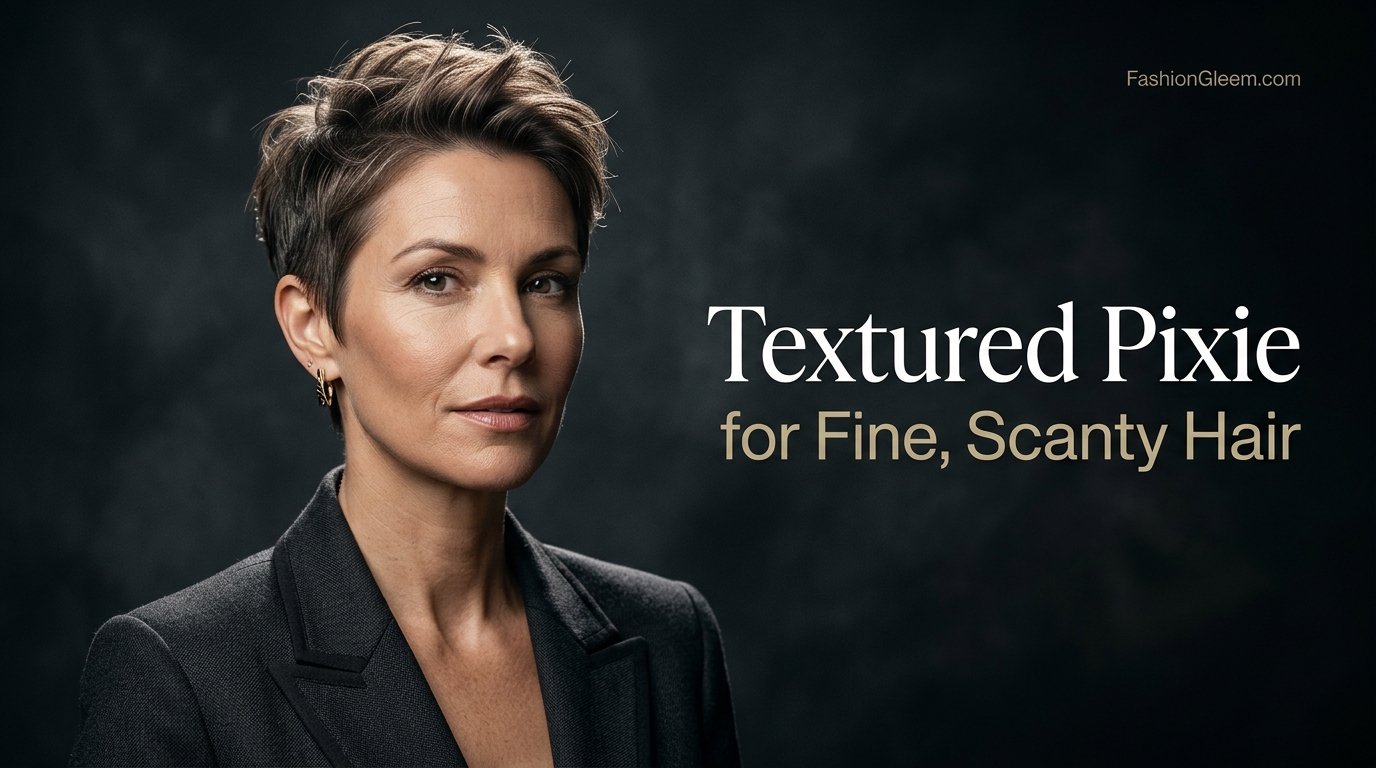
Textured Pixie: Maximum Lift, Minimum Weight
The pixie removes nearly all the weight. Roots that lay flat at shoulder length stand up at pixie length almost automatically.
Keep texture on top and length around the crown. Piecey separation reads as thickness far better than a smooth helmet shape.
The trade off is maintenance honesty. A pixie needs the salon every four to six weeks to keep its shape.
Grow out is the other cost. Budget for several awkward months, or plan a bixie stage on the way back.
Soft Shag: Volume With a Caution
The shag builds volume with choppy layers and movement. On wavy scanty hair, a soft shag looks effortlessly full.
The caution matters as much as the cut. Heavy shag layering on very sparse hair exposes the scalp between layers.
Ask for a soft version by name. Light layers around the crown, blunt ends below, and no thinning shears anywhere.
French Bob With Fringe
The French bob sits at the jawline with a soft inward bend and a fringe across the forehead.
Its boxy silhouette creates width where scanty hair lacks it. The fringe solves a sparse hairline at the same time.
It flatters straight and slightly wavy hair best. Very curly hair needs a curl aware version cut strand by strand.
Bixie: Between a Bob and a Pixie
The bixie mixes pixie texture with bob length around the face. It is the trend cut that genuinely suits fine hair.
It offers an easier grow out than a true pixie. The face framing length keeps it feminine and forgiving between appointments.
Ask your stylist to keep the ends blunt. A bixie thinned at the edges loses the density illusion it exists to create.
Long Layers: Keeping Length the Safe Way
Some readers will not cut above the shoulders. Long scanty hair can work, with strict conditions attached to it.
Keep the ends blunt and the layers long. Layers should start below the chin, adding movement without removing the baseline.
Style for width, not length. Loose waves from a large barrel iron double the visual size of long thin hair.
Accept the limit honestly. Past the chest, most scanty hair turns stringy no matter how well it is cut.
Graduated Bob: Built In Crown Lift
The graduated bob stacks shorter layers at the back. That stacked shape pushes the crown upward without any teasing or spray.
It suits readers whose thinning concentrates at the back. The graduation builds a shelf of hair exactly where coverage fails.
Keep the front longer for softness. An A line angle, longer at the front, keeps the style modern rather than severe.
Textured Updos and Occasion Styling
Scanty hair can still do events. A textured, slightly loose updo hides more scalp than a sleek pulled back style ever will.
Build volume before pinning anything. Mousse, a blow dry, and gentle crown teasing create the padding the style needs.
Loose face framing pieces complete the illusion. They keep attention on the face and texture, away from the hairline edges.
Best Haircut for Scanty Hair by Face Shape
Density decides the technique; face shape decides the silhouette. The same blunt bob needs adjusting for every face below.
|
Face shape |
Best approach |
Watch out for |
|---|---|---|
|
Oval |
Almost any scanty friendly cut works |
Avoid hiding the face behind heavy fringe |
|
Round |
Longer lob, side part, height on top |
Chin length cuts that widen the face |
|
Square |
Soft layers around the jaw, longer lengths |
Blunt jaw level lines that harden the jaw |
|
Heart |
Chin length bob, fringe, fullness at the jaw |
Too much crown volume widening the forehead |
Oval Faces
An oval face is the easiest canvas here. Pixies, bobs, and lobs all work without corrective shaping.
Spend the freedom on the density problem instead. Choose purely by your pattern, not by face corrections.
Round Faces
Round faces need vertical help. Length below the chin and height at the crown lengthen the whole picture.
A deep side part is your best tool. It breaks the round symmetry and adds the root lift discussed earlier.
Square Faces
A strong jaw softens with movement around it. Face framing layers and a lob that skips past the jaw work best.
Avoid a blunt line ending exactly at the jaw. It underlines the widest point and hardens the whole look.
Heart Shaped Faces
Heart shapes carry width at the forehead and narrow at the chin. Your cut should add fullness low, near the jaw.
A chin length bob with a fringe is ideal. It fills the narrow zone while the fringe balances the forehead.
Curtain Bangs and Face Framing Layers
Stylist Dimitris Giannetos gives the layering compromise. Layer the front only, keeping the back full, for movement without lost density.
Face framing layers open up the face and fake fullness around it. The back keeps its weight and its blunt line.
Curtain bangs pair naturally with this approach. They add front density while blending into the face framing pieces seamlessly.
Best Haircut for Scanty Hair After 50
Density often drops further after fifty. Hormonal changes slow growth and shrink strand diameter at the same time.
The good news: the scanty rules work even better here. The chin to shoulder zone flatters mature faces and thinning patterns together.
The Polished Bob and Lob
A blunt bob with a side part is the most requested mature option. It reads elegant, intentional, and fuller than any long style.
Silver and grey hair benefits from the same rules. Grey strands are often coarser but sparser, so blunt ends matter even more.
Add a gloss treatment if grey hair looks dull. Shine makes the surface read as one solid sheet instead of separate strands.
Short Cuts That Lift a Mature Face
A textured pixie with height on top lifts the whole face visually. It is the opposite of ageing when it is cut well.
Keep the fringe soft and the sides gentle. Hard, severe edges date a short cut faster than length ever will.
Avoid the two extremes completely. Very long thin hair drags features down, while a shaved back pixie can look harsher than intended.
How to Choose Between Your Final Two Cuts
Most readers narrow this guide to two finalists. Decide between them with upkeep and grow out, not photographs.
Ask three questions honestly. How many weeks between salon visits will you really keep: four, six, or ten?
How many minutes will you style on a workday: two, ten, or twenty? A cut needing twenty fails a two minute reader.
Finally, how much do you fear the grow out? Pixies punish quitters; lobs forgive them. Let your honest answers pick the winner.
When still torn, choose the longer option first. You can always cut more next visit; you cannot glue length back.
Haircuts and Techniques to Avoid With Scanty Hair
Half of a good result is refusal. These are the requests and habits that quietly make scanty hair look thinner.
Thinning Shears on the Ends
Thinning shears exist to remove bulk. Scanty hair has no bulk to spare, especially in its last two inches.
One pass can turn a blunt baseline wispy. Ask your stylist to leave the shears in the drawer for your cut.
Full Head Short Layers
Layers stacked through the whole head remove weight everywhere. The top gains movement while the ends quietly disappear.
This is the internet’s biggest contradiction on thin hair. The fix is placement: face framing and long layers, never short layers throughout.
Male readers meet the same rule in reverse. Fashion Gleem’s guide to layered haircuts for men shows how layer placement changes volume on top.
Very Long, One Weight Hair
Length past the chest stretches scanty hair into visible strings. Each strand separates, and the scalp pattern shows between them.
Centre parts make it worse. A long centre parted style draws a bright scalp line straight down the middle.
The Razor Cut Dispute, Answered Honestly
One popular thin hair page advises asking for a razor cut to add rough texture and visible body.
Most thin hair guidance disagrees, and this guide sides with the majority. Razors can shred fine strand ends, adding frizz and wispiness.
If your stylist loves razors, restrict them to surface texture only, well away from your ends and hairline.
Slicked Back and Wet Look Styles
Slicked styles pull every strand against the scalp. They expose the hairline, part, and crown in one unforgiving sweep.
Wet look products finish the damage. Clumped, separated strands over bright scalp is the thinnest presentation hair can give.
Save sleek finishes for the lengths only. Keep the roots dry, matte, and lifted even on your most polished days.
Accessories and Toppers: Honest Extras
Some coverage problems sit beyond a haircut’s reach. Headbands, scarves, and clip in toppers exist for exactly those spots.
A wide headband covers a sparse hairline instantly. It works for school runs, workouts, and bad hair days without any styling.
Hair toppers add real hair over a thinning crown. They solve a coverage problem that cutting can only soften, never solve.
Neither option is a failure or a secret. Plenty of women combine a good blunt cut with a topper for events.
What to Ask Your Stylist, Word for Word
Walk in with sentences, not screenshots alone. These lines translate this guide into salon language your stylist can act on.
|
Ask for this |
Say it like this |
|---|---|
|
Blunt perimeter |
“One length with a blunt baseline, please, no tapering at the ends.” |
|
No thinning shears |
“Please skip the thinning shears, my ends need all their bulk.” |
|
Face framing layers only |
“Layers around my face only. Keep the back full and blunt.” |
|
The right length zone |
“Keep it between my chin and shoulders, where it looks fullest.” |
|
Crown lift |
“A little graduation at the back so the crown stands up.” |
Add one honest sentence about your pattern. “My part is widening” or “my hairline is sparse” tells the stylist where to protect you.
Bring two photos: one of the shape you want, one of the finish you want. Shape and finish are different decisions.
Ask about upkeep before the first cut. A style needing six weekly trims fails a reader who visits quarterly.
Styling Scanty Hair for Maximum Volume
The cut builds the architecture. Daily styling decides whether the volume survives past breakfast, so routine matters as much as scissors.
The Blow Dry Routine
- Apply volumizing mousse to damp roots, about a golf ball amount for short hair, two for a lob.
- Rough dry upside down until hair is 80 percent dry, lifting roots with your fingers throughout.
- Flip up and finish with a round brush, pulling crown sections upward and slightly forward.
- Blast the roots with the cool shot for ten seconds per section to set the lift.
- Finish with texturizing spray through the mid lengths, never a heavy oil or wax.
The thinning hair educators at Nioxin’s thin hair styling guide teach the same root first logic for their cuts.
Products That Help, Products That Hurt
Help: mousse, root lift spray, dry shampoo, texturizing spray, and lightweight heat protectant. All add grip without coating strands together.
Hurt: heavy oils, thick creams, wet look gels, and conditioner applied at the roots. They glue strands into separated strings.
Conditioner belongs from the mid lengths down. Roots need cleanliness and lift, not slip and weight.
Tinted dry shampoo earns a special mention. Along a part line it reduces scalp contrast while it absorbs oil.
Tools That Earn Their Place

A medium round brush does most blowout work on bobs and lobs. Smaller brushes suit pixie length crowns and fringes.
Boar bristle brushes grip fine hair without tearing it. Their tension smooths the surface while you lift at the root.
Your dryer needs a nozzle attachment. Concentrated airflow directed down the shaft keeps the cuticle flat and the shine high.
A large barrel curling iron, used twice a week maximum, beats daily flat ironing. Waves add width; pin straight heat adds damage.
Skip tools promising miracles. No brush or dryer adds strands; the right ones simply protect and position the hair you have.
The Part Trick and Second Day Refresh
A deep side part flips hair against its flat growth pattern. The roots stand higher simply because they are bent backward.
Fashion Gleem’s side part hairstyle guide shows the same principle working on men’s cuts and crops.
Change your part position every few weeks. A fixed part flattens permanently and the line itself starts looking wider.
For day two, spray dry shampoo before bed, not in the morning. It absorbs oil overnight while you sleep.
Morning refresh takes two minutes. Mist the roots lightly, blow dry upward for thirty seconds, and re pinch the texture.
Waves and Curls: Width From Texture
Straight scanty hair shows every gap because it lies in one plane. Waves bend light and cover more visual area.
Loose waves from a large barrel iron are the fastest fix. Curl away from the face, then break the curls with fingers.
Never brush waves out smooth. Brushing separates the clumps into strings, which is the exact look you are avoiding.
For naturally wavy hair, styling cream on damp hair suffices. Scrunch, air dry, and leave it alone once dry.
Scanty Hair Care Habits That Protect Fullness

A great cut loses its effect fast on damaged hair. These habits protect the strands your fullness depends on.
Wash Rhythm and Scalp Care
Oily roots make scanty hair clump and separate. Most fine haired readers do best washing every one to two days.
Skipping washes for a week rarely helps density. Build up weighs strands down and makes show through worse, not better.
Keep the scalp itself clean and calm. A healthy scalp environment supports the hair you have, per dermatology guidance.
Brushing, Heat, and Tension
Use a wide tooth comb on wet hair, never a brush. Wet fine strands stretch and snap under brush tension.
Keep heat settings moderate and always use protectant. Repeated high heat thins the ends you worked to keep blunt and full.
Rotate your hairstyles to spread tension. Daily tight ponytails pull on the same fragile hairline until it thins further.
Sleep and Friction
A silk or satin pillowcase reduces overnight friction. Cotton grips fine strands and roughs them into morning breakage and frizz.
Loose braids beat tight buns for sleep. They prevent tangles without pulling on the roots for eight straight hours.
These habits sound small because they are. Their value is cumulative: less breakage means your blunt ends survive between trims.
Colour Tricks That Make Scanty Hair Look Thicker
Colour changes how light moves through hair. Used well, it is the closest thing to adding strands that styling offers.
Dimension is the mechanism. Highlights and lowlights together create light and shadow, and shadow reads as depth and density.
A shadow root darkens the first centimetre near the scalp. That depth hides the bright scalp line at a part.
Watch the contrast rule instead of chasing shades. Very dark hair on a pale scalp shows every gap at the part.
The opposite extreme fails too. Very light, single process blonde can look wispier, because pale strands nearly disappear against skin.
Balayage suits scanty hair best. It needs fewer sessions than full highlights, and lightening always costs fine strands some strength.
Ask your colourist for soft, multi tonal work. One flat colour from root to tip is the least forgiving option available.
Colour Cautions for Fragile Strands
Lightening always costs strength, and scanty hair has less strength to spend. Space colour sessions out generously.
Ask for partial work instead of full heads where possible. Balayage panels and face framing highlights deliver dimension with less damage.
If your hair feels gummy or breaks when wet, pause colour entirely. No shade trick matters on hair that is breaking off.
Be honest with your colourist about thinning. Good colourists adjust placement to protect sparse zones rather than bleach through them.
Best Haircuts for Men With Scanty or Thinning Hair
Men’s scanty hair follows the same physics. Short and even beats long and hopeful almost every time.
The goal is low contrast. When thin zones and thick zones are cut close to one length, the difference stops announcing itself.
Textured Crop and Crew Cut
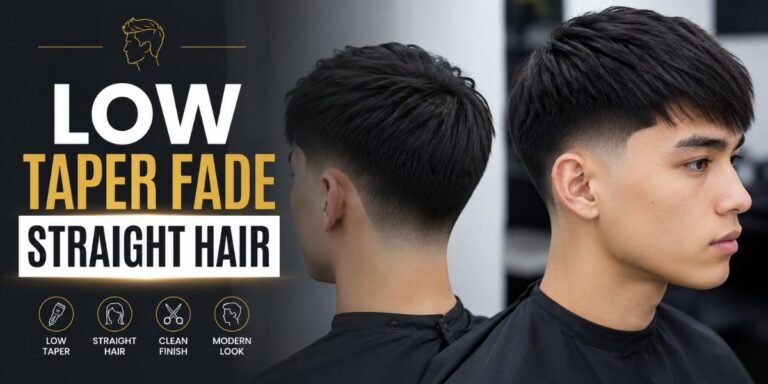
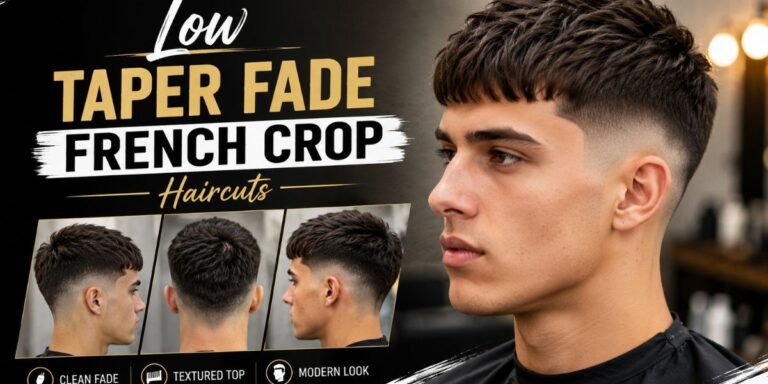
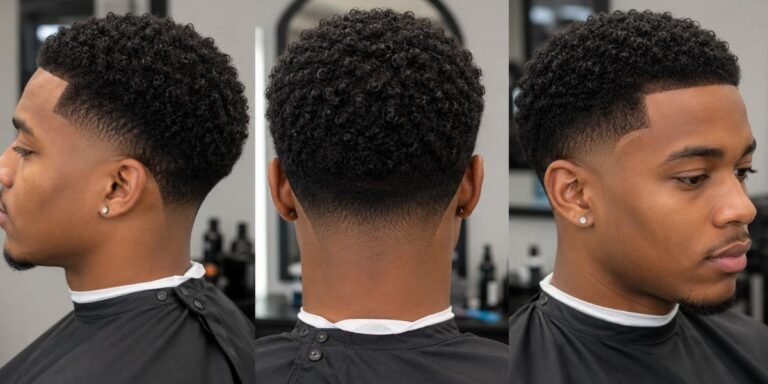
The textured crop keeps a short, choppy top with a fringe forward. It is the most forgiving men’s cut for a thinning crown.
Fashion Gleem’s textured crop haircut guide breaks down the fade and fringe combinations in detail.
A crew cut offers the simpler version. Even length, clean edges, and no styling debate in the morning at all.
Quiff and Side Part Styles
A short quiff builds height at the front, which reads as density where the hairline is retreating.
The textured quiff guide on Fashion Gleem shows how texture, not length, creates that height.
A classic side part with tapered sides works similarly. It suits early thinning and professional settings best.
Buzz Cut for Advanced Thinning
When thinning is advanced, the buzz cut ends the camouflage battle. Uniform shortness makes thin and thick zones match.
Choose the guard length honestly with your barber. Fashion Gleem’s complete buzz cut guide for men compares guard numbers and face shapes.
Many men report the buzz feels like relief. Nothing to arrange, nothing to check in mirrors and photographs all day.
What Men Should Avoid
Avoid growing the top long to comb over thin zones. Length separates under light and movement, announcing exactly what it hides.
Avoid heavy wet look gels for the same reason. They clump strands into dark strings with bright scalp between them.
Matte, dry finish products serve thinning hair better. They keep strands separated and textured, which reads as coverage.
When Thinning Hair Needs a Doctor, Not a Haircut
A haircut changes appearance only. Some patterns of loss carry medical information that no stylist should be asked to hide.
Book a dermatologist if shedding turns sudden or patchy, or if handfuls come out in the shower for weeks.
Book one if your part widens noticeably within months, or your scalp itches, burns, scales, or hurts anywhere.
The Academy’s guidance is clear that early diagnosis matters. Many causes of shedding are treatable, especially when caught early.
Postpartum shedding and illness related shedding usually reverse. Pattern hair loss progresses slowly and benefits from early treatment most.
None of this cancels the haircut. It simply puts the order right: diagnose first, then camouflage with a clear conscience.
How This Guide Was Checked
Recommendations were compared across working stylist interviews, salon educators, and brand thin hair specialists, then tested for agreement.
Where sources conflicted, the conflict is shown, not hidden. The razor cut dispute above is the clearest example of that policy.
Health numbers come from the American Academy of Dermatology only. No volume percentages or regrowth figures were invented anywhere.
Advice checked October 2026. If stronger stylist or medical guidance appears, the recommendations here should be updated with it.
Reader questions shaped the final structure as well. The self check, the face shape table, and the final two decision section answer the exact doubts readers raise after generic photo lists.
Key Takeaways

- The blunt bob is the consensus best haircut for scanty hair: one length, even ends, maximum visible density.
- Scanty means low density, fine means thin strands, and thinning means active loss. The right cut depends on which you have.
- Ask for face framing layers only. Thinning shears and full head layers remove the bulk scanty hair cannot spare.
- A deep side part, tinted dry shampoo, and dimension colour are the cheapest volume tools you own.
- Men follow the same rules: textured crop, crew cut, or an honest buzz cut for advanced thinning.
- Sudden, patchy, or fast loss needs a dermatologist. A haircut is camouflage, never a treatment.
Frequently Asked Questions
What does scanty hair mean?
Scanty hair is sparse, low density hair. Fewer strands cover the scalp, so hair looks thin and the scalp can show through.
Is scanty hair the same as thin hair?
Yes. Scanty is the South Asian English term for what American readers call thin hair: low density rather than narrow strands.
What is the difference between fine hair and thin hair?
Fine describes each strand’s diameter. Thin describes how many strands you have. You can have fine, plentiful hair or coarse, scanty hair.
What is the single best haircut for scanty hair?
A blunt bob. One length, even ends remove the wispy baseline and make the hair look denser, per stylist consensus.
Does cutting hair short make it look thicker?
Usually, yes. Shorter hair carries less weight pulling it flat, so roots lift and the ends look fuller immediately.
Are layers good for scanty hair?
The right layers are. Face framing and long layers add movement. Full head short layers remove bulk and make ends look thinner.
Should I let my stylist use thinning shears?
Ask them to skip thinning shears on your ends. They remove exactly the bulk that makes scanty hair look full.
Is a razor cut good for scanty hair?
Most thin hair guidance says avoid razors on the ends. They can shred fine strands, increasing frizz and wispiness over time.
Bob or pixie: which is better for scanty hair?
Both work well. The bob keeps length and polish, while the pixie gives more lift but needs trims every four to six weeks.
Can I keep long hair if it is scanty?
Yes, with conditions: blunt ends and long layers only. Past the chest, scanty hair usually turns stringy despite good styling.
What is the best haircut for a thinning crown?
For women, shorter cuts with crown lift and a side or zigzag part. For men, a textured crop or crew cut works best.
How can I hide a widening part?
Switch to a side or zigzag part, change the position regularly, lift the roots, and try tinted dry shampoo along the line.
Do bangs help scanty hair?
Yes. A fringe adds visible density at the front and can cover a sparse hairline. Curtain bangs are the softer, safer start.
Is the shag good for scanty hair?
A soft shag can add volume and movement. Heavy layering on very sparse hair exposes the scalp, so keep the layers light.
Does hair colour change how thick hair looks?
Yes. Multi tonal colour adds depth and shadow. A shadow root also hides the bright scalp line showing at a part.
Is blonde or brunette better for thin hair?
Neither alone wins. What matters is contrast with your scalp and dimension in the colour itself, not the shade family.
How often should scanty hair be trimmed?
Pixies need four to six weeks, bobs six to eight weeks, and longer cuts eight to ten weeks to protect blunt ends.
What products make scanty hair look thicker?
Volumizing mousse or root lift spray on damp roots, then dry shampoo or texturizing spray. Tinted dry shampoo doubles as part camouflage.
Why does conditioner make my hair look thinner?
Conditioner at the roots coats and separates strands, increasing show through. Apply it from the mid lengths to the ends only.
How do I blow dry scanty hair for volume?
Mousse at the roots, dry upside down to 80 percent, finish with a round brush lifting the crown, then set with cool air.
Can a haircut make my hair actually grow thicker?
No. A haircut changes how hair looks, not how follicles produce it. Nothing about cutting hair regrows or thickens it.
How many hairs is it normal to lose a day?
About 50 to 100 hairs, per the American Academy of Dermatology. Wash days look heavier because loose shed hairs collect together.
When should I see a doctor about thinning hair?
See a dermatologist for sudden, patchy, or fast loss, or any scalp itching, pain, burning, or scaling alongside it.
Are hair extensions safe for scanty hair?
Heavy extensions risk traction and breakage on fine or thinning hair. If used at all, choose lightweight methods fitted by a specialist.
Can curly hair be scanty too?
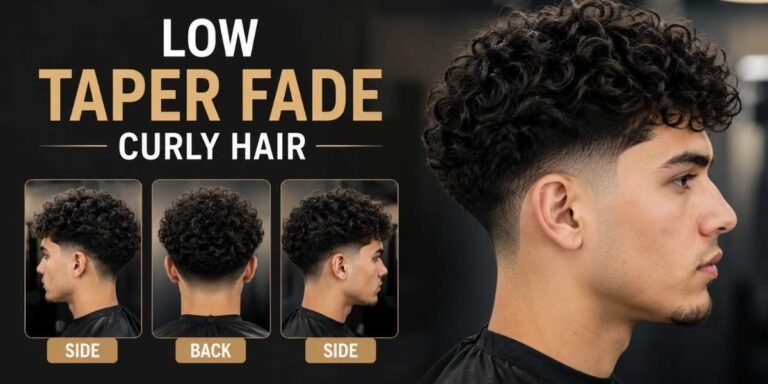
Yes. Curly scanty hair needs curl by curl cutting and minimal thinning, because curls naturally separate and reveal scalp in the gaps.
Do hair toppers work better than a haircut?
They solve different problems. A topper adds real coverage at the crown, while a haircut redistributes the hair you already have.
What haircut suits postpartum shedding?
Postpartum shedding is usually temporary. A blunt lob with curtain bangs hides regrowth wisps at the hairline while density returns.
What is the best men’s haircut for scanty hair?
A textured crop, crew cut, or short textured top with tapered sides. For advanced thinning, an even buzz cut looks cleanest.
Conclusion
The best haircut for scanty hair works by honest illusion. It keeps every strand’s strength at the ends and lifts the roots.
Start with the blunt bob if you want one proven answer. Choose by your pattern if your problem is more specific.
Take the salon script lines with you to the appointment. They protect your ends better than any inspiration photo alone can.
Keep exploring cuts, styling routines, and honest hair advice in the Hair Style collection here on Fashion Gleem, and refine your choice from there.