

Wolf Cut: The Shag Mullet Hybrid, the Four Decisions, and the Version That Fits Your Hair
The wolf cut is a hybrid of the 1970s shag and the 1980s mullet: heavy, choppy layers stacked at the crown for volume, length kept longer and tapered toward the back, and a fringe or face frame finishing the front.
That definition is where most guides stop, and it is exactly where most disappointing wolf cuts begin.
Two clients can ask for “a wolf cut” in the same salon on the same day and walk out with completely different hair, because the name covers a spectrum, not a single cut.
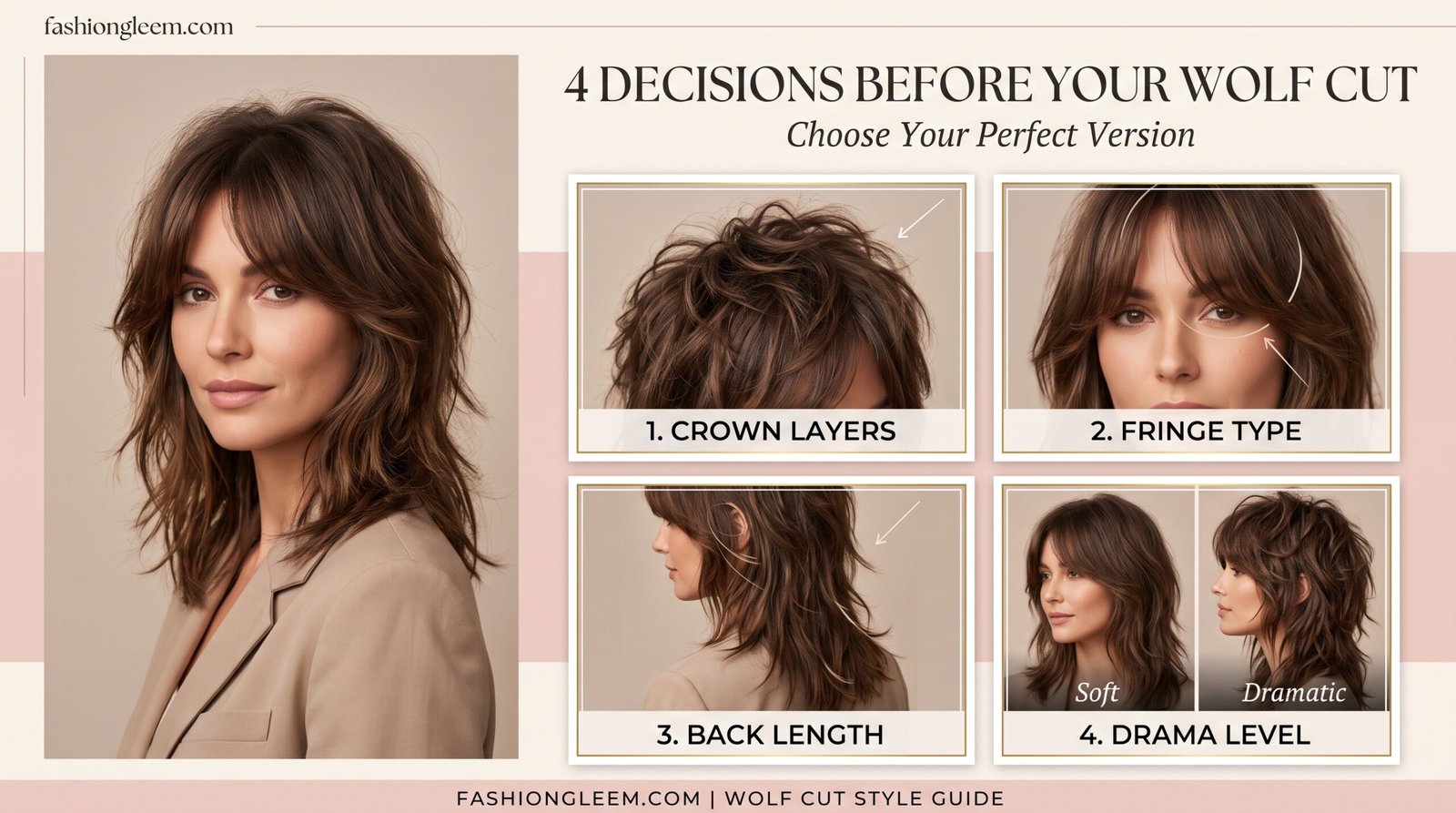
So this guide teaches the cut the way stylists actually build it: as four decisions you set before the scissors come out. Crown layer weight, fringe type, back length and contrast, and drama level.
Set those four against your hair type and face shape, and the cut becomes one of the most adaptable in the modern salon.
You will also find the honest parts other guides skip: the trim range the sources actually disagree about, why there is no real national price for this cut, and the grow out map for the day you want your length back.
One more framing before the details.
This cut is often described as rebellious, and its 2021 moment was exactly that, but the version filling salons now is better described as customizable: a volume and texture system that can be dialed from office safe to stage ready without changing its name.
Reading it that way, as a dial rather than a dare, is what makes the rest of this guide work.
Wolf Cut at a Glance
| Feature | The Wolf Cut Setting |
|---|---|
| Ancestors | 1970s shag + 1980s mullet |
| Crown | Short, heavy, choppy layers for volume |
| Back | Longer, tapered, softer than a true mullet |
| Front | Fringe or long face framing layers |
| Finish | Tousled, textured, lived in |
| Minimum length | About chin length (shorter becomes a wolf bob) |
| Daily styling | About 5 to 10 minutes, air dry friendly |
| Refresh trims | Every 6 to 10 weeks, depending on version |
Shag, Wolf Cut, Mullet: The Spectrum
The three cuts are one family, and placing them on a line prevents most naming confusion at the consultation.
| Cut | Layers | Back | Overall Feel |
|---|---|---|---|
| Shag | Even, all over, at one length family | Blends with the rest | Textured, retro, soft |
| Wolf cut | Heavy and short at the crown | Longer, tapered, connected | Wild, voluminous, edgy |
| Mullet | Secondary to the contrast | Dramatically longer, separate | Bold, statement, high contrast |
| Wolf bob | Wolf architecture | Kept at chin to collarbone | The short version of the same idea |
| Shullet | Shag mullet blend | Soft contrast | The gentler neighbor |
Numi Hair’s wolf cut guide draws the distinction the same way: a shag is layers and texture at one length, a mullet is the contrast itself, and a wolf cut sits between them. The wolf bob is that same cut kept at bob length.
The practical use of the spectrum: when you show your stylist a photo, you are pointing at a position on this line. Say which side of the wolf cut you lean toward, shag soft or mullet bold, and half the consultation is already done.
The Four Decisions That Specify Your Version

Decision One: Crown Layer Weight
The crown layers are the engine of the cut. Heavy, short crown layers produce the dramatic volume and the wild top silhouette of the classic version.
Softer, longer crown layers produce the modern, wearable version: lift without the spiky architecture. Your hair density referees this decision, as the hair type sections below show: fine hair cannot spare the density heavy layers remove, and thick hair often needs exactly that removal.
Decision Two: Fringe Type
The fringe does the face shape work and sets the cut’s personality. Curtain bangs are the softest and most requested: they part in the middle, sweep into the face frame, and forgive a lazy styling morning.
Wispy and bottleneck bangs keep more edge while staying light. A full fringe is the boldest choice and the highest upkeep.
And the fringe is optional: long face framing layers deliver the shape without bangs at all, the version to choose if you know you hate fringe maintenance.
Decision Three: Back Length and Contrast
How much length stays at the back, and how sharply it contrasts with the short crown, is what separates a wolf cut from a mullet in the mirror.
Keep the back tapered and connected, with the layers blending down, for the classic wolf. Push the length and disconnect it for drama.
This is the decision to make with a photo in hand, because words like “a bit longer” mean different things to different people.
Decision Four: Drama Level
Finally, place the whole cut on the drama dial. The soft wolf, the direction the trend has moved in 2026, blends everything: longer layers, gentler texture, a lived in fringe.
The dramatic wolf sharpens every choice: shortest crown, boldest fringe, longest back. Neither is better; they are different commitments, in the chair and in the mirror each morning. Choose the one your actual routine supports.
Wolf Cut by Hair Type
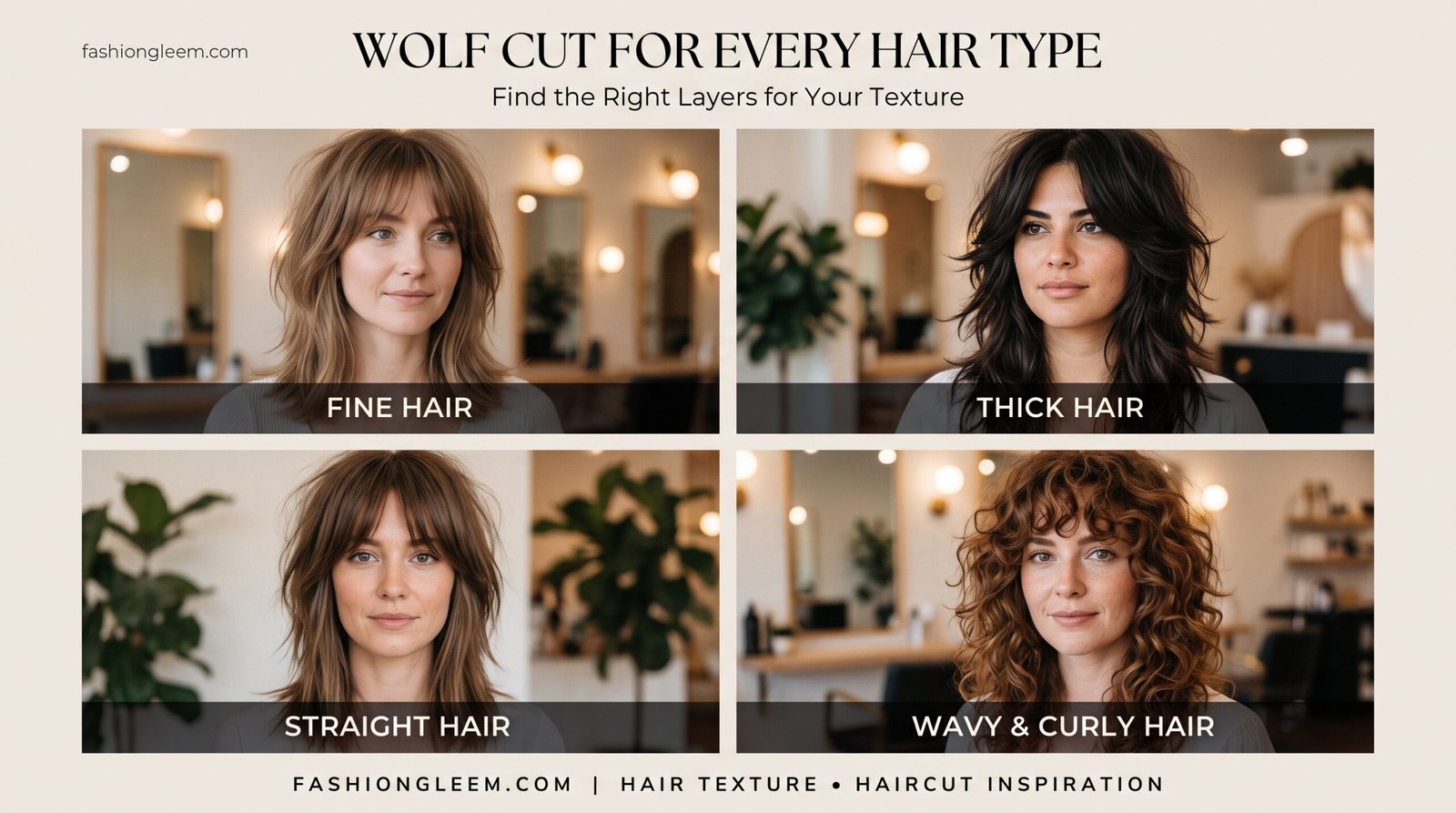
Fine and Thin Hair
Fine hair is where this cut earns its reputation and where it most often goes wrong. The short crown layers manufacture volume precisely where fine hair lies flattest, which is why stylists recommend the cut for fine hair so often.
The conditions are strict: layers must be soft and blended, cut with scissors rather than heavy razor work, and the ends must keep their density.
John Frieda’s guide to wolf cuts gives exactly this guidance for fine hair: soft, blended layers that build volume without making the ends wispy.
Ask for the perimeter kept full, style with light products only, and the crown volume will read as thickness. Ask for the dramatic version with razored ends, and the same cut makes fine hair look thinner. Density, not the cut’s name, decides.
Thick Hair
Thick hair takes the full architecture gladly. The layering removes the bulk that makes thick hair form a heavy triangle, while the length keeps the fullness that is thick hair’s whole advantage.
Longer layers and texturized ends are the standard prescription in trade guidance, including the stylist commentary in Hairdressers Journal’s wolf cut trend report, where thicker hair is shaped with longer layers to remove weight while keeping fullness and texture.
Straight Hair
Straight hair displays the choppy layering most graphically, every layer line visible, which is the look many people picture first.
The trade off is daily: straight hair grows no texture of its own, so the tousle must be built each morning.
Mousse or curl cream worked into damp hair at roots and ends, a rough blow dry or diffuser pass for volume, and a texturizing or sea salt spray to separate the layers is the standard routine, five to ten minutes once learned.
Wavy and Curly Hair
Wavy and curly hair arrive with the cut’s two main ingredients, volume and texture, already installed. The layers release the curl pattern instead of fighting it, and the shape builds itself as it dries.
The specialist guidance is specific: cut curly hair dry, so layers are placed by how the curls actually fall, and work with a stylist experienced in textured hair.
MopTop’s curly wolf cut guide builds its whole method on that principle, styling with curl cream, scrunching, and a diffuser or air drying to define the pattern.
Coily and Afro textured hair follows the same logic, with moisture as the first product priority and layers shaped to the natural pattern, as the textured hair specialists in the trade coverage describe.
Wolf Cut by Face Shape
| Face Shape | The Adjustment That Works |
|---|---|
| Oval | The classic version, as designed |
| Round | Crown volume plus longer face framing to add visual length |
| Square | Wispy, textured fringe and layers falling past the jaw to soften angles |
| Heart | Longer layers at the back and side swept fringe to balance a narrower chin |
| Long | Fuller sides and a fringe to shorten the visual length |
The pattern under the table: the fringe and the face frame do the adjusting, while the crown and back stay the cut itself. That is why decision two, fringe type, should be made with your face shape in front of you.
The Versions
The Wolf Bob
The same architecture at chin to collarbone length: crown volume, face framing, and tapered ends on a short base. It is the version for people who want the texture without the length, and it grows into a classic wolf cut if you let it.
Styling is the quickest of the family: rough dry with mousse at the roots, scrunch a light cream through the lengths, and dry the crown upside down for the last minute if it falls flat. Most wearers finish in under ten minutes.
The Classic Wolf Cut
Medium to long hair, the full silhouette: heavy crown layers, a real fringe or strong face frame, and the tapered back in its original proportions. This is the version the definition describes and the photos usually show.
The Long Wolf Cut and the Allie-Cat
The 2026 direction of the trend is softer and longer.
UK hair trade coverage names the long version worn by Mika Abdalla’s character in the series Off Campus the Allie-Cat cut: softness, texture, and effortless movement, with long graduated layers point cut for a soft blend and a lived in fringe.
Whether or not the name survives, the direction is clear: the extreme 2021 contrast has mellowed into length, blend, and wearability, which is also why the cut keeps recruiting people who would never have booked the original.
The Men’s Wolf Cut
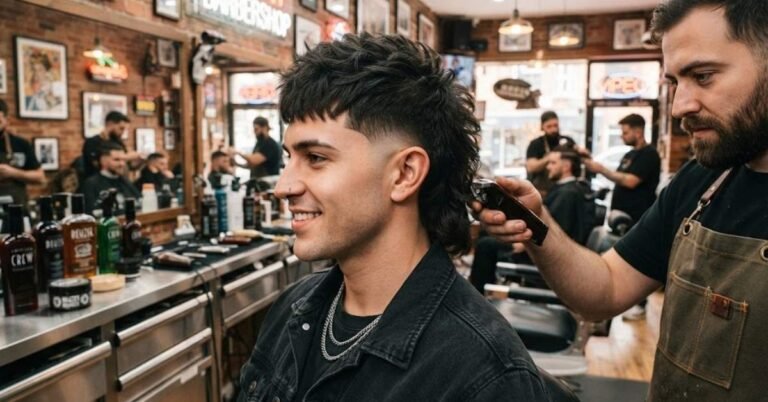
The architecture transfers directly: layered crown volume, tapered length at the back, texture throughout, typically at shorter overall length. It sits in the same family as the modern shag and the softer mullets already common in men’s cutting.
The layering principles are shared across the salon.
The technique discussions in our guide to layered haircuts for men and the volume through texture in our textured quiff style guide read as close cousins of this cut.
The short extreme of the texture family, covered in our complete guide to the buzz cut for men, makes an equally useful contrast.
The Korean Wolf Cut and Color Pairings
The version most often credited with starting the trend keeps the architecture soft at the edges: feathery layering, a see through or wispy fringe, and a finish that reads polished rather than wild.
It remains the reference point for clients who want the shape at its most wearable, and the gentlest first version.
Color interacts with this cut more than with blunter styles, because heavy layers expose interior sections of hair. Balayage and face framing highlights amplify the layering, making each tier visible; solid dark colors give the silhouette its sharpest graphic read.
If color is part of the plan, sequence it at the consultation, since the cut’s layers decide where lightener earns its keep.
How to Ask Your Stylist
1. Bring photos of your version. Not the cut in general: your version, ideally on a similar hair type and density to yours. Three photos that agree with each other beat ten that span the spectrum.
2. State the four decisions in words. Crown layer weight, fringe type, back length and contrast, drama level. A sentence each is enough, and it converts the photo from a wish into a specification.
3. Ask the density question directly. “With my density, how short can the crown layers go before my ends look thin?” This is the question that prevents the most common wolf cut regret, and any stylist worth booking will answer it concretely.
4. Agree the maintenance before the cut. Trim interval for your version, the product kit, and the five minute morning routine. If the upkeep described does not fit your life, soften the version now, not at the regret stage.
5. Say the not list out loud. No mullet drama, no razored ends, no fringe, no length off the back: whatever your limits are. Stylists consistently say the not list prevents more disappointment than the want list, because the cut’s name spans such a wide spectrum.
Bring your glasses if you wear them daily, mention if you tie your hair up for work or sport, and say how you actually style on a weekday morning. Those three facts change real decisions in the chair.
The wider world of cuts and versions lives in the FashionGleem hair style collection, where this guide’s siblings sit.
Styling at Home: The Five to Ten Minute Routine
1. Start on damp hair with product at the roots. Volumizing mousse for fine and straight hair; curl cream for wavy and curly hair. Product placement is the routine: roots for lift, a little through the ends for separation.
2. Dry for your texture. Air dry for the natural, lived in finish the cut is designed for. Diffuse to build waves and encourage curl. Rough blow dry, lifting at the roots with fingers, when you want maximum crown volume.
3. Scrunch and separate. Once dry, scrunch to wake up the layers, then break up the ends with fingers or a pea of styling paste. Separation, not smoothness, is the finish.
4. Shape the fringe last. A round brush and a quick dryer pass give curtain bangs their sweep; wispy fringes usually need only finger placement. Second day fringes revive with a mist of water and thirty seconds of heat.
5. Revive, do not redo. Day two crown volume comes back with dry shampoo at the roots and a scrunch. The cut is built to look better slightly undone, which is most of its charm and nearly all of its low maintenance reputation.
For a formal finish, keep the silhouette and smooth the surface: round brush blow dry for polish, a light cream instead of spray, the fringe swept neatly.
It will read as a polished wolf cut, not a sleek blunt cut, and it should not try to.
Maintenance: Trims, Products, and the Grow Out Map
The trim range, honestly. Sources disagree, and the disagreement is informative: curly specialists and several salon guides put refresh trims at 6 to 8 weeks, while brand guidance for softer and bob versions allows 8 to 10 weeks.
Both are right about different versions. Short crowns, strong fringes, and dramatic contrast need the shorter interval; soft, long, blended versions coast to the longer one. Book by your version, and let the first grow out teach you your own number.
The product kit, complete. A volumizing mousse, a texturizing or sea salt spray, a curl cream if your hair waves or curls, a heat protectant for hot tool days, and dry shampoo.
Five products cover every routine in this guide; anything beyond that is preference, not necessity.
The grow out map. Month three: the crown layers soften and the fringe needs its first decision, grow it or trim it. Month six: the shape reads as a shag, still intentional, still textured.
Month nine and beyond: a long layered cut with a past. Because the wolf cut has no blunt lines, there is no shelf or ledge to grow past, which is why stylists call it one of the most graceful cuts to exit.
Many people simply let it become their next haircut.
A note on the first fortnight. Fresh layered cuts often look sharper in the salon than they do at home in week one, simply because the stylist’s finish is a professional blow out.
Judge the cut at day ten, styled your way, before concluding anything.
By then the layers have settled, your routine has found its shortcuts, and the haircut you actually bought, rather than the one that was styled for you, is the one in the mirror.
The cost question, honestly. There is no verified national average price for a wolf cut, and any page quoting one is inventing it.
The cut is priced as a standard salon haircut: your city, your salon’s tier, your stylist’s experience, and whether a finish and style are included.
Ask for the full appointment price when you book, including the styling finish, and treat first appointments with consultation as their own line item where salons charge for them.
Frequently Asked Questions
What is a wolf cut?
A wolf cut is a hybrid of the 1970s shag and the 1980s mullet: heavy, choppy layers concentrated at the crown for volume, with the length left longer and tapered toward the back.
It usually includes face framing layers and some form of fringe, and it is named for its wild, untamed silhouette.
Why is it called a wolf cut?
The name describes the look: tousled, textured, and a little wild, like a wolf’s mane. The top is full and shaggy while the ends taper, giving the untamed outline the name refers to.
What is the difference between a wolf cut and a shag?
A shag layers hair fairly evenly at one overall length for all over texture.
A wolf cut pushes the contrast further: much shorter, heavier layers at the crown and noticeably longer, tapered length at the back, which gives it a subtle mullet like silhouette the classic shag does not have.
What is the difference between a wolf cut and a mullet?
A mullet is defined by the contrast itself: short front and sides, long back, often dramatically.
A wolf cut borrows the silhouette but softens it: the sides and face frame stay connected to the length, the layers blend the transition, and the back is tapered rather than left as a separate long section.
What is a wolf bob?
A wolf bob is the same cut kept at bob length, roughly chin to collarbone: choppy crown layers and face framing on a short base.
It delivers the wolf cut’s volume and texture for people who do not want long hair, and several guides note it styles in under ten minutes.
Does a wolf cut suit everyone?
It suits a wide range because the variables adjust: layer weight, fringe type, and overall length are set per person.
Fine hair needs softer, blended layers so the ends do not go wispy; thick hair can take longer layers to remove weight; curly hair works when layers follow the curl pattern. A consultation decides the version.
Is a wolf cut good for fine or thin hair?
It can be one of the best cuts for fine hair, because the short crown layers manufacture volume where fine hair is flattest.
The caution is degree: layers must stay soft and blended, and the ends kept fuller, or fine hair turns stringy. Ask for volume at the crown with density preserved at the ends.
Is a wolf cut good for thick hair?
Yes, and it is often recommended for thick hair because the layering removes bulk while keeping fullness and movement. Longer layers and texturized ends stop thick hair from forming the triangle silhouette, and the cut grows out gracefully between appointments.
Is a wolf cut good for curly hair?
Curly hair is a natural match: the cut’s volume and texture are already in the hair.
Specialists advise cutting curly hair dry so the layers are placed by how curls actually fall, following the curl pattern rather than fighting it, and styling with curl cream, scrunching, and a diffuser or air drying.
Can you get a wolf cut on straight hair?
Yes; straight hair shows the choppy layering most graphically.
The trade off is styling effort: straight hair needs the texture built in each morning with mousse or curl cream at the roots, a diffuser or rough blow dry for volume, and texturizing spray or sea salt spray to separate the layers.
What face shapes suit a wolf cut?
Oval faces take the classic version as is. Round faces gain length from crown volume and longer face framing. Square faces soften with wispy, textured fringes and layers that fall past the jaw.
Heart shaped faces balance with longer layers at the back and side swept fringe. The fringe choice does most of the face shape work.
How long does your hair need to be for a wolf cut?
Chin length is the practical minimum, per brand guides: below the chin there is room for the crown layers and the tapered back to read as a wolf cut rather than a layered bob.
Medium to long hair shows the full silhouette best, and shorter versions shade into the wolf bob.
Do you need bangs with a wolf cut?
No, but the cut is usually paired with a fringe because the face framing is half the look. Curtain bangs are the softest and most common choice, wispy or bottleneck bangs keep the edge, and a full fringe is the boldest.
Bang free versions use long face framing layers instead.
How do you ask your stylist for a wolf cut?
Bring reference photos of the exact version you want, ideally on a similar hair type.
Then name the variables: how short the crown layers, which fringe, how much length stays at the back, and how dramatic the contrast should be. Photos plus those four decisions prevent the classic mismatch, where client and stylist pictured different cuts under one name.
How much does a wolf cut cost?
There is no verified national average; a wolf cut is priced as a standard salon haircut, and prices vary by city, salon tier, and stylist experience.
Expect the price of a normal cut plus styling at your salon, and confirm when booking. Anyone quoting a single national figure is guessing.
How often does a wolf cut need trimming?
Guides disagree slightly, so treat this as a range: brand and salon guides put refresh trims at about 6 to 8 weeks for shape critical versions, and up to 8 to 10 weeks for softer, longer versions.
The cut is forgiving as it grows, so the interval is about keeping the crown layers lively, not rescuing the shape.
Is a wolf cut high maintenance?
Day to day, no: it is famous for the air dried, undone finish, and most versions style in five to ten minutes.
The maintenance is in the trim schedule, because layered cuts lose their architecture as they grow, and in a small product kit (a texturizer and a heat protectant cover most routines).
How do you style a wolf cut at home?
Work a volumizing mousse or texturizing product into damp hair, focusing on roots and ends. Air dry for the natural finish, or blow dry with a diffuser to build waves and volume.
Scrunch to separate layers, shape the fringe with a round brush if it needs polish, and finish by breaking up the ends with fingers. The goal is tousled, not perfect.
What products do you need for a wolf cut?
A short kit covers most hair types: a volumizing mousse for roots, a texturizing or sea salt spray for separation, a curl cream for wavy and curly versions, a heat protectant for any hot tool use, and dry shampoo to revive second day crown volume.
Fine hair should keep products light; thick and curly hair can carry creams and gels.
Can you cut a wolf cut at home yourself?
People do, and tutorials abound, but the cut is layer architecture, not a trim: crown layers cut too short or back length cut too long cannot be uncut.
The safe home version is a soft, long wolf cut with conservative layers, cut in small checks. Most stylists advise at least the first wolf cut in a salon, then home maintenance if you insist.
How does a wolf cut grow out?
Gracefully, by layered cut standards: the crown layers lengthen into ordinary layers and the shape softens toward a shag, then a long layered cut. The awkward phase is mild because there are no blunt lines to expose.
Many people grow a wolf cut into its own next haircut without an intervention cut.
What is a shullet?
Shullet is a portmanteau of shag and mullet, used for cuts in the same family, often a little softer or shorter than a full wolf cut.
Trade coverage treats the wolf cut, the shullet, and the modern shag as neighboring points on one spectrum rather than separate species.
What is the Allie-Cat cut?
UK hair trade coverage in 2026 names the long, soft wolf cut worn by Mika Abdalla’s character Allie in the series Off Campus the Allie-Cat cut: soft texture, long graduated layers, point cut for a soft blend, and a lived in fringe.
It is a softer, more wearable wolf cut variant, and salons report it driving requests.
Is the wolf cut still in style in 2026?
Yes, in evolved form. The extreme 2021 version has softened into longer, blended versions (the Allie-Cat coverage is the current example), and brand and trade guides continue to feature the cut as a leading request.
Trend pieces framing it as a 2026 style are appearing from hair brands now.
Where did the wolf cut come from?
The cut is widely reported to have emerged from South Korean salon culture, then spread globally through TikTok around 2021, when celebrity versions, most famously Billie Eilish’s 2021 wolf cut reveal, pushed it into the mainstream.
Its ingredients are older: the 70s shag and the 80s mullet.
Is a wolf cut suitable for men?
Yes. The men’s version keeps the same architecture with typically shorter length and a more tapered back, and it works across straight, wavy, and curly hair. It sits near the modern mullet and shag territory already common in men’s cuts.
Can you get a wolf cut with an undercut?
You can, and it intensifies the contrast: shaved or closely clipped sides under the layered top. It is a more dramatic, higher commitment variant, because the grow out of the undercut section is its own project. Most first time wolf cuts skip it.
Does a wolf cut work for older women?
Yes, in its softer versions: longer, blended layers, a curtain or side swept fringe, and length kept at or below the shoulders.
The crown volume is genuinely flattering where hair has thinned at the top, provided the layers stay soft enough to keep the ends full.
Will a wolf cut make thin hair look thinner?
Only if it is cut wrong: overly short, heavily razored layers can make fine ends look sparse.
Cut with soft, blended layers and fullness preserved at the perimeter, it does the opposite, and the crown volume reads as thickness. The stylist conversation about your density matters more than the cut’s name.
Is a wolf cut damaging to hair?
The cut itself removes length and split ends, which helps hair health. The damage risk is in styling: daily high heat without protectant. Because the wolf cut is designed for air drying and diffusing, most wearers use less heat than a sleek style demands.
Can you tie a wolf cut up?
Yes, at medium and longer lengths: ponytails, half up styles, and claw clips all work, and the face framing layers fall out decoratively, which wearers count as a feature.
Very short wolf bobs will not fully tie up, which is worth knowing before choosing the short version.
Does a wolf cut suit glasses wearers?
Generally yes: the fringe choice is the variable. Curtain and side swept fringes sit clear of frames more easily than a full blunt fringe, and face framing layers can be cut to clear the arms of the glasses.
Bring your glasses to the appointment and say they are daily wear.
What is the difference between a wolf cut and a butterfly cut?
The butterfly cut uses long, soft, blended layers that frame the face in sweeping sections, a polished, glamorous finish.
The wolf cut is its edgy sibling: choppier, shorter crown layers, more contrast toward the back, and a tousled finish. Brand guides draw exactly this contrast: edgy and textured versus soft and toned down.
Can a wolf cut fix a flat crown?
It is one of the best cuts for it: the short crown layers are literally built where flatness happens, and they lift with minimal product.
Persistent flatness usually comes from layers grown too long or product weighing the roots down, both fixable at a refresh trim.
How do you style a wolf cut for a formal look?
Smooth the finish without removing the shape: blow dry with a round brush for polish, keep the layers’ separation with a light cream rather than spray, and sweep the fringe neatly. The silhouette stays wolf; the surface goes formal.
It will not read as a sleek blunt cut, and it should not try to.
Is a wolf cut good for summer?
It is popular in summer because the internal layering removes weight, the neck area can be tapered for coolness, and the style is designed for air drying and wash and go routines.
The fringe in heat is the main complaint; curtain and swept versions behave better in humidity.
What should you tell your stylist you do NOT want?
Name your limits explicitly: no mullet drama if you want the soft version, no razored ends if your hair is fine, no short crown if you tie your hair up daily, and no full fringe if you wear glasses or hate fringe upkeep.
Stylists consistently say the not list prevents more regret than the want list.
Can you get a wolf cut on damaged or bleached hair?
Yes, and it often helps, because the layering removes the most damaged ends. The limits are structural: heavily compromised hair cannot hold very short crown layers without breakage, so expect a softer version and a treatment conversation. A strand test at consultation settles it.
How long does a wolf cut appointment take?
Typically the length of a standard cut appointment at your salon; the layering is detail work, so first appointments with consultation and styling finish run longer than a refresh trim. Ask when booking if the salon books new style consultations separately.
What is the difference between a short wolf cut and a pixie?
A pixie is cropped close overall, with the length measured in a few inches everywhere. A short wolf cut keeps the wolf architecture at bob to chin length: crown volume, face framing, and tapered length at the back.
They read as different silhouettes from every angle.
Does a wolf cut need special shampoo or care?
No specialist regimen: layered hair benefits from lightweight moisture that does not weigh the crown down, and from avoiding heavy oils at the roots. Curly versions follow standard curl care: moisture first, gentle cleansing, and definition products.
Wolf cut in one line: how do you decide?
Decide the version, not just the name: crown layer weight, fringe type, back length, and drama level, matched to your hair type and face shape.
If those four are set, by photo and by conversation, the wolf cut is one of the most adaptable cuts in the salon.
Conclusion
The wolf cut rewards the client who treats it as a specification rather than a name: set the crown weight, the fringe, the back length, and the drama level against your hair type, density, and face shape, and the cut adapts to almost anyone.
Cut carelessly, the same name produces the regret stories: wispy fine ends, accidental mullet drama, a fringe nobody wanted to maintain. The difference is never the cut. It is the conversation before it.
Use the four decisions, bring the photos, say the not list, and book the trim your version actually needs.
For the rest of the family’s cuts and styles, start with parent guides like our guide to boys hair cut styles and browse the FashionGleem hair library: the same principle applies everywhere in the salon.
The version fitted to your hair beats the famous name, every time.


One Comment