Dusty Rose Blush: Pink, Muted, Matched by Temperature and Depth
Dusty rose blush is the pink for people who find pink too pink. It takes the rose family and turns its volume down: pink muted with gray and brown, until the color reads polished instead of sweet.
That muting is the whole product. A bright pink announces itself as makeup. A dusty rose sits closer to a real flush, which is why it owns the bridal kits, the office bags, and the fall shade lists at the same time.
Fashiongleem organizes the shade the way it is actually bought: by temperature first, because dusty rose comes in cool and warm versions that suit different skin; by depth second, because the right version changes completely from fair skin to deep skin.
Two warnings before the shades. First, the name guarantees nothing: dusty rose is a description, not a standard, and every brand’s version differs. Second, prices and ratings in the coverage are labeled strands here, reported with their sources, never merged into fake averages.
What Dusty Rose Is: Pink With the Volume Turned Down
Start with the recipe, because every rule below derives from it. The Typsy Beauty budget blush guide states it in one clean line: dusty rose blends pink, brown, and a touch of mauve.
The brown does the grounding. It pulls pink toward skin tones, which is why the shade reads like a flush instead of a sticker, and why it survives on medium skin where brighter pinks float.
The gray does the muting. It lowers the color’s brightness and saturation, the quality readers describe as sophisticated, grown up, or vintage. Too much gray for your skin, though, is exactly where the failures in the troubleshooting section come from.
Judge the shade by that recipe and most buying confusion dissolves. A version that looks too pink is under muted. A version that looks gray on your face is over muted for your temperature, or simply the cool version worn on warm skin.
The Name on the Box Guarantees Nothing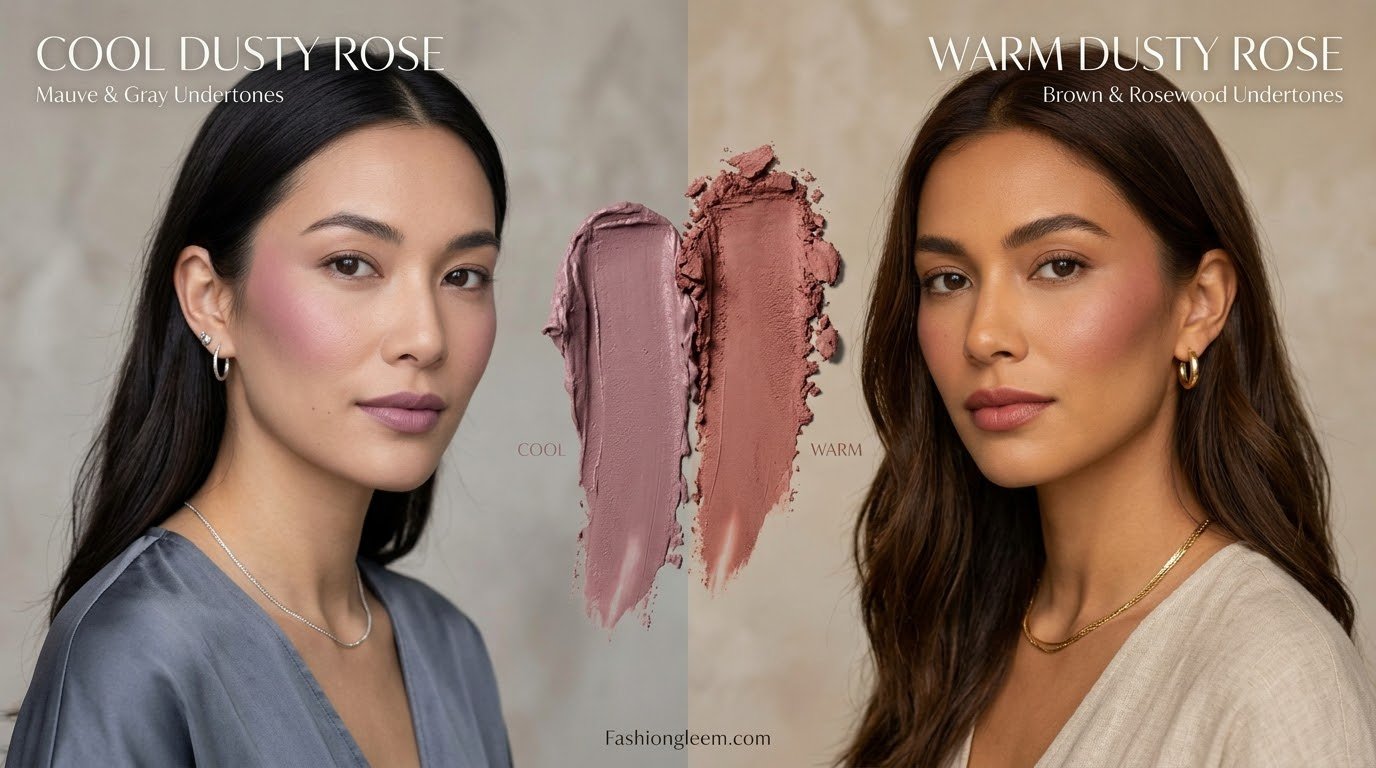
Dusty rose is an unregulated description. No standard defines its temperature, depth, or pigment, so brands use the same two words for noticeably different colors, and the coverage proves it inside a single product line.
Makeup artist Scarlett Quarmby compared one brand’s three rose shades on camera because clients kept requesting them. Rose Crush is warm rose. Dusty Rose is more pigmented, mauve, and cool. Desert Rose is opaque, also mauve and cool, distinguished by coverage.
Three names, three colors, one brand. Across brands the spread widens further, and the social layer adds noise: one viral creator praised a famous lipstick name as the most beautiful dusty rose blush she had used, which tells you how loosely the label travels online.
So the working rule is verification over naming. Swatch on your cheek or jaw, not your hand. Check the color in daylight after ten minutes of wear. Compare one cool and one warm version side by side, and let your skin, not the box, make the call.
The Two Temperatures: Cool Mauve Leaning vs Warm Brown Leaning
This split is the buying decision the shade lists skip. Dusty rose comes in two temperatures, and they are different purchases for different faces.
|
Version |
The lean |
Suits best |
Named examples from coverage |
|---|---|---|---|
|
Cool dusty rose |
Toward mauve and gray |
Cool and neutral undertones |
Makeup by Mario Dusty Rose; Lawless Rosebud (dusty cool rose) |
|
Warm dusty rose |
Toward brown and rosewood |
Warm, golden, and olive undertones |
Makeup by Mario Rose Crush (the warm sister); fall list warm versions |
|
Neutral dusty rose |
Balanced, slight brown |
Neutral undertones, most medium skin |
Laura Mercier Chai; Tarte Exposed (muted rose) |
Cool dusty rose echoes the pink and purple signals already in cool skin.
The Nikol Beauty medium skin tone guide gives the shade its exact home in an undertone table: for medium skin with neutral undertones, dusty rose is the recommended blush, with extremes of orange and fuchsia as the shades to avoid.
Warm dusty rose harmonizes with golden and olive skin, adding flush without the orange argument that coral starts. Olive skin is the temperature test’s strictest case: its green cast amplifies gray and mauve, which is why cool dusty rose so often reads gray on olive faces.
When in doubt, shop the temperature, not the name. A warm skinned reader who buys the famous cool version has not bought the wrong shade family. She has bought the right family in the wrong temperature, and the fix is a swap, not a new search.
The Depth Ladder: Fair, Medium, and Deep Versions
Temperature decides the direction. Depth decides whether the color shows up at all, and dusty rose’s depth story is where honest guidance matters most, because the shade name stays the same while the right product changes completely.
|
Skin depth |
What the shade must do |
Guidance from the coverage |
|---|---|---|
|
Fair |
Read as sophistication, not heaviness |
Soft versions recommended first by the fall coverage; sheer the pigmented liquids hard |
|
Light medium to medium |
Balance depth against undertones |
The neutral home ground; standard versions of the named shades |
|
Deep |
Carry real pigment and depth |
Avoid pale white based versions (the ashy trap); deeper mauve versions function as the dusty rose |
The Apex News fall blush shades list leads its fall list with soft dusty rose for fair to medium skin with cool or neutral undertones.
Its avoid entry states the deep skin problem plainly: chalky pale pinks with a strong white base appear ashy on medium to deep complexions.
The social evidence answers from the other side. In the review conversation around the budget liquid line, women of color name the deeper Suave Mauve shade as their dusty rose. Same idea, deeper execution: pigment load and depth, not the family name, decide the result.
So read every recommendation with its depth band attached. A shade praised on fair skin is a fair skin claim. Deep skin readers should start from the pigmented, deeper versions and treat pale dusty rose swatches as a different product category altogether.
The Named Shades: The Reference Products Compared
These are the shades the coverage itself names, labeled as strands: each character note is attributed to the guide or artist who stated it, and the two prices are the ones reported in the social and list coverage, not a price survey.
|
Shade |
Brand and format |
Temperature and finish |
Reported strand |
|---|---|---|---|
|
Dolce Vita |
NARS, powder |
Neutral cool, matte |
The reference dusty rose in shade guides |
|
Chai |
Laura Mercier, powder infusion |
Neutral, soft matte |
Dusty rose with a soft matte finish |
|
Exposed |
Tarte, Amazonian clay powder |
Neutral, muted rose |
The muted rose for neutral tones |
|
Dusty Rose |
e.l.f. Camo, liquid |
Muted soft rose, dewy |
$7 in creator posts; the budget phenomenon |
|
Suave Mauve |
e.l.f. Camo, liquid |
Deeper mauve |
Named by women of color as their dusty rose |
|
Dusty Rose |
Makeup by Mario, cream stick |
Cool, mauve leaning, pigmented |
Artist compared: cool against warm Rose Crush |
|
Dusty Rose |
Summer Fridays, balm stick |
Cream, natural finish |
$38 in fall list coverage |
|
Petal |
Westman Atelier, cream stick |
Dusty nude rose |
The luxury dusty nude rose in swatch posts |
Dolce Vita holds the reference position: when shade guides need to point at what dusty rose means, they point here. Chai is the soft matte professional version, and Exposed the neutral workhorse, all three named together in the undertone guides.
The Dappered Chic best blush comparison earns its place in this table for a different reason: its best blush comparison names the e.l.f. liquid in Dusty Rose as a category pick, and its methodology note honestly states the picks are editorial comparisons, not wear tests.
That honesty is the standard this table follows.
The budget door is real: a $7 liquid with the keyword on the box, rated enthusiastically by creators who compared it against a famous pink they judged too pink.
The prestige door buys texture: balm and cream sticks at several times the price, with the refinement in the finish rather than the color idea.
Finish Rewrites the Color: Cream, Liquid, or Powder
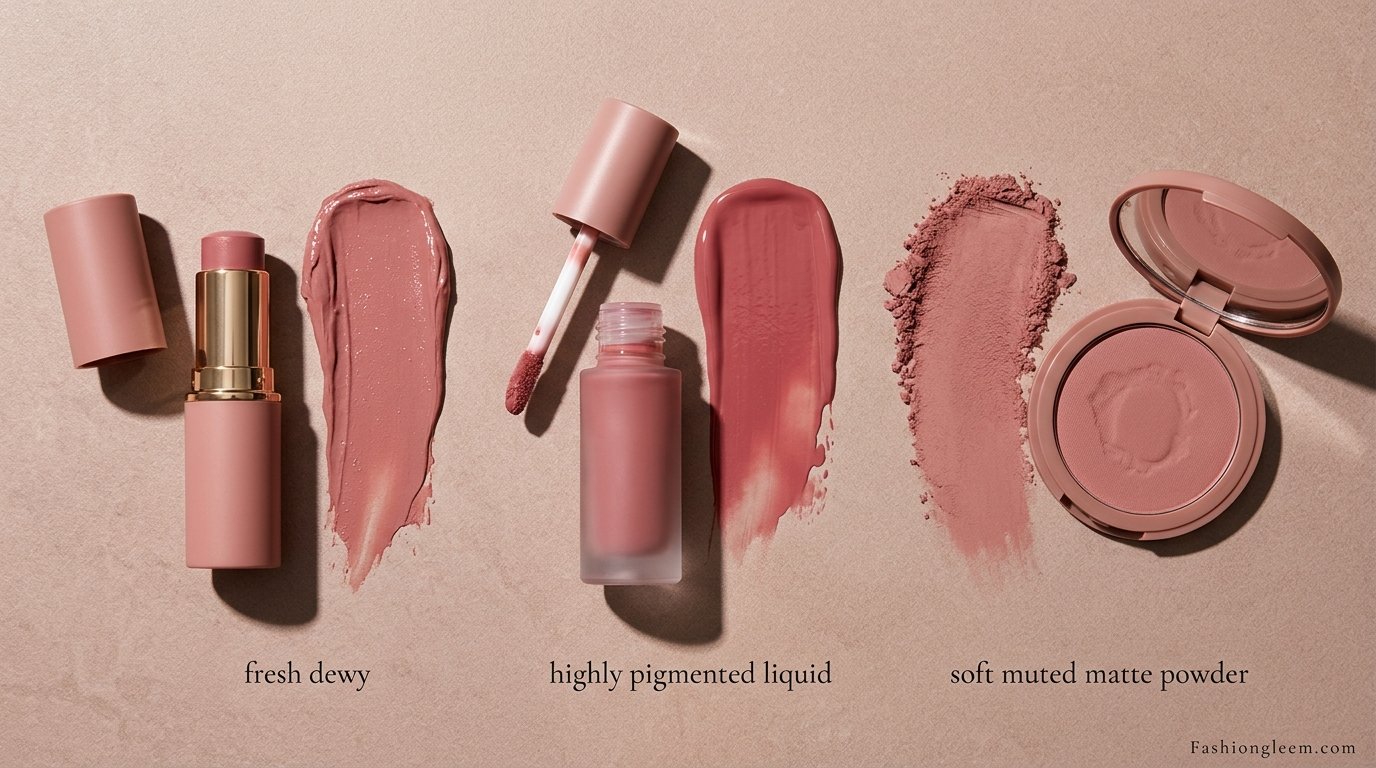
Buyers treat finish as a texture preference. On this shade it is a color variable, because finish changes how muted the same pigment reads on skin.
Matte powder grays the shade down further. It is the most muted, most sculpted reading, and the longest wearing on oily skin, but it is also the finish most likely to tip a cool version into gray on the wrong temperature.
Cream and balm push the shade fresher and pinker. They melt into skin, which is why the medium skin guidance argues cream outperforms powder on mature skin: it creates a lit from within flush instead of sitting on texture.
Liquid delivers the strongest pigment per dot and the steepest learning curve. The budget phenomenon’s own positive reviews carry the technique warning: start with a tiny dot, blend, then decide. Liquids punish the bright blush habit of applying first and blending later.
So choose finish as part of the shade decision. If a dusty rose reads too gray in a matte powder, the same family in a cream may be exactly right, and you have changed the finish, not abandoned the shade.
Application: Placement That Keeps It Sculpted
Dusty rose’s grown up reputation is partly choreography. Bright pinks live on the apples of the cheeks. Dusty rose belongs higher and further back, on the cheekbone, swept toward the temple in the draping family of placements.
Work in this order for a controlled result:
- Start sheer: one small dot of liquid, or one tapped off brush of powder.
- Place on the cheekbone, not the apple, and blend up and back.
- Check in daylight before adding: this shade builds quietly, then suddenly.
- Set cream with powder in the same family when the day is long.
Face shape adjusts the angle, not the shade. Round faces keep the sweep higher for lift. Long faces keep it more horizontal so the face does not lengthen further. The shade’s restraint forgives beginners, which is why it is the safest first blush in the pink family.
The layering technique behind bridal longevity comes from the artist coverage: cream first, then its matching powder as a veil, which sets the color while keeping it neutral. Use the powder as a veil, not a second full application, or the muting doubles and the color goes flat.
Pairing Dusty Rose: Lips, Eyes, and Bronzer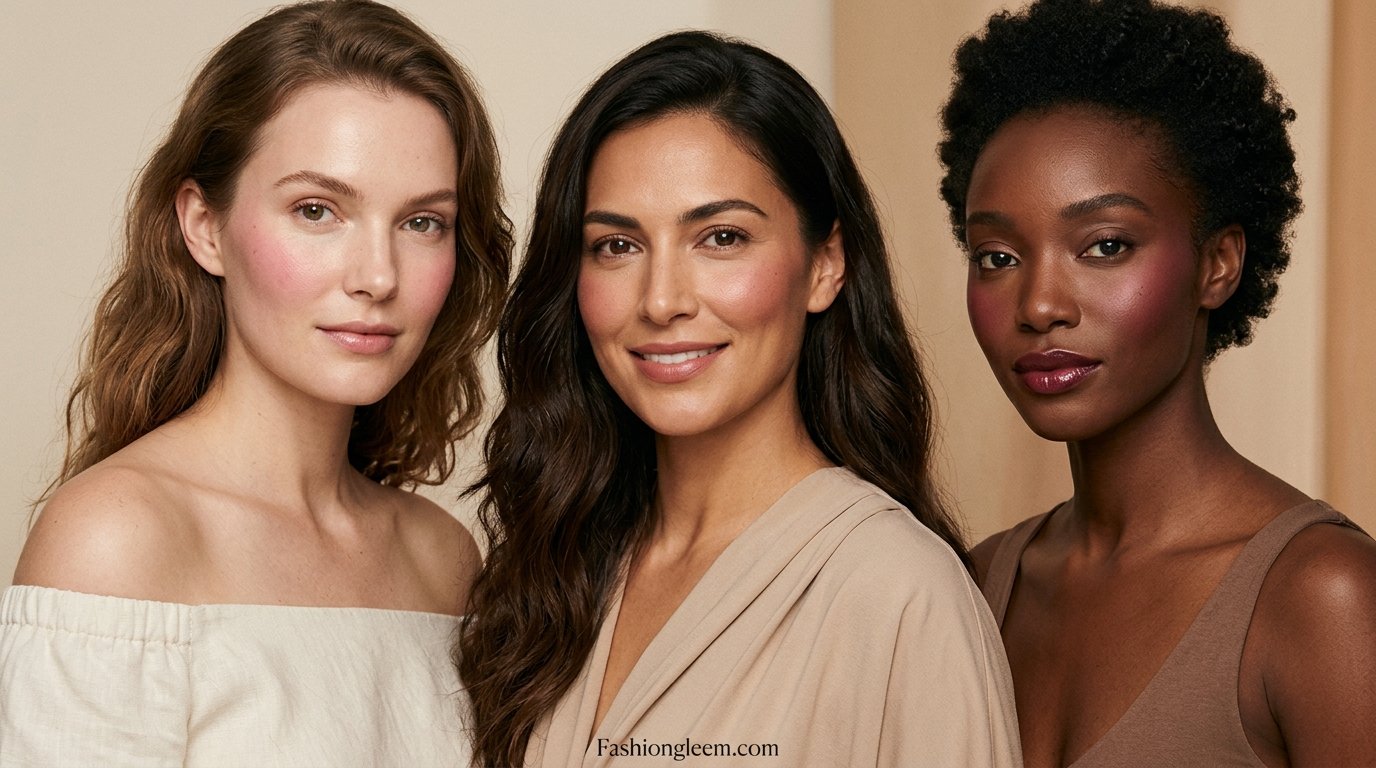
The shade’s signature look is monochrome: dusty rose on cheeks, a mauve or rosewood lip, and soft neutral eyes in the same temperature. The register reads expensive precisely because nothing on the face is arguing.
For lips, stay in the family: mauve, nude pink, and rosewood keep the harmony, and The long wear lipstick guide on this site covers the long wear side of the pairing for readers who need the lip to outlast the event.
A classic red lip turns the look into deliberate contrast, an evening move. Orange and coral lips fight both temperatures and are the pairing to avoid.
Eyes follow the same temperature rule: taupe and mauve shadows for the cool version, warm browns and bronze for the warm one.
The best vegan mascara under 20 guide completes the soft glam frame for readers building the whole look, and The glow up routine guide on this site places the shade inside a full routine.
Bronzer works with territory discipline: bronzer first in its zones, blush after on the cheekbone, and no muddy overlap between them. Blend the border, not the colors into each other, or the muting you paid for turns to mud.
When Dusty Rose Goes Wrong: Four Failures, Four Fixes
Most dusty rose disappointments are diagnosable, and each one maps to a decision made earlier in this article.
|
Failure |
The mechanism |
The fix |
|---|---|---|
|
Looks gray |
Cool muted version on warm or olive skin |
Swap to the warm, brown leaning version |
|
Looks ashy |
Pale white based formula on medium or deep skin |
Choose depth and pigment, not pastel tints |
|
Turns orange |
Warm version warming up on cool skin, or bronzer drag |
Test alone on bare cheek; move cooler |
|
Gone by noon |
Single cream layer, unset, over fresh skincare |
Layer cream under powder; set; spray |
Gray is a temperature verdict, not a shade verdict. Ashy is a depth verdict. Naming which failure you have is most of the fix, because each one points at a different shelf: temperature, depth, finish, or setting.
The test protocol prevents all four: swatch on the cheek, wait ten minutes, check in daylight. Muting and temperature shifts show themselves as a product settles, and the hand swatch in store lighting hides every one of them.
Mistakes That Quietly Ruin the Shade
The failures above have habits underneath them, and the same five recur across the reviews and guides.
- Trusting the name: buying any box labeled dusty rose without checking its temperature against your skin.
- Swatching on the hand: hand skin is a different color and temperature from cheek skin; the test lies politely.
- Starting with a full liquid dose: high pigment liquids need the dot discipline from the first application.
- Judging on fair skin swatches: a depth band mismatch dressed as a product review.
- Doubling the powder layer: setting cream with a full second application flattens the color into dullness.
Underneath all five sits one pattern: the shade was bought as a name instead of being matched as a color. Temperature, depth, finish: three checks, done once, and dusty rose becomes the easiest shade in the bag.
The beauty routine at home guide shows how the shade anchors an at home routine, and The glow up tips guide collects the wider glow guidance for readers extending the look beyond the cheeks.
Reading the Pan vs Reading the Skin
Every dusty rose mistake in this article begins the same way: the shade was judged in the pan. Pan color lies in three directions at once, and knowing them makes store testing twice as fast.
First, pans read cooler than skin. The gray in the recipe shows at full strength against plastic and compacts, then softens against the warmth of a face. A pan that looks almost mauve can wear as a balanced rose.
Second, pans read lighter than the applied color of pigmented formulas. Liquids and dense creams concentrate as they blend out, which is the pan side of the dot discipline: the swatch that looks gentle can arrive at full strength.
Third, pans hide the white base. The ashy trap is invisible in the compact and obvious on a deep cheek. This is why the cheek swatch in daylight is not fussiness. It is the only test that measures the product you will actually wear.
The Honest Limits of the Shade
Dusty rose has real limits, and naming them protects the shade’s reputation better than overselling it.
It is not a high energy color. Readers who want a visible pop, a festival flush, or the bright blush statement of the moment will find dusty rose too quiet, and they are right to. Its register is polish, not announcement.
It is not a universal shortcut either. The shade forgives beginners more than brights do, but temperature and depth still have to be matched, and the two minutes of swatch testing are the price of the forgiveness.
And it is not immune to fashion. Bright blush cycles in and out as the statement look. Dusty rose persists underneath as the tailoring: the shade readers return to for work, weddings, photographs, and every occasion where the makeup should be noticed second, after the person wearing it.
FAQs
1. What is dusty rose blush?
A blush in a muted rose shade: pink with gray and brown mixed in, which lowers its brightness and makes it read sophisticated rather than sweet.
A budget guide in the coverage defines the recipe exactly: dusty rose blends pink, brown, and a touch of mauve.
It is the pink for people who find pink too pink.
2. What color is dusty rose exactly?
A medium muted pink with a gray brown cast.
In its cool version it leans mauve; in its warm version it leans toward a pinkish brown.
There is no single standardized shade: dusty rose is a color description, not a regulated name, which is why every brand’s version differs and swatching matters.
3. Is dusty rose blush warm or cool?
Both exist, and the split is the shade’s biggest buying decision.
Makeup by Mario’s Dusty Rose is described by a working artist as mauve and cool toned, while warm, brown leaning dusty roses fill the fall shade lists.
Cool versions suit cool and neutral undertones; warm versions suit warm and olive undertones; neutrals can wear either.
4. Who can wear dusty rose blush?
Nearly everyone, at the right temperature and depth.
The fall shade coverage recommends it for fair to medium skin with cool or neutral undertones in its soft version, medium skin guides place it as the neutral undertone shade, and deeper, more pigmented versions carry it into deep skin.
The shade scales; the specific product must scale with it.
5. What is the difference between dusty rose and mauve blush?
Temperature and purple.
Mauve is pink pulled toward purple and gray, distinctly cool.
Dusty rose is pink pulled toward brown and gray, which can sit neutral or warm.
A mauve leaning product sold as dusty rose (the Makeup by Mario case) wears cooler than the name suggests, which is exactly why the two get confused.
6. What is the difference between dusty rose and nude pink blush?
Depth and intent.
Nude pink stays close to skin color, lighter and quieter, a no blush blush.
Dusty rose is deeper and more visible, with the muting doing a sculpting job.
Westman Atelier’s Petal is documented as a dusty nude rose, which shows the two families meeting in the middle.
7. Which dusty rose blush is the reference shade?
NARS Dolce Vita is the shade the coverage treats as the reference: shade guides name it directly as the dusty rose, the one other versions get compared against.
Laura Mercier’s Chai is named in the same guides as a dusty rose with a soft matte finish, and Tarte’s Exposed as the muted rose for neutral tones.
8. What is the best drugstore dusty rose blush?
The e.l.f.
Camo Liquid Blush in Dusty Rose is the coverage’s budget phenomenon: creator posts price it at $7, rate it highly, and praise the muted soft rose tone against rivals judged too pink.
Treat creator ratings as enthusiasm, not testing, but the shade’s popularity at that price is itself evidence of the color’s demand.
9. Is there a dusty rose blush under 10 dollars?
Yes, on the creator reported strand: the e.l.f.
Camo Liquid Blush in Dusty Rose at $7.
Liquid pigment at that price needs a tiny starting amount, as even the positive reviews note.
Prices move and vary by retailer, so check the current listing before quoting the number onward.
10. What is the best luxury dusty rose blush?
The prestige strands in the coverage: the Summer Fridays Blush Balm Stick in Dusty Rose at $38 (fall list strand), Westman Atelier’s Baby Cheeks in Petal as the dusty nude rose.
And Armani’s Luminous Silk Glow Blush in its dusty rose shade for a luminous finish.
Luxury here buys texture and finish refinement more than a different color idea.
11. Does dusty rose blush work on deep skin?
In its deeper versions, yes; in its pale versions, often not.
The fall coverage warns that pale, white based pinks appear ashy on medium to deep complexions.
The social evidence agrees constructively: women of color in the e.l.f.
Conversation name the deeper Suave Mauve shade as their dusty rose.
Pigment load and depth, not the family name, decide the result.
12. Why does dusty rose blush look gray on me?
Usually a temperature or muting mismatch: a cool, heavily muted version on warm or olive skin reads gray because the gray in the shade has nothing in the skin to agree with.
The fixes are to switch to the warm, brown leaning version, apply it over a warmer base, or move one step toward rosewood.
The shade did not fail; its temperature did.
13. Why does dusty rose blush look ashy?
Ashiness is the white base problem: pale, pastel leaning formulas carry a white base that sits visibly on medium and deep skin instead of melting in.
Choose versions with clear depth and pigment rather than pastel tints, and test on the cheek, not the wrist, in daylight before buying.
14. Why does my dusty rose blush turn orange?
Warm versions on cool skin can pull orange as they wear, and bronzer layered underneath can drag a neutral dusty rose warm.
Test the shade alone on bare cheek skin, check it after an hour, and if it warms up, move to the cool version of the shade rather than a different shade family.
15. Is dusty rose blush good for mature skin?
The fall shade coverage aimed at mature readers leads with soft dusty rose, on the logic that muted color freshens without the brightness that can emphasize texture.
Formula matters as much as color: the medium skin guide argues cream outperforms powder on mature skin because it melts in rather than sitting on texture.
16. Should I choose cream, liquid, or powder dusty rose?
By skin and finish goal.
Powder (ideally finely milled) suits oily skin and reads the most muted and matte.
Cream suits dry and mature skin and reads fresher.
Liquid gives the strongest pigment per dot and the steepest learning curve.
The same shade name in three finishes wears like three cousins, not triplets.
17. Does finish change how dusty rose looks?
Yes, measurably in character: matte finishes gray the shade down further, dewy finishes push it fresher and pinker, satin sits between.
This finish shift is why a shade can be right in a cream and wrong in a powder for the same face.
Choose the finish as part of the shade decision, not after it.
18. How do I apply dusty rose blush for a natural look?
Start sheer.
One small dot of liquid or one tapped off brush of powder, placed on the cheek, blended up and back toward the temple, then assessed in daylight before adding more.
Dusty rose’s whole appeal is restraint; its natural look is lost by quantity faster than by placement.
19. Where should dusty rose blush be placed?
Higher and further back than a bright pink: on the cheekbone rather than the apple, swept toward the temple in the draping family of placements.
That placement is part of why the shade reads sculpted and grown up.
On round faces keep it higher; on long faces keep it more horizontal.
20. Can dusty rose blush double as contour?
The cool versions, partly.
Fair skin guides note cool mauve leaning shades can double as a soft contour because their gray reads as shadow.
It is a soft structure effect, not a replacement for contour on deeper skin or for strong sculpting.
Warm dusty rose cannot do this job; warmth reads as sun, not shadow.
21. What lipstick pairs with dusty rose blush?
Its own family: mauve, nude pink, and rosewood lips keep the monochrome register that makes the shade look expensive.
A classic red lip changes the look into deliberate contrast, which works for evening.
Orange and coral lips fight both temperatures of dusty rose and are the pairing to avoid.
22. Can I wear dusty rose blush with bronzer?
Yes, with order discipline: bronzer first in its own zones, blush after on the cheekbone, and no overlapping muddy middle.
The medium skin guidance pairs muted rose shades with warmth successfully when each product keeps its territory.
Blend the border, not the colors into each other.
23. Is dusty rose blush good for bridal makeup?
It is a bridal staple in the artist coverage: the shade comparison reel exists because brides kept requesting these exact rose and mauve tones.
Muted color photographs without dating, survives flash, and suits the soft glam register most brides ask for.
Longevity comes from layering: cream set with a matching powder, a technique the artist demonstrates.
24. How do I make dusty rose blush last all day?
Layer and set.
Cream or liquid first, a light dusting of a matching powder blush over it, finishing spray last.
The bridal layering demonstration in the artist coverage sets cream with powder in the same shade family for exactly this reason.
Skin prep matters too: blush over well moisturized, settled base outlasts blush over fresh slick skincare.
25. Can I layer cream and powder blush in the same shade?
Yes, and it is the professional version of the shade: the artist comparison content demonstrates layering the cream with its matching powder to set it while keeping the color neutral.
Use the powder as a veil, not a second full application, or the muting doubles and the color goes flat.
26. What eyeshadow goes with dusty rose blush?
Neutrals in its own temperature: taupe, soft brown, and mauve toned shadows for the cool version; warm browns and bronze for the warm version.
The monochrome dusty rose look (matching soft rose on eyes, cheeks, and lips) is the shade’s signature editorial arrangement.
27. Is dusty rose blush office appropriate?
It is arguably the most office appropriate blush color in the pink family: muted, close to a natural flush, and hard to overdo in its sheer first layer.
The shade’s grown up reputation comes from exactly this register.
Choose matte or satin finishes for the most conservative settings.
28. Dusty rose vs desert rose: are they the same?
Not in the one line where both are named: an artist comparing Makeup by Mario shades describes Desert Rose as opaque with mauve and cool tone, and Dusty Rose as more pigmented, also mauve cool.
Distinguishing them by opacity and depth.
Across brands the names are unregulated and overlap freely, which is the name collision problem in miniature.
29. What is the dusty rose shade in Makeup by Mario?
In the Soft Pop line, Dusty Rose is the cooler, mauve leaning, more pigmented of the artist compared trio, against Rose Crush (warm rose) and Desert Rose (opaque, mauve cool).
If you want the warm version of the idea from that line, Rose Crush is the comparison the artist herself draws.
30. What is the dusty rose shade in e.l.f.?
The Camo Liquid Blush shade named Dusty Rose, the $7 creator favorite.
The same line’s Suave Mauve functions as the deeper dusty rose for many wearers of color, per the review conversation.
Both are high pigment liquids: start with one small dot.
31. Can olive skin wear dusty rose blush?
The warm version, yes; the cool version is the risk.
Olive skin’s green cast amplifies gray and mauve, which is why cool dusty rose reads gray on olive faces so often.
Warm, brown leaning dusty rose and rosewood sit in olive skin’s safe zone.
The medium skin guide’s logic applies: neutral to warm muted shades flatter golden and olive complexions.
32. Can fair skin wear dusty rose blush?
Fair skin is the shade’s home ground in the coverage: the fall list recommends soft dusty rose especially for fair to medium skin with cool or neutral undertones.
Fair skin’s only caution is depth: the most pigmented versions (the liquid, the Mario stick) need sheering so the muting reads as sophistication, not heaviness.
33. Is dusty rose blush a fall shade only?
Fall claims it loudest (the seasonal lists lead with it), but the shade is a neutral, and neutrals are seasonless: bridal season drives it in spring and summer, and its office register works all year.
What changes by season is finish: dewier in summer, more matte and layered in fall and winter.
34. How is dusty rose different from tea rose or antique rose?
Mostly naming vintage, not color science: tea rose traditionally names a softer, lighter rose; antique and vintage rose name the same muted idea as dusty rose with a period flavor.
Treat all three as unregulated descriptions and judge by swatch.
The names are poetry; the pigment is the fact.
35. Can men or beginners use dusty rose blush?
Beginners, especially: muted shades forgive placement and quantity errors that bright pinks advertise, which makes dusty rose the safest first blush in the pink family.
The only beginner trap is the high pigment liquids, where the dot discipline matters from day one.
36. Does dusty rose blush suit warm undertones?
The warm version does, genuinely: brown leaning dusty rose harmonizes with golden and warm olive skin, adding flush without the orange argument that coral starts.
Cool dusty rose on warm skin is the mismatch behind most gray complaints.
Warm readers should shop the temperature, not the shade name.
37. Does dusty rose blush suit cool undertones?
It is the cool undertone’s signature pink: the mauve leaning versions echo the skin’s own pink and purple signals, which is why the fall coverage pairs the shade with cool and neutral undertones first.
Cool skin can also wear the warm version in summer as a deliberate sun effect, placed like warmth rather than flush.
38. How do I test a dusty rose blush before buying?
Swatch on the cheek or jaw, not the hand: hand skin is a different color.
Check it in daylight after ten minutes of wear, because muting and temperature shifts show as the product settles.
Compare one cool and one warm version side by side; the right temperature announces itself immediately against your skin.
39. Can dusty rose blush be used on lips or eyes?
Cream and balm formats often can: multi use sticks in this shade family are marketed for cheeks and lips, and the monochrome look uses the same tone on eyes.
Powder blush on lips needs a balm base and stays an improvisation.
Check each product’s own labeling; eye area use is a product specific claim, not a shade property.
40. Why is dusty rose blush so popular?
It solves the pink problem: many adults want a flush that does not read girlish, bright, or orange, and dusty rose is the pink with the volume turned down.
Social commerce amplified it (a $7 liquid with the name on the box, bridal artists comparing shades on camera), but the demand underneath is the color’s register: polished, calm, and hard to get wrong.
41. What blush is similar to NARS Dolce Vita?
The guides’ own comparison set: Laura Mercier Chai for the soft matte version, Tarte Exposed for the neutral muted rose, and the e.l.f.
Dusty Rose liquid for the budget version of the idea.
Similar means same temperature and depth family, not identical color; each differs in finish, which shifts the wear.
42. Is dusty rose blush still in style?
Muted neutrals do not trend in and out the way brights do; dusty rose persists because it is a register, not a novelty.
The 2026 coverage still leads fall lists with it and bridal artists still field requests for it.
If bright blush is the fashion statement, dusty rose is the tailoring: always in the wardrobe.
Conclusion
Dusty rose blush rewards the buyer who treats it as a color to match, not a name to trust. Pink muted with gray and brown, split into a cool mauve leaning version and a warm brown leaning one, scaled by depth from fair skin to deep.
Run the three checks before any purchase: temperature against your undertone, depth against your skin, finish against your skin type and the day.
The named shades in the table give you the starting points at every price, from the creator loved budget liquid to the reference powder.
Then swatch on your cheek, in daylight, and wait ten minutes. The right dusty rose will look less like makeup and more like your own flush on its best behavior, which is the entire promise of the shade.
Start with the version that matches your temperature, apply it high and sheer, and let the muting do the work. That is a dusty rose blush doing exactly what its name promises.

Dilawar is a contributing writer at Fashiongleem.com, focusing on beauty, hairstyles, skincare, fashion accessories, and personal grooming. He creates informative, easy-to-follow articles that help readers explore new looks, understand popular beauty trends, and improve their everyday styling routines. His writing emphasizes practical advice, useful product information, and accessible fashion inspiration for modern readers.