

Night Routine for Glowing Skin: Remove, Treat, Seal
Night routine for glowing skin is not a shelf of products. It is a short sequence with three jobs: remove the day, treat with one active, and seal the skin so its water survives the night.
Glow needs an honest definition before it needs a routine. Skin reads as glowing when it is hydrated, calm, and even enough in texture to reflect light smoothly, and a night routine supports those three inputs over weeks.
That framing matters because this is general information, not treatment. No routine can promise a result, and skin conditions belong with a dermatologist. What a routine can do is stop working against your skin every night.
Fashiongleem treats this routine as a system: the order rule, the three movements, a weekly rotation instead of nightly stacking, skin type settings, and a two step minimum for the nights you can barely stand up.
Everything below is built from dermatologist quoted guidance and the order guides that agree with each other. Where a claim rests on a single source, it is labeled a strand, right where it appears.
Why Night Is Different: The Repair Shift
Skin runs on a day and night split. The day shift is defense: sunscreen, pollution, and makeup sit on the surface. The night shift is repair, and the routine’s job is to hand the skin over clean and supported.
Board certified dermatologist Dr Marisa Garshick states the frame in The Prevention dermatologist evening routine roundup: a nighttime routine focuses on repair and recovery, as the skin regenerates while you sleep.
That is why the strong tools live at night. Retinoids and exfoliating acids do their work away from sunlight, and some, retinol above all, are degraded by light and can raise sun sensitivity.
Night has a cost side too. Skin loses water the whole time it repairs, which is why the seal step exists and why an unsealed routine wakes up looking dull even when the treatment step was perfect.
The Order Rule: Thinnest to Thickest
One rule organizes every product you own. Apply from thinnest to thickest: watery layers first, where they can reach the skin, and creams and oils last, where they seal everything underneath.
Dr Caroline Opene gives the rule its working phrasing in the same roundup: patients apply from thinnest, like serums or toners, to thickest, like creams. The Obviously Skincare guide to layering products in the right order builds its whole layering system on the same law.
The full night order, with each step’s status, is short enough to memorize:
|
Step |
Product |
Status |
|---|---|---|
|
1 |
First cleanse (oil, balm, or micellar), if makeup or sunscreen worn |
Conditional |
|
2 |
Water based cleanser |
Every night |
|
3 |
Toner or essence |
Optional |
|
4 |
Treatment: one active (retinoid or acid, not both) |
Rotation nights |
|
5 |
Hydrating serum |
Optional |
|
6 |
Eye cream |
Optional |
|
7 |
Moisturizer or night cream |
Every night |
|
8 |
Face oil or sleeping mask |
Optional, always last |
The Green Point skincare routine order guide states the companion rule as its own answer because readers ask it constantly: serum goes before moisturizer, always, because the light layer must sit closest to the skin.
The one structural exception is oil. Oil based products block water based ones from getting through, so anything in an oil base goes after every water based layer, whatever its label says.
Step One, REMOVE: Cleansing the Day Off
Nothing works through a film. Sunscreen residue, makeup, sebum, and the day’s pollution sit between your treatment products and your skin, and the first movement of the routine removes them.
Start with hands and lukewarm water. Hot water is a quiet barrier stressor, and clean hands matter more than most product choices people agonize over.
Double Cleansing: When It Earns Its Keep
Double cleansing runs two cleansers with two jobs. An oil based first cleanse (balm, oil, or micellar water) dissolves makeup, sunscreen, and sebum. A gentle water based second cleanse then cleans the skin itself.
It earns its keep on makeup days and water resistant sunscreen days, when a single cleanse leaves film behind. The Small Batch Serums routine order guide gives the proportionate version: if you wore neither, one gentle cleanse is fine.
On bare skin days, doubling up is not extra credit. Over cleansing is its own problem, stripping the barrier the rest of the routine is trying to support. Match the cleanse to the day, not to a fixed ritual.
Pat dry with a clean towel and do not rub. The skin you are about to treat should be calm, not freshly abraded, and the towel habit is the cheapest upgrade in this entire routine.
Step Two, TREAT: One Active Per Night
The treatment step is where routines go right or go wrong. The rule that protects everything else is simple: one strong active per night, chosen on purpose, rotated across the week.
The candidates are familiar. Retinoids for texture and tone support. Exfoliating acids (glycolic or lactic AHA, salicylic BHA) for dullness and roughness. Everything else in the step, niacinamide, hydrating serums, is support crew, not a second headline act.
Retinol Mechanics: Dry Skin, Pea Size, Buffered Starts
Retinol has the strictest application rules in the routine, and the guides agree on all of them. Night only, because sunlight degrades it and it can increase sun sensitivity.
Apply it to fully dry skin, a minute or two after cleansing. Damp skin can increase stinging, which is why the damp skin habit that suits hydrating serums is wrong here. The routine holds both rules at once, in different steps.
Use a pea sized amount for the whole face. More product does not mean more effect; it mostly means more irritation, and the pea is the measure the dermatologist tips repeat.
Beginners start low: two nights a week is the layering guides’ shared starting point, adding nights only as the skin stays comfortable. Nightly retinol is an earned setting after weeks of tolerance, not a starting instruction.
The Moisturizer Sandwich: Buffering for Tender Skin
The sandwich is moisturizer, then retinol, then moisturizer again. The first layer slows the active’s absorption, which softens the adjustment period for beginners and sensitive skin.
It trades a little speed for tolerance, and tolerance is what keeps a retinol habit alive past week three. Graduate out of the sandwich when the skin is bored by it, not before.
One caution outranks every tip in this section. If you are pregnant, trying to conceive, or breastfeeding, ask your own doctor before using a retinoid. That is standard guidance for this ingredient family, stated plainly by The Glowinout night routine order guide.
Step Three, SEAL: Beating Overnight Water Loss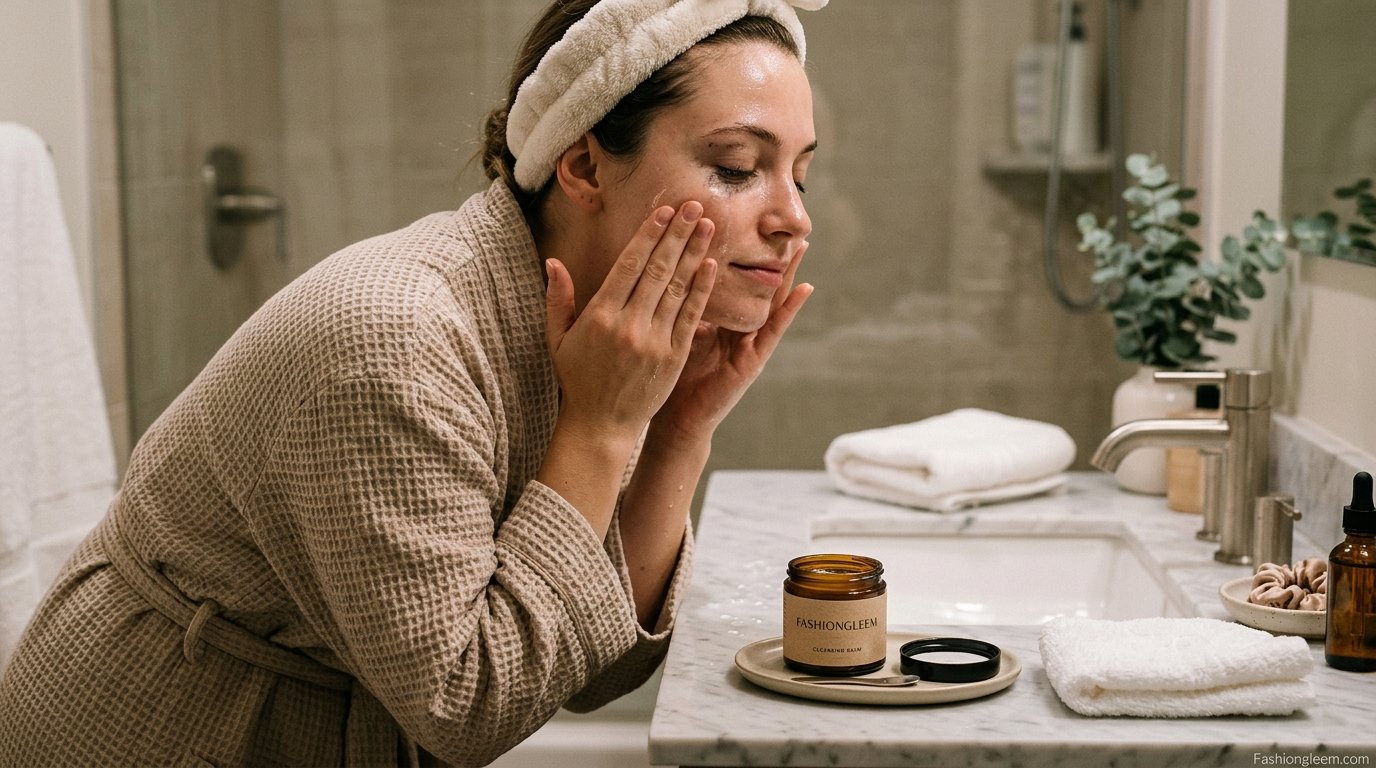
The seal is the step readers skip and dermatologists defend. Dr Opene’s line for it: apply a moisturizer to replenish the skin barrier and lock in hydration.
The physics is plain. Hydrating layers add water to the skin’s surface. Left unsealed, that water escapes overnight through transepidermal water loss, and the escape rises in dry, heated bedroom air.
A cream or richer night moisturizer slows the escape. Night creams are mostly this idea in a heavier format: more seal, no SPF, built for hours without reapplication. A good day moisturizer still beats a skipped night.
Face oil, if used, is the final layer, the roof of the routine. A sleeping mask plays the same role on the driest nights: the seal of seals, a few nights a week rather than a nightly default.
The Weekly Rotation: Retinol Nights, Acid Nights, Rest Nights
One active per night only works if the week is planned. The rotation, taught by name as skin cycling in The Glowinout night routine order guide, gives each night a single job and gives the barrier recovery gaps between active nights.
|
Night |
Job |
What goes on |
|---|---|---|
|
1 |
Retinoid |
Cleanser, retinol on dry skin, moisturizer |
|
2 |
Rest |
Cleanser, hydrating serum if used, moisturizer |
|
3 |
Exfoliation |
Cleanser, acid product, moisturizer |
|
4 |
Rest |
Cleanser, hydrating serum if used, moisturizer |
|
5 |
Retinoid |
Cleanser, retinol on dry skin, moisturizer |
|
6 |
Rest |
Cleanser, moisturizer (the minimum is fine) |
|
7 |
Rest or reset |
Minimum, or a mask night if skin is calm |
Beginners run fewer active nights than this table, not more: two active nights a week is a complete starter rotation. The table is the established version readers grow into over a month or two.
The rest nights are not empty nights. They are when barrier focused care happens: hydration, the seal, and nothing that asks the skin to perform. Skipping rest is how rotations collapse into irritation.
Exfoliation cadence has a strand to respect: a clinic guide puts exfoliation steps at one to two times a week. Two acid nights in the table sits at the top of that range; sensitive skin belongs at one.
The Tired Night Minimum: Two Steps That Still Count
Every long routine in the guides quietly assumes energy. Real life includes midnight finishes, travel days, and new baby nights, and those are exactly the nights routines go to die.
So here is the floor, led with pride. Dr Garshick’s minimum, from the same dermatologist roundup: you only need a cleanser to remove the build up from the day and a moisturizer to help nourish the skin.
Two steps, every night, beats seven steps three nights a week, because consistency is the active ingredient no bottle sells. Newsible Asia’s three step dermatologist guide reports the same consensus in structure: a straightforward routine done nightly promotes healthier skin over time.
Shrink the routine; never skip it to zero. The minimum also protects the rotation: a tired rest night at minimum still counts as a rest night, and the week’s pattern survives.
One more floor rule: do the routine before the sofa slump. A single clinic guide offers a timing strand, between 8 PM and 10 PM, about 30 minutes before bed. Treat the clock as a suggestion; the mechanism, routine before exhaustion, is the point.
Routines by Skin Type: What Actually Changes
Skin type does not change the movements. It changes three settings: cleanser weight, active choice and frequency, and seal richness. Anything more rewritten than that is padding.
|
Skin type |
Cleanse setting |
Treat setting |
Seal setting |
|---|---|---|---|
|
Dry |
Cream or gentle cleanser; double cleanse on makeup days only |
Hydrating serum under the active; buffered retinol |
Richest cream; oil or sleeping mask on dry nights |
|
Oily |
Thorough gentle cleanse; double cleanse after sunscreen days |
Standard rotation; acids often suit |
Gel or lotion moisturizer, never skipped |
|
Combination |
Standard gentle cleanse |
Standard rotation |
Flexible seal: more on cheeks, lighter on the T zone |
|
Sensitive |
Shortest cleanse, fragrance cautious |
One gentle active at most; rest nights outnumber active nights |
Simple ceramide rich cream |
|
Acne prone |
Gentle, thorough, no scrubbing |
One active at a time; no stacking |
Non greasy seal; consistency over novelty |
Dry skin lives or dies at the seal. It is also where bedroom air votes loudest: heating season can turn a working routine dull in a week, and the fix is a richer final layer, not a new treatment.
Oily skin must hear the seal rule clearly. Skipping moisturizer does not reduce oil; it leaves the barrier unsupported and the actives unbuffered, a combination that reads as shiny and dull at the same time.
Sensitive skin runs the slowest version of everything: fewer steps, actives introduced weeks apart, patch testing treated as essential. Persistent reactions are a dermatologist conversation, not an endless product swap.
The skincare routine for beginners guide walks the same type logic from the very first routine, and The best skincare routine for glowing skin guide builds the wider glowing skin routine around these night settings for readers who want the full day picture.
The Troubleshooting Table: Four Failures, Four Fixes
Most night routine complaints are mechanical, and each one maps to a specific step. Diagnose by symptom before buying anything.
|
Symptom |
Likely mechanism |
The fix inside the routine |
|---|---|---|
|
Products pilling into rolls |
Layers too thick, too fast, or an oil layer under water layers |
Thinner amounts, brief pauses, oil strictly last |
|
Skin dull every morning |
Overnight water loss; seal too light for the room |
Richer final layer; add a hydrating layer under it |
|
Retinol stinging and flaking |
Damp skin, too many nights, no buffer |
Dry skin only, fewer nights, the sandwich |
|
Dry despite moisturizer |
Humectant with nothing occlusive over it |
Seal with a cream; consider oil or a mask night |
Pilling is the order rule announcing itself. Products roll when a heavy layer sits under a light one or when layers are stacked wet on wet without a pause. Thin the amounts first; it is usually quantity, not incompatibility.
Morning dullness is the seal failing, most often in winter. Before adding a morning rescue product, upgrade the last step of the night: the fix for a night problem belongs at night.
Stinging after a new active is information, not a challenge. Step back a level, add rest nights, and let the barrier recover. Burning that does not settle after stopping a product is a stop and seek advice signal, not a routine problem.
Mistakes That Quietly Wreck a Night Routine
Night routines rarely explode. They erode, one small habit at a time, and the guides’ mistake lists rhyme with each other.
- Sleeping in sunscreen or makeup: the treatment step then works through a film, and pores spend the night in the day’s residue.
- Stacking two strong actives: retinol plus an acid on one night is the classic route to a wrecked barrier.
- Retinol on damp skin: the stinging shortcut, repeated nightly until the habit dies.
- Daily exfoliation: it thins the barrier the routine exists to support, then gets misread as needing more exfoliation.
- Copying a whole influencer shelf: ten new products at once makes every reaction unattributable and every routine unsustainable.
- Abandoning tired nights: skipping to zero instead of shrinking to the minimum breaks the consistency the results depend on.
The pattern under all six is identical: the routine failed at discipline, not at product quality. Cheaper products in the right order, on the right nights, outperform a luxury shelf used at random.
The Supporting Cast: Eyes, Lips, Neck, and Sleep
A few small territories round out the night without adding steps that matter. Eye cream is optional in nearly every guide: a gentle product tapped on after treatments, or plain moisturizer used carefully, for most readers.
Lips take the final balm or overnight mask, because they have no oil glands of their own and the night is long. It is the last thirty seconds of the routine and the one people thank themselves for.
The neck, chest, and hands age in the same light as the face and get forgotten by it. Whatever moisturizer remains on your hands after the face belongs there.
The best body lotion for glowing skin guide covers the body side of the glow routine for readers extending it downward.
Sleep itself is the routine’s partner, not its backdrop. A beginner guide strand puts the target at 7 to 8 hours beside the routine steps, and the dermatologist framing agrees in structure: products support the repair window; sleep is the repair window.
Pillowcases are hygiene, not magic. Change them regularly, because a treated face returned to a stale surface works against itself. Silk versions are marketed on friction claims; treat those as product claims, and remember that clean and often changed beats expensive and stale.
The Korean skincare 10 step routine guide shows how the long routine tradition organizes its extra layers for readers who love the ritual. The turmeric face mask guide covers the occasional mask night.
The skincare collection on this site holds the wider collection, and The glow up routine guide on this site reframes the same habits as a glow up system.
FAQs
1. What is a night routine for glowing skin?
A short evening sequence built in three movements: remove the day (cleansing), treat with one targeted active, and seal with moisturizer so skin keeps its water overnight.
Glow, honestly defined, is how hydrated, calm, evenly textured skin reflects light, and the routine supports those inputs over weeks rather than promising an overnight change.
2. What is the correct order of a night skincare routine?
Cleanser first, then the optional light layers in thinnest to thickest order: toner or essence if used, treatment serum or active, eye cream if used, moisturizer to seal, and face oil last if used.
Dermatologist Dr Caroline Opene’s rule, quoted in Prevention’s roundup, is the memory hook: apply from thinnest, like serums and toners, to thickest, like creams.
3. How many steps should a night routine have?
Fewer than the internet suggests.
The working range across dermatologist guided pages runs from two to six steps.
The floor is a two step minimum: cleanser and moisturizer.
The standard version runs three movements: cleanse, treat, seal.
Optional additions come after that.
Toner, eye cream, oil, and masks earn their place only when the basics are already consistent.
Extra steps serve the ritual, not the skin.
4. What is the minimum night routine that still works?
Cleanser and moisturizer.
Board certified dermatologist Dr Marisa Garshick states it plainly in Prevention’s evening routine roundup: you only need a cleanser to remove the day’s build up and a moisturizer to nourish the skin.
Everything else is an upgrade to a working floor, which is why tired nights should shrink the routine instead of skipping it.
5. Do I need to double cleanse every night?
Only when there is something to dissolve.
Double cleansing, an oil based cleanser or balm followed by a water based cleanser, earns its keep on makeup, long wear products, and water resistant sunscreen.
On a bare skin day, one gentle cleanse is enough, and several order guides say so outright.
Over cleansing is its own problem, not a virtue.
6. What is double cleansing?
Two cleansers in sequence with two different jobs.
The first, oil based (balm, oil, or micellar water), dissolves makeup, sunscreen, and sebum, which are oil soluble.
The second, a gentle water based cleanser, actually cleans the skin itself.
The Glow Guide Hub FAQ also records the Korean 4 2 4 method (four minutes of oil massage, two of foam, four of rinsing) as a strand of the same tradition.
7. Should I use toner at night?
Optionally.
Modern toners are light hydrating or calming layers, not the astringent strippers of memory, and order guides consistently mark the step optional.
It goes on straight after cleansing as the lightest layer.
Skip exfoliating toners on retinol nights, and skip toner entirely if your routine already feels complete without it.
8. Where does retinol go in a night routine?
After cleansing, on fully dry skin, before moisturizer.
Retinol is the treatment step: sunlight degrades it and it can increase sun sensitivity, which is why every layering guide assigns it to the night.
Wait a minute or two after cleansing so the skin is dry; damp skin can increase stinging, a caution repeated across the order guides.
9. Can I use retinol every night?
Eventually, some people do; nobody should start there.
The layering guides’ shared protocol is to begin at two nights a week, buffer with moisturizer if needed, and add nights only as the skin stays comfortable.
Nightly use is an earned setting after weeks of tolerance, not a starting instruction, and irritation is the signal to step back, not to push through.
10. How much retinol should I use?
A pea sized amount for the whole face.
The Belogical dermatologist tips and several order guides repeat the same measure, because more product does not mean more effect; it mostly means more irritation.
Spread it evenly, keep it away from the eye corners and lip edges unless a product is formulated for those areas.
11. Should retinol go on dry or damp skin?
Dry.
This is one of the few application rules the guides state without hedging: retinol belongs on fully dry skin, and damp skin can increase stinging and irritation.
The damp skin habit that suits hydrating serums like hyaluronic acid is right for them and wrong for retinoids; the routine holds both rules at once, in different steps.
12. Can I use retinol and exfoliating acids on the same night?
For most people, and for every beginner, no.
The order guides converge: choose retinol or an exfoliating acid on a given night, and alternate them across the week.
Stacking both is the commonest route to a wrecked barrier.
Experienced users with tolerant skin sometimes layer carefully, but that is an exception the guides mention only to warn around.
13. What is skin cycling?
A weekly rotation that gives each night one job: a retinoid night, an exfoliation night, and rest nights for barrier focused care, in repeating order.
Glowinout’s night routine guide teaches it by name.
The point is spacing: actives get recovery gaps, so the routine delivers their benefits without the irritation that makes people quit.
14. How often should I exfoliate at night?
The clinic guide strand says one to two times a week for exfoliation steps.
In a rotation, that translates to one or two acid nights weekly for most people.
Daily exfoliation is the classic over treatment error: it thins the barrier the rest of the routine is trying to support, and the dullness it causes is often mistaken for needing more exfoliation.
15. Does serum go before or after moisturizer at night?
Before.
Serums are lightweight and concentrated, designed to sit close to clean skin where their ingredients can work.
Moisturizer then locks in hydration and softens any dryness the active causes.
The Green Point order guide states it as a standalone answer because it is one of the most asked layering questions in skincare.
16. Can I layer two serums at night?
Yes, with the order rule applied: thinnest to thickest, as Dr Garshick advises for multiple serums in Prevention’s roundup.
The caution is chemical, not mechanical: two treatment serums can smuggle in two strong actives on one night, which breaks the one active rule through the back door.
One treatment serum plus one hydrating serum is the sane ceiling.
17. Do I need an eye cream at night?
No, and the guides are unusually honest about it: eye cream is marked optional in nearly every routine in the set.
The under eye skin is delicate and some people like a dedicated gentle product there, tapped on after treatments and before moisturizer.
A plain moisturizer used gently achieves much of the same for most readers.
18. What does a night cream do that a day moisturizer does not?
Mostly richness, not magic.
Night creams are typically heavier, built to seal against overnight water loss while you are not reapplying anything, and they carry no SPF because none is needed indoors at night.
The SkinCeuticals order guide places richer moisturizing as the night’s final structural step for the same reason.
A good day moisturizer used at night still beats a skipped night.
19. Should face oil go before or after moisturizer?
After, as the last step.
Oils are occlusive: they sit on top and slow water escape, which also means water based products applied after an oil cannot get through properly.
The layering guides state the exception clearly: oil based serums also go after water based layers, always.
Oil is the routine’s roof, and roofs go on last.
20. When should I do my night routine, right before bed?
A single clinic guide offers a timing strand: between 8 PM and 10 PM, ideally about 30 minutes before bed, so products settle instead of transferring to the pillow.
Treat the clock as one source’s suggestion, not a rule.
The durable advice inside it is real: do the routine before the late evening sofa slump, because the best routine is the one that happens.
21. What is a good night routine for dry skin?
The same three movements with the settings turned up: a gentle or cream cleanser, double cleansing only on makeup days, a hydrating serum under the treatment step, and the richest seal in the set (a ceramide rich cream.
With a face oil or sleeping mask on the driest nights).
Dry skin is also where the seal physics matters most, especially in heated winter bedrooms.
22. What is a good night routine for oily skin?
The same structure with lighter formats: a thorough but gentle cleanse (oily skin is likeliest to benefit from double cleansing after sunscreen days), treatment nights as scheduled, and a gel or lotion moisturizer instead of a cream.
The step oily skin must not skip is the seal: skipping moisturizer does not reduce oil, it just leaves the barrier unsupported and the actives unbuffered.
23. What is a good night routine for combination skin?
Run the standard routine and vary the seal by zone if needed: the regular moisturizer everywhere, a touch more on dry cheeks, a lighter hand on the T zone.
Combination skin rarely needs two routines; it needs one routine with a flexible final step, plus patience, because its zones also shift with seasons.
24. What is a good night routine for sensitive skin?
Shorter, slower, and fragrance cautious.
Fewer steps (the minimum plus one gentle treatment at most), actives introduced one at a time weeks apart, retinol buffered or replaced by gentler options, and rest nights outnumbering active nights.
Sensitive skin is where the rotation matters most and where patch testing stops being a formality.
Persistent reactions are a dermatologist conversation, not a product swap loop.
25. Can a night routine help acne prone skin?
A consistent gentle routine supports the skin around any acne care: proper cleansing, one active at a time, non greasy sealing, and never stacking irritating treatments.
That is general information, not acne treatment: active breakouts, cystic patterns, or scarring belong to a dermatologist, who can prescribe what cosmetic routines cannot.
The routine’s job for acne prone skin is mostly to stop making things worse.
26. Can vitamin C be used at night?
It can, but the guides generally split the famous pair across the day: vitamin C in the morning for its antioxidant role alongside sunscreen, retinol at night.
Using vitamin C at night is not an error; it simply crowds the treatment slot.
If your skin dislikes morning layers under sunscreen, a night vitamin C on non retinol nights is a legitimate arrangement.
27. What should a beginner’s first night routine look like?
Two steps for the first weeks: a gentle cleanser and a moisturizer, every night, until the habit is automatic.
Then add one treatment (a hydrating serum, or retinol two nights a week) and run the rotation.
The Small Batch order guide makes the same completeness point for the full day: cleanser, moisturizer, and sunscreen is a complete beginner routine.
Complexity is earned by consistency, never the reverse.
28. How long before a night routine shows results?
Weeks, and the honest guides say so in structure if not in words: barrier and hydration improvements can feel quick.
While texture and tone changes ride on skin’s renewal cycles and are measured in four to twelve week horizons in most routine guidance.
Anyone promising a visible transformation in three nights is selling.
Judge a routine at the month mark, by morning feel and mirror light, not by the first week.
29. Why does skin look dull in the morning?
Mostly water and light.
Skin loses water overnight (transepidermal water loss), an unsealed or under moisturized routine wakes up dehydrated, and dehydrated skin reflects light unevenly, which the eye reads as dullness.
Dead cell build up from under exfoliation adds to it.
The fixes are inside the routine: hydrate, seal properly, exfoliate on schedule, rather than adding a morning rescue product.
30. What is transepidermal water loss?
The steady escape of water through the skin’s surface, usually shortened to TEWL.
The beginner guides name it as exactly what the night moisturizer exists to slow: skin repairs during sleep while losing water the whole time, and the seal step is the counterweight.
Dry air, heating, and a damaged barrier all raise the loss, which is why winter mornings look dullest.
31. Does sleep itself affect how skin looks?
The guides treat sleep as the routine’s partner: dermatologist quotes frame the night as the skin’s repair and regeneration window, and the beginner guides carry a sleep strand of 7 to 8 hours alongside the routine steps.
Short version: products support the process, sleep is the process.
No cream compensates for chronically missing it, which is why routine advice that ignores bedtime is incomplete.
32. Should I change my pillowcase for my skin?
Regularly, as basic hygiene: pillowcases collect oil, product residue, and the night’s shed skin, and returning a freshly treated face to a stale surface is working against yourself.
Silk pillowcases are marketed on friction and absorption claims; treat those as product claims, not established facts.
Clean and often changed beats expensive and stale, every time.
33. Can I use the same moisturizer morning and night?
Yes.
The day night split is about additions, not identity: mornings add SPF on top, nights can go richer underneath.
Plenty of routines run one good moisturizer around the clock, and the Newsible three step guide’s consensus line applies: a straightforward routine done consistently promotes healthier skin over time.
Buy the second cream when the first one’s limits are specific, not because the clock changed.
34. What is the moisturizer sandwich for retinol?
Buffering: a layer of moisturizer before the retinol and another after it, so the active absorbs more slowly and gently.
The layering guides recommend it for beginners and sensitive skin: apply moisturizer first to soften the adjustment period, use the retinol on top once the skin is dry, then seal.
It trades a little speed for a lot of tolerance in the starter weeks.
35. Should I apply skincare to damp skin?
It depends on the step, and the routine holds both answers.
Hydrating products, especially hyaluronic acid serums, are commonly applied to slightly damp skin to give them water to hold.
Retinoids are the standing exception: fully dry skin, because damp skin can increase stinging.
Know which rule belongs to which bottle and the contradiction disappears.
36. What mistakes quietly wreck a night routine?
The recurring five across the guides: sleeping in sunscreen or makeup, stacking two strong actives on one night, applying retinol to damp skin, exfoliating daily, and abandoning the routine on tired nights instead of shrinking it to the minimum.
None of them feel dramatic, which is the point: night routines fail by erosion, not by explosion.
37. Is a 10 step routine better than a 3 step one?
No evidence in the guides supports more steps as better skin.
The Korean traditions that popularized long routines build them from light hydrating layers, not stacked actives, and even they are frameworks, not requirements.
The dermatologist guided consensus in this set favors the shortest routine that covers removal, treatment, and sealing, done nightly, over a long routine done twice a week.
38. Can I skip moisturizer if my skin is oily?
No.
Moisturizer is the seal, and oily skin’s barrier loses water like any other.
Skipping it leaves actives unbuffered and the surface dehydrated beneath the oil, a combination that reads as shiny and dull at once.
The fix is format, not omission: gel and lotion textures seal without the cream feel oily skin dislikes.
39. What is a sleeping mask?
An overnight final layer, thicker than a moisturizer, designed to sit on the skin for hours as the seal of seals.
In the order it replaces or tops the moisturizer step, a few nights a week rather than nightly for most people.
Think of it as the winter coat option in the seal step: same job, heavier build, used when conditions (dry skin, dry air) call for it.
40. Do I need to remove sunscreen at night if I wore no makeup?
Yes, especially water resistant formulas, which are engineered not to leave.
The first cleanse exists largely for this job: sunscreen films and the day’s pollution and sebum dissolve in the oil step, and the water based cleanse then cleans the skin itself.
On days with neither makeup nor sunscreen, the single gentle cleanse is the proportionate version of the same step.
41. Are retinoids safe to use during pregnancy?
The responsible general guidance, stated in Glowinout’s routine guide, is to ask your doctor before using a retinoid if you are pregnant, trying to conceive, or breastfeeding.
That caution is standard across dermatology guidance for this ingredient family.
This page gives general information only; personal clearance belongs to your own clinician, who knows your situation.
42. When should I see a dermatologist instead of adjusting my routine?
When the problem stops behaving like a routine problem: persistent or worsening breakouts, rashes, burning that does not settle after stopping a product, patches that change, or anything that scars.
Newsible’s three step guide closes with the right disclaimer, that routine content is information, not a substitute for professional advice.
A routine manages daily care; diagnosis is a different service.
Conclusion
Night routine for glowing skin turns out to be a small system wearing a large wardrobe. Remove the day, treat with one active, seal against the night’s water loss, and repeat the pattern across a planned week.
The order rule does the organizing: thinnest to thickest, oil last, serum before moisturizer. The rotation does the protecting: retinol nights, acid nights, and rest nights, so no single evening asks your skin to do everything.
And the minimum does the saving. On the nights when two steps are all you have, two steps are enough, because the routine that survives tired evenings is the one still working in month three.
Start tonight at the floor: cleanser, moisturizer, bed. Add one treatment next week, plan the rotation the week after, and let consistency, the only ingredient every guide agrees on, do the compounding.

Dilawar is a contributing writer at Fashiongleem.com, focusing on beauty, hairstyles, skincare, fashion accessories, and personal grooming. He creates informative, easy-to-follow articles that help readers explore new looks, understand popular beauty trends, and improve their everyday styling routines. His writing emphasizes practical advice, useful product information, and accessible fashion inspiration for modern readers.