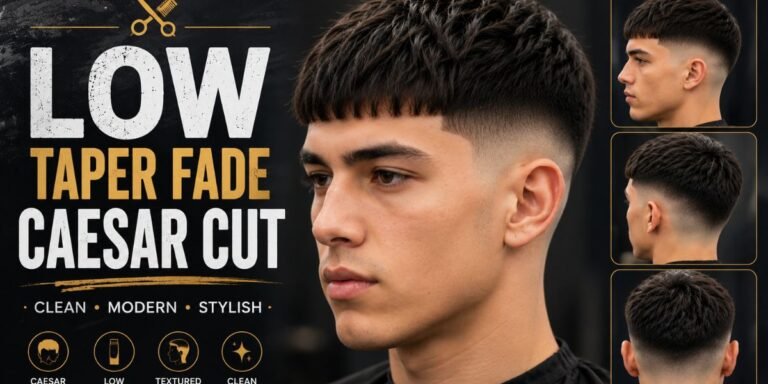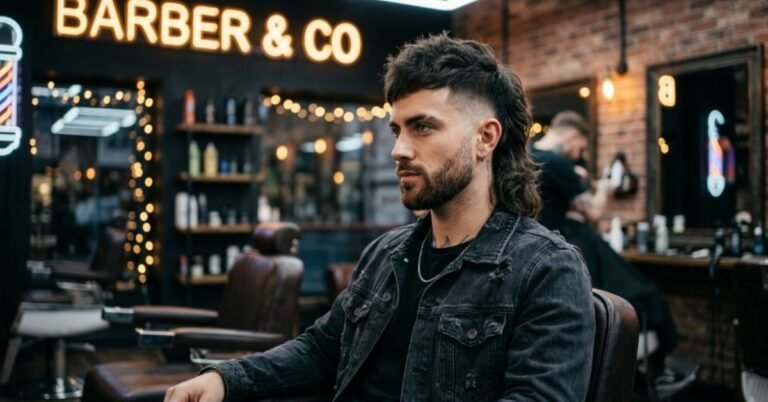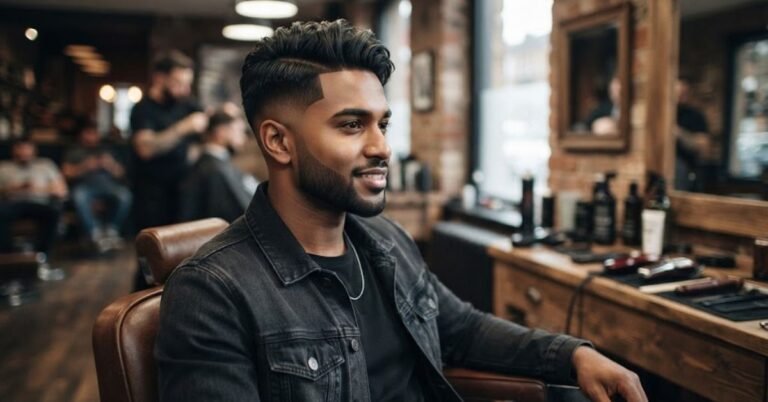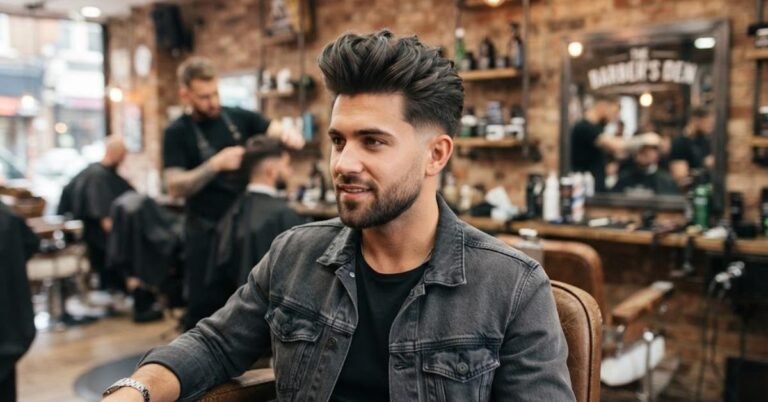
21 Best Low Taper Fade Side Part Hairstyle Ideas for Men (2026)
Picking the right haircut can change how you look in seconds. If you want a style that feels sharp, easy to manage, and works for almost any occasion, the low taper fade side part is one of the smartest choices you can make in 2026. It blends a soft, gradual fade with a defined part on top, giving you a look that is neat without feeling stiff.
In this guide, you will find 21 of the best low taper fade side part hairstyle ideas, tips on talking to your barber, styling advice for different hair types, and answers to the questions men ask most about this cut. Whether you are heading to the office, a wedding, or just want a fresh weekend look, there is a version of this haircut for you.
What Are Low Taper Fade Side Part Hairstyle?
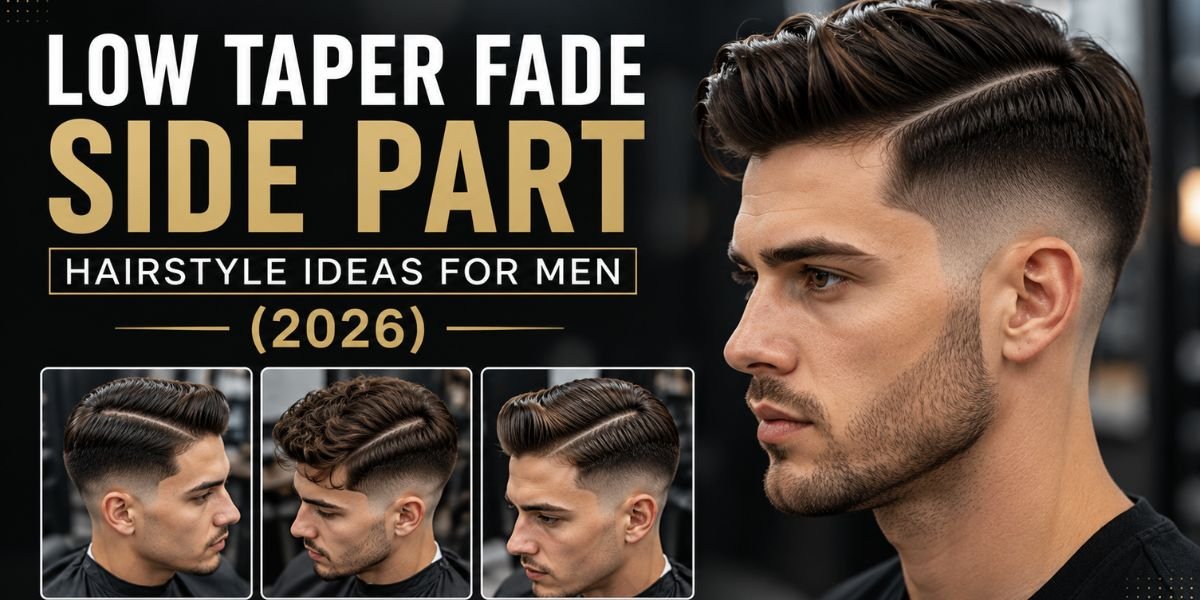
A low taper fade side part hairstyle combines two classic barbering techniques into one modern cut. The sides and back are faded gradually starting low, near the ears and neckline, while the top is styled into a clean, defined part. The result is a haircut that feels polished on top and clean around the edges, without looking harsh or overdone.
This style has grown into one of the most requested cuts at barbershops because it works with almost any face shape, hair texture, and lifestyle. It is smart enough for the office and relaxed enough for everyday wear.
What Is a Low Taper Fade?
A low taper fade is a fade that starts close to the skin near the bottom of the head, usually around the ears and the nape of the neck, then blends upward into longer hair. Unlike a high fade or skin fade, the low taper keeps more length on the sides, which gives a softer, more natural transition.
Because the fade sits low, it grows out more gracefully than higher fades, meaning fewer trips to the barber. It also tends to suit conservative workplaces and formal settings, since it keeps a subtle, understated finish rather than a bold, contrast heavy look.
What Is a Side Part Hairstyle?
A side part hairstyle divides the hair into two uneven sections along a natural line on the scalp. One side carries more volume, while the other is combed down flat or swept back smoothly. Side parts have been a staple in men’s grooming for over a century, but the modern version leaves more height and texture on top instead of lying completely flat.
When paired with a low taper fade, the side part gets extra definition. The tapered sides create a clean frame that makes the part line stand out, giving the whole haircut a sharper, more intentional shape.
Why This Haircut Is Popular in 2026
Men in 2026 want haircuts that look sharp without demanding hours of daily upkeep, and the low taper fade side part checks every box. Softer, more natural finishes have replaced the stiff, heavily gelled looks of past years, which makes this cut feel current rather than dated.
A few reasons this style continues to trend:
- It works across age groups, from teens in school to professionals in the office
- It suits nearly every hair type, including straight, wavy, curly, thick, and thin hair
- It requires less frequent barber visits compared to high or skin fades
- It photographs well, which matters for social media and professional profiles
- Barbers can customize the fade height and top length to match personal style
Search interest around fade haircuts and side part styles has stayed consistently high, and barbers report that clients increasingly ask for softer, low blends over aggressive contrast fades. This shift toward natural texture and subtle grooming is a defining trend of men’s hairstyling in 2026.
Benefits of a Low Taper Fade Side Part
This haircut is not just about looks. It offers practical advantages that make it worth considering for most men.
- Low maintenance compared to high or skin fades, since the fade grows out cleanly
- Works for formal events, job interviews, and everyday casual wear
- Flatters most face shapes by adding structure without overwhelming the features
- Adapts to straight, wavy, and curly hair with only small adjustments
- Easy to style at home with basic tools, a comb and a light styling product
- Pairs well with beards, mustaches, and clean shaven looks alike
- Offers a professional look while still allowing personal style through the top length and part
Top 21 Best Low Taper Fade Side Part Hairstyle
Below are 21 ways to wear the low taper fade side part, ranging from timeless classics to bold modern takes. Use these as inspiration when you sit down with your barber.
Classic Low Taper Fade Side Part

The classic version keeps things simple. Hair on top sits around two to three inches long, combed neatly to one side with a crisp, straight part line. The fade stays low and subtle, blending softly near the ears. This is the safest choice for job interviews, weddings, and conservative offices.
This is usually the first style barbers show first time clients because it rarely goes out of fashion. It photographs well for professional headshots and adapts easily to slightly formal or slightly casual occasions depending on how much product you use. Ask for a comb line rather than a razor line if you want the lowest maintenance version of this look.
Modern Low Taper Fade Side Part

The modern take adds slightly more volume and texture on top, often finished with a matte styling cream instead of a shiny gel. The part is still visible but less rigid, giving a relaxed, lived in finish that still looks put together.
Barbers achieve this look by point cutting the top section instead of blunt cutting it, which softens the edges and lets the hair fall more naturally into place. It suits men who want the structure of a side part without looking like they spent too long in front of the mirror.
Textured Low Taper Fade Side Part

Texture is added through a texturizing spray or light wax worked through the top section, creating movement and separation between strands. This version suits men who want the structure of a side part without a flat, combed down appearance.
Short Low Taper Fade Side Part

For men who prefer minimal styling time, the short version keeps the top at around one to one and a half inches. It is easy to comb into place in under a minute and holds its shape through a full workday.
Side part low taper

A slightly more relaxed reading of the same idea, this version leans on a natural side part rather than a forced comb line. The fade stays low and soft, letting the hair fall where it naturally wants to sit before a light comb through defines the part.
Long Low Taper Fade Side Part

This version keeps three to four inches of length on top, giving room for a deep side sweep and added volume. It works well for men with straight or wavy hair who want a bit more drama without losing the clean sides underneath.
Low Taper Fade Side Part with Hard Part

A hard part, also called a shaved part, uses a razor line to carve a crisp division instead of relying on a comb line alone. Combined with a low taper fade, this creates a sharp, graphic look that stands out while still keeping the fade understated. It works best on men with slightly thicker hair, since the skin needs enough surrounding density to make the line stand out clearly.
Low Taper Fade Side Part with Beard

Pairing this haircut with a well groomed beard adds balance and maturity to the overall look. The low fade keeps the transition between beard and hairline smooth, so the two elements blend together instead of competing for attention. Trimming the beard to a similar level of neatness as the fade keeps the whole look cohesive rather than mismatched.
Low Taper Fade Side Part with Line Up

A line up, also known as an edge up, sharpens the hairline at the front and temples with a razor or clipper. This adds crisp definition to the low taper fade side part, making it a favorite among men who want extra precision around the forehead and temples.
Straight Hair Low Taper Fade Side Part

Straight hair holds a side part especially well since it lies flat naturally. A light pomade or cream is usually enough to keep the part in place all day without needing a strong hold product.
Wavy Hair Low Taper Fade Side Part

Wavy hair adds natural texture to the top section, giving the part a softer, more effortless look. A texturizing cream helps enhance the waves while still keeping the part line visible.
Curly Hair Low Taper Fade Side Part

Curly hair brings volume and dimension to this haircut. Barbers often leave slightly more length on top to let the curls show their natural pattern, while the low taper fade keeps the sides controlled and neat.
Thick Hair Low Taper Fade Side Part

Thick hair holds shape well and can support longer top lengths without losing structure. A lightweight product prevents the hair from feeling heavy while still allowing the part to stay defined.
Thin Hair Low Taper Fade Side Part

For thin hair, barbers often keep the top slightly shorter and use a light volumizing product to create the appearance of fuller hair. The low taper fade also helps balance thin hair by adding visual structure at the sides.
Low Taper Fade Side Part with Volume

This version focuses on lifting the roots for added height, usually achieved through blow drying with a round brush before combing the part into place. It works especially well for medium to thick hair types.
Professional Low Taper Fade Side Part

Built for the office, this version keeps everything clean, controlled, and understated. The fade stays subtle, the part is precise, and the finish uses a matte or semi matte product rather than high shine.
Low Taper Fade Side Part for Teen Boys

A simplified, low maintenance version suited for school and sports. The fade stays soft, the top is kept short to medium length, and styling usually takes only a comb and a small amount of product.
Asian Low Taper Fade Side Part

This style is especially popular among men with thick, straight Asian hair textures. The low taper fade keeps the sides controlled while the top is styled with a soft, natural side sweep rather than a rigid, heavily combed part.
Blonde Low Taper Fade Side Part

Lightened or fully blonde hair on top creates striking contrast against the darker faded sides. This version works well for men who want a bold, standout look while keeping the overall haircut structured and clean.
Layered Low Taper Fade Side Part

Layering adds movement and dimension to longer top sections, preventing the hair from looking flat or heavy. This version pairs especially well with wavy or thick hair types.
Trending Low Taper Fade Side Part Hairstyle

The current trending version favors natural texture over heavy styling, a slightly deeper side part, and a soft, almost undone finish. It reflects the broader 2026 shift toward low maintenance, natural looking men’s haircuts.
How to Ask Your Barber for a Low Taper Fade Side Part
Clear communication with your barber is the difference between getting exactly what you want and leaving disappointed. Bring a reference photo whenever possible, since fade height and top length can vary widely between barbers.
What to tell your barber
Be specific about three things: fade height, top length, and part style. For example, you might say you want a low taper fade that starts near the ears, two and a half inches of length on top, and a natural side part rather than a hard part.
Best clipper guard numbers
Most barbers use a combination of guard numbers to build a low taper fade. A common approach uses a number 1 or 1.5 guard near the bottom, blending up through a number 2 and 3 guard, before fading into scissor work on top. Exact numbers depend on your hair thickness and desired contrast.
| Fade Zone | Common Guard Number | Result |
| Nape and around ears | 1 or 1.5 | Very short, close to skin |
| Mid blend area | 2 to 3 | Gradual transition |
| Upper sides | 3 to 4 | Blends into top length |
| Top section | Scissor or clipper over comb | Length varies by style |
Recommended fade height
A true low taper fade starts about one to one and a half inches above the ear, well below the temple line. This keeps the fade subtle and prevents the harsh, high contrast look associated with high or skin fades.
Ideal top length
Top length depends on the specific style you choose, but most low taper fade side part looks work best between one and a half and three inches. Shorter lengths are easier to maintain, while longer lengths allow for more volume and sweep.
Hard part or natural part
Decide in advance whether you want a razor line hard part or a natural comb part. A hard part gives a sharper, more graphic finish and needs to be maintained every few weeks as hair grows, while a natural part is lower maintenance and blends more subtly.
Styling product recommendations
Ask your barber which product type suits your hair texture. Generally, creams and light pomades work well for straight and wavy hair, while curl defining creams or light gels suit curly hair types better than heavy waxes.
Best Face Shapes
The low taper fade side part is one of the more flexible haircuts when it comes to face shape, but small adjustments in top length, part depth, and volume placement can make it even more flattering for your particular features. A quick conversation with your barber about your face shape before the cut begins usually leads to a much better final result.
Oval Face
Oval faces are considered the most balanced face shape and can wear nearly any version of this haircut, from short and classic to long and voluminous, without restriction.
Round Face
Men with round faces benefit from added height on top and a deeper side part, which helps elongate the face visually and avoid emphasizing width.
Square Face
Square faces pair well with softer, textured tops that reduce the sharpness of the jawline, along with a low taper fade that keeps the sides from adding extra bulk.
Diamond Face
Diamond shaped faces look great with moderate volume on top and a side part that softens the cheekbones, since the goal is to balance a narrower forehead and chin.
Heart Face
Heart shaped faces, which are wider at the forehead and narrower at the chin, benefit from side swept styles that reduce forehead width and add subtle balance lower down.
Oblong Face
Oblong or longer faces look best with shorter top lengths and added width at the sides, since taller styles can make the face appear even longer.
Best Hair Types
This haircut adapts to nearly every hair type, though styling technique and product choice will shift depending on texture. Knowing your hair type before choosing a product helps you avoid common frustrations like flat, lifeless styling or products that feel greasy by midday.
Straight Hair
Straight hair holds a defined part naturally and needs only a light product to stay in place throughout the day.
Wavy Hair
Wavy hair adds texture and a slightly undone look, which suits the more relaxed, modern versions of this haircut particularly well.
Curly Hair
Curly hair works best with slightly longer top lengths, allowing the natural curl pattern to show while the low taper fade keeps the sides tidy.
Thick Hair
Thick hair can support more length and volume without losing shape, though lightweight products help avoid a heavy, weighed down look.
Thin Hair
Thin hair benefits from shorter top lengths and volumizing products that create the illusion of fullness.
Medium-Length Hair
Medium length hair offers the most flexibility, working well with classic, textured, and voluminous versions of the side part alike.
Pros and Cons
| Pros | Cons |
| Low maintenance compared to high fades | Requires regular trims to keep the fade sharp |
| Works with most face shapes and hair types | Hard part versions need frequent touch ups |
| Suitable for formal and casual settings | May not suit men who prefer very long hair |
| Easy to style at home | Styling curly hair takes extra product knowledge |
| Ages well from teens to older men | Uneven barbering can make the fade look patchy |
How to Style a Low Taper Fade Slick Back Haircut
To style a slick back version of this cut, start with damp hair and apply a small amount of pomade or gel evenly through the top section. Comb the hair straight back from the hairline using a fine tooth comb, working in smooth, consistent strokes to avoid part lines. Finish by smoothing any flyaways with your palm for a sleek, glossy result.
Best Styling Products
- Water based pomade for a classic, glossy finish
- Strong hold gel for all day control in humid weather
- Matte clay if you prefer a slick back with less shine
How to Style a Low Taper Fade Side Part
Styling the side part version starts with identifying your natural part line, which usually sits where your hair already tends to fall. Apply a small amount of cream or light pomade to damp hair, then use a fine tooth comb to create a crisp line before combing the longer side down and across.
Best Styling Products
- Light hold cream for a natural, touchable finish
- Fine tooth comb for precise part lines
- Texture powder for added volume at the roots
Styling Workflow
- Towel dry hair until slightly damp, not soaking wet
- Apply a coin sized amount of product evenly through the top
- Comb in your natural part line using a fine tooth comb
- Sweep the longer side across and slightly downward
- Blow dry on a low setting while shaping with your fingers or a brush
- Set with a light hairspray if you need extra hold through the day
Step-by-Step Styling Guide
- Start with clean, towel dried hair for the best product absorption
- Choose a product suited to your hair type, cream for straight or wavy hair, gel or curl cream for curly hair
- Warm the product between your palms before applying evenly
- Comb your part line first, then style the rest of the top around it
- Use a blow dryer on a cool or low heat setting to set the shape
- Finish with a light touch of hairspray or texture powder if needed
How to Maintain a Low Taper Fade Side Part
Regular maintenance keeps this haircut looking sharp between barber visits. Schedule a trim every three to four weeks to keep the fade clean, since low tapers grow out more gracefully than high fades but still need upkeep.
At home, wash your hair two to three times a week with a mild shampoo to avoid stripping natural oils, and apply a small amount of product daily rather than layering heavy amounts, which can weigh hair down. If you have a hard part, touch it up every one to two weeks with clippers or a razor to keep the line crisp.
Sleeping on a slightly damp head can also disrupt your part line by morning, so towel dry thoroughly and, if needed, use a small amount of leave in cream before bed to keep the top section manageable. A silk or satin pillowcase can help reduce frizz overnight, particularly for wavy and curly hair types. Between barber visits, a light dusting of the neckline with a personal trimmer can keep the fade looking fresh without needing a full appointment every time.
Low Taper Fade Side Part vs Comb Over
A comb over shares similarities with the side part but typically features a more dramatic length difference between the two sides and a longer overall top length. The low taper fade side part tends to look more balanced and modern, while the comb over leans slightly more formal and traditional. Both pair well with a low fade, but the side part generally suits younger, more casual styling preferences.
Low Taper Fade Side Part vs Slick Back
The slick back pushes all the hair straight back without a visible part, creating a sleek, uniform look. The side part instead divides the hair into two sections, offering more texture and dimension. Men who want a formal, streamlined finish often lean toward the slick back, while those who want a bit more personality choose the side part.
Low Taper Fade Side Part vs Quiff
A quiff features hair swept upward and slightly back at the front, creating height and volume, whereas the side part keeps hair flatter and divided by a clear line. The quiff feels bolder and more fashion forward, while the side part offers a more classic, controlled appearance. Both work well with a low taper fade underneath.
Celebrity Inspiration
Many well known actors, athletes, and public figures have popularized versions of the low taper fade side part over the past few years, favoring its clean, versatile look for red carpet events and everyday appearances alike. Looking up recent photos of your favorite public figures with short, tapered haircuts can be a great way to find reference images to bring to your barber, especially since specific styling choices shift from season to season.
Sports broadcasters, news anchors, and business leaders also tend to favor this cut for its camera friendly finish. Because it reads as neat and put together without looking overly styled, it has become a common choice for men whose jobs put them in front of a camera or a client regularly. Saving a handful of reference photos from different angles, front, side, and back, gives your barber the clearest picture of the exact finish you want.
Common Mistakes to Avoid
Even a straightforward haircut like this one can go wrong if a few small details are overlooked, either in the chair or during at home styling. Keeping these common mistakes in mind will help you get consistent results every time.
- Asking for a high fade when you actually want a low taper, since the two create very different results
- Skipping regular trims, which causes the fade to grow out unevenly and lose its shape
- Using too much product, which can weigh hair down and hide the definition of the part
- Choosing a hard part without committing to the maintenance it requires
- Not communicating your hair type to your barber, since curly, straight, and wavy hair all need slightly different techniques
- Styling hair when it is too wet, which can prevent products from holding properly once dry
Conclusion
The low taper fade side part remains one of the smartest haircut choices for men in 2026, offering a rare mix of low maintenance upkeep, broad versatility, and a polished finish that works across nearly every setting. Whether you prefer the classic combed down look, a textured modern take, or a bold hard part version, there is a variation of this cut suited to your hair type and face shape.
Bring reference photos to your next barber appointment, communicate your preferred fade height and top length clearly, and use the styling tips above to keep the look sharp between visits. With the right care, this haircut can stay a reliable, sharp choice season after season.