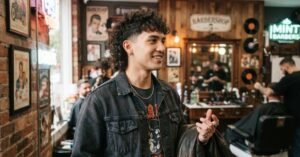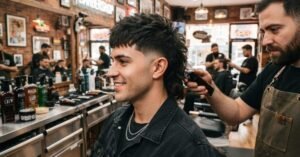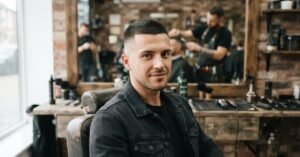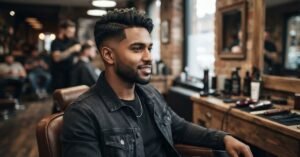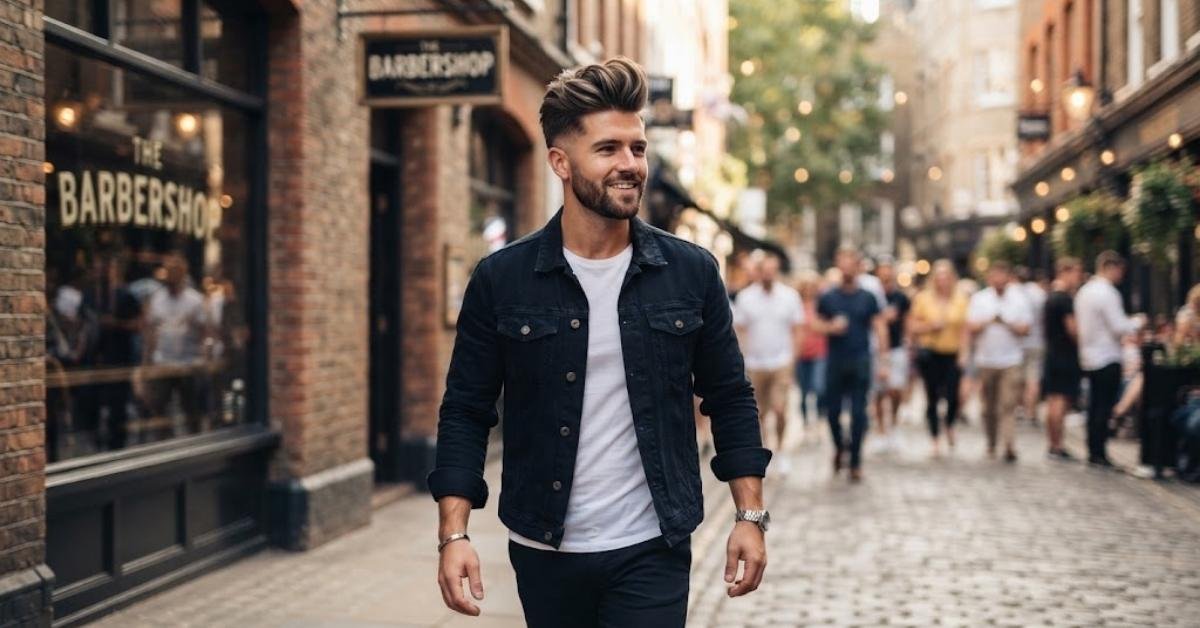
The quiff has stayed at the top of men’s hairstyle trends for decades, and it isn’t slowing down in 2026. Part pompadour, part brush-up, the quiff gives you height, texture, and a confident silhouette without needing dramatic length or high maintenance.
Whether you have straight hair, waves, or curls, there’s a version of this cut built for you. In this guide, you’ll find 28 quiff hairstyle ideas for men, along with what to ask your barber, who each style suits, and how to keep it looking sharp between appointments.
Trendy Men’s Quiff Haircut Ideas
Below are the most wearable quiff variations right now, ranging from low-maintenance everyday cuts to bold, statement-making styles. Each one works with a different hair type, face shape, or lifestyle, so read through and pick the one that fits your goals.
Classic Quiff
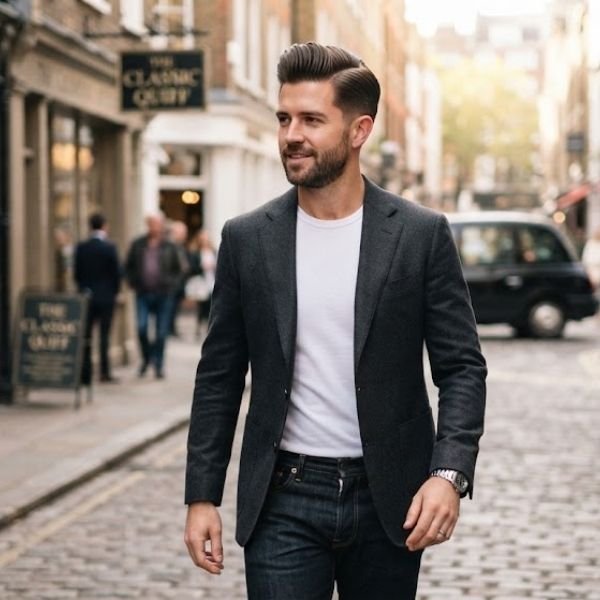
The classic quiff is the original template: short, tapered sides paired with longer hair on top that’s brushed upward and slightly back. It has roots in 1950s rockabilly culture and was made famous by icons like Elvis Presley and James Dean.
What to ask your barber: Request scissor work on top with extra length left at the front hairline, and a clean taper on the sides. Avoid going too long, or the front will flop forward instead of standing up.
Best for: Round, oval, and square face shapes that benefit from added vertical height.
Messy Quiff
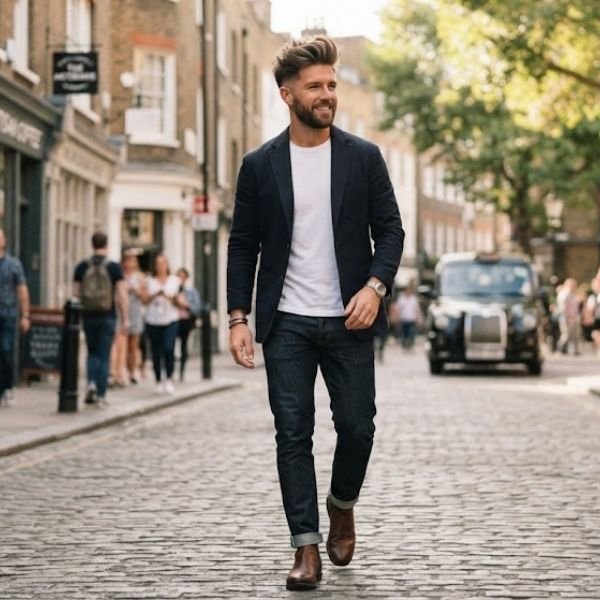
The messy quiff takes the traditional shape and adds controlled chaos through tousled, irregular texture. It’s less about precision and more about attitude, giving you volume that looks lived-in rather than overly styled.
Styling tip: Apply a matte clay or texturizing paste to damp hair, then scrunch upward with your fingers instead of combing for a natural, undone finish.
Best for: Casual settings, creative workplaces, and anyone who wants a lower-effort morning routine.
Textured Quiff
A textured quiff relies on layered cutting and product to create separation and movement rather than a smooth, uniform surface. The result is a fuller-looking top with visible strand definition.
What to ask your barber: Point cutting or texturizing shears on top to remove bulk while keeping length, paired with a taper or fade on the sides.
Best for: Thick or wavy hair that already has natural texture to work with.
Modern Quiff
The modern quiff softens the retro shape into something sleeker and more versatile for daily wear. Height is concentrated at the front hairline and gradually tapers back toward the crown, usually finished with a sharp fade on the sides.
Best for: Professional environments where you want structure without looking overly vintage.
Short Quiff
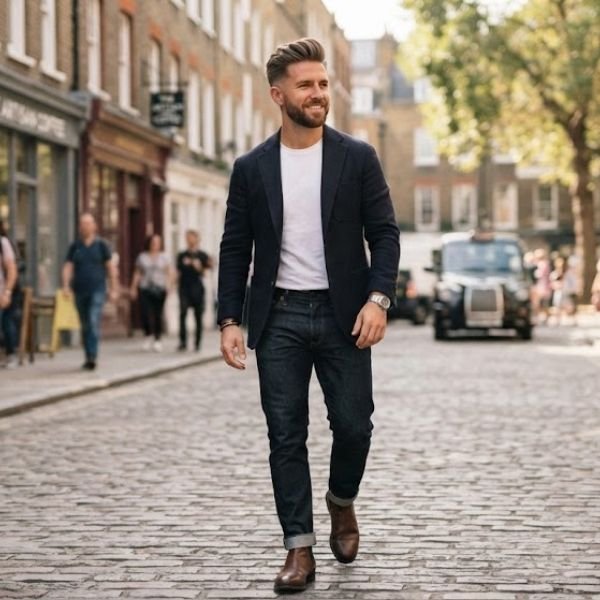
The short quiff is a low-maintenance option for men who want the shape of a quiff without a lengthy styling routine. The top stays cropped close, just long enough to lift and push upward at the front.
Styling tip: A small amount of matte pomade worked through damp hair is usually enough, no blow dryer required.
Best for: First-time quiff wearers and men who prefer short hair overall.
Quiff Fade
The quiff fade pairs the voluminous top with sides and back that gradually blend into the skin. You can choose a low, mid, or high fade depending on how much contrast you want against the length on top.
What to ask your barber: Specify the fade height and confirm whether you want it blended into a taper or straight into skin for maximum contrast.
Best for: Men who want a sharp, modern finish that photographs well.
Medium Quiff
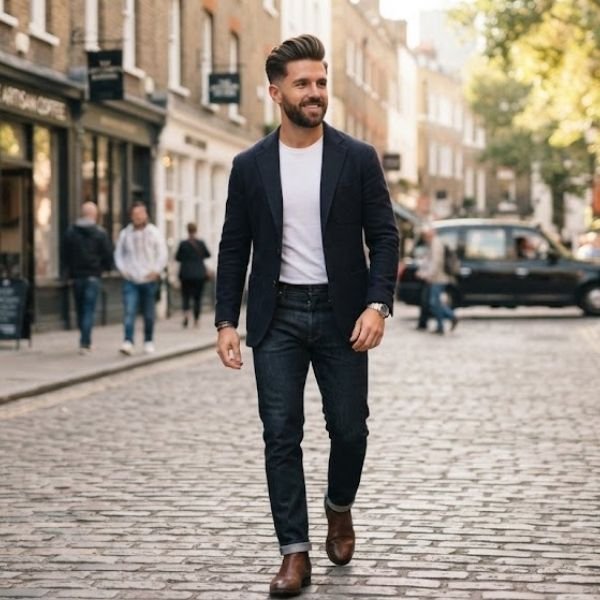
A medium quiff offers more length on top than a short version while still being easy to manage. There’s enough hair to create real volume and movement without needing daily blow-drying sessions.
Best for: Guys transitioning from short hair who want to experiment with more styling options.
Quiff with Beard
Pairing a quiff with a well-groomed beard creates balance across the whole face. The height on top adds length, while the beard adds width at the jawline, which flatters most face shapes.
Styling tip: Keep the beard neatly lined so it doesn’t compete visually with the volume up top.
Best for: Men with round or square faces looking for a more defined, masculine silhouette.
Short Quiff with Low Taper Fade
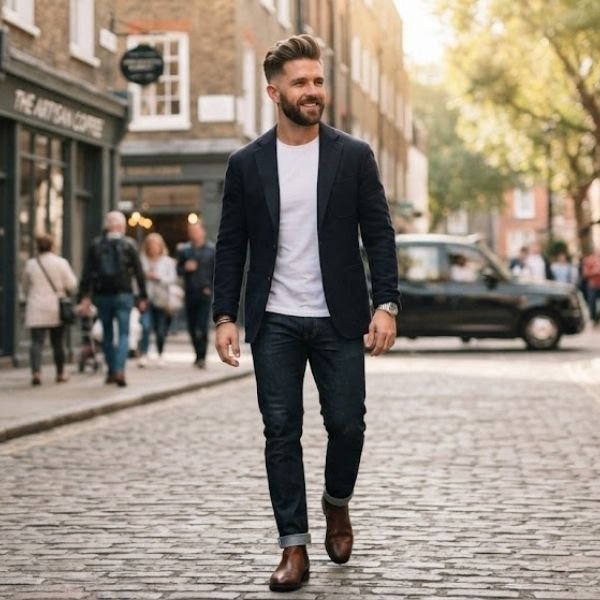
This combination keeps things subtle. The low taper fade sits close to the hairline and barely fades the sides, so the focus stays on the shorter quiff volume at the front.
Best for: Conservative workplaces or anyone easing into fades for the first time.
Tousled Textured Quiff with Low Fade
This variation combines a naturally tousled top with heavy texturizing and a low fade for a soft transition on the sides. It reads as effortless while still being deliberately shaped.
Best for: Wavy or curly hair types that hold texture well without much product.
Wavy Quiff
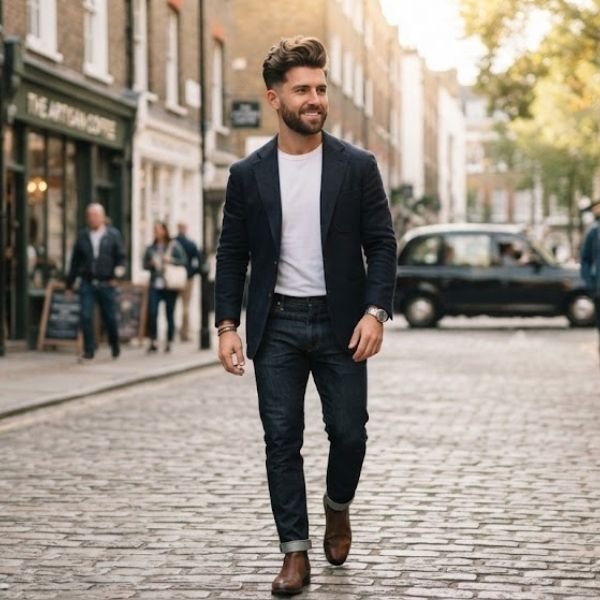
If your hair has natural wave, the wavy quiff lets that texture do most of the work. Instead of a sharp, structured peak, the front lifts and rolls back in soft, organic waves.
Styling tip: A sea salt spray enhances the natural wave pattern before you push the front up and back with your fingers.
Best for: Men with naturally wavy hair who don’t want to fight their texture.
Short Textured Quiff with Mid Fade
This style keeps everything close to the head. The mid fade sits between the temple and crown, giving a clean, contrast without going as bold as a high fade, while the textured top adds a touch of volume.
Best for: Everyday versatility between office and weekend wear.
Messy Quiff with Taper Fade
Combining a messy, undone top with a smooth taper fade gives you the best of both worlds: relaxed styling up top with a sharp, groomed finish on the sides.
Best for: Men who want an edgy look that’s still office-appropriate.
Long Quiff
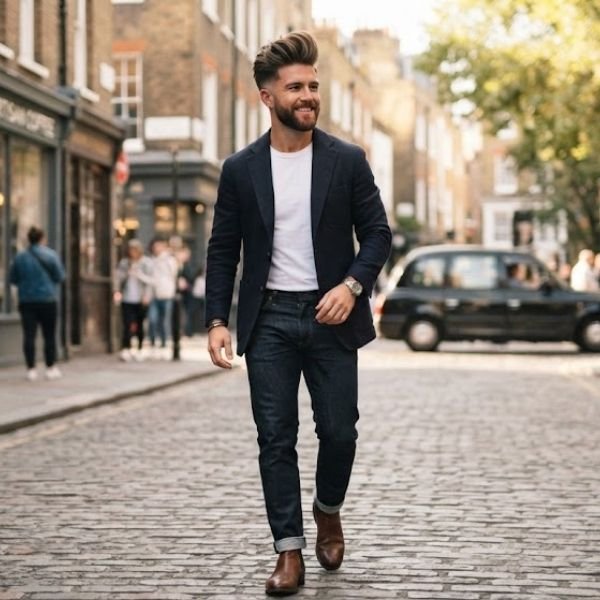
The long quiff keeps significant length on top, giving you more room to experiment with height, waves, and sweep. It takes more time to style and maintain but offers the most dramatic visual impact.
Styling tip: Use a round brush and blow dryer to lift the roots before applying a strong-hold cream to lock the shape in place.
Best for: Men with thick hair who don’t mind a longer daily styling routine.
Thick Quiff Fade
Thick hair naturally holds more volume, and pairing it with a fade highlights that density even more. The sides disappear into skin or a close taper while the top stands tall with minimal product.
Best for: Naturally thick or coarse hair types.
Full Textured Quiff with Low Skin Fade
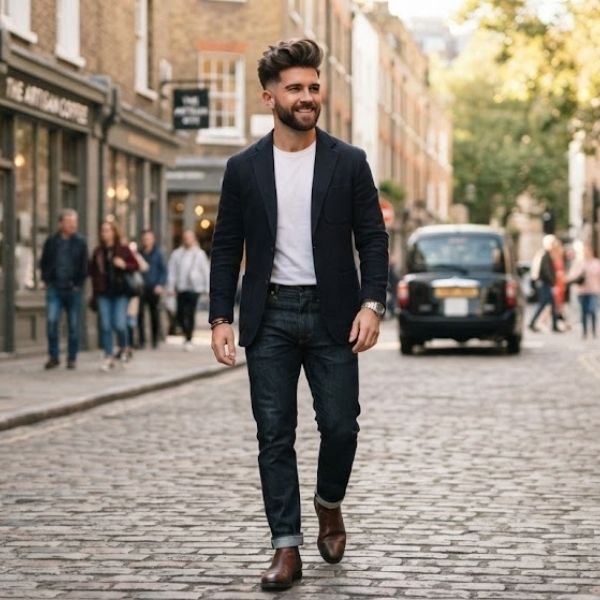
This variation maximizes fullness on top through layered texturizing while the low skin fade keeps the sides understated. It’s a balanced style that still makes a statement.
Best for: Men who want maximum volume without an aggressive fade contrast.
Tousled Short Quiff with Low Fade
A shorter take on the tousled quiff, this style is quick to style each morning and pairs naturally messy texture with a subtle low fade for a clean edge.
Best for: Busy schedules and low daily maintenance.
Messy Wavy Quiff with Low Taper
This look leans into natural wave patterns combined with deliberately messy styling, finished off with a soft low taper that doesn’t overpower the textured top.
Best for: Casual, laid-back everyday style.
Natural Quiff with High Fade
Here the top is left mostly natural, relying on hair’s own movement rather than heavy styling, while a high fade creates maximum contrast on the sides for a bold, modern look.
Best for: Men who want a striking contrast with minimal daily effort on top.
Undercut Quiff
The undercut quiff combines a disconnected, closely shaved or clipped section on the sides with dramatically longer length on top. The hard line between the two sections creates a bold, high-contrast look.
What to ask your barber: Specify whether you want a disconnected undercut (a sharp visual break) or a blended one for a softer transition.
Best for: Men who want an edgier, statement-making version of the quiff.
Youthful Short Quiff with Drop Fade and Beard
A drop fade curves downward behind the ear rather than staying straight, adding a dynamic shape to the sides. Paired with a short quiff and light beard, it creates a fresh, youthful look.
Best for: Younger men or anyone wanting a trend-forward style.
Textured Quiff with Sharp Fade
This pairing contrasts a soft, textured top with crisp, precise fade lines on the sides. The sharpness of the fade makes the texture on top look even more voluminous by comparison.
Best for: Men who like defined, barbershop-fresh detailing.
Edgy Blonde Quiff
Lightening the top to blonde while keeping the sides natural or faded adds a bold color contrast to the classic shape. This works especially well on textured or messy quiff variations, where the lighter tone highlights movement.
Best for: Men comfortable experimenting with color who want their quiff to stand out.
Long Quiff Fade
This variation keeps significant length on top while pairing it with a fade on the sides, creating a strong contrast between the voluminous crown and the closely cropped sides and back.
Best for: Men who want maximum height and drama with a clean, modern edge.
Straight Smooth Quiff with Mid Skin Fade
For men with naturally straight hair, this style keeps the top sleek and polished rather than textured, brushed cleanly upward and back, with a mid skin fade adding contrast beneath.
Styling tip: A light-hold pomade with shine gives a smoother, more polished finish than matte clay.
Best for: Straight hair types and more formal, polished occasions.
Curly Quiff
Curly hair adds natural volume and texture that works beautifully with the quiff shape. Rather than fighting the curl pattern, this style lifts curls upward and back, letting them fall naturally at the crown.
Styling tip: Use a curl-defining cream on damp hair, then diffuse dry on low heat to preserve the curl pattern while adding lift at the roots.
Best for: Natural curls and coily hair textures.
Pompadour Quiff
This hybrid borrows the pompadour’s height and volume at the front while keeping the quiff’s softer, more relaxed back-and-up direction rather than a full sweep-back. It’s bolder than a standard quiff but more wearable day-to-day than a full pompadour.
Best for: Men who want extra height and don’t mind a slightly longer styling routine.
Textured Fringe Quiff
This variation keeps some length forward over the fringe area rather than pushing all the hair straight up, blending quiff height with fringe-like coverage at the front. It’s a versatile middle ground between the two hairstyles.
Best for: Men who want partial forehead coverage along with quiff volume.
Disconnected Quiff
A disconnected quiff features a clear, sharp separation between the longer top and the much shorter sides, usually achieved through an undercut or heavy contrast fade. There’s no gradual blend, just a defined line that emphasizes the shape.
Best for: Bold personalities who want their haircut to make a visual statement.
What Is A Quiff Haircut?
A quiff is a men’s hairstyle defined by short, tapered or faded sides and back, paired with noticeably longer hair on top, especially at the front hairline, which is styled upward and slightly backward. The name comes from the word “coiffure,” and the style itself traces back to the 1950s, when it was popularized by rock ‘n’ roll icons.
Structurally, a quiff sits somewhere between a pompadour and a brush-up. A pompadour typically involves more height and a fuller sweep-back, while a plain brush-up lifts hair straight up with less backward direction. The quiff blends both, creating lift at the front that curves gently backward rather than standing completely vertical or lying flat.
The style works across nearly every hair type, including straight, wavy, curly, and coily hair, and it adapts easily to different lengths, from short and low-maintenance to long and dramatic. Because the sides can be tapered or faded to any height, and the top can be left natural, layered, or heavily textured, the quiff offers dozens of variations while keeping its core identity: short sides, longer top, and upward-back movement.
Final Thought
The quiff remains one of the most flexible hairstyles a man can choose because it adapts to hair type, face shape, and lifestyle without losing its signature identity. Whether you prefer the low-maintenance appeal of a short quiff, the boldness of an undercut version, or the polish of a straight, smooth finish, there’s a variation here that fits your routine and personal style.
The best way to land on the right cut is to bring a reference photo to your barber and be specific about fade height, length on top, and how much texture you want. From there, a good pomade, clay, or texturizing spray will keep your quiff looking sharp all day.
FAQs About Quiff Hairstyle Men
What do I tell my barber for a quiff?
Ask for short, tapered or faded sides and back, with extra length left on top at the front hairline for lift. Specify the fade height (low, mid, or high) and how much texture or bulk you want removed on top.
What is the difference between fringe and quiff?
A fringe is styled forward and down, often covering part of the forehead, while a quiff is styled upward and back, lifting away from the face. The direction of the front section is the main distinction between the two.
What face shape is a quiff for?
Round, oval, and square face shapes tend to benefit most, since the added height creates vertical balance and visual length. Most face shapes can still wear a quiff by adjusting the height and volume to suit their proportions.
Is quiff attractive?
Yes, the quiff is widely considered an attractive and versatile hairstyle because it adds structure, height, and definition to the face. Its popularity across decades and cultures reflects how well it suits a wide range of men.
What is a modern quiff haircut?
A modern quiff features height concentrated at the front hairline that gradually tapers back toward the crown, usually paired with a sharp fade on the sides. It’s a sleeker, more wearable update on the classic 1950s shape.

Elena Hartwell is a hair and beauty writer passionate about hairstyles, hair care, and the latest beauty trends. She shares practical tips, styling inspiration, and easy ideas to help readers feel confident and look their best.