The Ultimate Guide to Modern Mohawk-Inspired Mullet Styles
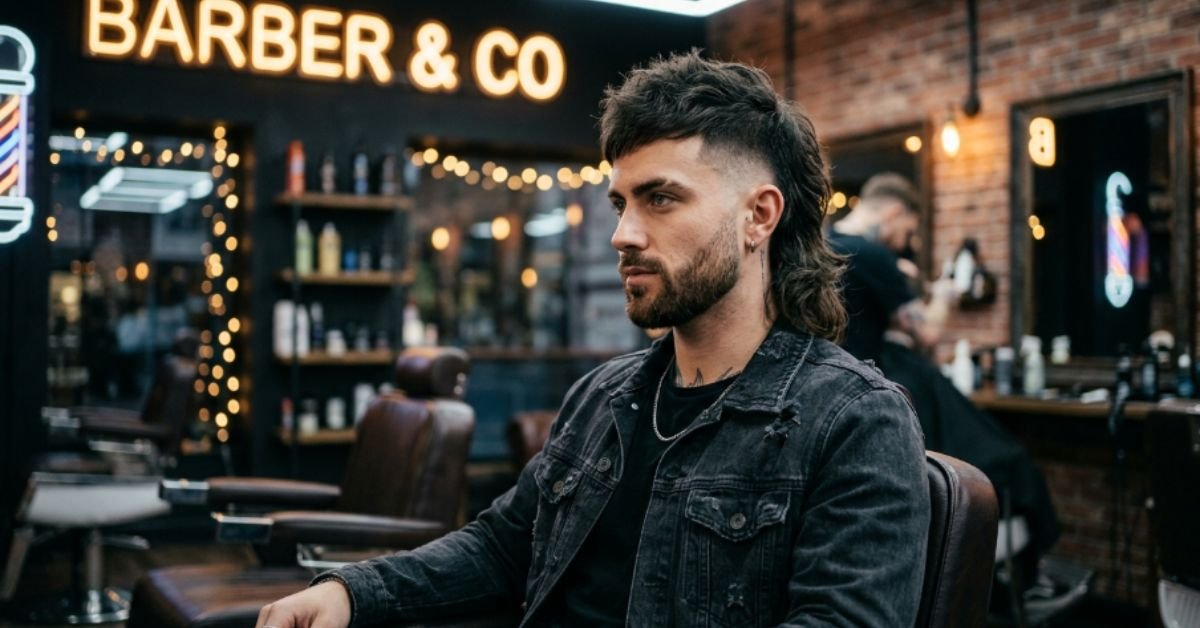
The mohawk mullet is one of the boldest hair trends of 2026, and it isn’t slowing down. This cut fuses the punk energy of a classic mohawk with the “business up front, party in back” attitude of a mullet, giving you a shaved or faded side profile, a raised center strip, and length left through the nape. It reads as rebellious and refined at the same time, which is exactly why barbers keep seeing more requests for it every season.
Unlike the exaggerated mohawks of the 1980s, today’s version is far more wearable. The sides are tapered or faded instead of fully shaved, the center strip is textured rather than rigid, and the back length is shaped to flow naturally. The result is a style that works for the barbershop, the office, and the stage.
In this guide, you’ll find the 10 mohawk mullet variations defining 2026, how to style each one, which fade pairs best with the cut, and the care routine that keeps it looking sharp between trims.
Top 10 Modern Mohawk Mullet 2026
Here’s a quick overview of the styles we’ll cover, ranked by popularity and versatility this year:
- Mohawk Burst Fade Mullet
- Mohawk Taper Mullet
- Mohawk V-Back Mullet
- Mohawk Curly Mullet
- Mohawk Straight Mullet
- Mohawk Wolf Mullet
- Mohawk Drop Fade Mullet
- Mohawk Shag Mullet
- Mohawk Textured Mullet
- Mohawk Fringe Mullet
Each one takes the same core structure, shorter or shaved sides, a raised center section, and longer back length, and reshapes it around a different fade, texture, or hair type. Below is a closer look at what makes each cut unique, who it suits, and how to ask for it in the chair.
Mohawk Burst Fade Mullet
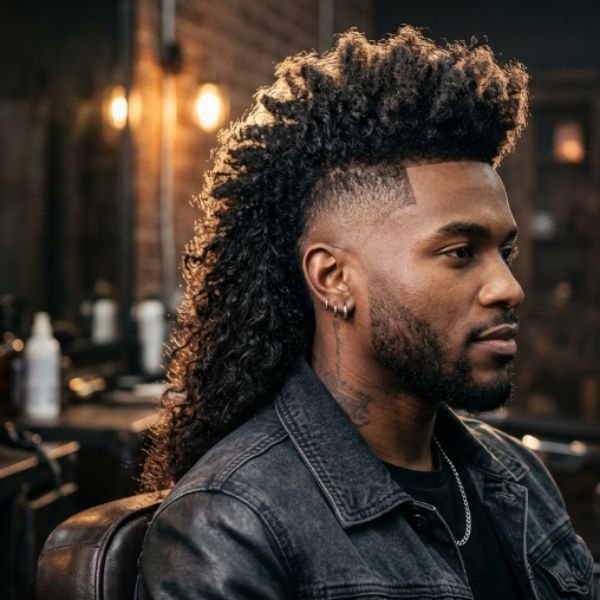
The burst fade mullet is one of the most requested combinations in barbershops right now. Instead of a straight fade line running down the neck, the burst fade curves around the ear in a semicircle, which lets the mullet’s back length flow out untouched while the sides disappear into skin.
- Best for: thick or medium density hair that holds a defined mohawk strip
- Styling tip: blow-dry the crown upward with a round brush, then lock the shape with a strong-hold molding paste
- Upkeep: sides need a refresh every 2 to 3 weeks to keep the burst pattern crisp
This variation gives you the sharpest contrast on the list, so it suits anyone who wants their mohawk section to stand out immediately.
Mohawk Taper Mullet
The taper mullet softens the shaved-sides look with a gradual fade that never fully touches skin. It’s the safer, lower-maintenance cousin of the burst fade version, and it grows out far more gracefully.
- Best for: first-timers who aren’t ready to commit to a skin fade
- Styling tip: use a lightweight sea salt spray for texture instead of heavy gel, since the taper doesn’t need a sharp line to look intentional
- Upkeep: trims every 4 to 5 weeks are usually enough
Because the sides stay slightly longer, this cut also works better in colder climates or offices with a more conservative dress code.
Mohawk V-Back Mullet
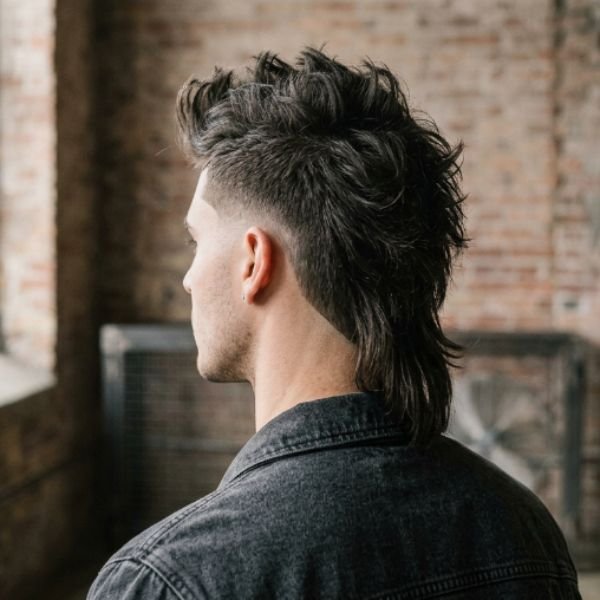
The V-back mullet takes its name from the back section, which is cut into a defined V shape at the nape instead of a blunt or rounded line. Paired with a mohawk top, it creates a sharper silhouette that photographs well from every angle.
- Best for: men who want a more structured, tailored finish
- Styling tip: ask your barber to point-cut the V for a soft edge rather than a razor-straight line
- Upkeep: the V shape needs re-cutting every 4 to 6 weeks to stay clean
This is a strong pick if you want the mullet portion to feel deliberate rather than grown-out.
Mohawk Curly Mullet
Curls and mohawks were made for each other. Natural curl pattern adds volume to the center strip without any extra product, while the longer back curls into loose, bouncy layers instead of hanging flat.
- Best for: naturally curly or wavy hair types
- Styling tip: apply a curl cream to damp hair and scrunch upward, then air-dry or diffuse for maximum lift
- Upkeep: every 6 to 8 weeks, since curls hide growth better than straight hair
If you already have texture, this variation requires the least daily effort of anything on this list.
Mohawk Straight Mullet
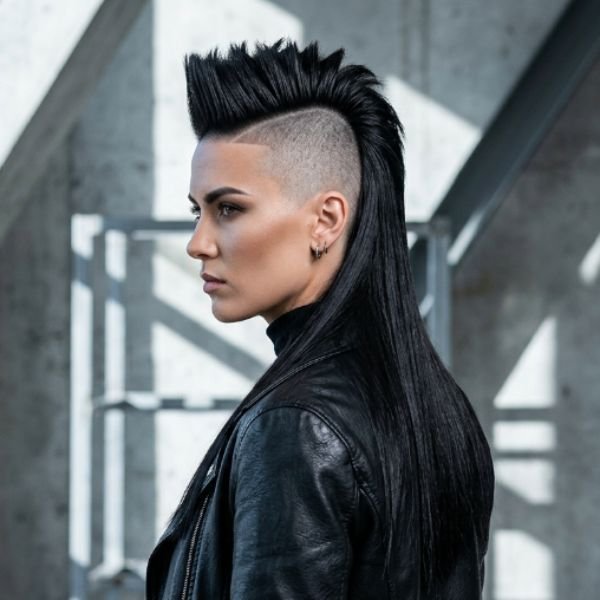
The straight mohawk mullet leans into precision. With sleek, straight hair, the center strip holds a crisp, blade-like shape, and the back falls in clean, defined lines instead of loose movement.
- Best for: fine to medium straight hair
- Styling tip: blow-dry with a paddle brush before applying a matte pomade to avoid unwanted shine
- Upkeep: every 3 to 4 weeks to maintain the sharp lines
This is the go-to option for anyone who wants their mohawk mullet to look architectural rather than shaggy.
Mohawk Wolf Mullet
The wolf mullet blends shag layering with mohawk structure, creating a choppy, lived-in texture that has become a favorite among Gen Z and K-pop-inspired trendsetters. It’s less about sharp lines and more about volume and movement.
- Best for: thick to medium hair that can hold heavy layering
- Styling tip: use a texturizing powder at the roots and scrunch rather than comb for a deliberately messy finish
- Upkeep: every 6 to 8 weeks, since the layered cut is more forgiving as it grows
If your goal is edgy but not overly polished, the wolf mullet delivers that balance better than any other variation here.
Mohawk Drop Fade Mullet
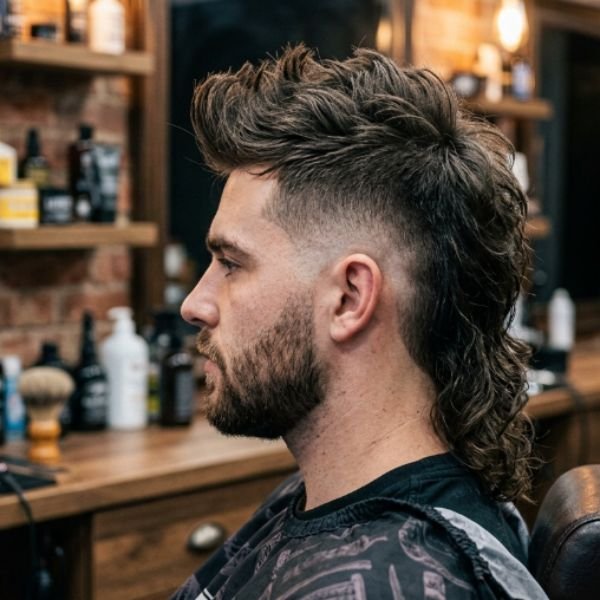
The drop fade curves downward behind the ear before leveling off at the nape, following the natural shape of the head. Combined with a mohawk top, it creates a rounder, softer contrast than a burst or skin fade.
- Best for: rounder face shapes that benefit from added angles
- Styling tip: keep the top spiked forward slightly rather than straight up to complement the fade’s curve
- Upkeep: every 2 to 3 weeks to preserve the drop line
Barbers often recommend this pairing because the drop fade is more flattering across a wider range of head shapes than a straight-line fade.
Mohawk Shag Mullet
The shag mullet trades a defined mohawk strip for feathered, heavily layered hair throughout the crown, blending seamlessly into a shaggy, textured back. It’s the most retro-leaning cut on this list, pulling directly from 70s rock influences.
- Best for: medium to thick hair with natural movement
- Styling tip: apply a texture spray to damp hair and let it air-dry for a natural, unstructured finish
- Upkeep: every 6 to 8 weeks since the shag layers disguise regrowth well
This variation suits anyone chasing a musician-inspired look without the high-maintenance styling routine.
Mohawk Textured Mullet
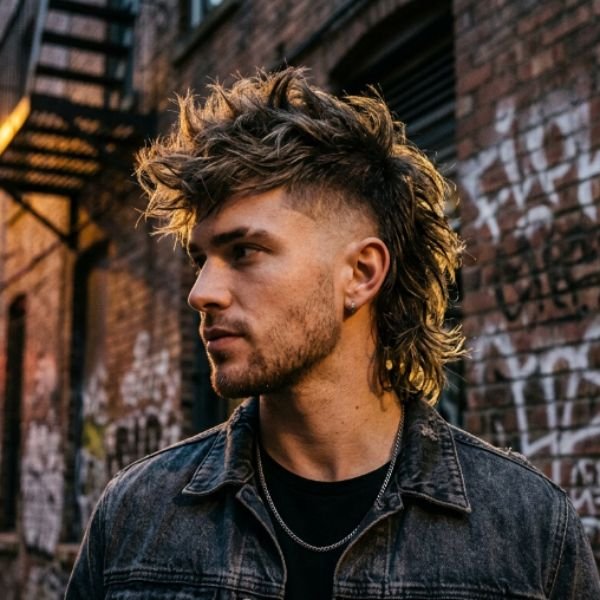
The textured mullet focuses on choppy, point-cut ends across the top and back rather than one uniform length. It gives the illusion of extra density and works especially well on hair that’s naturally a little flat or fine.
- Best for: fine or thin hair that needs a boost in perceived volume
- Styling tip: dry shampoo at the roots adds grip before styling cream is worked through the ends
- Upkeep: every 4 to 5 weeks, plus regular point-cutting to maintain the choppy finish
This is one of the more forgiving mohawk mullet styles day to day, since the texture masks minor styling imperfections.
Mohawk Fringe Mullet
The fringe mullet brings a blunt or textured fringe forward over the forehead while keeping the classic mohawk strip and mullet back intact. It’s a hybrid style that borrows from the French crop, giving the front of the haircut more structure.
- Best for: those who want a defined frame around the face
- Styling tip: blow-dry the fringe forward and down first, then style the rest of the mohawk strip upward
- Upkeep: fringe needs trimming every 3 to 4 weeks to avoid it falling into the eyes
This variation is a strong option if you want the boldness of a mohawk mullet without fully exposing the forehead.
Mohawk Mullet Styling
Getting a great cut is only half the job. Daily styling is what keeps a mohawk mullet looking intentional instead of unkempt. Here’s a simple routine that works across most hair types:
- Start with damp, towel-dried hair, never soaking wet
- Apply a lightweight styling product first (sea salt spray, curl cream, or texture paste depending on your hair type)
- Lift the crown section with a round brush or your fingers while blow-drying to build the mohawk’s height
- Brush the back section downward and outward to keep the mullet length flowing naturally
- Finish with a small amount of matte clay or molding paste on the top for hold, keeping the sides clean and product-free
A useful rule from working barbers: if your mohawk mullet doesn’t move at all when you turn your head, you’ve likely used too much product. The best version of this cut still has some natural movement built in.
Best Fade for Mohawk Mullet
Not every fade suits the mohawk mullet equally well. Here’s how the main options compare:
- Burst fade: the sharpest, most eye-catching contrast, ideal if you want maximum drama around the ears
- Drop fade: rounder and more flattering on wider or rounder face shapes
- Taper fade: the lowest-maintenance option, since it grows out without leaving an awkward line
- Skin fade: the boldest choice, best suited to thicker top hair that can visually balance the closely shaved sides
If you’re unsure which to choose, a taper fade is the safest starting point, since it complements almost every mohawk mullet variation on this list without demanding frequent touch-ups.
Care Tips for Mohawk Mullet
Because a mohawk mullet combines two very different lengths on one head, it needs a slightly different care approach than a standard haircut.
- Wash 2 to 3 times a week rather than daily, since over-washing strips the natural oils that help the top hold its shape
- Apply conditioner only to the mid-lengths and ends at the back, avoiding the roots so the mohawk strip doesn’t lose lift
- Use a heat protectant before any blow-drying or flat-ironing session
- Book a trim every 3 to 6 weeks depending on your variation, faded sides need more frequent visits than shaggy or curly styles
- Ask for internal weight removal rather than just shorter length if your hair is naturally thick, so the shape stays defined instead of bulky
- Switch to a silk or satin pillowcase to reduce friction and keep the back section from tangling overnight
Consistent care matters more with this cut than most, since an overgrown mohawk mullet can quickly start looking like an accidental haircut rather than a styled one.
FAQs
Is the mohawk mullet still trending in 2026?
Yes. It’s one of the standout hybrid haircuts of the year, driven by streetwear, K-pop influence, and its appearance on celebrities and runways alike.
What face shapes suit a mohawk mullet?
Most face shapes can wear a version of it, but round faces tend to look best with a drop fade, while oval and square faces suit sharper burst or skin fades.
Does a mohawk mullet work with curly hair?
Absolutely. Curly and wavy textures are among the most popular choices, since natural curl adds volume to the top without extra styling effort.
How often do I need to trim a mohawk mullet?
Faded sides typically need attention every 2 to 4 weeks, while the longer back and mohawk strip can usually go 6 to 8 weeks between full trims.
Can I grow a mohawk mullet out from a regular haircut?
Yes. Most barbers treat it as two separate sections: they let the back grow while shaping the top into a defined strip and fading or tapering the sides.
What products work best for styling a mohawk mullet?
Sea salt spray and curl cream add texture for casual looks, while molding paste or matte clay gives the center strip stronger, longer-lasting hold.
Conclusion
The mohawk mullet has evolved well beyond its punk-rock origins into one of the most versatile, personality-driven haircuts of 2026. Whether you lean toward the sharp contrast of a burst fade, the natural volume of a curly top, or the relaxed texture of a wolf or shag variation, there’s a version of this cut suited to nearly every hair type and lifestyle. Pick the fade and texture that match your daily routine, keep up with regular trims, and this style will reward you with one of the boldest, most expressive looks in modern men’s hair.

Elena Hartwell is a hair and beauty writer passionate about hairstyles, hair care, and the latest beauty trends. She shares practical tips, styling inspiration, and easy ideas to help readers feel confident and look their best.