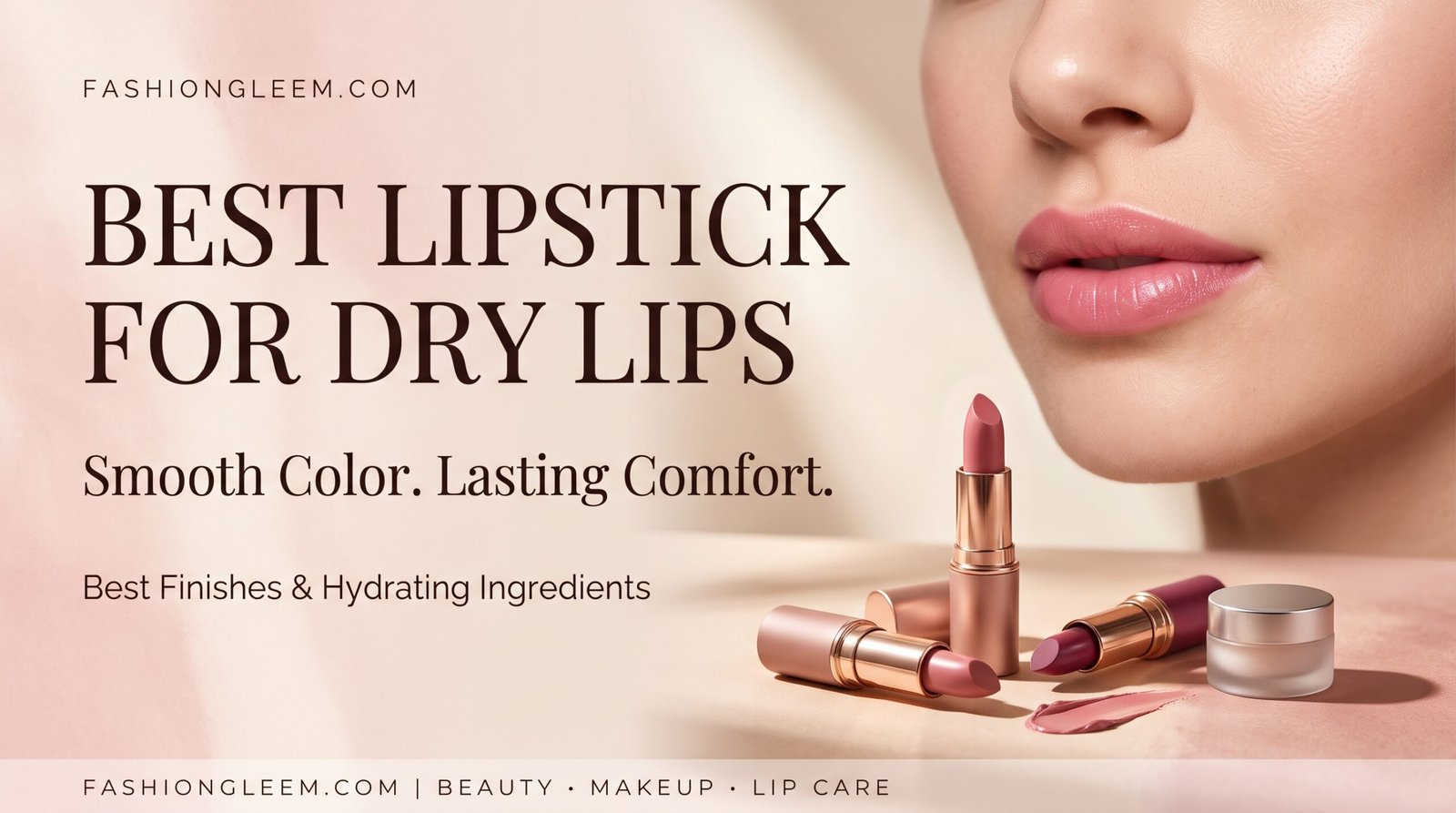
Best Lipstick for Dry Lips: What to Buy and How to Wear It
Note: This guide is general information only, not medical advice. If chapped lips persist beyond two to three weeks despite care, see a dermatologist.
The best lipstick for dry lips does two jobs at once. It delivers the color you want and keeps your lips comfortable for hours.
Most lipsticks fail the second job. This guide shows you which ingredients help, which finishes to choose, and the exact routine that keeps color smooth on dry lips.
You will also learn what dermatologists actually disagree about, so you can decide for yourself.
Quick Answer
| Question | Short answer |
|---|---|
| What is the best lipstick for dry lips? | A creamy, satin, or glossy formula with humectants and emollients like hyaluronic acid, shea butter, and squalane. |
| Which finish should I avoid? | Traditional matte. It has no moisturizing properties and clings to flakes. |
| What ingredients help? | Hyaluronic acid, shea butter, jojoba oil, vitamin E, aloe vera, squalane. |
| What ingredients hurt? | Camphor, phenol, menthol, and long-wear film formers. |
| What is the key step? | Prep. Exfoliate gently, prime with balm, then apply color. |
Why Lips Get Dry (and Why Lipstick Makes It Worse)
Lips have no oil glands. The rest of your face produces its own moisture barrier, but your lips cannot. They depend entirely on external moisture.
Lip skin is also extremely thin, among the thinnest on the body. Thin skin loses water fast and damages easily, especially in cold, wind, or dry indoor heat.
Many lipsticks then make things worse. Matte formulas are designed to look flat with no sheen, which means they contain little to no moisturizing ingredients.
Long-wear lipsticks grip the lips with film-forming polymers. That grip is the opposite of hydration, and it drags across every flake.
The Ingredients That Help vs. the Ones That Hurt
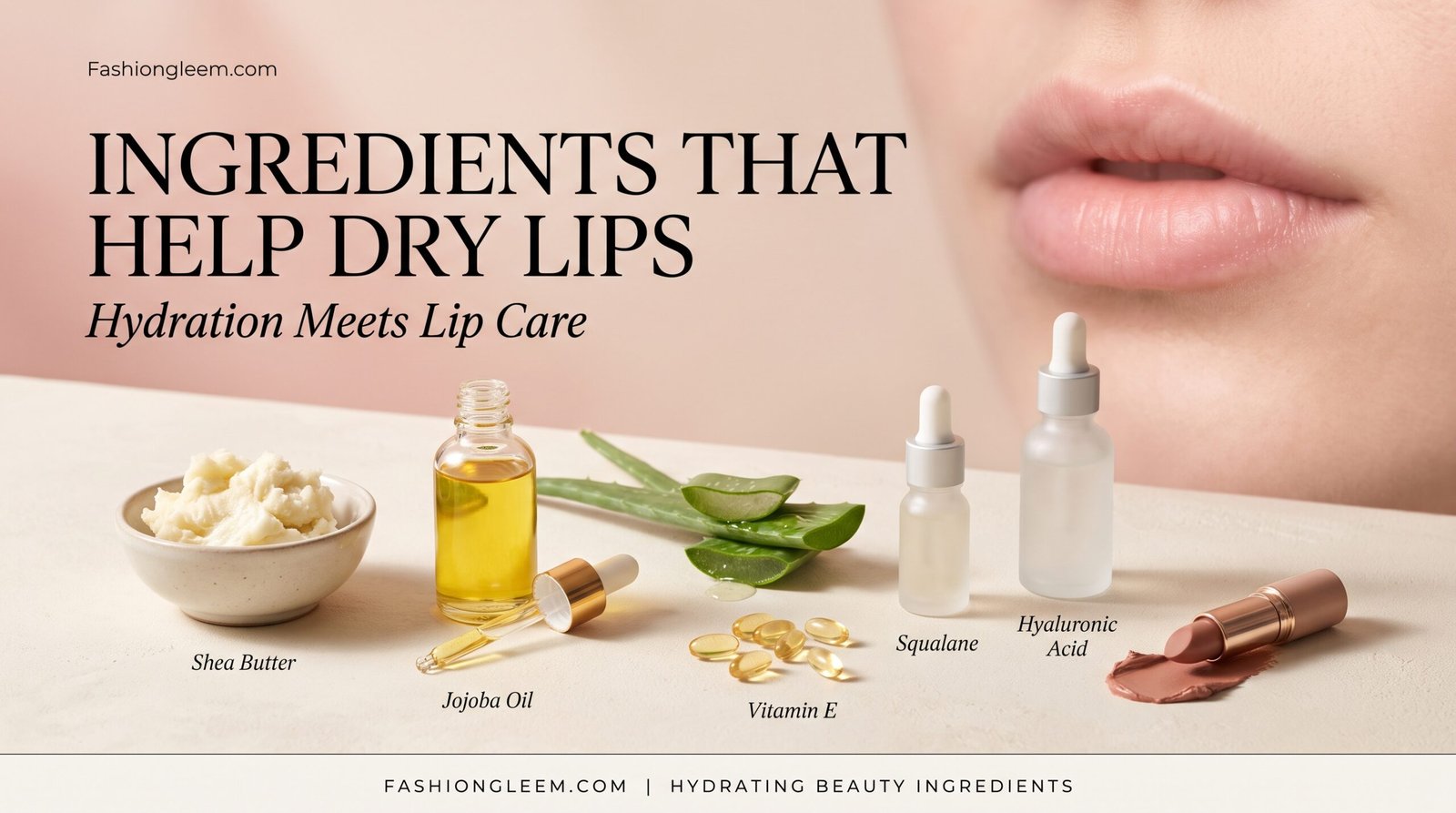
Ingredients to Look For
Hyaluronic acid. A humectant that draws water into the lips. Dermatologist Dr. Debra Jaliman calls it “super hydrating and a natural humectant.”
Shea butter. Rich in vitamins and fatty acids. Its natural cinnamic acid content is anti-inflammatory, which soothes irritated lips.
Jojoba oil. A natural skin conditioner that seals in moisture and forms a barrier against cold weather. It also calms irritation.
Squalane. A lightweight emollient that locks in moisture without heaviness. Dermatologists recommend it for chronically dry lips.
Vitamin E. An antioxidant that smooths the lip surface and protects against environmental damage.
Aloe vera. Its enzymes reduce inflammation and help repair chapped lips, similar to how it soothes sunburn.
Grapeseed oil. Provides fatty acids and vitamins that moisturize while protecting against free radicals.
Ingredients to Avoid
Camphor, phenol, and menthol. These create a cooling tingle that feels refreshing but dries lips out with repeated use. Dr. Jaliman specifically warns against all three.
Long-wear film formers. Anything promising 12 to 16 hours of unmoving color achieves it with resins that do not hydrate. Comfort drops as wear time rises.
High alcohol content. Alcohol-based formulas evaporate fast and take lip moisture with them.
Heavy synthetic fragrance. Fragrance is a common irritant for sensitive, already-compromised lips.
The Beeswax Debate: Two Dermatologists Disagree
Here is an honest disagreement. Dr. Jaliman warns against beeswax, saying it “just sits on the surface of the lip and doesn’t penetrate it.”
Dr. Elena Marsh takes the opposite view for chronically dry lips. She recommends occlusives including beeswax because they lock moisture in.
Both views have logic. Occlusives seal existing moisture in; they do not add moisture themselves. If your lips are already hydrated underneath, beeswax helps. If they are parched, it seals in dryness.
Try both approaches and watch your own lips. Your response is the data that matters. The full dermatologist interview behind this guidance is the Dermstore dermatologist guide.
Lipstick Finishes Ranked for Dry Lips
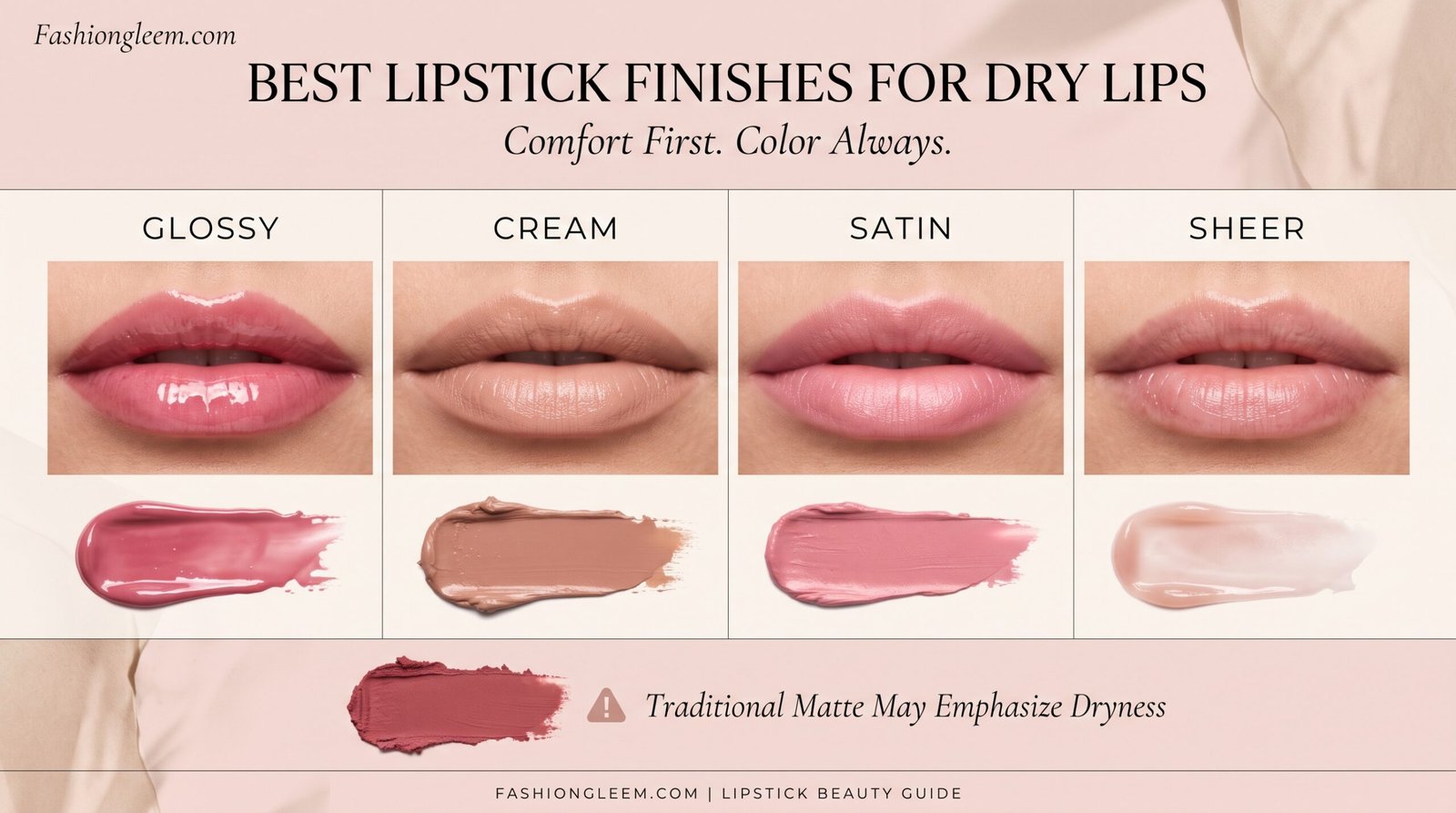
| Rank | Finish | Why | Watch out |
|---|---|---|---|
| 1 | Glossy / lip oil hybrid | Most hydrating; reflects light away from flakes | Needs reapplying; can feather |
| 2 | Cream | Balances color and comfort; emollient-rich | Moderate wear time |
| 3 | Satin | Creamy with subtle sheen; comfortable all day | Less pigment than matte |
| 4 | Sheer / tinted balm | Maximum comfort; foolproof application | Lightest color payoff |
| 5 | Matte | Boldest color; longest wear | Driest; clings to every flake |
For dry lips, finishes 1 through 4 are the safe zone. Traditional matte sits last for a reason.
Some newer “comfort matte” formulas add conditioning ingredients. They are better than classic mattes but still drier than creams. The Glamgrader satin lipstick guide shows why satin has become the comfort sweet spot.
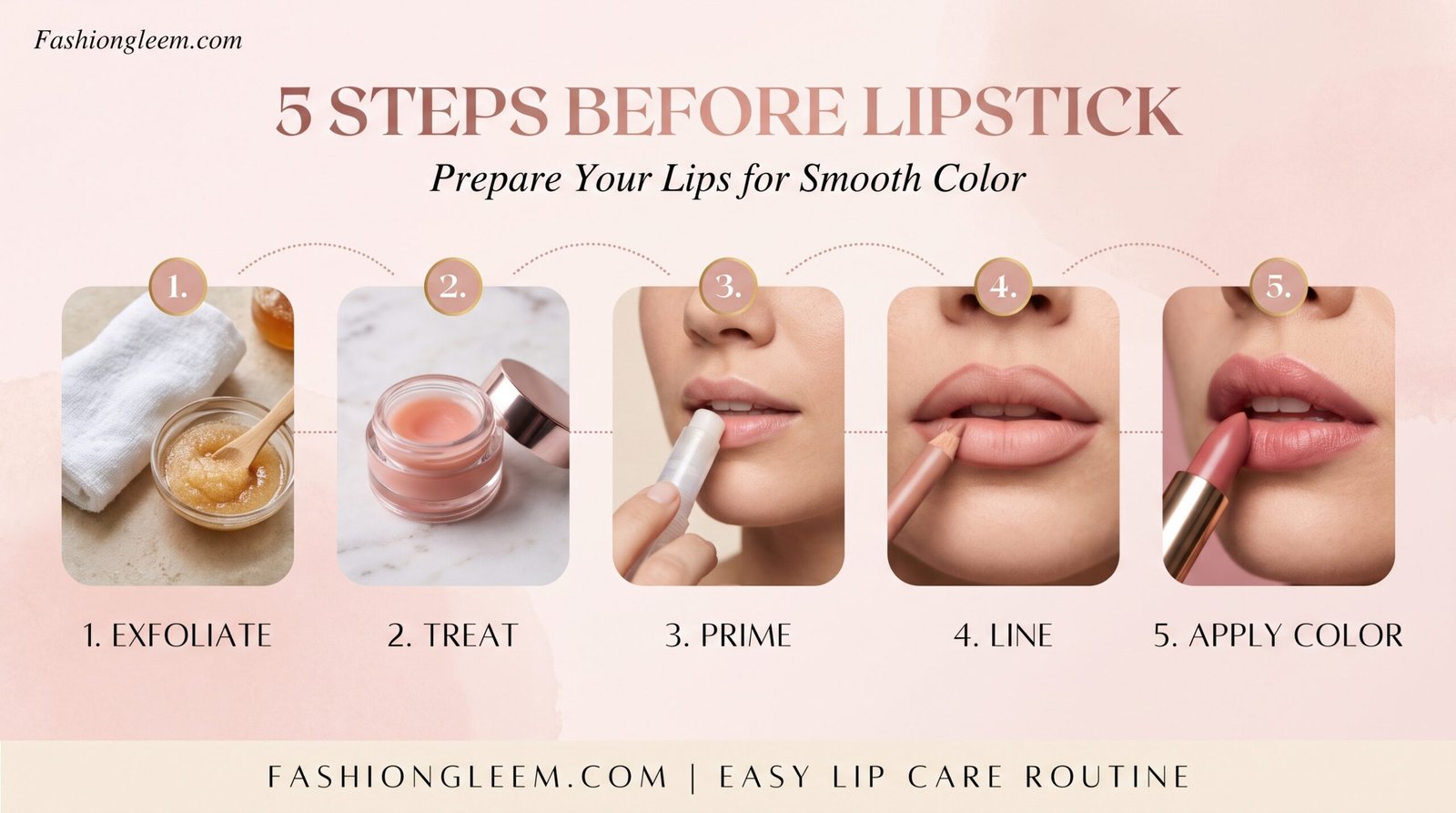
The Pre-Lipstick Ritual: 5 Steps Before Color
Even the best lipstick for dry lips needs a good canvas. This ritual takes five minutes.
Step 1: Gentle Exfoliation
If lips are flaky, lift the dead skin first. Dr. Jaliman recommends a damp washcloth rubbed gently over the lips.
For a DIY scrub, mix honey and sugar into a paste. Apply, rub gently with a washcloth, cotton pad, or soft toothbrush, then rinse.
Exfoliate 1 to 2 times per week, not daily. Over-scrubbing creates the rawness you are trying to fix.
Step 2: Treat
Apply a nourishing lip treatment or mask and let it absorb for a few minutes. Overnight lip masks worn the night before work even better.
This step fills in the moisture deficit so your lipstick does not have to do all the work.
Step 3: Prime with Balm
Apply a thin layer of plain lip balm as a primer. Blot lightly so color still grips.
Doubling up on moisture, treatment plus balm, keeps dryness at bay through the day.
Step 4: Line (Optional but Helpful)
Lip liner prevents feathering, the bleeding of color into fine lines around the mouth. Choose a shade matching your lips or your lipstick.
Liner also gives color something to hold onto as the day wears on.
Step 5: Apply Color
Apply your hydrating lipstick from the center outward. Blot once with tissue for a natural finish, or layer for intensity.
New to building a full routine? Our skincare routine for beginners covers how lip care fits into the bigger picture.
How to Apply Lipstick on Dry, Flaky Lips
Warm the bullet slightly on the back of your hand first. Warm product glides instead of dragging.
Use thin layers. One thin coat, blot, then a second thin coat lasts longer and looks smoother than one thick coat.
Press, do not rub. Pressing deposits color without disturbing flakes. Rubbing back and forth lifts them.
Carry your lipstick or a clear balm for midday touch-ups. Reapplying over dry color beats layering more dry color.
What to Look for When Buying
Formula Types by Concern
| Concern | Look for |
|---|---|
| Everyday dry lips | Cream or satin finish with shea butter and vitamin E |
| Very chapped lips | Tinted balm or lip oil hybrid; maximum comfort first |
| Sensitive lips | Fragrance-free, dermatologist-tested, minimal ingredient list |
| Mature lips | Creamy formula with hyaluronic acid; avoid matte settling into lines |
| Long workdays | Satin finish; reapply at lunch rather than chasing long-wear |
| Budget priority | Drugstore creamy or tinted balm formulas; check ingredients, not price |
Hands-on testing reviews like BuyingClarity’s hands-on review and Beauty with Hollie’s moisturizing picks consistently land on the same pattern: creamy and balm-like formulas win for dry lips across price tiers.
Reading the Label
Ingredients appear in descending order by amount. Hydrating stars like shea butter or squalane should appear early, not last.
“Dermatologist-tested” means tested, not approved. It is a mild trust signal, not a guarantee.
“Hypoallergenic” has no legal definition in cosmetics. Treat it as marketing until the ingredient list confirms it.
“Natural” tells you nothing about hydration. Poison ivy is natural. Read the actual ingredients.
Tinted Balm vs. Lipstick vs. Lip Oil
| Feature | Tinted balm | Cream/satin lipstick | Lip oil |
|---|---|---|---|
| Color payoff | Sheer | Medium to full | Sheer to medium |
| Hydration | Highest | Good | Very high |
| Wear time | 1-2 hours | 3-5 hours | 1-2 hours |
| Best for | Worst chapped days | Daily color | Gloss lovers |
| Skill needed | None | Low | Low |
For severely chapped lips, start with a tinted balm until healing, then graduate to lipstick. There is no prize for suffering through color.
Lip oil layered over lipstick adds shine and comfort for evenings. Apply it only to the center of the lips to avoid feathering.
Troubleshooting: Fixing Common Problems
| Problem | Cause | Fix |
|---|---|---|
| Flaking by noon | Dry base + drying formula | Exfoliate, prime with balm, switch to cream finish |
| Settling into lip lines | Matte formula + thin lips | Switch to creamy or glossy; try a lip primer |
| Feathering | No liner + glossy formula | Line lips; blot before applying |
| Color fades fast | Sheer formula + eating/drinking | Reapply; this is normal, not failure |
| Tight, uncomfortable feeling | Long-wear or matte formula | Switch finishes; layer balm underneath |
| Stinging on application | Irritants (menthol, fragrance) or cracked skin | Switch to fragrance-free; heal first with balm only |
Seasonal Strategy
Winter is peak chapped-lip season. Cold air, indoor heating, and wind strip moisture relentlessly. This is when the full ritual matters most.
Keep a balm in every coat pocket. Reapply before going outside, not after damage appears.
Summer brings sun damage to thin lip skin. Look for lip products with SPF during high-exposure months.
Year-round, humidifiers in dry bedrooms reduce overnight moisture loss from lips.
When Dry Lips Need a Doctor
The American Academy of Dermatology advises seeing a dermatologist if chapping persists beyond two to three weeks despite proper care.
Warning signs include swelling, severe redness, pain, cracking at the corners that will not heal, or signs of infection. These can indicate angular cheilitis, eczema, or allergy.
Do not keep buying products for a medical problem. Persistent symptoms deserve professional evaluation.
Frequently Asked Questions
What is the best lipstick for dry lips?
A creamy, satin, or glossy formula with hyaluronic acid, shea butter, jojoba oil, or squalane. Finish matters as much as ingredients.
What lipstick will not dry out my lips?
Cream, satin, and glossy finishes with emollient-rich formulas. Avoid traditional mattes and long-wear formulas.
Is matte lipstick bad for dry lips?
Generally yes. Matte formulas are designed flat with no sheen and contain little moisture. Comfort mattes are better but still drier than creams.
Is satin or glossy better for dry lips?
Glossy is most hydrating, satin is the best balance of comfort and wear. Both beat matte for dry lips.
What ingredients should I look for?
Hyaluronic acid, shea butter, jojoba oil, squalane, vitamin E, and aloe vera, per dermatologist guidance.
What ingredients dry out lips?
Camphor, phenol, menthol, high alcohol content, and heavy synthetic fragrance.
Does beeswax hydrate lips?
Dermatologists disagree. One says it only sits on the surface; another recommends it as an occlusive for chronically dry lips. Test it yourself.
Should I put lip balm under lipstick?
Yes. A thin balm layer primes lips and extends comfort. Blot lightly so color still adheres.
How do I prep chapped lips for lipstick?
Exfoliate gently 1 to 2 times weekly, apply treatment, prime with balm, then color. Never apply color to flaking lips unprepped.
Can I exfoliate my lips every day?
No. Daily scrubbing damages the barrier. Stick to 1 to 2 times per week.
Why does my lipstick flake by noon?
Usually a dry base plus a drying formula. Exfoliate, prime, and switch to a cream or satin finish.
Why does lipstick settle into lip lines?
Matte formulas emphasize texture. Creamy finishes and lip primer minimize settling.
How do I stop lipstick from feathering?
Use lip liner around the edge, blot before applying, and avoid over-applying glossy formulas past the lip line.
Does lip liner help dry lips?
It helps feathering and wear, not hydration itself. Pair liner with a hydrating lipstick.
Is lip oil better than lipstick for dry lips?
For comfort, yes. For color payoff, lipstick wins. Many people layer oil over lipstick.
Can I wear long-wear lipstick with dry lips?
Not comfortably. Long-wear formulas trade hydration for grip. Choose reapplication over endurance.
What is the best drugstore lipstick for dry lips?
Look for creamy or tinted-balm formulas with shea butter or vitamin E high on the ingredient list. Price matters less than formula.
Does hyaluronic acid in lipstick actually work?
Yes, as a humectant. It draws water into the lips, though it needs an emollient alongside to seal it in.
Should lipstick be fragrance-free for dry lips?
Preferably yes for sensitive or cracked lips. Fragrance is a common irritant.
Why should I not lick my lips?
Evaporation. Saliva water evaporates quickly and takes lip moisture with it, leaving lips drier than before.
How often should I reapply?
Every 3 to 4 hours, or after eating and drinking. Hydrating formulas are designed for reapplication.
Can lipstick cause chapped lips?
Yes. Formulas with menthol, camphor, phenol, or drying alcohols can cause or worsen chapping with repeated use.
What is the best lipstick for dry mature lips?
Creamy formulas with hyaluronic acid. Avoid mattes, which settle into lines and emphasize texture.
Is tinted lip balm enough color?
For everyday wear, often yes. It will not match a true lipstick’s pigment, but the comfort tradeoff suits bad lip days.
Can I layer lip oil over lipstick?
Yes. Apply to the center of the lips for shine without disturbing the edges.
What does dermatologist-tested mean?
The product was tested under dermatologist supervision. It is not an approval or a guarantee of gentleness.
Can I make matte lipstick work on dry lips?
Partially. Exfoliate, prime heavily with balm, and choose a “comfort matte.” Expect less comfort than cream finishes.
Should I use a lip mask at night?
Yes. Overnight lip treatments repair the barrier while you sleep, making morning color application much smoother.
When should I see a doctor for chapped lips?
If chapping persists beyond two to three weeks despite care, or with swelling, severe redness, or pain.
Do I need different lipstick in winter?
Often yes. Switch to richer, glossier formulas in winter and keep balm in every pocket.
Conclusion
The best lipstick for dry lips is not one magic product. It is the right finish, the right ingredients, and the right prep ritual working together.
Choose cream, satin, or glossy formulas with proven hydrators. Avoid the known drying culprits. Exfoliate gently, prime always, and reapply without guilt.
Your lips will tell you what works. Listen to them, and color becomes comfortable again.
Ready to round out the routine? Revisit our body care routine aesthetic guide and compare current prices at your preferred retailer before you buy.