Best Foundation for Dry Skin: How to Choose, Top Picks and Application Tips for a Smooth, Glowing Finish 2026
You apply your foundation in the morning and it looks perfect. By noon, it has clung to every dry patch, settled into every fine line, and turned your skin into a flaky, uneven canvas.
If that sounds familiar, you have probably been using the wrong formula. You need a Best Foundation for Dry Skin. Many foundations are designed for normal or oily skin. They are made to control shine, which is the last thing dry skin needs.
The right foundation does the opposite. It adds comfort, melts into the skin, and leaves a soft, healthy glow instead of a dull, powdery finish.
Table of Contents
Why Foundation Behaves Differently on Dry Skin
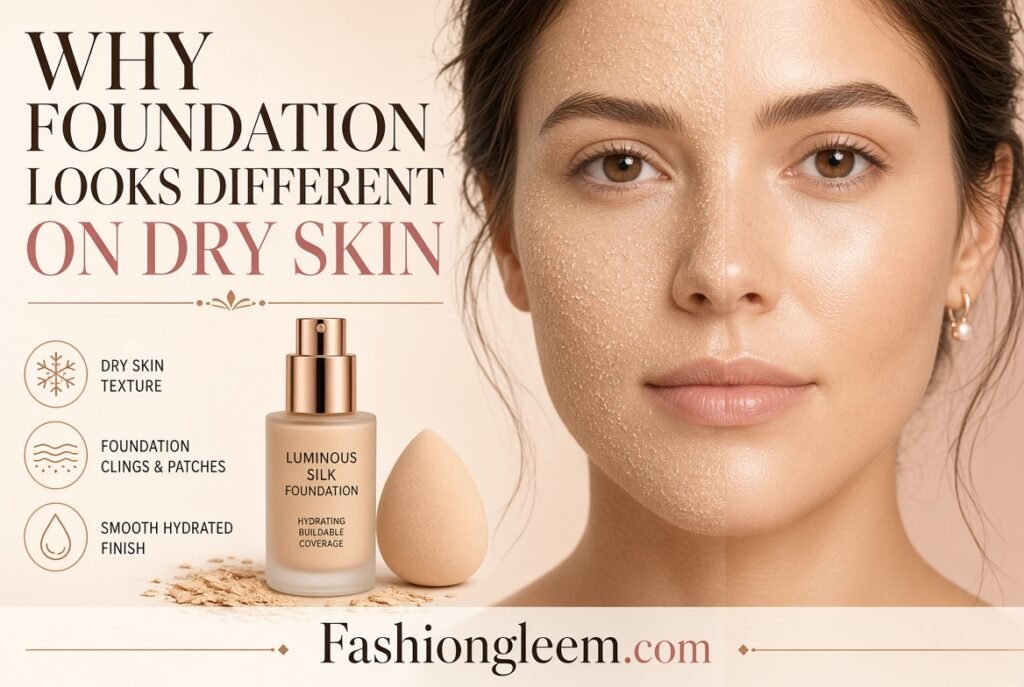
Dry skin produces less oil, so it has a weaker barrier and loses moisture more easily. This affects how foundation looks and wears.
What Happens When Foundation Meets Dry Skin
- Matte formulas cling to dry patches and look flaky
- Powder-based products emphasize texture and fine lines
- Foundation can look patchy where skin is rough
- Skin may feel tight and uncomfortable after a few hours
- Makeup can fade or separate unevenly
Dry Skin vs Dehydrated Skin
These two terms are often confused, but they are not the same.
| Feature | Dry Skin | Dehydrated Skin |
|---|---|---|
| Cause | Lack of natural oil | Lack of water |
| Skin type or condition | A skin type | A temporary condition |
| Looks like | Flaky, rough, sometimes tight | Dull, tight, fine surface lines |
| Can affect | Dry skin types | Any skin type, including oily |
| Helps | Rich moisturizers, oils | Hydrating serums, water-based products |
Both benefit from hydrating makeup and good skin prep.
When Dry Skin Needs Medical Care
Severely dry, itchy, cracked, or inflamed skin may signal eczema or another skin condition. If your skin is painful, very red, or does not improve with moisturizer, see a dermatologist.
What to Look for in a Foundation for Dry Skin
A good dry-skin foundation focuses on hydration, flexibility, and a skin-like finish.
Key Qualities
| Quality | Why It Matters |
|---|---|
| Hydrating formula | Adds comfort and prevents a tight feeling |
| Satin, radiant, or dewy finish | Reflects light and looks fresh |
| Lightweight to medium coverage | Avoids caking and settling |
| Buildable texture | Lets you add coverage only where needed |
| Flexible, creamy feel | Moves with the skin and resists cracking |
| Smooth blending | Prevents patchiness |
Helpful Ingredients
- Hyaluronic acid draws water into the skin
- Glycerin is a gentle humectant that hydrates
- Squalane softens and smooths
- Ceramides help support the skin barrier
- Shea butter and plant oils add richness
- Vitamin E helps condition the skin
- Niacinamide soothes and supports the barrier
- Peptides can support a smoother look
Ingredients and Features to Be Careful With
- Alcohol-heavy or very drying formulas
- Ultra-matte, long-wear finishes
- Heavy powders in the formula
- Strong fragrance if you have sensitive skin
Check the ingredient list, and patch test new products if your skin is reactive.
Types of Foundation for Dry Skin
Foundation comes in several forms. Some suit dry skin much better than others.
| Type | Best For Dry Skin? | Notes |
|---|---|---|
| Skin tint or tinted moisturizer | Excellent | Sheer, hydrating, very natural |
| Serum foundation | Excellent | Light, skincare-style formula |
| Liquid foundation (hydrating or radiant) | Excellent | Wide range of coverage |
| Cream foundation | Very good | Rich and forgiving, may feel heavy if overapplied |
| Stick foundation (cream) | Good | Convenient, can be rich |
| Cushion foundation | Good | Light and dewy, easy to apply |
| BB or CC cream | Good | Often includes SPF and hydration |
| Powder foundation | Not ideal | Can emphasize dryness |
| Matte liquid foundation | Not ideal | Can cling to dry patches |
Skin Tints and Tinted Moisturizers
These offer sheer to light coverage and a lot of hydration. They are ideal for everyday wear and for people who prefer a natural look.
Serum Foundations
Serum foundations combine skincare ingredients with a light tint. They feel almost weightless and give skin a healthy glow.
Hydrating Liquid Foundations
Look for words such as hydrating, luminous, radiant, or satin on the label. They offer light to medium coverage with a comfortable finish.
Cream Foundations
Cream formulas are rich and smooth. They can offer more coverage while staying soft on the skin.
Cushion Foundations
Cushion compacts hold liquid foundation in a sponge and deliver a light, dewy finish. They are quick and convenient.
Coverage Guide: Sheer, Medium, or Full?
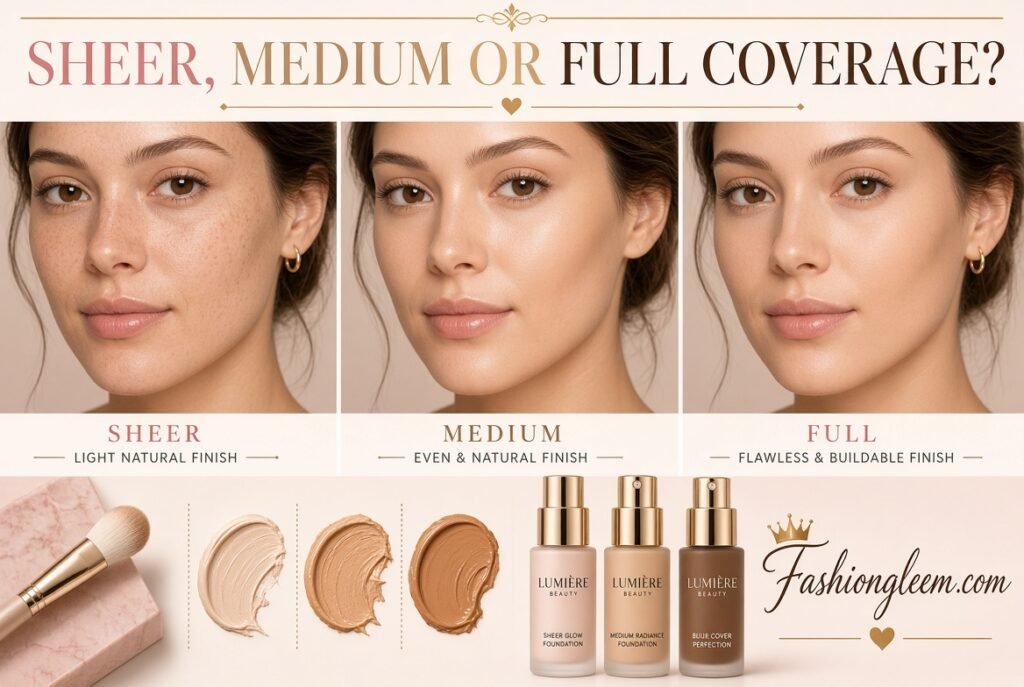
The right coverage depends on your needs and preferences.
| Coverage | Look | Best For |
|---|---|---|
| Sheer | Natural, skin-like | Everyday, minimal makeup |
| Light | Evens tone, shows skin | Daily wear |
| Medium | Covers redness and spots | Work, events |
| Full | Covers most imperfections | Special occasions |
Tip for Dry Skin
Start with lighter coverage and add more only where needed. Heavy layers can accentuate dryness.
Finish Guide: Dewy, Radiant, Satin, or Matte?
Finish describes how foundation looks once it dries.
| Finish | Description | Dry Skin Suitability |
|---|---|---|
| Dewy | Very glowy, wet-look | Great, but may look shiny on some |
| Radiant | Luminous, light-reflecting | Excellent |
| Satin | Soft glow, slight sheen | Excellent |
| Natural | Skin-like, in between | Very good |
| Matte | Flat, no shine | Usually not recommended |
Radiant and satin finishes tend to look the most flattering on dry skin because they add light without looking greasy.
Best Foundations for Dry Skin: Popular Picks
The picks below are commonly recommended by beauty editors, reviewers, and shoppers for dry skin. Formulas, shade ranges, SPF levels, and prices change over time, so check the brand’s website before buying.
| Foundation | Type and Finish | Notable Features |
|---|---|---|
| Charlotte Tilbury Beautiful Skin Foundation | Liquid, radiant | Often praised for a glowy, skin-like finish on dry and mature skin |
| Estée Lauder Futurist Hydra Rescue Moisturizing Foundation SPF 45 | Liquid, hydrating | Moisturizing formula with SPF |
| Shiseido Synchro Skin Radiant Lifting Foundation SPF 30 | Liquid, radiant | Silky and lightweight with a buildable, comfortable feel |
| Kosas Revealer Skin-Improving Foundation SPF 25 | Liquid, natural glow | Skin-care-style formula often liked for dry and combination skin |
| ILIA Super Serum Skin Tint SPF 40 | Skin tint, hydrating | Light coverage with a serum-like feel |
| Hourglass Veil Hydrating Skin Tint | Skin tint, hydrating | Sheer, hydrating tint for natural looks |
| Natasha Denona Hy-Glam Foundation | Liquid, radiant | Hydrating formula with a wide shade range |
| Merit Minimalist Perfecting Complexion Foundation and Concealer Stick | Cream stick, natural | Convenient stick for light coverage |
| e.l.f. Soft Glam Satin Foundation | Liquid, satin | Budget-friendly option with a soft satin finish |
How to Use This List
Use these picks as a starting point, not a guarantee. Everyone’s skin is different, so read the ingredient list, check shade ranges, and look for return policies or free samples.
Best for Everyday Natural Looks
Skin tints and serum foundations, such as the ILIA and Hourglass options, suit minimal makeup routines and warm weather.
Best for Mature, Dry Skin
Radiant liquid foundations with a flexible texture tend to look smoother on lines. Charlotte Tilbury and Shiseido formulas are often mentioned in this category.
Best for Daily Sun Protection Support
Formulas with SPF, such as Estée Lauder Futurist Hydra Rescue and Kosas Revealer, add a layer of protection. Foundation SPF should not replace a dedicated sunscreen applied generously beforehand.
Best Budget Option
Affordable formulas such as e.l.f. Soft Glam Satin Foundation offer a hydrating, satin finish without a high price.
Foundations to Approach With Caution on Dry Skin
Some popular foundations are designed for long wear and oil control. They can work on dry skin with careful prep, but they may emphasize dry patches.
Long-Wear Matte Formulas
Full-coverage, matte, or stay-in-place formulas can cling to dryness. If you love one, use plenty of moisturizer and a hydrating primer, and apply thin layers.
Powder Foundations
Powder products can look flat and dry. Use them only over a well-moisturized base, or skip them altogether.
How to Choose the Right Shade
A hydrating formula still needs the right shade to look natural.
Know Your Undertone
| Undertone | Typical Signs | Foundation Tip |
|---|---|---|
| Warm | Veins look greenish, gold jewelry flatters | Choose yellow or golden shades |
| Cool | Veins look blue or purple, silver jewelry flatters | Choose pink or rosy shades |
| Neutral | A mix of both | Choose neutral shades |
| Olive | Greenish-golden cast | Choose golden-olive shades |
Test Properly
Apply a few stripes along your jawline and check them in natural daylight. The right shade disappears into your skin. Judge the color after a few minutes, since some formulas oxidize and change slightly.
Consider Seasonal Changes
Skin tone can change with the seasons. You may need a slightly deeper shade in summer and a lighter one in winter.
Prepare Your Skin Before Applying Foundation

Skin prep is just as important as the foundation itself. Dry skin needs a smooth, hydrated base.
Step 1: Cleanse Gently
Use a mild, hydrating cleanser. Avoid harsh foaming cleansers that strip oils.
Step 2: Exfoliate Lightly (Occasionally)
Gentle exfoliation once or twice a week helps remove flaky skin that foundation would otherwise cling to. Do not over-exfoliate, which can worsen dryness.
Step 3: Apply Hydrating Serum
A serum with hyaluronic acid or glycerin adds water to the skin. Apply it to slightly damp skin.
Step 4: Moisturize
Apply a rich moisturizer and give it a few minutes to absorb. If your skin looks greasy, blot lightly.
Step 5: Sunscreen
Apply a broad-spectrum sunscreen with SPF 30 or higher, as recommended by the American Academy of Dermatology. Wait a few minutes before makeup.
Step 6: Primer (Optional)
A hydrating or smoothing primer can help foundation glide and last. Avoid mattifying primers.
Step 7: Lips and Eyes
Apply lip balm and a gentle eye cream so the delicate areas are comfortable before makeup.
How to Apply Foundation on Dry Skin Step by Step
Technique can transform how foundation looks on dry skin. Follow these steps for a smooth, natural result.
Step 1: Use a Small Amount
Start with a pea-sized drop for the whole face. Dry skin tends to absorb product, but too much can look heavy.
Step 2: Warm the Product
Warm foundation between your fingers or on the back of your hand. This helps it melt into the skin.
Step 3: Dot and Press
Dot foundation on the center of your face, such as the cheeks, forehead, nose, and chin. Press it in with a damp sponge or fingers.
Step 4: Blend Outward
Blend outward toward the hairline and jawline with gentle bouncing or patting motions. Avoid rubbing, which can lift dry flakes.
Step 5: Build Coverage Only Where Needed
If you need more coverage, add a second thin layer to areas such as redness or spots.
Step 6: Conceal
Use a creamy, hydrating concealer in small amounts. Pat it in and blend with a sponge or finger.
Step 7: Set Lightly
Skip powder if your skin is very dry. If you need to set, use a tiny amount of finely milled powder only on the T-zone.
Step 8: Finish With a Mist
A hydrating setting spray melts layers together and adds a fresh look.
Best Tools for Applying Foundation on Dry Skin
The tool you use affects the finish.
| Tool | Finish | Best For |
|---|---|---|
| Damp beauty sponge | Natural, seamless | Most dry skin, adds a skin-like look |
| Soft foundation brush | Smooth, buildable | Medium coverage |
| Fingers | Warm, sheer | Skin tints and light coverage |
| Stippling brush | Airbrushed | Liquid foundations, lightweight application |
Why a Damp Sponge Works Well
A slightly damp sponge presses product into the skin and prevents streaking. It also helps keep the finish soft and natural.
Keep Tools Clean
Wash brushes and sponges every one to two weeks to avoid buildup of bacteria and product.
How to Get Foundation to Last on Dry Skin
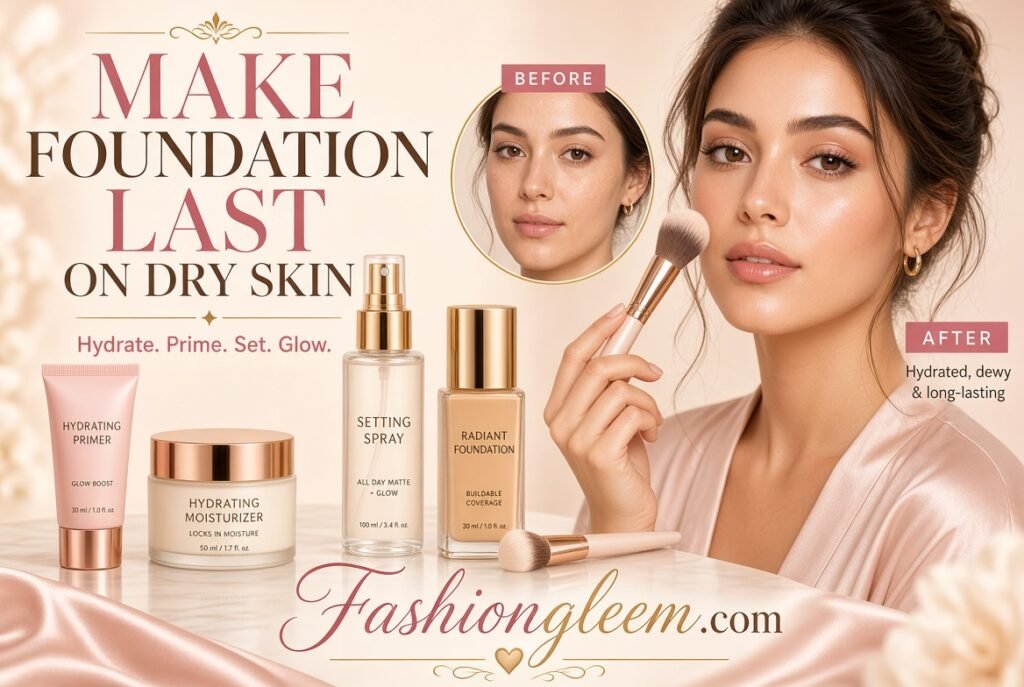
Dry skin does not usually produce oil that breaks down makeup, but foundation can still fade or crack.
Layer Hydration
Use a hydrating serum, moisturizer, and primer. Hydrated skin holds on to makeup better.
Choose Cream Over Powder
Cream blush, bronzer, and highlighter blend easily with liquid foundation and keep a seamless, glowy finish.
Set Only Where Needed
Only set areas that get shiny. Leave dry areas unpowdered.
Use a Hydrating Setting Spray
Mist your face lightly after makeup. This helps layers meld and stay flexible.
Carry a Mini Hydrating Mist
A quick mist during the day refreshes skin and softens any dryness.
Foundation for Dry Skin by Concern
Dry skin often comes with other concerns. Here is how to handle them.
Dry and Mature Skin
Choose radiant liquid foundations or serum foundations with flexible texture. Use thin layers and press the product in. Avoid heavy powder and matte formulas.
Dry and Sensitive Skin
Choose fragrance-free, gentle formulas with minimal ingredients. Patch test before use and avoid harsh exfoliants.
Dry and Acne-Prone Skin
Look for non-comedogenic, lightweight formulas that are hydrating but not heavy. Remove makeup thoroughly each night. See a dermatologist if acne is persistent.
Dry and Flaky Skin
Exfoliate gently, use a rich moisturizer, and choose a skin tint or serum foundation. Avoid products that rely on powder.
Dry Skin With Fine Lines
Use hydrating primer, thin foundation layers, and press foundation into the skin. Avoid applying too much concealer under the eyes.
Dry Skin With Redness
A skin tint or light liquid foundation can even tone without heavy coverage. A green-toned corrector can help neutralize redness before foundation.
Dry Skin With Dark Spots
Use a color corrector or concealer on spots, then apply a light layer of foundation over the top. Wear sunscreen daily to prevent more spots from forming.
Foundation for Dry Skin by Season
Skin needs shift throughout the year.
Winter
Cold air and indoor heating dry the skin. Use richer moisturizers, cream foundations, and dewy finishes. Add a humidifier at home.
Summer
Lighter formulas, such as skin tints and serum foundations, feel more comfortable in warm weather. Use sunscreen generously.
Spring and Fall
Transitional seasons call for flexibility. Keep a medium-weight hydrating foundation and adjust moisturizer as needed.
Foundation for Dry Skin by Skin Tone
Shade range matters. People with deeper skin tones have often struggled to find hydrating foundations that match, though many brands now offer broader ranges.
Fair to Light Skin
Look for formulas that do not look too pink or too yellow. Test along the jawline in daylight.
Medium and Tan Skin
Golden and neutral undertones are common. Check how the foundation looks after a few minutes.
Deep Skin
Choose formulas with rich pigments that do not look ashy. Look for brands that offer a wide shade range with true deep undertones, and check reviews from people with similar skin tones.
Always Check for Samples
Many retailers offer samples or testers. Try before committing to a full size.
Common Mistakes When Choosing Foundation for Dry Skin
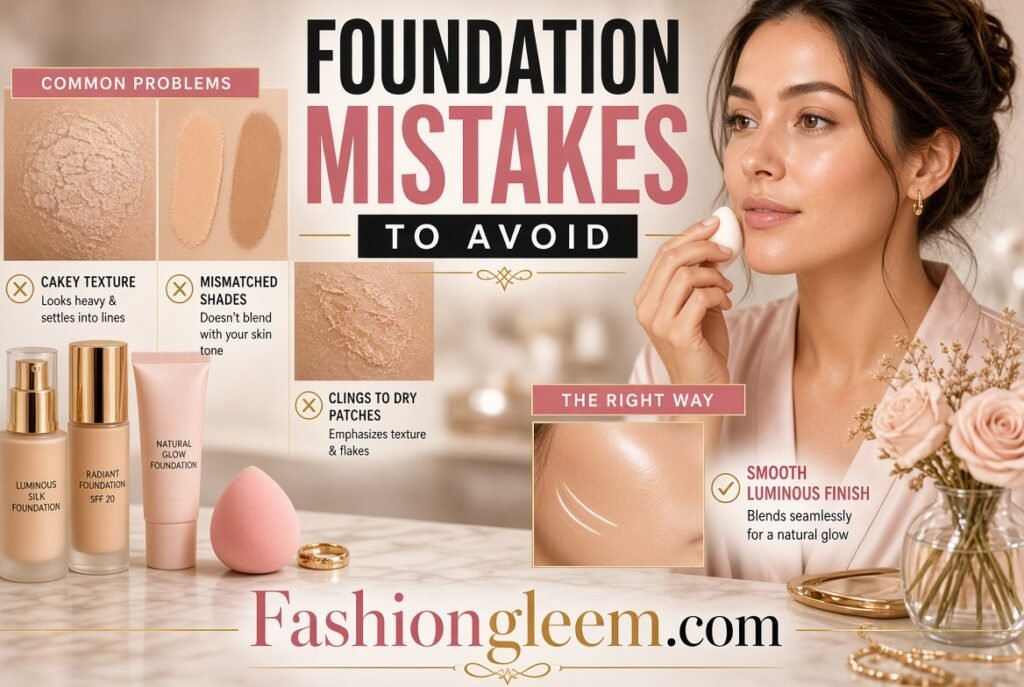
Avoid these common errors.
Choosing Matte Formulas
Matte foundations can cling to dry patches. Choose satin, radiant, or dewy finishes.
Skipping Skin Prep
Applying foundation to dry, flaky skin leads to patchy results. Moisturize first.
Using Too Much Product
Heavy layers can settle into lines. Start with less and build gradually.
Overusing Powder
Powder can emphasize dryness. Use it only where needed.
Picking the Wrong Shade
A shade that is too light or too dark looks obvious. Test in natural light.
Ignoring Undertones
Matching depth but not undertone leads to a muddy or orange look.
Relying on Foundation SPF Alone
Foundation rarely provides enough sun protection on its own, since most people do not apply enough. Use a dedicated sunscreen underneath.
Myths About Foundation and Dry Skin
Let us clear up a few common beliefs.
Myth: Dry Skin Cannot Wear Full Coverage
It can, with the right formula and prep. Choose a hydrating, buildable full-coverage foundation and apply thin layers.
Myth: Foundation Makes Dry Skin Worse
Hydrating foundations can actually add comfort. Drying, matte formulas and poor prep cause problems.
Myth: You Should Skip Moisturizer Under Foundation
Moisturizer helps foundation glide on and look smoother. Always prep your skin.
Myth: Powder Sets Everything
Powder can make dry skin look flat and dusty. Use a hydrating setting spray instead.
Myth: Expensive Always Means Better
Many affordable foundations perform well on dry skin. Look at the formula and finish, not just the price.
How to Remove Foundation Without Drying Your Skin
Gentle removal protects your skin barrier.
Use a Cleansing Balm or Oil
Balms and oils melt makeup without stripping the skin. Massage gently and rinse with lukewarm water.
Follow With a Gentle Cleanser
If needed, use a creamy cleanser to remove any leftover residue.
Moisturize Afterward
Apply a hydrating serum and moisturizer to restore comfort.
Avoid Harsh Wipes
Rough or alcohol-based wipes can irritate dry skin. Choose gentle options.
Skincare Habits That Make Foundation Look Better
Great makeup starts with healthy skin.
Daily Sunscreen
Protects skin from damage and helps keep the barrier healthy.
Moisturize Morning and Night
Consistent moisturizing improves comfort and makeup wear.
Use Lukewarm Water
Hot water strips natural oils. Wash and shower in lukewarm water.
Humidify Your Home
A humidifier adds moisture to dry indoor air, particularly in winter.
Stay Hydrated and Eat Well
A balanced diet and enough fluids support general skin health, though they will not replace moisturizer.
Consider a Dermatologist
If dryness is severe or persistent, a dermatologist can recommend treatments and rule out conditions such as eczema.
Foundation vs Skin Tint vs BB Cream vs CC Cream
These products overlap, which can be confusing. This comparison helps you choose.
| Product | Coverage | Finish | Typical Extras |
|---|---|---|---|
| Foundation | Light to full | Matte to dewy | Wide shade ranges |
| Skin tint | Sheer | Natural, glowy | Often skincare ingredients |
| Tinted moisturizer | Sheer to light | Natural | Moisturizing base, sometimes SPF |
| BB cream | Light to medium | Natural | Often SPF and skincare benefits |
| CC cream | Light to medium | Natural | Often color-correcting, SPF |
Which Should You Pick?
If you want the most comfort and a natural look, start with a skin tint or tinted moisturizer. If you want more coverage for events or photos, choose a hydrating liquid or cream foundation.
How to Buy Foundation for Dry Skin Smartly
Shopping well saves money and frustration.
Ask for Samples
Many beauty counters and online retailers offer samples. Wear a sample for a full day to see how it behaves on your skin.
Check the Return Policy
Choose retailers that accept returns on opened beauty products, or that offer shade-matching guarantees.
Read the Ingredient List
Look for hydrating ingredients and avoid anything that you know irritates your skin. If your skin is sensitive, patch test.
Read Reviews From Similar Skin Types
Look for reviews from people with dry skin and a similar skin tone. They give a better idea of how the product performs for you.
Compare Price and Size
Higher prices do not always mean better performance. Compare the amount of product and how much you actually use per application.
Watch the Expiration
Check the period-after-opening symbol on the packaging. Liquid foundations generally last for a limited time once opened, so follow the label.
Building a Full Dry-Skin Makeup Routine Around Your Foundation
A good foundation works best with the right supporting products.
Concealer
Choose a creamy, hydrating concealer in a shade close to your skin tone or slightly lighter under the eyes. Use a small amount and blend gently.
Blush, Bronzer, and Highlighter
Cream and liquid formulas blend seamlessly into foundation and add life to the face. Choose soft, satin finishes over chunky glitter.
Eyeshadow and Liner
Soft, blendable shadows and gentle pencil liners are easier on dry lids. Prime the eyelids if they tend to crease.
Mascara and Brows
Choose lightweight formulas and set brows with a clear or tinted gel. Mascara completes the look without making skin feel heavy.
Lips
Dry skin often means dry lips. Exfoliate lightly, apply balm, and choose creamy lipsticks or tinted balms.
Quick Decision Guide: Which Foundation Should You Choose?
Use this table to match your needs.
| Situation | Best Choice |
|---|---|
| Want a natural, everyday look | Skin tint or serum foundation |
| Want a glowy finish | Radiant or dewy liquid foundation |
| Mature, dry skin | Hydrating liquid foundation, thin layers, no heavy powder |
| Need more coverage | Buildable hydrating liquid or cream foundation |
| Want sun protection support | Foundation with SPF over a dedicated sunscreen |
| On a budget | Affordable satin or hydrating foundation |
| Sensitive skin | Fragrance-free, minimal-ingredient formula |
| Short on time | Cushion foundation or skin tint |
Pros and Cons of Foundation Types for Dry Skin
Every type has strengths and trade-offs.
| Type | Pros | Cons |
|---|---|---|
| Skin tint | Light, natural, hydrating | Limited coverage |
| Serum foundation | Skincare feel, glowy | May need touch-ups |
| Liquid foundation | Flexible coverage, many shades | Can settle if overapplied |
| Cream foundation | Rich, buildable | Can feel heavy |
| Cushion | Convenient, light | May need sponge care |
| BB or CC cream | Often has SPF, easy | Less shade variety |
| Powder foundation | Quick | Emphasizes dryness |
Also Read:
- Glow Up Routine: The Complete Step-by-Step Guide to Build Yours in 2026
- Clean Girl Makeup: The Complete Guide to a Fresh, Glowy, Effortless Look in 2026
- Glow Up Tips: The Complete Guide to Looking and Feeling Your Best in 2026
- Beauty Routine at Home: The Secret to Glowing Skin & Hair 2026
- Popular Layered Haircuts For Men: 22 Attractive Hairstyles
- 4 Guard Buzz Cut: A Classic Short Hairstyle for a Clean Look
- 5 Guard Buzz Cut: The Perfect Balance Between Short and Full Hair
- 6 Guard Buzz Cut for a Clean and Natural Look
- 10 Guard Buzz Cut Styles for Every Face Shape
- Buzz Cut Fade: A Modern Haircut That Never Goes Out of Style
- 30 Stylish Burst Fade Comb Over Haircuts for Men in 2026
- 16 Guard Buzz Cut: A Longer Buzz Cut for a Clean, Natural Look
- Attractive Medium Length Hairstyles For Men
- The Quiff Hairstyle: 28 Stylish Variations For Modern Men
- Top 10 Asian Mullet Hairstyle
- 22 Burst Fade Slick Back Haircut Ideas for Men in 2026
- Burst Fade Taper Haircut: 23 Best Styles for Men in 2026
- Burst Fade Mohawk Haircut: 25 Bold Styles for Men in 2026
- Top 10 Mohawk Mullet Variations 2026
- Curly Burst Fade Haircut: 35 Styles for Every Curl Type (2026)
- 37+ Mid Fade Haircuts Men Love for a Sharp, Modern Look
- Low Taper Fade Buzz Cut: 26 Best Styles for Men in 2026
- Low Taper Fade Middle Part: Top 26 Powerful Hairstyles for Men in 2026
- Low Taper Fade Textured Crop Haircut: Top 26 Best Styles for Men in 2026
Frequently Asked Questions (FAQs)
What is the best foundation for dry skin?
The best foundation for dry skin is a hydrating, radiant or satin liquid foundation, serum foundation, or skin tint. Popular choices include Charlotte Tilbury Beautiful Skin, Estée Lauder Futurist Hydra Rescue, and Shiseido Synchro Skin Radiant Lifting Foundation.
What type of foundation is best for dry skin?
Liquid, serum, cream, and tinted formulas with hydrating ingredients are best. Avoid powder and ultra-matte foundations.
Which finish is best for dry skin?
Radiant, satin, and dewy finishes look the most flattering because they add glow instead of emphasizing dryness.
What ingredients should I look for in a foundation for dry skin?
Hyaluronic acid, glycerin, squalane, ceramides, shea butter, vitamin E, and niacinamide are helpful. Avoid very drying, alcohol-heavy formulas.
Should I use powder on dry skin?
Use it sparingly and only where you get shiny. Many people with dry skin can skip powder entirely.
Can dry skin wear full-coverage foundation?
Yes, with the right formula and prep. Choose a hydrating, buildable full-coverage foundation and apply thin layers.
What is the best foundation for dry mature skin?
Radiant, flexible liquid foundations and serum foundations are often recommended. Apply thin layers and avoid heavy powder.
What is the best foundation for dry and sensitive skin?
Look for fragrance-free, minimal-ingredient hydrating formulas and patch test before use. Skin tints and gentle serum foundations are good options.
What is the best foundation for dry skin with acne?
Choose a lightweight, hydrating, non-comedogenic formula and remove it thoroughly each night. See a dermatologist for persistent acne.
What is the best budget foundation for dry skin?
Affordable options with a satin or hydrating finish, such as e.l.f. Soft Glam Satin Foundation, are often recommended. Always check the formula and shade range.
Do I need primer under foundation on dry skin?
Not always, but a hydrating or smoothing primer can help foundation glide and last. Avoid mattifying primers.
How do I stop foundation from clinging to dry patches?
Moisturize well, exfoliate gently a couple of times a week, use thin layers, and press foundation in with a damp sponge.
Why does my foundation look cakey on dry skin?
Common causes include too much product, matte formulas, dry skin without proper prep, and heavy powder. Hydrate first and use less product.
Should I use a brush, sponge, or fingers for dry skin?
A damp sponge or fingers give the most natural finish. A soft brush works too if you press and blend gently.
Does foundation with SPF replace sunscreen?
No. Most people do not apply enough foundation to get the labeled SPF. Wear a dedicated broad-spectrum sunscreen underneath.
How do I choose the right foundation shade for dry skin?
Test shades along your jawline in natural light and check how they look after a few minutes. Match your undertone as well as depth.
Can I wear foundation every day with dry skin?
Yes, as long as you cleanse gently at night and moisturize. Choose lightweight, hydrating formulas.
How do I remove foundation from dry skin?
Use a cleansing balm or oil, follow with a gentle cleanser if needed, and apply moisturizer afterward.
Is a skin tint better than foundation for dry skin?
A skin tint gives lighter, more natural coverage and is very hydrating, so it suits many dry skin types. If you want more coverage, choose a hydrating liquid or cream foundation.
Should I see a dermatologist about very dry skin?
Yes, if skin is painful, cracked, very itchy, or not improving with moisturizer. It may be a sign of eczema or another condition that needs treatment.
Conclusion
The best foundation for dry skin is one that adds comfort instead of taking it away. Choose a hydrating liquid, serum, cream, or skin tint with a radiant or satin finish, and avoid powder-heavy and ultra-matte formulas.
Prep your skin with a gentle cleanser, hydrating serum, moisturizer, and sunscreen. Apply a small amount of foundation with a damp sponge or your fingers, press it in, and build coverage only where you need it.
Match your shade in natural daylight, check the ingredient list, and use samples whenever possible. Remember that formulas and shade ranges change, so confirm details with the brand before you buy.
With the right product and a little technique, dry skin can look smooth, fresh, and glowing from morning to night.