
Skincare Routine for Hormonal Acne: A Complete Step-by-Step Guide to Calmer, Clearer Skin 2026
It always seems to happen at the worst possible moment. A big event next week, a new job, a first date, and then, right along your jawline, a deep, painful bump appears out of nowhere.
You have changed your cleanser. You have tried the trending serum, Skincare Routine for Hormonal Acne. You have scrubbed, dabbed, and hoped. Still, the breakouts keep coming back in the same stubborn spots, often in a rhythm that seems strangely familiar.
That pattern is a clue. When acne flares along the chin and jaw, worsens around your period, or appears in adulthood after years of clear skin, hormones are often part of the story.
The good news is that hormonal acne is common, well understood, and treatable.
Table of Contents
What Is Hormonal Acne?
Hormonal acne is acne that is driven or worsened by hormonal changes. It is not a separate disease. It is the same acne process, influenced by hormones that affect oil production and inflammation.
It is common in teenagers during puberty, but many adults, especially women, experience it well into their 20s, 30s, 40s, and beyond.
How Acne Forms
Acne begins when pores become clogged with oil and dead skin cells. Bacteria that live on the skin can then multiply, and the body responds with inflammation, causing red bumps, pimples, and cysts.
Where Hormones Come In
Androgens, hormones present in both men and women, stimulate oil glands to produce more sebum. When androgen levels rise, or when the skin becomes more sensitive to them, oil production can increase and pores clog more easily.
Common Signs of Hormonal Acne
Hormonal acne has some typical patterns. Not everyone has all of them, but they can help you recognize it.
Typical Features
- Breakouts along the jawline, chin, and lower cheeks
- Deep, tender, or painful bumps under the skin
- Flare-ups that follow your menstrual cycle
- Acne that begins or returns in adulthood
- Breakouts that resist over-the-counter products
- Blackheads and whiteheads mixed with deeper lesions
Hormonal Acne vs Other Types
| Feature | Hormonal Acne | Common Teen Acne |
|---|---|---|
| Location | Lower face, jawline, chin, neck | T-zone, forehead, nose |
| Lesion type | Deep, tender nodules and cysts | Blackheads, whiteheads, pimples |
| Timing | Cycle-linked flares | Constant during puberty |
| Age | Often adults | Teens |
| Response to basic care | Often limited | Often better |
These are general patterns, not strict rules. Only a healthcare provider can diagnose the cause of your acne.
What Causes Hormonal Acne?
Several hormonal shifts and lifestyle factors can trigger breakouts. Understanding your likely triggers helps you work with your doctor.
Menstrual Cycle Changes
Many women notice breakouts in the days before their period. Hormone levels shift in the second half of the cycle, which can increase oil production and inflammation.
Polycystic Ovary Syndrome (PCOS)
PCOS is a common hormonal condition that can cause higher androgen levels. Acne, irregular periods, excess hair growth, and thinning scalp hair can be signs. If you notice these together, speak with a healthcare provider.
Puberty
Rising hormone levels during the teen years commonly cause acne in both boys and girls.
Pregnancy and Postpartum Changes
Hormones change dramatically during and after pregnancy, and acne can improve or worsen. Always check with your doctor before using acne treatments during pregnancy or breastfeeding.
Perimenopause and Menopause
As estrogen declines, the balance of hormones changes, and some women develop acne for the first time in their 40s or 50s. Skin may also become drier, which makes treatment trickier.
Stopping Hormonal Birth Control
Some people notice breakouts after stopping birth control pills, as hormones adjust. This is often temporary but can last several months.
Stress
Stress increases cortisol, a hormone that may stimulate oil production and worsen inflammation. Stress does not cause acne alone, but it can make it worse.
Other Factors
Genetics, certain medications, skincare and hair products that clog pores, sweat, friction from masks or helmets, and sleep problems can also contribute.
Why Hormonal Acne Is Different to Treat
Hormonal acne often responds slowly to basic skincare alone, because the trigger comes from inside the body. Topical products can help manage oil, clogged pores, and bacteria, but they may not fully control the hormonal drivers.
That is why many people combine a consistent skincare routine with medical treatment from a doctor.
Set Realistic Expectations
Most treatments take about eight to twelve weeks to show clear results. Skin may even look slightly worse in the first few weeks as it adjusts. Patience and consistency are essential.
The Basic Skincare Routine for Hormonal Acne at a Glance
A simple, gentle routine forms the foundation. You can add treatments gradually.
| Step | Morning | Night |
|---|---|---|
| 1. Cleanse | Gentle, non-stripping cleanser | Gentle cleanser |
| 2. Treat | Optional: niacinamide or azelaic acid | Acne treatment: retinoid or other active |
| 3. Spot treat | As needed | As needed |
| 4. Moisturize | Lightweight, non-comedogenic moisturizer | Lightweight moisturizer |
| 5. Protect | Broad-spectrum sunscreen SPF 30 or higher | Not needed |
Step 1: Gentle Cleansing
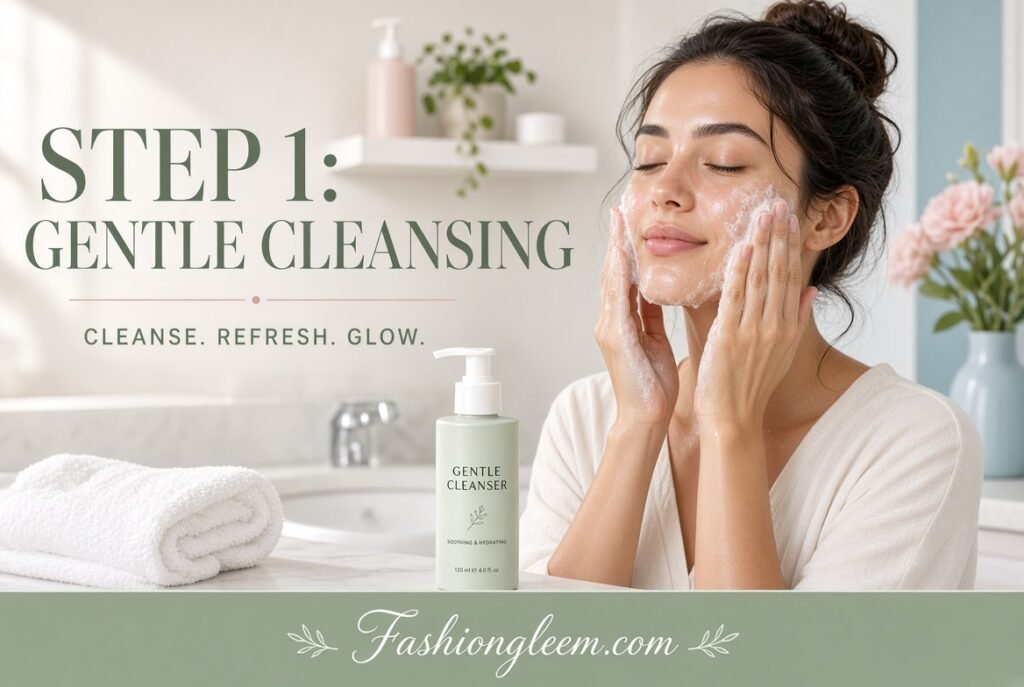
Cleansing removes oil, sweat, dirt, and makeup. For hormonal acne, gentle is better than harsh.
What to Look For
Choose a mild gel, cream, or foaming cleanser labeled non-comedogenic. A cleanser with a low concentration of salicylic acid may help oily skin, but it can dry out more sensitive skin.
How to Cleanse
- Use lukewarm water, not hot
- Massage the cleanser gently for 30 to 60 seconds
- Rinse well
- Pat dry with a clean towel
How Often
Cleanse twice a day, and after heavy sweating. Over-washing can irritate skin and increase oil production.
What to Avoid
Skip harsh scrubs, rough washcloths, and alcohol-based cleansers. Aggressive cleansing damages the skin barrier and can worsen inflammation.
Step 2: Active Ingredients That Help Hormonal Acne
Active ingredients target clogged pores, bacteria, and inflammation. Introduce them slowly and one at a time.
| Ingredient | How It Helps | Notes |
|---|---|---|
| Adapalene (topical retinoid) | Unclogs pores, reduces inflammation, prevents new breakouts | Available over the counter at lower strength, use at night |
| Benzoyl peroxide | Reduces acne-causing bacteria | Can dry skin and bleach fabrics |
| Salicylic acid | Exfoliates inside pores | Good for blackheads and whiteheads |
| Azelaic acid | Reduces inflammation and post-acne marks | Often well tolerated, helpful for dark spots |
| Niacinamide | Soothes and supports the skin barrier | Gentle, good for beginners |
| Sulfur | Helps absorb oil and calm spots | Mild option for sensitive skin |
| Tretinoin or tazarotene | Stronger prescription retinoids | Prescription only |
| Clascoterone cream | Topical anti-androgen treatment | Prescription only |
Retinoids: The Foundation Treatment
Topical retinoids are among the most recommended acne treatments by dermatologists. They help prevent clogged pores and may reduce marks. Start two or three nights a week and increase gradually.
Benzoyl Peroxide
Benzoyl peroxide can be used as a wash or leave-on gel. Start with a lower concentration and use it sparingly, as it can cause dryness and irritation.
Salicylic Acid
Salicylic acid is a beta-hydroxy acid that penetrates oil to clear clogged pores. It is a good option for people who cannot tolerate retinoids or benzoyl peroxide.
Azelaic Acid
Azelaic acid helps with both breakouts and post-acne dark marks, and is generally well tolerated. It is a helpful option for sensitive or darker skin tones.
Niacinamide
Niacinamide may help calm redness and support the barrier. It is usually gentle and can be added to most routines.
Safety Note on Pregnancy
Some acne treatments are not recommended during pregnancy or breastfeeding, particularly retinoids. Always talk to a healthcare provider before using acne treatments if you are pregnant, planning pregnancy, or breastfeeding.
Step 3: Moisturize, Even With Acne
Many people with acne avoid moisturizer because they fear it will cause more breakouts. In fact, acne treatments can dry out the skin, and a damaged barrier can make acne worse.
How to Choose a Moisturizer
Look for lightweight, non-comedogenic, fragrance-free formulas. Gel or lotion textures suit oily skin, while creams suit drier skin.
Helpful Ingredients
- Glycerin and hyaluronic acid for hydration
- Ceramides to support the skin barrier
- Niacinamide to soothe
- Panthenol to calm irritation
How to Apply
Apply moisturizer to slightly damp skin after cleansing. Use a small amount and spread it evenly.
Step 4: Sunscreen Every Morning
Sunscreen is essential for acne-prone skin. Many acne treatments make the skin more sensitive to the sun, and sun exposure can darken post-acne marks.
What to Choose
Choose a broad-spectrum sunscreen with SPF 30 or higher, as recommended by the American Academy of Dermatology. Look for non-comedogenic, oil-free formulas, or gel or fluid textures.
Mineral vs Chemical
Mineral sunscreens containing zinc oxide tend to be gentle. Lightweight chemical sunscreens are often easy to wear under makeup. Pick the one you will use every day.
Step 5: Spot Treatments
Spot treatments target individual blemishes without drying the whole face.
Options
- Benzoyl peroxide gel on inflamed pimples
- Salicylic acid gel on whiteheads and blackheads
- Sulfur-based spot products for sensitive skin
- Hydrocolloid patches on open or surface pimples to protect and absorb
How to Use
Apply a small amount only to the blemish. Overusing spot treatments can cause dryness and peeling.
Do Not Pop Cysts
Deep cysts cannot be safely squeezed. Picking can lead to scarring and dark marks. A dermatologist can treat painful cysts with a cortisone injection.
Your Beginner Morning Routine for Hormonal Acne
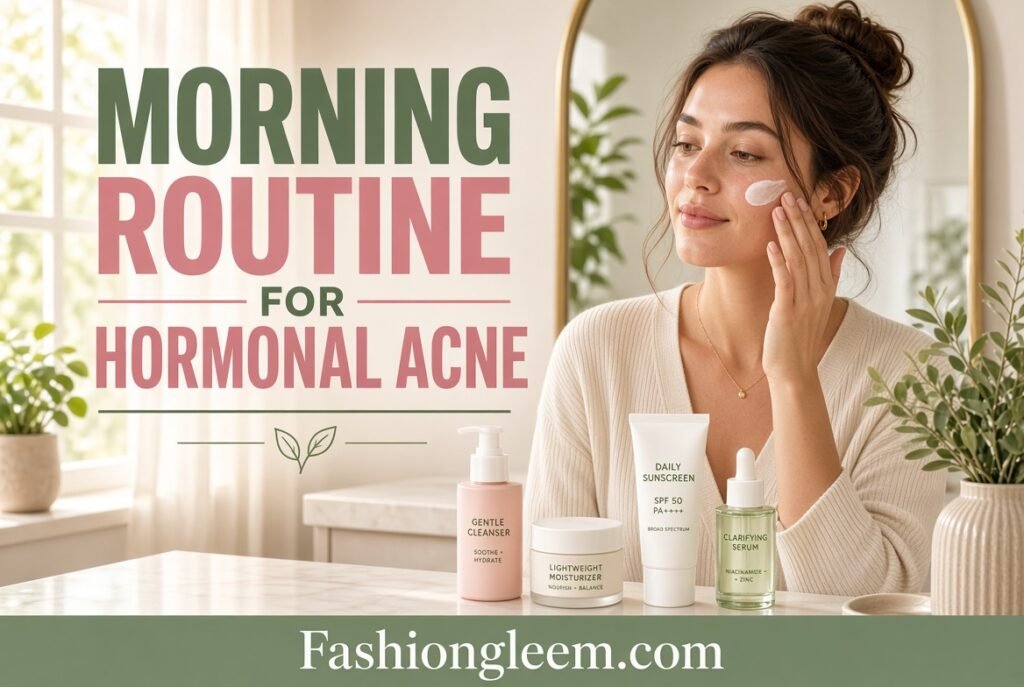
A morning routine should be quick, gentle, and protective.
Step by Step
- Cleanse with a gentle cleanser
- Apply a niacinamide or azelaic acid serum if you use one
- Spot treat if needed
- Apply a lightweight moisturizer
- Finish with broad-spectrum sunscreen
Your Beginner Night Routine for Hormonal Acne
A night routine is when you use your main treatment.
Step by Step
- Remove makeup and sunscreen with a gentle cleanser or balm
- Cleanse again if needed
- Apply your treatment, such as adapalene
- Apply a lightweight moisturizer
- Spot treat any new blemishes
Tips
- Apply retinoids to dry skin, using a pea-sized amount for the whole face
- Wait a few minutes before moisturizing if your skin is sensitive
- Do not use multiple strong actives on the same night
A Simple Weekly Schedule
Rotating your actives helps limit irritation. This sample plan is for people using adapalene and benzoyl peroxide. Adjust based on your doctor’s advice.
| Day | Morning | Night |
|---|---|---|
| Monday | Cleanser, moisturizer, sunscreen | Cleanser, adapalene, moisturizer |
| Tuesday | Cleanser, benzoyl peroxide spot treatment, moisturizer, sunscreen | Cleanser, moisturizer |
| Wednesday | Cleanser, moisturizer, sunscreen | Cleanser, adapalene, moisturizer |
| Thursday | Cleanser, benzoyl peroxide spot treatment, moisturizer, sunscreen | Cleanser, moisturizer |
| Friday | Cleanser, moisturizer, sunscreen | Cleanser, adapalene, moisturizer |
| Saturday | Cleanser, moisturizer, sunscreen | Cleanser, moisturizer |
| Sunday | Cleanser, moisturizer, sunscreen | Cleanser, moisturizer |
As your skin adjusts, you may increase frequency under guidance. Skin comfort should guide you.
Cycle-Based Skincare: Adjusting Through the Month
Many people notice that their skin changes across the menstrual cycle. Adjusting your routine slightly may help, though research on cycle-syncing skincare is still limited.
Follicular Phase (After Your Period)
Skin often feels calmer. This is a good time to maintain your routine and use treatments consistently.
Ovulation
Oil production may rise for some people. Keep skin clean and hydrated.
Luteal Phase (Before Your Period)
Breakouts often appear. Stay consistent with your treatments, use spot treatments early, and avoid trying new products at this time.
During Your Period
Skin may feel sensitive. Focus on gentle cleansing and barrier-supporting moisturizers.
Track Your Cycle
Use a calendar or app to note flare-ups alongside your cycle. This helps you and your doctor spot patterns.
Skincare Routine for Hormonal Acne by Skin Type
Your skin type affects which products feel comfortable.
Oily Skin
Use a gentle gel cleanser, lightweight gel moisturizer, and oil-free sunscreen. Salicylic acid and niacinamide can help manage shine.
Dry or Dehydrated Skin
Choose a cream cleanser, ceramide moisturizer, and gentle actives. Introduce retinoids slowly and consider the “sandwich method,” applying moisturizer before and after the treatment.
Combination Skin
Use lighter products on the T-zone and richer products on dry cheeks. Apply treatments where acne occurs most.
Sensitive Skin
Keep the routine minimal. Use fragrance-free products, patch test new items, and consider azelaic acid or sulfur instead of stronger actives.
Darker Skin Tones
Darker skin is more prone to post-inflammatory hyperpigmentation, the dark marks left after acne heals. Treat inflammation early, avoid picking, wear sunscreen daily, and consider azelaic acid or niacinamide. A dermatologist can recommend safe treatments.
Skincare for Teen Hormonal Acne vs Adult Hormonal Acne
The routine is similar, but the approach differs slightly.
| Factor | Teens | Adults |
|---|---|---|
| Main trigger | Puberty-related hormones | Cycle changes, PCOS, stress, menopause |
| Skin tolerance | Often oilier, tolerates more | May be drier, more sensitive |
| Common treatment | Adapalene, benzoyl peroxide | Retinoids plus hormonal therapies if needed |
| Key concern | Frequent breakouts | Persistent jawline acne and marks |
Medical Treatments for Hormonal Acne
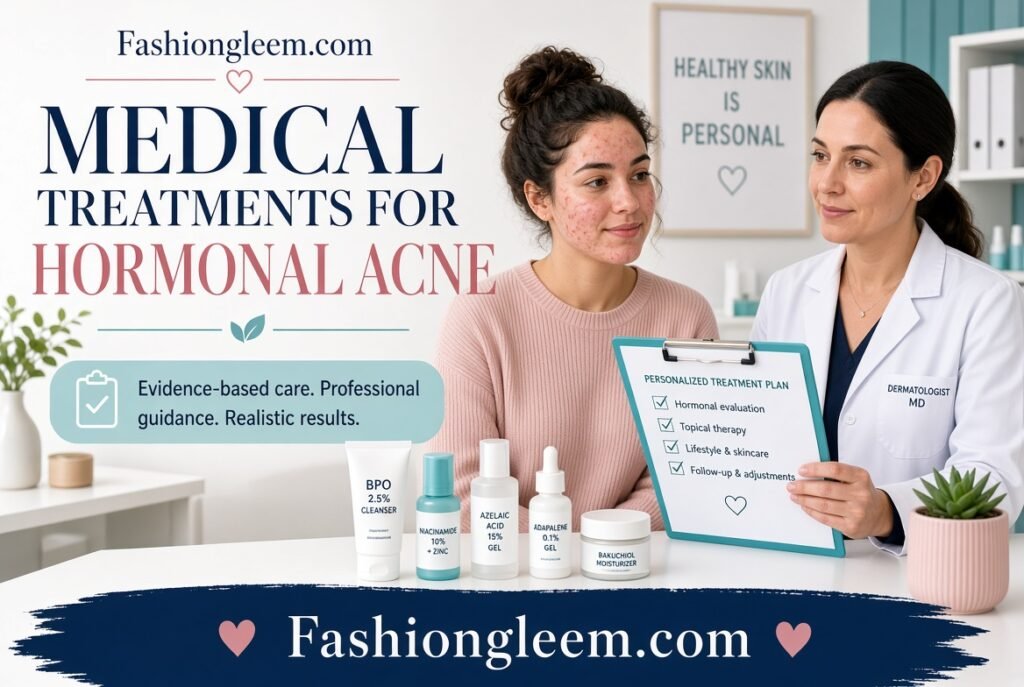
If skincare alone is not enough, a healthcare provider may recommend prescription options. These work alongside your routine.
Prescription Topicals
- Stronger retinoids such as tretinoin or tazarotene
- Topical antibiotics combined with benzoyl peroxide
- Clascoterone cream, which targets androgen activity in the skin
- Prescription azelaic acid
Combined Oral Contraceptives
Certain birth control pills can reduce acne by lowering androgen levels. They are not suitable for everyone, so discuss risks and benefits with your doctor.
Spironolactone
Spironolactone is an oral medication that blocks androgen effects. Dermatologists sometimes prescribe it for adult women with persistent hormonal acne. It requires medical supervision and is not safe during pregnancy.
Oral Antibiotics
Doctors may prescribe oral antibiotics for a limited time to reduce inflammation. They are usually combined with topical treatments.
Isotretinoin
Isotretinoin is a powerful oral medication for severe or scarring acne. It requires close medical supervision and has strict safety requirements, including pregnancy prevention.
Procedures
In-office treatments such as cortisone injections for large cysts, chemical peels, and light-based therapies may help certain cases. Your dermatologist can advise you.
Do Diet and Lifestyle Affect Hormonal Acne?
Skincare and medical treatments are the foundation, but lifestyle choices can play a supporting role.
Diet
Research suggests that high-glycemic foods and, in some studies, dairy products may be linked to acne in some people, but results are mixed and not conclusive. If you suspect a food trigger, try making one change at a time and track your skin. Avoid extreme diets, and speak with a doctor or dietitian before major changes.
Sleep
Aim for regular, restful sleep. Poor sleep can increase stress hormones.
Stress Management
Exercise, mindfulness, time outdoors, and hobbies can help reduce stress, which may calm flare-ups.
Exercise
Regular movement supports overall health. Cleanse your face after sweating and avoid wearing tight, sweaty gear for long periods.
Hydration
Staying hydrated supports general health, but it will not clear acne by itself.
Daily Habits That Help Acne-Prone Skin
Small habits can reduce irritation and bacteria.
Change Pillowcases Regularly
Fresh pillowcases limit buildup of oil and bacteria.
Keep Your Phone Clean
Wipe your phone screen regularly, especially if it touches your jawline.
Keep Hair Products Off Your Skin
Oils, waxes, and styling products can transfer to the forehead and jaw. Wash your face after applying hair products.
Avoid Touching Your Face
Hands carry bacteria and oil. Try not to rest your chin or jaw on your hands.
Clean Makeup Tools
Wash brushes and sponges every one to two weeks.
Be Careful With Masks and Helmets
Friction and sweat can trigger breakouts. Use clean, breathable materials and cleanse after wearing them for long periods.
Makeup for Hormonal Acne
You can wear makeup and still care for your skin.
Choose Non-Comedogenic Products
Look for labels such as non-comedogenic or oil-free. Lightweight formulas feel more comfortable.
Use Color Correction
A green-toned concealer can neutralize redness before foundation. Dab lightly and blend gently.
Avoid Heavy Layers
Thick layers can feel stuffy and trap oil. Use a thin layer of product and build only where needed.
Remove Makeup Every Night
Cleanse thoroughly before bed. Sleeping in makeup can worsen clogged pores.
Treating Post-Acne Marks and Scars
Even after pimples heal, they can leave marks. Understanding the difference helps you choose the right care.
Post-Inflammatory Erythema
These are red or pink marks that fade over time. Sunscreen and gentle care help them heal.
Post-Inflammatory Hyperpigmentation
These are brown or dark marks, especially common in medium to deep skin tones. Daily sunscreen is essential, and ingredients such as azelaic acid, niacinamide, and vitamin C may help.
Acne Scars
Textured scars such as indentations require professional treatment. A dermatologist may recommend procedures such as microneedling, chemical peels, or laser therapy.
How Long Does It Take to See Results?
Skin renews itself over weeks, so improvement takes time.
| Stage | Typical Timeline |
|---|---|
| Skin adjusting to new products | First 2 to 4 weeks |
| Noticeable improvement | Often 6 to 12 weeks |
| Fading of marks | Several months |
These timelines vary. If you see no improvement after about three months of consistent use, see a dermatologist.
Purging vs a Bad Reaction
When you start active ingredients such as retinoids, you may notice more breakouts at first. This is sometimes called purging.
Signs of Purging
- Breakouts in your usual acne areas
- Small whiteheads and bumps
- Improvement within several weeks
Signs of a Bad Reaction
- Burning, stinging, or intense itching
- Widespread redness or swelling
- Breakouts in new areas
- Rash or hives
Stop the product and seek advice if you suspect a reaction. Seek urgent care for facial swelling or difficulty breathing.
Common Skincare Mistakes With Hormonal Acne
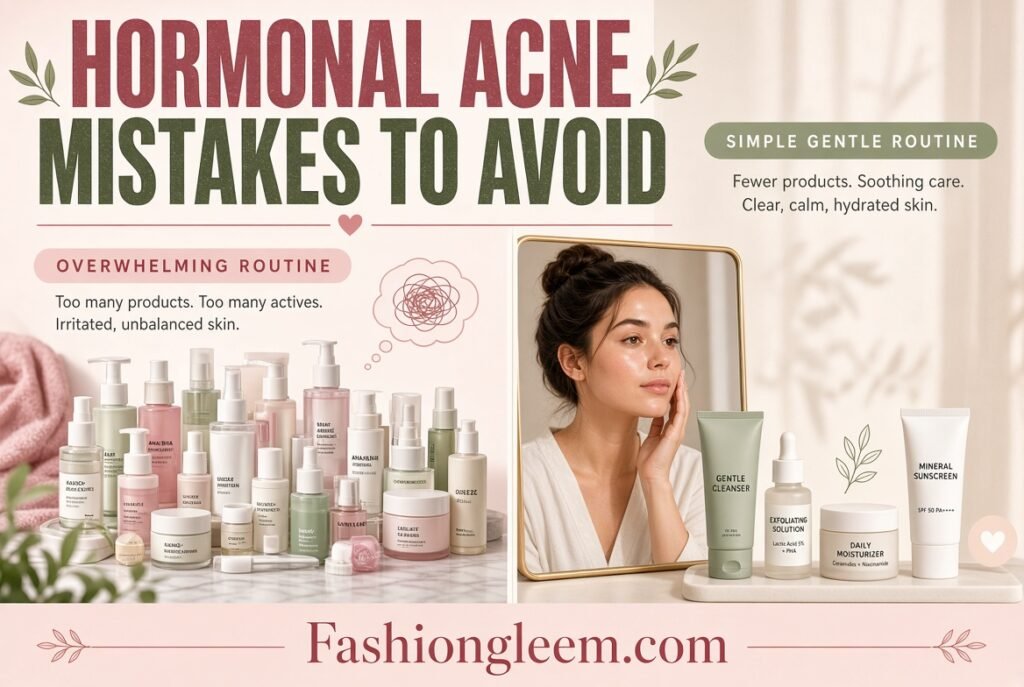
Avoid these common pitfalls.
Over-Washing and Scrubbing
Harsh cleansing can damage your barrier and worsen irritation.
Using Too Many Actives at Once
Combining several strong products can cause redness, peeling, and breakouts. Introduce one at a time.
Skipping Moisturizer
A damaged barrier can make acne worse. Use a gentle, non-comedogenic moisturizer.
Picking and Popping
Picking can cause scarring and dark marks. Use hydrocolloid patches or see a dermatologist.
Switching Products Too Often
Skin needs weeks to respond. Give a routine at least eight to twelve weeks unless it irritates your skin.
Skipping Sunscreen
Sun exposure can worsen marks and increase sensitivity. Wear it every morning.
Relying Only on Skincare for Severe Acne
Deep, painful, or scarring acne often needs medical treatment. Do not wait.
Using Toothpaste or Home Remedies
Toothpaste, lemon juice, and similar remedies can burn and irritate the skin. Stick to proven treatments.
Myths About Hormonal Acne
Clearing up misinformation can save time and frustration.
Myth: Acne Is Caused by Dirty Skin
Acne is not caused by poor hygiene. Over-scrubbing can actually make it worse.
Myth: Only Teens Get Hormonal Acne
Many adults experience hormonal acne, particularly women in their 20s, 30s, and beyond.
Myth: Oily Skin Should Skip Moisturizer
Oily and acne-prone skin still needs hydration, especially when using drying treatments.
Myth: Natural Remedies Are Always Safe
Natural ingredients can irritate skin or cause allergic reactions. Patch test everything.
Myth: Hormonal Acne Cannot Be Treated
Effective treatments exist, from topical options to prescription medications. A dermatologist can create a plan.
When to See a Doctor or Dermatologist
Skincare can help many people, but hormonal acne often benefits from medical guidance. Consider making an appointment if any of these apply.
Signs You Should Seek Help
- Deep, painful cysts or nodules
- Acne leaving scars or dark marks
- No improvement after about 8 to 12 weeks of consistent care
- Irregular or absent periods
- Excess facial or body hair growth
- Thinning scalp hair
- Sudden, severe acne in adulthood
- Acne affecting your mood or confidence
Why It Matters
Persistent acne with other symptoms such as irregular periods can sometimes signal a condition like PCOS. Early evaluation helps you get the right treatment.
What to Expect at a Dermatology Appointment
Knowing what to expect can make the visit easier.
Questions You May Be Asked
- When did your acne start?
- Does it worsen with your menstrual cycle?
- What products and treatments have you tried?
- Are you pregnant, breastfeeding, or planning pregnancy?
- Do you have irregular periods or other symptoms?
- What medications and supplements do you take?
Possible Tests
Your doctor may order blood tests to check hormone levels if they suspect PCOS or another hormonal condition.
Bring Information
Take photos of your skin at different stages and a list of products you have used.
Skincare Routine for Hormonal Acne on a Budget
Effective acne care does not require expensive products.
Prioritize the Essentials
A gentle cleanser, an over-the-counter adapalene or benzoyl peroxide product, a non-comedogenic moisturizer, and sunscreen cover the basics.
Add One Product at a Time
Introduce new products slowly to protect your skin and your budget.
Compare Ingredients
Affordable products often contain the same active ingredients as pricier ones. Check the label for concentration and ingredients.
Quick Decision Guide: What Should You Do in Each Situation?
Use this table to choose your next step.
| Situation | Best Approach |
|---|---|
| Mild jawline breakouts | Gentle routine, adapalene at night, sunscreen |
| Painful deep cysts | See a dermatologist |
| Cycle-linked flares | Track your cycle, spot treat early, stay consistent |
| Dry, irritated skin | Pause actives, use gentle cleanser and ceramide moisturizer |
| Dark marks after acne | Daily sunscreen, azelaic acid or niacinamide |
| Irregular periods with acne | Talk to a doctor about hormonal testing |
| Pregnant or breastfeeding | Ask a healthcare provider before any treatment |
| No improvement after 3 months | See a dermatologist |
Pros and Cons of Common Acne Ingredients
Every ingredient has strengths and trade-offs.
| Ingredient | Pros | Cons |
|---|---|---|
| Adapalene | Prevents clogged pores, over the counter | Dryness and irritation at first |
| Benzoyl peroxide | Reduces bacteria, widely available | Can dry skin and bleach fabrics |
| Salicylic acid | Unclogs pores, good for blackheads | May irritate sensitive skin |
| Azelaic acid | Helps marks and redness | May sting at first |
| Niacinamide | Gentle, calming | Mild effect alone |
| Prescription retinoids | Highly effective | Stronger irritation, prescription needed |
Also Read:
- Glow Up Routine: The Complete Step-by-Step Guide to Build Yours in 2026
- Clean Girl Makeup: The Complete Guide to a Fresh, Glowy, Effortless Look in 2026
- Glow Up Tips: The Complete Guide to Looking and Feeling Your Best in 2026
- Beauty Routine at Home: The Secret to Glowing Skin & Hair 2026
- Popular Layered Haircuts For Men: 22 Attractive Hairstyles
- 4 Guard Buzz Cut: A Classic Short Hairstyle for a Clean Look
- 5 Guard Buzz Cut: The Perfect Balance Between Short and Full Hair
- 6 Guard Buzz Cut for a Clean and Natural Look
- 10 Guard Buzz Cut Styles for Every Face Shape
- Buzz Cut Fade: A Modern Haircut That Never Goes Out of Style
- 30 Stylish Burst Fade Comb Over Haircuts for Men in 2026
- 16 Guard Buzz Cut: A Longer Buzz Cut for a Clean, Natural Look
- Attractive Medium Length Hairstyles For Men
- The Quiff Hairstyle: 28 Stylish Variations For Modern Men
- Top 10 Asian Mullet Hairstyle
- 22 Burst Fade Slick Back Haircut Ideas for Men in 2026
- Burst Fade Taper Haircut: 23 Best Styles for Men in 2026
- Burst Fade Mohawk Haircut: 25 Bold Styles for Men in 2026
- Top 10 Mohawk Mullet Variations 2026
- Curly Burst Fade Haircut: 35 Styles for Every Curl Type (2026)
- 37+ Mid Fade Haircuts Men Love for a Sharp, Modern Look
- Low Taper Fade Buzz Cut: 26 Best Styles for Men in 2026
- Low Taper Fade Middle Part: Top 26 Powerful Hairstyles for Men in 2026
- Low Taper Fade Textured Crop Haircut: Top 26 Best Styles for Men in 2026
Frequently Asked Questions (FAQs)
What is the best skincare routine for hormonal acne?
A gentle cleanser, a night-time retinoid such as adapalene, a non-comedogenic moisturizer, and daily sunscreen form the foundation. Add spot treatments as needed and see a dermatologist for persistent acne.
What does hormonal acne look like?
It often appears as deep, tender bumps and cysts along the jawline, chin, and lower face, sometimes flaring around your period.
What ingredients are best for hormonal acne?
Adapalene, benzoyl peroxide, salicylic acid, azelaic acid, and niacinamide are commonly used. Prescription options include stronger retinoids and clascoterone.
Can skincare alone cure hormonal acne?
Skincare can improve mild cases, but hormonal acne often needs medical treatment as well. A dermatologist can recommend prescription options.
How long does it take to clear hormonal acne?
Most treatments take about 8 to 12 weeks to show clear results. Some cases need longer or combined treatments.
Should I use a retinoid for hormonal acne?
Topical retinoids are a core acne treatment for many people. Start slowly, wear sunscreen, and avoid use during pregnancy unless your doctor says otherwise.
Is benzoyl peroxide good for hormonal acne?
It can help reduce acne-causing bacteria and inflammation. Use a low concentration at first, as it can dry the skin and bleach fabrics.
Does salicylic acid help hormonal acne?
Salicylic acid unclogs pores and helps with blackheads and whiteheads. It may be less effective on deep cysts.
Can I use moisturizer if I have acne?
Yes. A lightweight, non-comedogenic moisturizer supports the skin barrier and reduces dryness from acne treatments.
Do I need sunscreen with acne-prone skin?
Yes. Use a broad-spectrum, non-comedogenic sunscreen with SPF 30 or higher every morning, especially when using retinoids.
What causes hormonal acne along the jawline?
Fluctuating androgens that increase oil production, as well as factors like stress, PCOS, and cycle changes, can lead to jawline breakouts.
Why do I get acne before my period?
Hormone levels shift in the second half of the menstrual cycle, which may increase oil production and inflammation.
Can stress cause hormonal acne?
Stress can raise cortisol and may worsen breakouts, although it is rarely the only cause.
Does diet affect hormonal acne?
Some studies link high-glycemic foods and dairy to acne in certain people, but the evidence is mixed. Track your own triggers and avoid extreme diets.
Can birth control help hormonal acne?
Some combined oral contraceptives may reduce acne, but they are not suitable for everyone. Discuss options with your doctor.
What is spironolactone used for in acne?
Spironolactone is a prescription medication that blocks androgen effects and may help adult women with persistent hormonal acne. It is not safe in pregnancy and needs medical supervision.
Should I pop hormonal cysts?
No. Popping deep cysts can cause scarring and dark marks. Use hydrocolloid patches or see a dermatologist for treatment.
How do I treat dark marks after hormonal acne?
Wear sunscreen daily and consider azelaic acid, niacinamide, or vitamin C. See a dermatologist for stubborn marks.
Is hormonal acne a sign of PCOS?
It can be, especially when combined with irregular periods, excess hair growth, or thinning scalp hair. A doctor can evaluate you.
When should I see a dermatologist for hormonal acne?
See one if you have deep, painful cysts, scarring, irregular periods, or no improvement after about 8 to 12 weeks of consistent care.
Conclusion
A good skincare routine for hormonal acne begins with gentle, consistent habits. Cleanse softly, use a proven treatment such as adapalene at night, moisturize with a non-comedogenic cream, and wear sunscreen every morning.
Because hormonal acne starts inside the body, skincare alone may not be enough. Track your cycle, spot treat early, and avoid the common traps of over-washing, picking, and switching products too quickly.
If your breakouts are deep, painful, scarring, or come with irregular periods or other symptoms, see a dermatologist. Medical treatments such as prescription retinoids, hormonal therapies, and in-office procedures can make a major difference.
Be patient with your skin and yourself. With the right routine, steady care, and professional guidance when needed, calmer and clearer skin is achievable.


One Comment