

Healthy Lifestyle Tips That Actually Stick
Healthy lifestyle tips fail in a predictable way. The list is fine; the follow through is what collapses by week three.
The fix is not a longer list. It is a ranked one, built on the handful of numbers that carry almost all of the benefit.
Five numbers do that carrying here. 150 weekly movement minutes, two strength days, seven hours of sleep, half a plate of plants, water first.
Everything after the numbers is a system for hitting them. Stack the habits, design the environment, and protect a minimum viable day.
One boundary before the tips begin. This is general information, and persistent low mood or sleep trouble past two weeks belongs with a professional.
Health and appearance are cousins on this site, and FashionGleem’s beauty and style library covers both sides of the family. This page works the health side, properly.
The Five Numbers at a Glance
|
Number |
Target |
Source frame |
|---|---|---|
|
Movement |
150 to 300 minutes a week, moderate |
Federal activity guidelines (CDC) |
|
Strength |
2 days, every major muscle group |
Guidelines plus the 2026 ACSM update |
|
Sleep |
7 or more hours, consistent times |
CDC and sleep medicine consensus |
|
Plate |
Half fruits and vegetables |
MyPlate; WHO 400 g produce frame |
|
Drink |
Water as the default |
Federal dietary guidance |
Read the table as a priority order, not a menu. Movement and sleep sit on top because everything else gets easier above them.
The adherence figures explain the ranking’s urgency. Only about 24.2 percent of US adults meet both activity guidelines in national survey data.
Sleep tells the same story from the other side. About 30.5 percent of adults average under seven hours a night.
Numbers this widely missed are not knowledge problems. They are design problems, and design is what the system chapters solve.
Number One: 150 to 300 Minutes of Movement a Week
The federal target is 150 to 300 minutes of moderate activity weekly, or 75 to 150 vigorous, or a mix of both.
Moderate has a working test anyone can use. You can talk in phrases but not sing; your breathing is up and your heart is working.
Brisk walking is the reference activity for a reason. It is free, joint friendly, and already hiding inside ordinary days.
The weekly frame forgives irregular schedules completely. Three ten minute walks after meals count the same as one thirty minute session.
Weekend concentration works in the research too. Adults who compress activity into one or two days gain substantial benefits in the studies.
The honest enemy is not laziness; it is sitting. Break up long sitting with two minute stands and walks whenever the day allows.
Number Two: Two Strength Days, Every Muscle, Every Week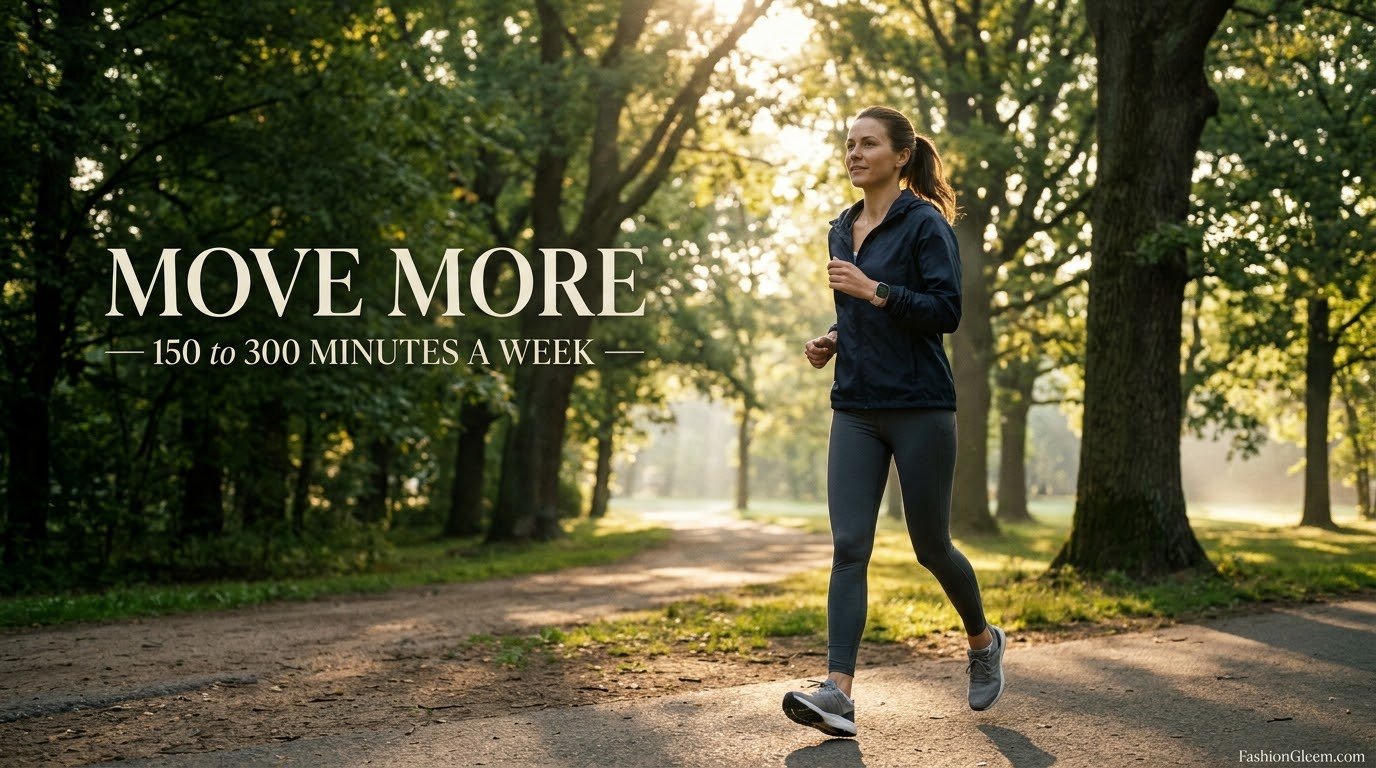
Aerobic minutes alone leave half the guideline unmet. Muscle strengthening on two or more days is the second federal pillar.
The March 2026 ACSM update restated the floor after reviewing 137 systematic reviews. Train each major muscle group at least twice a week.
The same update settled the equipment question kindly. Bodyweight work, bands, and free weights all count; the muscle cannot tell them apart.
A beginner session is shorter than folklore says. Squats, wall push ups, rows with a band, and a carry cover the map in twenty minutes.
Only about 31 percent of adults meet this target in survey data. The bar is low, the payoff is bone, muscle, and independence.
Rest days between sessions for the same muscles are part of the design. Twice weekly per group already assumes the recovery between.
Number Three: Seven or More Hours of Sleep
Sleep is the pillar readers feel first and fund last. Adults need 7 or more hours nightly, on a consistent schedule, per CDC guidance.
Consistency is a drug free lever of its own. Same wake time daily, weekends included, anchors the whole circadian system.
The wind down matters as much as the hours. Screens off thirty minutes before bed is a CDC listed habit for better sleep.
Bedroom conditions are cheap engineering. Cool, dark, and quiet beats any supplement shelf for most sleepers, most nights.
Short sleep is not a badge of ambition in the data. It tracks with higher risk of obesity, diabetes, blood pressure, and mood problems.
The appearance dividend is real and motivating here. Rested skin and brighter eyes are why the night routine for glowing skin sits in this site’s library.
Number Four: Half the Plate, Plants First
The current federal diet frame is the Dietary Guidelines for Americans 2025-2030, released in January 2026 by USDA and HHS.
Its plate picture is simple enough to use daily. Fill half the plate with fruits and vegetables, and vary the colors across the week.
WHO’s global frame lands in the same place. About 400 grams of fruit and vegetables a day, and under 5 grams of salt.
Protein and whole grains share the other half. Lean proteins, beans, eggs, fish, and dairy all fit; whole grains beat refined ones.
Added sugar and sodium hide in packaged food, not in cooking. A thirty second label check catches most of both before the cart does.
One caution carried from the research: a ranking British page prints NHS units for a US audience. American readers use American guidance, always.
Number Five: Water First, and the Rest of the Cupboard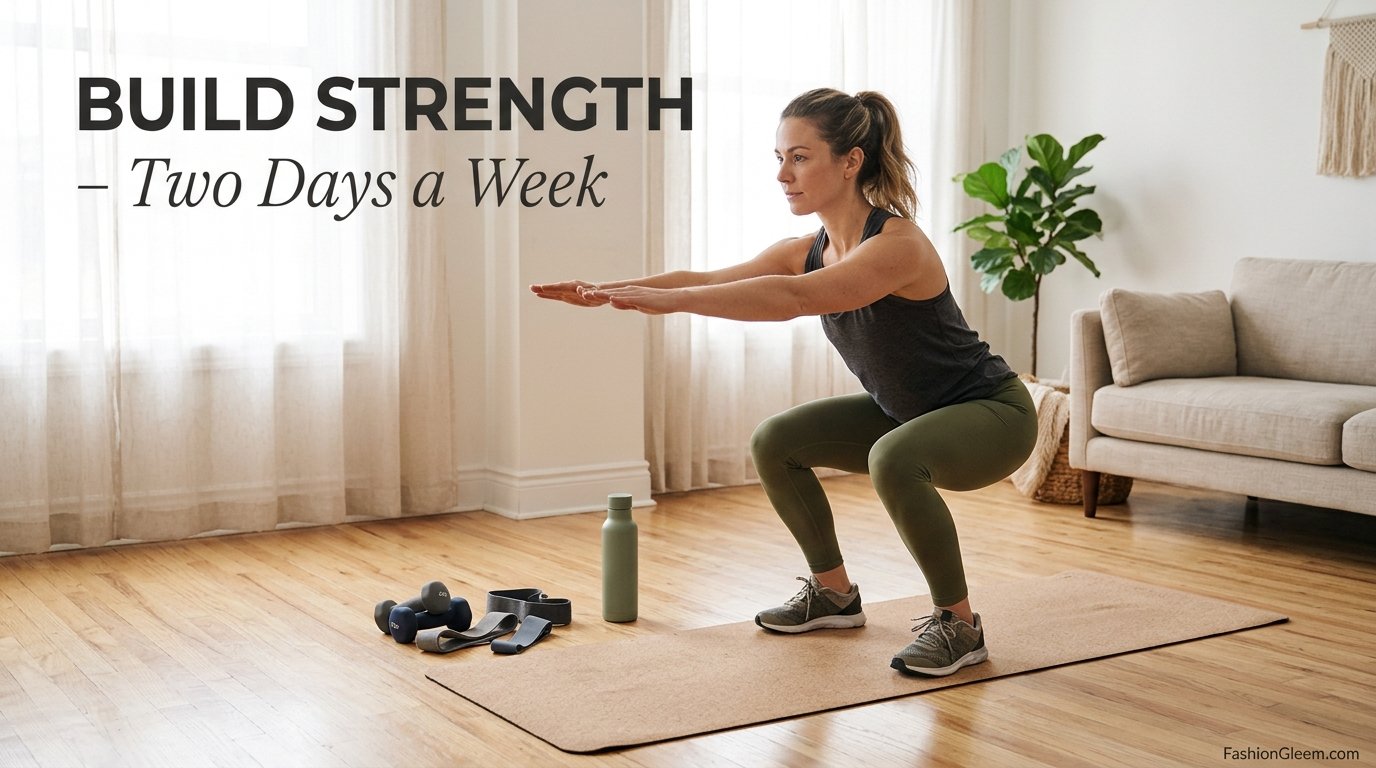
Hydration advice needs less drama than it gets. Water as the default drink, taken regularly through the day, covers most adults.
Thirst is a workable guide for healthy adults in ordinary conditions. Heat, exercise, illness, and age all raise needs above the baseline.
Sugary drinks are the real target of this number. Swapping them for water is the single easiest dietary upgrade most people own.
Caffeine is a timing question more than a quantity one. Keep coffee, and move it earlier if sleep is fragile.
Alcohol belongs in the honest column too. Less is better for health in current guidance, and alcohol free days are a workable middle step.
One compact outside take agrees with this five number order, and the HealthyRisen healthy living guide builds its whole guide on four of the same habits.
The System: Why Lists Fail and Habits Stick
Habit research gives the missing timeline. In the Lally study, new habits took about 66 days on average to feel automatic.
That single number rescues more routines than any tip. A habit that still feels effortful at week five is on schedule, not broken.
Lists fail because they ask for many starts at once. The system asks for one start, repeated until it feels boring, then the next.
Motivation is weather; systems are climate. The rest of this page is climate work: stacking, environment, and floor days.
Habit Stacking and Environment Design
Habit stacking attaches a new behavior to one you already own. After I pour coffee, I walk ten minutes is a stack, not a wish.
The anchor must be daily and unmissable. Teeth, meals, commutes, and the school run are the strongest anchors most lives contain.
Environment design removes the daily negotiation. Shoes by the door, fruit on the counter, and the phone charging outside the bedroom.
Make the healthy choice the easy choice, literally. Every step of friction you delete is willpower you never spend.
Tracking closes the loop kindly. A simple calendar cross per day beats any app for most people, and streaks motivate without shaming.
The Minimum Viable Day
Every system needs a floor for chaotic weeks. The minimum viable day is the smallest version that still counts as keeping faith.
Ten minutes of walking. One strength movement. One vegetable at one meal. In bed on time. That is a floor day, fully honored.
Floor days protect the identity the habit is building. You are still a person who moves daily, even when the day is on fire.
The alternative, all or nothing, is the real relapse engine. One missed workout becomes a missed month only when nothing counts as something.
Plan the floor before you need it. Deciding mid crisis is how floors vanish, so write yours down this week.
The Prevention Calendar: Screenings and Vaccines by Decade
Lifestyle is not only daily behavior. Prevention has a calendar, and keeping it is a healthy habit in the most literal sense.
The annual wellness visit is the anchor appointment. Blood pressure, weight, mood, and risk factors get reviewed while you feel fine.
Screenings layer in by age and risk. Blood pressure and cholesterol early, diabetes screening in midlife, cancer screenings on their schedules.
Vaccines are adult maintenance, not childhood leftovers. Flu yearly, and the age based list your clinician keeps current for you.
Exact ages and intervals belong to your own clinician and the current federal task force guidance. This page’s job is the habit of asking.
Set the calendar once, then let reminders carry it. Prevention fails by forgetting, not by disagreement, and systems beat memory again.
Tracks: Busy, Budget, Beginner, Senior
Busy professionals should buy time, not equipment. Post meal walks, calendar blocked movement, and a protected bedtime outperform any gadget.
Tight budgets lean on the free pillars. Walking, bodyweight strength, library cookbooks, frozen vegetables, and tap water cost almost nothing.
Beginners start with one number only. Movement is the friendliest first target because its feedback, energy and mood, arrives within days.
Seniors add one specific to the list: balance work, alongside the same 150 minutes and two strength days, as abilities allow.
Older adults also get a kinder steps picture. Research from 2022 suggests benefits level near 6,000 to 8,000 steps daily after sixty.
Every track shares the same spine. Only the starting number and the first stack change from person to person.
Skin, Hair, and the Appearance Dividend
Healthy habits show on the surface, which is this site’s home territory. Sleep, water, sun care, and not smoking are beauty inputs.
Sun protection is the daily cosmetic that is also medicine. A morning SPF habit protects skin health and appearance at once.
Body skin care rides along with the system rather than replacing it, and the retinol body lotion guide explains the topical side of that partnership.
Makeup sits downstream of all of it. The looks in the beauty and makeup library simply sit better on rested, hydrated, protected skin.
Treat appearance as feedback, not the goal. When energy and sleep improve, the mirror usually files its own progress report.
The Starter Week: Seven Days That Install the System
- Day 1: Walk ten minutes after one meal. Attach it to lunch or dinner and mark the calendar cross.
- Day 2: Set a wake time and keep it. Same time tomorrow, whatever tonight holds, and get daylight early.
- Day 3: Make one plate half plants. One meal only, any meal, and notice how full it keeps you.
- Day 4: Do a ten minute strength sampler. Squats, wall push ups, band rows, and a short carry around the home.
- Day 5: Swap one sugary drink for water. One swap, kept daily from here, and refill a bottle you like.
- Day 6: Stack and schedule the week ahead. Write three stacks, book the wellness visit if due, and prep one protein.
- Day 7: Walk longer and review kindly. A relaxed thirty minutes, then one sentence in a notebook about what worked.
The week installs one number at a time on purpose. Week two repeats the pattern with slightly bigger servings of each.
Mistakes That Quietly Undo Good Tips
Starting everything on Monday is the classic own goal. Five new habits compete for the same small willpower and all five lose.
Chasing the perfect routine skips the workable one. A twenty minute walk done daily beats the flawless program done twice.
Importing foreign guidance without noticing is subtler. Units, alcohol measures, and salt targets differ by country; read the flag on advice.
Treating sleep as the flexible pillar backfires quietly. Borrowing hours from sleep to fund exercise trades one pillar for another pillar.
Skipping the prevention calendar while perfecting smoothies is the last trap. The unglamorous appointment outranks the photogenic habit most years.
When Tips Are Not Enough: The Two Week Rule
Tips are for generally well people building generally good days. Some signals deserve a professional instead of a better routine.
Low mood, lost interest, or sleep problems that persist about two weeks are the standard prompt to seek help, not more willpower.
New symptoms, chest pain, fainting, or sudden changes are urgent by any standard. Urgent care and emergency services exist for exactly those moments.
Starting exercise with a chronic condition deserves a clinician’s input first. The guidelines themselves say to talk with your doctor about limitations.
Nothing on this page diagnoses or treats anything. It organizes general information so your own conversations with professionals start better informed.
A second outside guide frames the same pillars from the active living side, and the NextFitLife healthy and active lifestyle guide is worth a read with this page open beside it.
Food Craft: Three Assembly Meals That Carry a Week
Assembly cooking is the budget of effort applied to dinner. A rotisserie protein plus frozen vegetables plus a microwave grain is a complete plate in minutes.
Eggs carry the second slot honestly. Eggs, beans, greens, and whole grain toast make a supper that costs little and covers protein, fiber, and produce together.
A bean soup rotation covers the third. One big pot, three nights of variations, and the fiber target quietly takes care of itself.
Frozen produce deserves its reputation repaired. It is picked ripe, it keeps, and it removes the waste guilt that kills fresh vegetable habits.
Keep one sauce you love in the door of the fridge. A sauce turns assembly into dinner and protects the habit on tired evenings.
Movement Craft: Counting the Week in Minutes
Think of the target as a budget of 150 to spend across seven days. Budgets get spent in small bills without anyone feeling poor.
Post meal walks are ten minute bills. Three a day on five days clears the whole target without a single workout bag packed.
Errands and stairs are found money. Parking far, carrying baskets, and walking calls are NEAT, the non exercise movement that separates active days from desk days.
Vigorous minutes count double in the guideline exchange. A hilly route or a faster ten minutes buys time for busy weeks honestly.
Track the spend in one weekly line, not an app dashboard. Minutes, strength days, done. The simplicity of the ledger is why it survives.
Stress and Connection: The Soft Pillars With Hard Effects
Stress is not a mood footnote; it is a physiological load. It moves sleep, appetite, blood pressure, and the will to cook or walk.
The everyday tools are unglamorous and effective. Slow breathing for two minutes, daylight outside, movement, and a hard stop to the workday.
Connection belongs on the same shelf, not in a greeting card. Shared meals, clubs, volunteering, and regular calls are scheduled health behavior.
Loneliness deserves the same matter of fact response as high readings. It is a risk factor to address, with community as the intervention and the reward.
Guard the boundary at the fortnight line. Stress that flattens mood or sleep for about two weeks is a professional conversation, kindly and promptly.
Your First 66 Days, Mapped
Days 1 to 10 are the novelty phase. Everything feels possible, which is exactly why you must add nothing beyond the first habit.
Days 11 to 30 are the friction phase. The anchor wobbles, the weather turns, and the minimum viable day earns its keep repeatedly.
Days 31 to 50 are the negotiation phase. You will want to upgrade everything at once; upgrade one variable and let the rest ride.
Days 51 to 66 are the quiet phase. The behavior starts happening before the debate does, which is what automatic actually feels like from inside.
Day 67 is a review, not a graduation party. Keep what ran, fix the one friction that recurred, and choose the next number calmly.
A Note on Sources and Certainty
Every number on this page wears its source for a reason. Federal guidelines, sleep consensus, and named studies can be checked by any reader in minutes.
Where sources disagree in wording, the page prints the shared ground. The 150 minute target survives every translation because every major body lands there.
Where a figure comes from one study, it is labeled as one study. The 66 day average is a mean with a wide range, printed as both.
That labeling habit is the difference between wellness content and wellness marketing. One informs your decisions; the other rents your anxiety by the month.
Keep the Page, Lose the Guilt
Wellness content often sells a low grade shame along with its advice. This page declines the bundle: the numbers are information, not grades.
A week at forty percent of target is not failure data; it is scheduling data. The system reads it, adjusts one variable, and continues without ceremony.
That tone is itself a health behavior worth keeping. People return to pages and practices that treat them like adults with full lives.
Bookmark the five numbers, run the starter week when ready, and let ordinary days count. Ordinary days, repeated, are the entire secret the lists were hiding.
One Habit, Chosen Well, Beats Ten Habits Chosen Loudly
If this page leaves you with a single decision, make it this one. Choose the habit whose feedback you will feel within the first week.
Energy after a walk, calm after a screen free evening, pride after a strength session: felt feedback is the tuition the next habit charges.
Loud January energy chooses ten habits and funds none of them past February. Quiet selection funds one habit fully, then compounds the win.
The five numbers are patient. They will all be there in month three, when you arrive with proof that you are a person who finishes starts.
The Household Effect: Habits Are Contagious at Home
One person’s stack quietly edits the whole household. Fruit on the counter gets eaten by everyone who passes it, not only its buyer.
Shared walks become family infrastructure faster than solo workouts do. A standing evening walk is a meeting the calendar keeps for the whole home.
Use the effect kindly and never as surveillance. Invite, model, and leave the door open; recruitment by example outlasts recruitment by lecture every time.
Seasons Change; the Numbers Do Not
Winter shortens walks and daylight together. The system answers with indoor laps, stairs, and morning light from a window or a lamp lit breakfast.
Summer heat moves movement to the edges of the day. Dawn and dusk sessions plus shade routes keep the budget intact without heroics.
Travel weeks run on the floor day specification. Ten minutes in a hotel corridor still counts, and counting it is what brings the routine home.
A system that survives seasons is the actual product here. Anyone’s habits survive a perfect week; yours are being built for real calendars.
Begin Where You Stand
No equipment order, supplement shelf, or Monday is required to begin. The next meal, the next hour, and tonight’s bedtime are all open enrollment.
Pick the walk, set the wake time, and make one plate half plants this week. Three small starts, honestly kept, outperform the grand relaunch scheduled for someday.
The Quiet Arithmetic of Ordinary Days
Add the five numbers together across a year and the scale surprises people. A daily ten minute walk alone is sixty hours of movement annually.
Ordinary days are not the obstacle to a healthy lifestyle; they are its raw material. The system simply makes sure the material gets used on purpose.
Start Tonight, Not Monday
The next available start is tonight’s bedtime, hours away at most. Set the wake time, dim the screens, and let tomorrow morning be day one of the system.
Frequently Asked Questions
1. What are the best healthy lifestyle tips to start with?
Start with movement and sleep. A daily walk toward the 150 minute weekly target and a consistent wake time change energy and mood within days.
Add one number at a time after that, never all five in one week.
2. How many healthy habits should I start at once?
One. Habit research and coaching practice agree that a single new habit, repeated until it feels ordinary, outperforms five simultaneous starts.
Add the second only when the first survives a bad week.
3. What are the five most important healthy lifestyle numbers?
Movement, strength, sleep, plate, water. Move 150 to 300 minutes weekly, train strength two days, sleep seven or more hours, fill half the plate with produce, and make water the default drink.
4. How much exercise do adults need each week?
150 to 300 minutes of moderate activity. Or 75 to 150 vigorous minutes, or a mix, plus muscle strengthening on two days.
Brisk walking is the reference activity, and every bout counts toward the total.
5. What counts as moderate intensity exercise?
You can talk, but not sing. Moderate intensity raises breathing and heart rate while still allowing short phrases.
Brisk walking, easy cycling, and active gardening fit.
If you can chat comfortably for paragraphs, speed up slightly.
6. Does weekend only exercise count?
Yes, substantially. Research on the weekend warrior pattern finds people who compress their weekly activity into one or two days gain substantial cardiovascular and mortality benefits compared with inactive adults.
Spreading it out still helps adherence.
7. Do I need a gym to live a healthy lifestyle?
No. Bodyweight exercises, resistance bands, walking, and home cooking cover the guidelines fully.
A gym adds variety and coaching, not permission.
The March 2026 ACSM update confirms bands and bodyweight build strength effectively.
8. What are two strength days supposed to include?
Every major muscle group, briefly. Legs, hips, back, core, chest, shoulders, and arms, through movements like squats, push ups, rows, and carries.
Twenty focused minutes per session satisfies the guideline for most beginners.
9. How many hours of sleep do adults need?
Seven or more hours for most adults. CDC guidance sets seven plus for ages 18 to 60, seven to nine for 61 to 64, and seven to eight past 65.
Consistency of timing matters alongside the total.
10. Is 10,000 steps a day the right goal?
It is a useful ceiling, not a law. Steps research suggests benefits keep rising to roughly 8,000 to 10,000 for younger adults and level near 6,000 to 8,000 after sixty.
A personal best trend matters more than the round number.
11. How much water should I drink a day?
Enough that water is your default. Needs vary with heat, activity, and health.
Thirst guides healthy adults in ordinary conditions, and pale yellow urine is a fair check.
Exact glass counts are folklore, not federal guidance.
12. What is the healthiest eating pattern to follow?
The Mediterranean and DASH patterns lead the evidence. Both emphasize vegetables, fruits, whole grains, legumes, and lean proteins with limited added sugar and sodium.
The current Dietary Guidelines for Americans 2025-2030 frame the same plate.
13. What does half plate mean in practice?
Half of every plate, fruits and vegetables. It is the MyPlate picture: fill half with produce, a quarter with protein, a quarter with grains.
The half plate rule needs no weighing, counting, or app to use daily.
14. How long does it take for a healthy habit to feel automatic?
About two months, on average. The Lally study found new habits took around 66 days to feel automatic, with a wide range between people and behaviors.
Expect effort at week five; that is the schedule, not a failure.
15. Why do healthy lifestyle changes fail after a few weeks?
Because they are designed as lists, not systems. Too many starts at once, no anchor routine, no floor for bad weeks, and motivation treated as fuel.
Stacking, environment design, and a minimum viable day fix the design, not the person.
16. What is habit stacking?
Attaching a new habit to an owned one. After I pour coffee, I walk ten minutes.
The existing routine becomes the trigger, so the new behavior borrows its reliability instead of needing fresh willpower daily.
17. What is a minimum viable healthy day?
The smallest day that still counts. Ten minutes of walking, one strength movement, one vegetable, bed on time.
Floor days protect the streak and the identity during chaotic weeks, when all or nothing thinking causes relapses.
18. How can I be healthy on a tight budget?
Lean on the free pillars. Walking, bodyweight strength, tap water, frozen vegetables, library cookbooks, and sleep cost almost nothing.
The expensive version of healthy is mostly marketing; the guideline version is largely free.
19. How can busy professionals fit healthy habits in?
Buy time, not equipment. Post meal walks, calendar blocked movement, a protected bedtime, and a standing break rhythm fit professional days.
Three ten minute walks equal one thirty minute session in the guideline math.
20. Which matters more, diet or exercise?
They are partners, not rivals. Movement drives fitness, mood, and metabolic health; food drives weight and much of blood sugar and lipids.
Asking which matters more is like asking which leg walks.
Start with whichever feels easier.
21. Can I start a healthy lifestyle at 50 or 60?
Yes, and the returns are large. The same targets apply, with balance work added for older adults and medical input where conditions exist.
Starting at 60 still improves strength, sleep, and independence measurably within months.
22. What healthy habits matter most for older adults?
Strength, balance, and sleep lead. Two strength days protect muscle and bone, balance practice lowers fall risk, and seven to eight hours of sleep is the senior target.
Protein at meals supports the muscle work.
23. How do I reduce sitting if I have a desk job?
Interrupt sitting every half hour or so. Two minute stands, walks to water, stairs between tasks, and walking calls all count as breaks.
Total daily movement rises even when workouts stay the same, through plain non exercise activity.
24. Do post meal walks really help?
The evidence is encouraging. Short walks after meals blunt blood sugar rises in studies of glucose control, and they double as the easiest habit stack in this whole guide.
Ten minutes after your largest meal is the classic prescription.
25. What screenings and vaccines are part of a healthy lifestyle?
The age based set your clinician tracks. Blood pressure, cholesterol, diabetes, and cancer screenings on federal schedules, plus adult vaccines including yearly flu.
Keeping the appointments is itself one of the highest value healthy habits.
26. How often should I see a doctor if I feel fine?
Once a year for a wellness visit. Even when you feel fine, the annual visit reviews blood pressure, weight, mood, vaccines, and screening schedules.
Prevention works by calendar, and the visit is where the calendar lives.
27. Does stress management really change physical health?
Yes, through measurable pathways. Chronic stress affects sleep, blood pressure, eating, and inflammation.
Breathing practices, movement, daylight, and social time are the everyday tools.
Persistent stress with low mood past two weeks deserves professional support.
28. How does social connection affect health?
Connection is a health behavior. Socially connected people show better health outcomes across many studies, and loneliness tracks with worse ones.
Calls, shared meals, clubs, and volunteering belong on a lifestyle list beside food and exercise.
29. Is morning or evening exercise better?
Whichever you will repeat. Studies find benefits on both sides; adherence decides the winner.
Morning sessions dodge schedule collisions, evening sessions suit night owls.
Pick by calendar honesty, not by influencer certainty.
30. What should a healthy morning routine include?
Light, movement, and a real breakfast. Daylight within an hour of waking anchors the body clock, a short walk wakes the system, and protein plus fiber at breakfast steadies the morning.
Keep it under fifteen minutes to keep it daily.
31. What should a healthy evening routine include?
Dim, cool, and screen light. A consistent wind down, screens off about thirty minutes before bed, a cool dark room, and the same sleep time nightly.
The routine signals the brain the way dawn signals the opposite.
32. How much caffeine is okay, and when should I stop it?
Keep it earlier if sleep is fragile. Caffeine lingers for hours, and sensitive sleepers feel an afternoon coffee at midnight.
Morning only is the standard experiment.
Total amounts within common moderation are a smaller issue than timing.
33. How do I eat healthy without cooking every night?
Build three assembly meals. Rotisserie protein plus frozen vegetables plus a grain, eggs any style, and a bean soup rotation cover most weeknights.
Healthy eating fails on friction, and assembly cooking removes the friction.
34. Are supplements part of a healthy lifestyle?
Food first, supplements second. A varied diet covers most needs; supplements fill specific gaps a clinician identifies, like vitamin D or B12 in some adults.
No supplement substitutes for sleep, movement, or the plate itself.
35. How do I restart after falling off my routine?
Shrink, do not restart from zero. Return with the minimum viable day for a week, then rebuild the stack you had.
A lapse is data about friction, not a verdict on character.
Most long term healthy people have restarted many times.
36. What is the 80 percent full rule?
Eat until you are about 80 percent full. Hara hachi bu is an Okinawan practice of stopping before fullness, giving satiety signals time to arrive.
It is a pacing habit, not a diet rule, and it suits slow, shared meals best.
37. Do I need to give up alcohol completely?
No, but less is better. Current guidance finds lower consumption lowers risk, and alcohol free days are a practical step down.
People who struggle to cut back should treat that as a health conversation, not a willpower failure.
38. What is the difference between a healthy lifestyle and a diet?
Scope and duration. A diet is a temporary eating change with an end date.
A lifestyle covers movement, sleep, stress, connection, and prevention, permanently and flexibly.
Diets end; lifestyles absorb holidays, travel, and bad weeks by design.
39. Can healthy habits really lower disease risk?
Yes, at the population level. Meeting activity, sleep, and dietary guidelines is associated with substantially lower chronic disease rates in large studies.
No habit guarantees an individual outcome, which is why this guide promises better odds, never certainty.
40. When should lifestyle tips give way to a doctor visit?
When symptoms persist or appear suddenly. Low mood or sleep problems lasting about two weeks, chest pain, fainting, or any sudden change need professional care promptly.
Lifestyle advice is general information and never a diagnosis or a treatment.
41. How do I track progress without obsessing over numbers?
Track a few anchors, weekly. Minutes moved, strength days, average sleep, and how you feel at 3 in the afternoon cover the story.
Review monthly, adjust one variable, and let trends, not daily noise, steer.
42. What is the single best first step toward a healthy lifestyle?
A daily walk at a set time. It is free, needs no equipment, stacks onto meals, and pulls sleep, mood, and blood sugar with it.
Ten minutes after one meal, every day, is the seed the whole system grows from.
Conclusion
The healthy lifestyle tips that last are a system wearing a list’s clothes. Five numbers on top, and habits designed to survive ordinary weeks.
Start with one number and one stack this week. The walk after a meal is the seed almost everyone can plant today.
The care of the surface follows the same rhythm as the care of the whole, and the dusty rose blush shade guide shows how small, well chosen color decisions lift a face.
Skin care routines reward the same consistency the system teaches. The glowing results in the beauty and makeup library belong to readers who repeat simple steps daily.
Give the system its sixty six days. By the time the habits feel automatic, the list you started with will feel like a description of you.

Dilawar is a contributing writer at Fashiongleem.com, focusing on beauty, hairstyles, skincare, fashion accessories, and personal grooming. He creates informative, easy-to-follow articles that help readers explore new looks, understand popular beauty trends, and improve their everyday styling routines. His writing emphasizes practical advice, useful product information, and accessible fashion inspiration for modern readers.