
Peach Blush Makeup: A Spectrum, Matched by Depth First
Peach blush makeup has a reputation problem: it is sold as the shade that suits everyone, bought as a single pale pan, and abandoned the first time it turns orange, chalky, or simply invisible.
Peach is not one shade. It is a spectrum running from soft apricot through pink-peach and true peach to coral-peach and orange-peach, and every failure comes from buying the wrong position on it.
Depth picks the position. Fair skin wears the sheer end, medium skin owns the middle, and deep skin needs the saturated end before undertone even enters the conversation.
This page teaches the method, not a product shelf. Choose by depth, refine by undertone, pick a formula your skin type likes, then place it properly, and peach becomes the easiest blush you own.
The Spectrum: Five Positions
Position one is soft apricot. The palest, milkiest peach, beautiful as a sheer wash on fair and light skin, and the position most likely to disappear anywhere deeper.
Position two is pink-peach. Peach pulled toward pink, the diplomatic end of the family, and the position cool and neutral undertones should try first.
Position three is true peach. The balanced middle, equal warmth and softness, where medium skin tones in particular can live almost permanently.
Position four is coral-peach. Peach with pink and red energy added, brighter and more present, the working position for tan skin and for deep skin starting out.
Position five is orange-peach. The deepest, warmest end, bordering the terracotta family, carrying the saturation that medium deep and deep complexions need to see color at all.
Shade names hide the position. Fruit names, dessert names, and mood names tell you nothing reliable, a point a best peach blushes roundup with a real chooser section makes by sorting its picks by depth and undertone instead of by label.
The swatch is the only translator. A fully blended swatch on your own cheek, checked in daylight, tells you the position a product truly occupies on your skin.
Step One: Depth Before Undertone
Depth decides whether color registers. A blush can be the perfect temperature and still fail completely if its pigment load is wrong for your depth, in either direction.
Fair and light skin: start sheer. Soft apricot and pink-peach washes add warmth without swamping a light complexion, and vibrant formulas need a pinhead start because they show immediately.
Medium skin: the whole spectrum is open. True peach and coral-peach are the everyday center, with apricot for subtle days and orange-peach for summer depth.
Tan skin: saturation is your friend. Coral-peach and warm orange-peach keep their presence against golden depth, while pale positions fade into expensive nothing.
Deep skin: begin at the rich end. Saturated coral-peach and orange-peach with real pigment are the entry point; a blush color matching explainer on tone and undertone explains why pale formulas fail here, which the next section names.
Sequence matters more than talent. Readers who pick undertone first buy three wrong pans; readers who fix depth first usually land their shade in one or two tries.
The White Base Problem
Pale blushes are built on white pigment. To make a powder pale, formulators load it with white base, and that base behaves very differently depending on the skin under it.
On fair skin, white base just dilutes. The color reads soft and pretty, only weaker than expected, which is a dosing footnote rather than a failure.
On deep skin, white base turns visible. Instead of blending into the complexion, the white shows as a chalky, gray, ashy film, and the peach itself seems to vanish underneath it.
Pigment load is the other half. A formula can also fail deep skin by carrying too little color pigment to register against a rich complexion, whatever its base.
The fix is structural, not technical. No blending trick rescues a white heavy pale peach on deep skin; moving to a saturated position with a cleaner base is the actual solution.
Read pans suspiciously at the pale end. If a peach looks almost pastel in the pan and your skin is medium deep or deeper, expect ashiness and test before money moves.
Step Two: Undertone Picks the Lean
Warm undertones take the golden road. Apricot, true peach, coral, and orange-peach echo the warmth already in the skin, which is why peach feels like a natural flush here.
Olive undertones stay golden and muted. The undertone table in a blush shade guide with an undertone table pairs olive skin with peach and terracotta first, while very bright orange can exaggerate sallowness.
Cool undertones enter at pink-peach. The pink lean keeps peach harmonious on cool skin, and a balanced coral-peach is usually as far toward orange as cool faces happily go.
Peach on cool skin is still allowed. Worn deliberately, it adds a warmth contrast that freshens a cool complexion; it only fails when the orange lean is accidental and too strong.
Neutral undertones live in the middle. Balanced coral-peach and true peach suit neutral skin in both directions, pinker for freshness, goldener for sun.
Undertone tests only suggest. Jewelry and vein tests are explicitly not definitive in the careful guides; a daylight cheek swatch outranks every test ever printed.
Peach Among Its Neighbors
Peach versus pink is a temperature choice. Pink reads cooler and fresher, peach warmer and sunnier; the dusty rose blush guide covers the muted, gray softened branch of the pink family if your taste runs cooler.
Peach versus coral is an energy choice. Coral is peach with more pink and red drive; choose it when you want presence, and true peach when you want softness.
Peach versus terracotta is a depth choice. Terracotta takes the same warmth deeper, earthier, and browner, flattering medium to deep warm skin; its own page joins this cluster when it publishes.
The families share one method. Depth first, undertone second works for every blush family on this site, so learning it on peach transfers to rose, berry, and bronze.
Your cluster shelf, honestly labeled. The fair end of every family gets its own treatment in the best blush for fair skin guide, and the wider shelf lives in the beauty and makeup library.
Formulas: Powder, Cream, Liquid
Powder diffuses and lasts. A fluffy brush lays down soft, buildable color, and powder is the natural choice for oily skin, humid days, and anyone who wants the blush to stay where it was put.
Cream melts and mimics skin. Creams and balms give the most skin like finish, suit dry and mature skin beautifully, and forgive texture that powder would emphasize.
Liquid concentrates. Liquids range from sheer tints to formulas so pigmented that a pinhead covers both cheeks; they reward confidence and punish rushing.
Sticks trade precision for speed. A peach stick is the travel and touch up format, applied in stripes and blended with fingers, best in sheer formulas.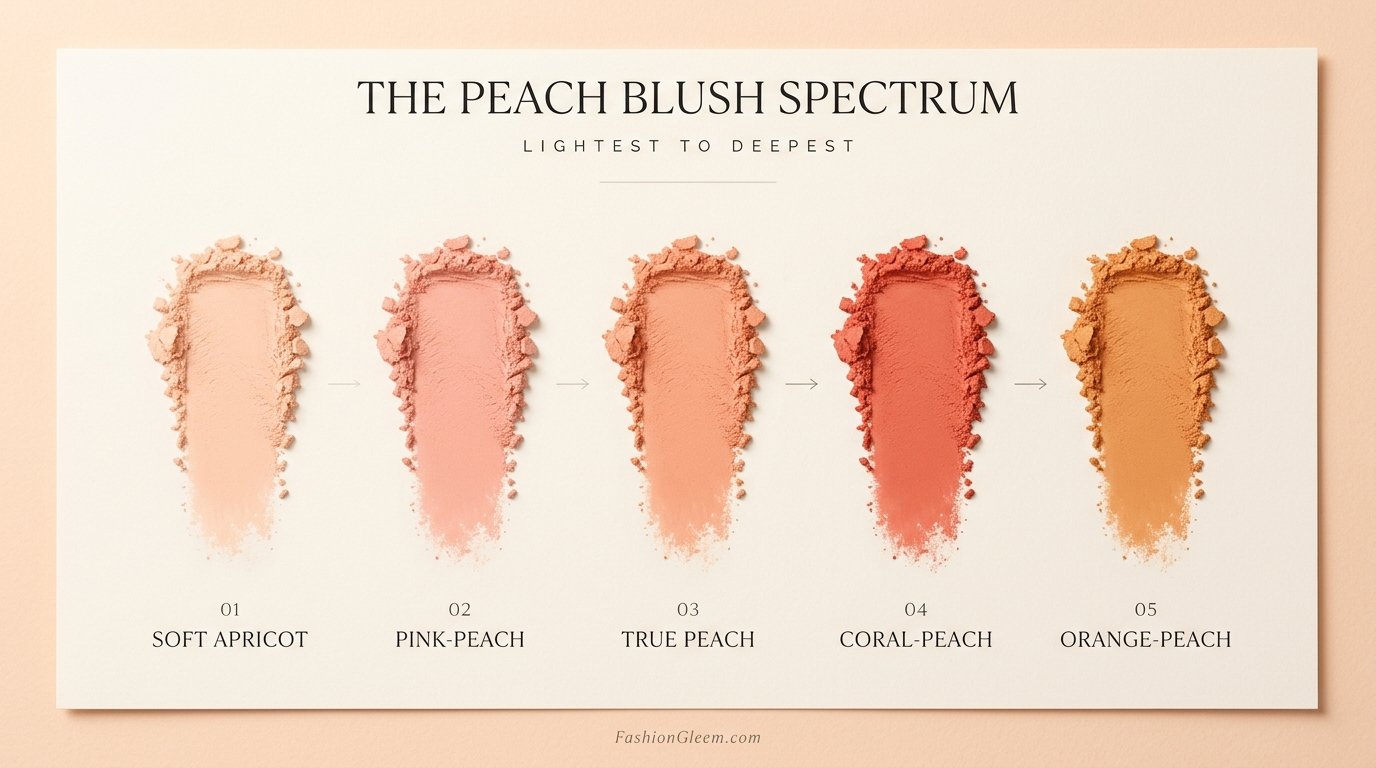
|
Formula |
Best skin |
Finish character |
Application rule |
|---|---|---|---|
|
Powder |
Oily, combination, humid days |
Diffused, matte to satin |
Fluffy brush, light layers, base set first |
|
Cream or balm |
Dry, normal, mature |
Skin like, dewy to satin |
Tap, never rub, over base |
|
Liquid |
Confident hands, all types |
Sheer tint to full pigment |
Tiny amounts, blend fast |
|
Stick |
Travel, touch ups |
Sheer and portable |
Stripe, blend with fingers |
Layering extends everything. A cream peach tapped in first, then a sheer powder peach over it, is the field’s standard answer to blush that fades by lunch.
Placement: Three Maps
The apples map is the classic. Color centered on the apples and blended outward gives the fresh, youthful flush most readers picture when they say natural.
The lifted map is the modern default. Place the color higher, on the upper cheek, and blend back toward the temples and hairline; the upward sweep does the lifting.
The sun kissed map is a separate look. A sheer wash swept across both cheeks and lightly over the nose bridge imitates a day outside, and it should be chosen, not stumbled into.
Blending direction is the technique. Whatever the map, edges diffuse upward and outward; dragging color downward pulls the whole face with it.
Intensity calibrates in daylight. Bathroom light flatters and lies; check the finished cheeks near a window before deciding the blush is too weak or too strong.
Highlighter comes after, sparingly. The balance between cheek color and glow is its own skill, and blush tips for balancing color with highlighter walk through pairing the two without a stripe of either.
Application in Order
Prep decides patchiness. Moisturized skin and a settled base let every formula grip evenly; blush over a half wet foundation is where most patchiness is born.
Creams tap over base. Tap or stipple cream and liquid peach straight down over foundation; rubbing sideways shears the base off, which is the entire mystery of blush lifting foundation.
Powders wait for set. Give the base a minute, then powder peach in light layers with a fluffy brush, building instead of loading.
Fingers are real tools. Warm fingertips melt cream blush into skin better than most brushes, and they are the applicator every stick format assumes.
Blend with a clean brush last. A clean fluffy brush over the finished cheeks diffuses edges without adding color, the professional’s final ten seconds.
The Pairings: Lips, Eyes, Highlight
Lips stay in the warm family by default. Nude, peach, warm pink, and soft coral harmonize; the transfer proof lipstick guide matters on days when the lip has to survive as long as the cheek.
Eyes go warm neutral. Bronze, champagne, warm browns, and soft golds let peach cheeks hold the warm center of the look without competition.
Cool contrasts are deliberate styling. A berry lip or a gray shadow with peach cheeks can look intentional and chic, but it reads as a choice, so keep the blush sheer there.
The monochromatic shortcut works. The same peach family on cheeks, lids, and lips is the fastest polished face in this entire color story, and beginners execute it well.
Repairs: Orange, Ashy, Invisible, Patchy
Too orange: shift one position pinker. The product is not cursed; its lean is wrong for your undertone. Pink-peach fixes most orange complaints without leaving the family.
Ashy: shift deeper and cleaner. Move toward saturated coral-peach with less white base, and retire the pale pan to fair skinned friends rather than fighting it daily.
Invisible: add a layer, not a new pan. Cream under powder doubles the presence of a too sheer shade, and building in daylight stops the apply, vanish, repeat cycle.
Patchy: fix the base, not the blush. Set the base, prep dry patches, and stipple instead of sweeping; nine patchy complaints in ten are base complaints wearing blush costumes.
Too bright: diffuse with what is left. Blend edges with a clean brush, then pass the nearly empty foundation brush over the center to mute intensity without removing the color.
Position shifting beats product switching. One step deeper, pinker, or warmer rescues most wrong purchases conceptually, even when the rescue means one smarter second purchase, which is why FashionGleem home organizes its beauty library by family and method.
Occasions and Seasons
Everyday peach is a sheer peach. Apricot or pink-peach at low intensity is the office and school run setting; the family only looks dressy when saturation climbs.
Wedding peach is a satin peach. Satin finishes photograph most forgivingly, and a mid spectrum position in a layered cream plus powder build survives the day.
Summer deepens the position. Tanned skin and stronger light take coral-peach and orange-peach gracefully, and powder formulas earn their keep in humidity.
Winter lightens and warms. Pale winter skin often shifts one position softer, while peach’s warmth does more visible good in the months when faces look drained.
Photography punishes white base twice. Flash can make pale, white heavy blush flare chalky even on medium skin, so event makeup belongs at the saturated, satin end.
Mistakes That Waste Good Peach
Buying the pan in the photo is the first: influencer swatches under studio light show a position your depth will never meet.
Testing on the wrist is the second: wrist skin is paler, cooler, and thinner than cheek skin, so it lies about color and intensity together.
Rubbing cream blush is the third, because it lifts the base and then gets blamed on the formula.
Judging in bathroom light is the fourth, the root of both the invisible blush morning and the clown cheek surprise in the car mirror.
Refusing to shift position is the fifth: loyalty to one wrong pan, when the family holds four other positions, is the most expensive mistake in this whole topic.
The Depth Table: Positions Matched to Skin
Use the table as a starting grid, then swatch. Positions are starting points; your cheek in daylight casts the deciding vote.
|
Skin depth |
Start at |
Also try |
Avoid first |
|---|---|---|---|
|
Fair |
Soft apricot, pink-peach |
True peach, sheer |
Orange-peach at full strength |
|
Light |
Pink-peach, soft apricot |
True peach |
Very pale pastel (may vanish) |
|
Medium |
True peach, coral-peach |
Apricot for subtle days |
Nothing is really off limits |
|
Tan |
Coral-peach |
Orange-peach |
Pale apricot (fades to nothing) |
|
Deep |
Coral-peach, orange-peach |
Terracotta-peach depth |
White based pale peach (ash risk) |
Undertone bends the row, not the table. Warm rows lean golden within their positions, cool rows lean pink, and the depth band itself does not move.
Two positions cover most lives. A soft position for everyday and a saturated one for summer, events, and photographs is the whole wardrobe most readers ever need.
Skin Types and Peach
Oily skin takes powder and patience. Powder peach over a set base survives oil best, and blotting before a sheer touch up beats adding fresh layers at noon.
Dry skin takes cream and prep. Cream formulas over well moisturized skin avoid the flake catching that makes powder blush look older than the face wearing it.
Mature skin takes cream and height. Cream textures respect fine lines, satin avoids both flatness and sparkle, and the lifted placement map does quiet structural work.
Combination skin splits the difference. Cream on the apples where skin is drier, a sheer powder layer over the top where oil breaks through first, in that order.
Sensitive skin reads labels first. Fragrance and formula sensitivities vary by person, so patch test a new blush along the jaw before committing both cheeks to it.
Buying Without Regret
Shop the spectrum position, not the brand story. Write down your depth band and your lean before opening any roundup, and every product description suddenly sorts itself.
Sheer formulas forgive beginners. A buildable, sheer peach in your position teaches intensity control with almost no way to fail publicly on the first morning.
One good pan beats three experiments. The method’s economics are real: a correctly positioned blush gets used to the pan, while experiments retire to a drawer at ninety percent full.
Test wear is the final exam. A shade that survives your full day, your lighting changes, and your honest mirror at hour six has earned its place; hour one compliments prove nothing.
Keep the receipt rule. Buy where returns exist until your position is proven; the first purchase in a new family is research, and research deserves a return window.
Worked Examples: Four Readers
The fair, cool reader starts at pink-peach. A sheer pink-peach cream, tapped on and checked by the window, gives her warmth that reads as health rather than costume.
Her failure mode is orange. The coral-peach her warm toned friend loves pulls orange on her, and the fix is position, not brand: back one step toward pink.
The medium olive reader lives at true peach. Golden warmth harmonizes with her skin’s own cast, and coral-peach is her summer and evening upgrade in the same pan family.
Her failure mode is brightness. Very bright orange exaggerates her sallowness, so she keeps her saturation warm but muted, choosing depth over neon every time.
The tan warm reader owns coral-peach. It holds its presence against her depth at midday, layered cream under powder on the days that run long.
Her failure mode is the pale pan. Pretty apricot swatches on her wrist and vanishes on her cheek, the white base and low pigment spending themselves against her depth.
The deep reader starts at orange-peach. Saturated, cleanly based, and built patiently, it gives her the same fresh warmth the pale pan promises fair skin and cannot deliver to her.
Her failure mode is ash. Any pastel peach with a heavy white base films gray on her cheeks, so she tests every new shade’s base on her jawline first.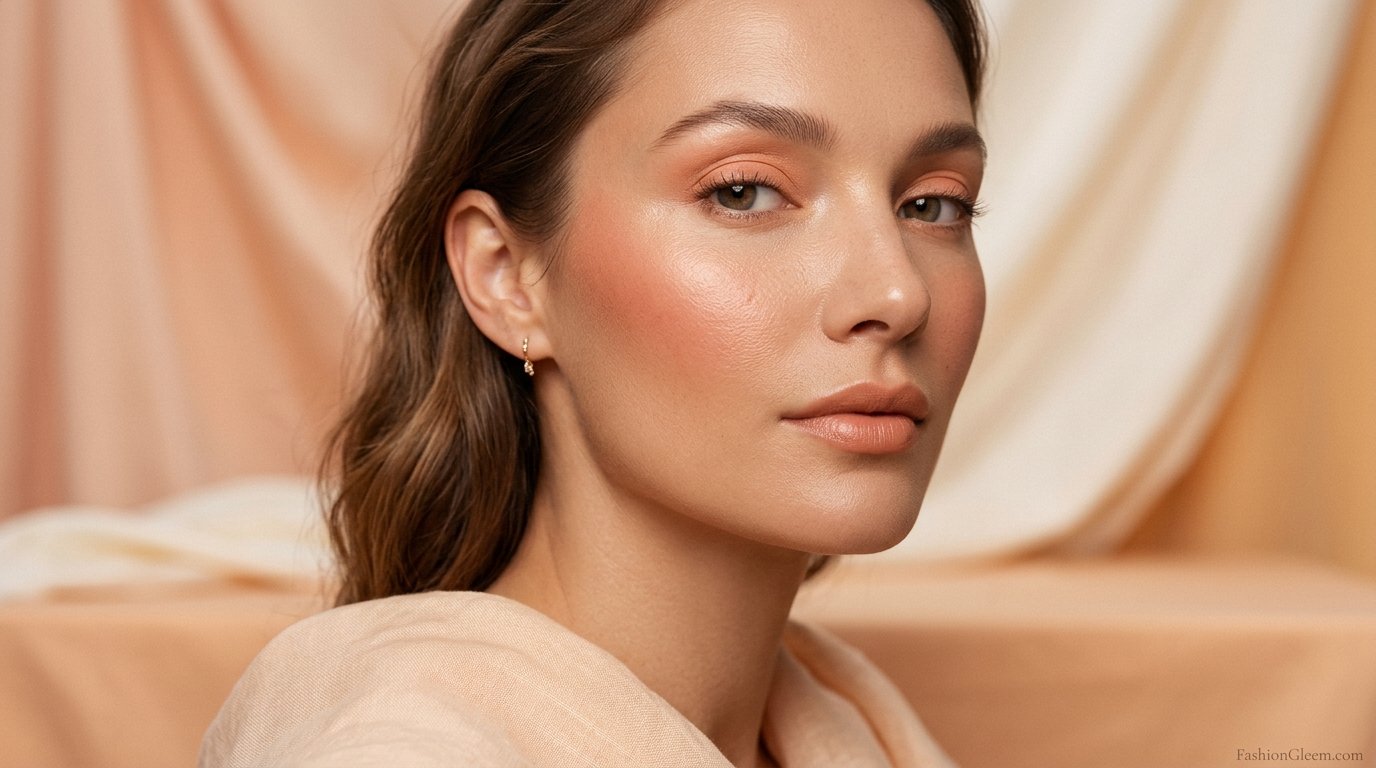
Peach Through the Decades of a Face
In your twenties, saturation is forgiving. Skin texture is smooth, experimentation is cheap, and the whole spectrum is a playground; learn your lean now and it serves you for decades.
In your thirties, time picks the formula. Sticks and creams that apply in a minute win the decade, and the lifted map starts earning its place as faces change.
In your forties, texture joins the conversation. Satin and cream finishes outrank matte powders as skin dries, and peach’s warmth compensates for the sallowness busy years bring.
Past fifty, placement is the product. The shade matters less than where it sits: high, blended toward the temples, in a cream that respects lines, peach reads as rest and health.
The spectrum itself never expires. Only positions and finishes rotate with age; the family that flattered you at twenty five has a position waiting at sixty five.
A Week of Peach: Intensity Calibration
Monday runs the sheer setting. One light layer of your everyday position, placed on the apples and blended out, is the week’s baseline face.
Midweek adds the lifted map. Same pan, higher placement and a second layer for the day with meetings or photographs, which teaches how much placement alone changes.
Friday tests the evening build. Cream under powder at your position, checked in daylight before you leave, because evening light forgives what noon exposes.
The weekend runs the sun kissed wash. Sheer color across the cheeks and the nose bridge with everything else quieter, the look this family was born for.
Sunday is the honest audit. Bare skin, then one cheek done and one left bare in daylight: the comparison calibrates your intensity better than any mirror habit you own.
Calibration ends blush blindness. A week of deliberate variation teaches your eye your own face, which is the skill every product in this category quietly assumes you have.
Peach and the Rest of the Face
Bronzer and peach are partners, not rivals. Bronzer shapes the perimeter with warmth and shadow; peach brings the flush to the front of the cheek where blood actually rises.
Order keeps them clean. Base, then cream blush, then bronzer at the edges, then powder blush if layering, then highlight last and least.
Foundation undertone matters quietly. A foundation that leans too pink can push a true peach orange on contact; matching foundation temperature to your own skin keeps peach honest.
Setting spray melds the layers. A light mist after powder work melts the powdery edge into skin, making satin peaches read as complexion rather than coating.
Peach under powder foundation days works too. On light base days, cream peach under a dusting of powder foundation gives the lit from within effect heavy makeup tries to fake.
The Two Pan Wardrobe
Most readers need exactly two peaches. One soft position for daily wear and one saturated position for summer depth, evenings, and photographs covers a year of faces.
Buy the everyday pan first. It teaches your intensity, your formula preference, and your placement on a forgiving shade before money goes to the dramatic one.
Buy the saturated pan second, in the same lean. Keep the undertone lean constant and change only depth, so the second pan reads as your blush after dark rather than a stranger.
Retire pans by position, not by guilt. A pan in the wrong position is a gift to a differently toned friend, not a daily punishment you owe a purchase.
Shade Names, Decoded
Fruit names signal warmth, not position. Peach, apricot, mango, and melon names promise the family; only a swatch reveals whether the pan sits pale or saturated inside it.
Dessert and drink names signal mood. They market sweetness and glow, which correlate with nothing in the pigment, so treat them as advertising, never as data.
Numbers beat names for reordering. When a shade works, record its number and finish, because names get renamed while formulas quietly continue under new labels.
The Five Minute Peach Face
Minute one: base and brows. Whatever light base you wear, settled, with brows done first so the face has its frame before color arrives.
Minutes two and three: the blush. Your position, your map, one layer, blended upward and checked once in the best light you have.
Minute four: lips in the family. A warm nude or peach lip keeps the story coherent without a second decision.
Minute five: the audit. Powder only where shine will break first, one last edge blend, and out the door before perfectionism starts its shift.
When Peach Is Not Your Answer
Sometimes the method acquits the shopper and convicts the family. If pink-peach in a clean base still fights your skin at every intensity, your flush may simply live in the rose family.
That is a result, not a failure. The depth and undertone work you did here transfers directly, so the rose experiment starts at the right depth on day one.
Keep the pan for layering days. A sheer peach under a rose blush warms it measurably, which is how makeup artists use shades their clients would never wear alone.
The cluster exists for this moment. Families are neighbors on one shelf here, and switching families with the method intact is the cheapest education in makeup.
Frequently Asked Questions
1. What is peach blush makeup?
A warm blush family, not a single pan. Peach runs from soft apricot through pink-peach and true peach to coral-peach and orange-peach; the shade name rarely tells you where a product sits.
2. Does peach blush suit everyone?
Almost, with the right position. Fair skin wears the sheer apricot end, deep skin needs the saturated coral-peach end, and cool skin usually prefers pink-peach.
The family fits most faces; one random pan does not.
3. What skin tones suit peach blush best?
Warm and golden skin first. Warm and olive undertones harmonize most easily, medium depths own the widest range, and every depth has a working position with the right saturation.
4. How do I choose a peach blush shade for my skin tone?
Depth first, undertone second. Find the depth band where the color registers on your skin, then pick the lean: golden and orange for warm or olive skin, pink-peach for cool or neutral.
5. What is the difference between apricot, peach, and coral blush?
A warmth gradient. Apricot is peach at its palest and softest, peach is the balanced middle, and coral adds pink and red energy as it deepens toward orange-peach.
6. Is peach blush good for fair skin?
Yes, at the sheer end. Soft apricot and pink-peach washes add warmth without overwhelming fair skin.
Start with less than you think; vibrant formulas show on fair skin with a tiny amount.
7. Which peach blush shades suit deep skin?
The saturated end. Rich coral-peach and orange-peach with real pigment load.
Pale peaches often carry too much white base for deep skin and read ashy or simply disappear.
8. Why does peach blush not show up on my skin?
A depth or pigment problem. Either the shade sits too pale for your depth, or the formula is sheer by design.
Move one position deeper, or layer cream under powder to build visible color.
9. Why does peach blush look ashy on dark skin?
Blame the white base. Many pale peaches are built on a strong white pigment base, which reads chalky or gray on deeper skin.
Choose saturated shades with less white base instead.
10. Why does peach blush look orange on me?
A mismatch, not a bad product. The shade leans too orange for your undertone or saturation.
Cool and neutral skin usually fix it by moving to pink-peach; a deeper position can also tame raw orange.
11. Can cool undertones wear peach blush?
Yes, at the pink-peach end. Peach on cool skin works as a deliberate warmth, and pink-leaning peaches stay harmonious.
Straight orange-peach is the position most likely to fight cool skin.
12. What peach blush suits olive skin?
Golden and muted peaches. Warm peach, apricot, and terracotta-peach harmonize with olive depth, while very bright orange can exaggerate sallowness.
The undertone guides pair olive skin with peach first.
13. What peach blush suits warm undertones?
Your home territory. The whole spectrum is open, from apricot to orange-peach.
Golden leans look most natural because they echo the warmth already in the skin.
14. What peach blush suits neutral undertones?
Balanced coral-peach. Neutral skin sits between the leans, so the middle positions work best, with pink-peach for a fresher effect and golden peach for a warmer one.
15. Is peach or pink blush better for me?
Temperature decides. Pink reads cooler and fresher, peach reads warmer and sunnier.
Warm and olive skin usually vote peach; cool skin votes pink or takes peach only at its pink end.
16. Is peach or coral blush better for me?
Coral is peach with more pink energy. Choose coral-peach when you want brightness and presence, true peach when you want softness.
On deep skin, coral’s saturation is often what makes the color visible.
17. Peach blush vs terracotta blush, what is the difference?
Terracotta is peach grown up. Both are warm, but terracotta is deeper, earthier, and browner, suiting medium to deep warm skin; peach is lighter, fresher, and fruitier at every depth.
18. Cream, powder, or liquid peach blush, which is best?
By skin type. Powder for oily skin and longevity, cream for dry or mature skin and a skin like finish, liquid for adjustable intensity, with tiny amounts because concentrates are strong.
19. What peach blush formula suits oily skin?
Powder, set properly. Powder peach diffuses with control and lasts; apply it after the base has set, and a cream layer underneath extends wear further on combination areas.
20. What peach blush formula suits dry or mature skin?
Cream, tapped on. Cream and balm formulas melt into dry and mature skin without emphasizing texture.
Tap with fingers or a sponge rather than rubbing, especially over foundation.
21. How do you apply peach blush naturally?
Light layers, blended up. Start on the apples with a small amount, blend back and upward toward the temples, and build in thin layers until the flush reads in daylight, not bathroom light.
22. Where do you apply peach blush for a lifted look?
Higher and further back. Place color on the upper cheek and blend toward the temples and hairline, keeping the center of the cheek softer; the upward direction does the lifting.
23. How do you get a sun kissed look with peach blush?
A wash across the high points. Sweep a light layer across both cheeks and lightly over the nose bridge, keeping intensity even and sheer; it is a deliberate look, separate from daily placement.
24. How much peach blush should I apply?
Less than the pan suggests. Vibrant formulas need a pinhead start on fair skin and patient building on deep skin.
Apply in daylight when you can; you can always add, and removing is harder.
25. Do you apply peach blush before or after foundation?
After, for creams and powders alike. Creams tap over foundation, powders go on once the base has set.
Blush under foundation is an advanced sheer technique, not the everyday order.
26. Why does cream blush lift my foundation?
Rubbing is the cause. Dragging a sponge or fingers sideways shears the base.
Tap or stipple cream blush straight down, and let each tap land before moving on.
27. How do I stop peach blush going patchy?
Usually unset base or dry patches. Let foundation set before powder blush, prep dry areas with moisturizer, and blend with a clean fluffy brush to diffuse edges instead of adding product.
28. How can I make peach blush last all day?
Layer and set. Cream first, tapped in, then a sheer powder peach over the top locks it.
The combination is the field’s standard fix for blush that fades by midday.
29. Should peach blush be matte, satin, or shimmer?
Satin is the safe default. Matte can flatten dry or mature skin, heavy shimmer emphasizes texture, and satin gives most faces a believable skin like glow at any age.
30. Can peach blush be worn every day?
It is the everyday family. Sheer positions and satin finishes were made for daily wear; intensity, not the color family, is what makes blush look like an occasion.
31. Does peach blush work for wedding makeup?
Yes, beautifully. Peach warms a face under photography lighting and pairs with classic bridal softness.
Satin finishes photograph most forgivingly; test your exact shade in daylight first.
32. Can I use peach blush as eyeshadow?
Often, with a caution. Many peach blushes double on eyes attractively, but only use a product on eyes as its own directions allow, and keep shimmer placement deliberate.
33. What lipstick colors pair with peach blush?
Stay in the warm family. Nude, peach, warm pink, and soft coral lips harmonize; a cool berry lip can still work as deliberate contrast if the blush stays sheer.
34. What eyeshadow pairs with peach blush?
Warm neutrals and golds. Bronze, champagne, warm brown, and soft gold eyes let peach cheeks stay the warm center; cool gray shadows can fight an orange-leaning peach.
35. How do I swatch a peach blush before buying?
On your cheek, in daylight. Swatch where the blush will live, blend it out fully, and check in natural light.
Wrist swatches lie about both color and intensity on the face.
36. Are undertone tests like veins and jewelry reliable?
Not definitively. The best shade guides say so plainly: jewelry and vein tests suggest, they do not decide.
Daylight cheek swatches settle what the tests cannot.
37. What is a good first peach blush for a beginner?
A sheer pink-peach or apricot. Pick a buildable formula in the position nearest your depth, apply it with a fluffy brush or fingers, and learn your intensity on one forgiving shade first.
38. Does peach blush suit freckles?
Wonderfully. Peach intensifies the sun kissed story freckles tell; keep the application sheer so the freckles show through rather than hiding under an opaque layer.
39. Can women over 50 wear peach blush?
Yes, with cream and height. Cream formulas respect texture, and upward placement keeps the face lifted.
Peach warmth is especially kind to mature skin in satin and cream finishes.
40. How do I fix peach blush that is too bright?
Diffuse, do not remove. Blend the edges outward with a clean brush or a barely damp sponge, then soften the center with the brush that applied your foundation, used almost empty.
41. Does peach blush photograph well?
Satin peach, yes. It reads as warmth rather than sparkle on camera.
Avoid heavy white based shimmer, which can flash back pale under strong flash.
42. What is the difference between peach blush and peach color corrector?
Different jobs entirely. Peach blush adds a warm flush on the cheeks; peach color corrector neutralizes blue toned darkness, usually under the eyes, beneath foundation.
The shared color is a coincidence of the color wheel.
Conclusion
Peach blush makeup rewards the shopper who shops the spectrum instead of the shade name, so find your position before you fall for a pan.
Hold the order. Depth first, undertone second, formula third, placement last: that sequence fixes the orange, the ashy, and the invisible before money changes hands.
Use the cluster. If your match turns out cooler or earthier, the rose and terracotta pages on this site carry the same method in their own temperatures.
Start with one cheek swatch in daylight this week. The right position will look like warmth arriving, not makeup sitting, and you will know it in one look.

Dilawar is a contributing writer at Fashiongleem.com, focusing on beauty, hairstyles, skincare, fashion accessories, and personal grooming. He creates informative, easy-to-follow articles that help readers explore new looks, understand popular beauty trends, and improve their everyday styling routines. His writing emphasizes practical advice, useful product information, and accessible fashion inspiration for modern readers.