

Capsule Wardrobe: The Edit-First System That Actually Works
A capsule wardrobe is a small, edited set of clothes where almost every top works with almost every bottom, so a full closet stops producing nothing to wear mornings. It is a system, and four rules run it.
The count is a ceiling, not a target. Every piece signs a contract: it pairs with at least three others or it does not enter. The palette is the multiplier that turns few pieces into many outfits. And the edit comes before any buying.
FashionGleem publishes wardrobe systems built on habits rather than hauls, and this one is the most habit based of all. Build it in order, from your real life outward, and the small closet starts behaving like a large one.
A Definition That Survives Contact With Your Closet
A capsule wardrobe is a curated collection of versatile pieces that all work together. The ShineSheets capsule wardrobe guide puts the point well: it is not about owning less for its own sake, but about owning pieces that combine, so dressing takes two minutes instead of twenty.
Most capsules land somewhere between 20 and 40 pieces for a season. That band already appears in the ShineSheets capsule wardrobe guide, which counts workout clothes, pajamas, and underwear outside the number, a detail that matters more than the number itself.
The term is older than the internet. Susie Faux, a London boutique owner, coined it in the 1970s for a handful of timeless pieces forming a closet’s backbone, and Donna Karan carried it mainstream in 1985 with her Seven Easy Pieces.
What It Is Not
A capsule is not a uniform, unless you want one. Uniform dressing repeats one formula daily; a capsule mixes many formulas from few pieces, which is a different pleasure and a different discipline.
It is not a shopping list either. A capsule bought in one weekend haul is just a smaller pile of guesses, and the method below exists precisely to stop that purchase from happening.
The lifestyle tips for women guide runs on the same insight in a different room of life: small systems kept daily beat dramatic overhauls kept never. Capsule building is that logic applied to a closet.
And it is not a purity test. The ShineSheets capsule wardrobe guide says it plainly: twenty pieces is a helpful starting point, not a test you pass or fail, and every honest framework in the field agrees once you read its rules.
The Count Is a Ceiling, Not a Target
Why the Number Exists at All
The number’s job is to force choices. Without a ceiling, editing has no pressure and the closet refills by drift; with one, every candidate piece must argue against something already inside.
That is why frameworks pick different numbers without any of them being wrong. They are selling different amounts of pressure: a strict challenge for three months, a seasonal wardrobe for a working life, a ten day experiment.
Treat your number as a budget, not a score. A 34 piece capsule where everything combines beats a 27 piece capsule full of orphans on every measure that matters: outfits, calm, and cost per wear.
The Field’s Number Bands, Side by Side
Guides in the field publish bands from 20 to 50 pieces, which sounds like chaos until the counting rules are exposed. The Stylin capsule wardrobe guide lands on roughly 30 to 40 core pieces for most people, enough for work, weekends, and the occasional event.
A style quiz source runs wider, 25 to 50, and its own style types run from 25 to 45 pieces each. The width is the finding: anyone quoting you one official number is quoting their rules, not the concept.
One named coach in the field, Los Angeles style coach Rayne Parvis, caps her clients at 35 items. That figure is a strand from one practice, useful as a sanity check, not as law.
The Counting Rules: Why 33 and 37 Are Not the Same Number
|
Framework |
Count |
What counts |
What is excluded |
Duration |
|---|---|---|---|---|
|
Project 333 |
33 or fewer |
Clothes, shoes, outerwear, accessories, jewelry |
Pajamas, workout wear, underwear |
3 months |
|
Unfancy 37 |
37 |
Clothing and shoes |
Accessories (outside the count) |
One season |
|
Stylin framework |
30 to 40 |
Core pieces for daily life |
Surplus and duplicates |
Ongoing |
|
ShineSheets band |
20 to 40 |
Seasonal wardrobe pieces |
Workout, pajamas, underwear |
One season |
Project 333 Counts Almost Everything
Project 333, created by Courtney Carver in 2010, is a challenge: dress with 33 items or fewer for three months. The methods compendium at Mood and Clothes capsule compendium records its inclusions precisely: clothing, shoes, bags, accessories, and jewelry all count.
Only pajamas, workout wear, and underwear sit outside that count. So a Project 333 closet is stricter than its number suggests, because the 33 must also carry your bags and jewelry for a full season.
Choose it when you want a reset with rules: a fixed start, a fixed end, and a closet small enough to prove the concept to yourself in ninety days.
The Unfancy 37 Counts Clothes and Shoes
The 37 piece method rotates a seasonal capsule of clothing and shoes, with off season pieces stored and swapped every three months. Accessories live outside the count, which is exactly why 37 here is roomier than 33 there.
One more honest wrinkle before the layouts: the compendium dates the seasonal rotation to storage, with pieces rotating out every three months. That small mechanic is what makes a 37 piece rail feel larger than a 60 piece closet with no system at all.
Its published layouts disagree, and that disagreement is worth printing. The JudyP Apparel capsule wardrobe explainer gives 15 tops, 9 bottoms, 4 layers, 4 shoes, 2 dresses, and 3 wildcards; a magazine strand gives 9 shoes, 9 bottoms, 15 tops, and 4 slots for dresses and jackets.
Both are the same method seen by different closets. The lesson is that layouts are starting negotiations, and your real life percentages, not a copied table, decide where your pieces sit.
Even the method’s founder arrives under two names in the sources: Caroline Rector in most, Carolyn Joy in the compendium. The method is identical either way, and the honest move is to note the conflict rather than silently pick one.
The Three Partner Contract
The Only Test a Piece Must Pass
One guide in the field states the entry rule as a principle, and it deserves to run the whole system.
The SimplyFashionOnline 30 pieces guide puts it cleanly: before a piece joins, check that it goes with at least 3 other pieces, preferably 5; if not, it does not belong.
That is the contract. A piece that pairs with three others is infrastructure; a piece that pairs with one is an orphan, whatever it cost and however it photographs. Orphans are how full closets produce nothing to wear.
Apply the contract at both doors. At the shop door it kills impulse buys in ten seconds; at the closet door it identifies exactly which current pieces are passengers, without any reference to how long you have owned them.
The Contract in Practice
Test a candidate blazer mentally against your closet. Over the white tee and jeans it works, over the button down and trousers it works, over the dress it works: three partners, signed.
Test a printed statement top the same way. It works with one skirt, fights every bottom you own, and needs shoes you do not have: one partner, declined, and the money stays in your account.
The contract also explains duplicates. A second black tee passes easily because black tees pair with everything; a second statement top in the same accent fails because it splits wears with its twin instead of creating outfits.
The Palette Is the Multiplier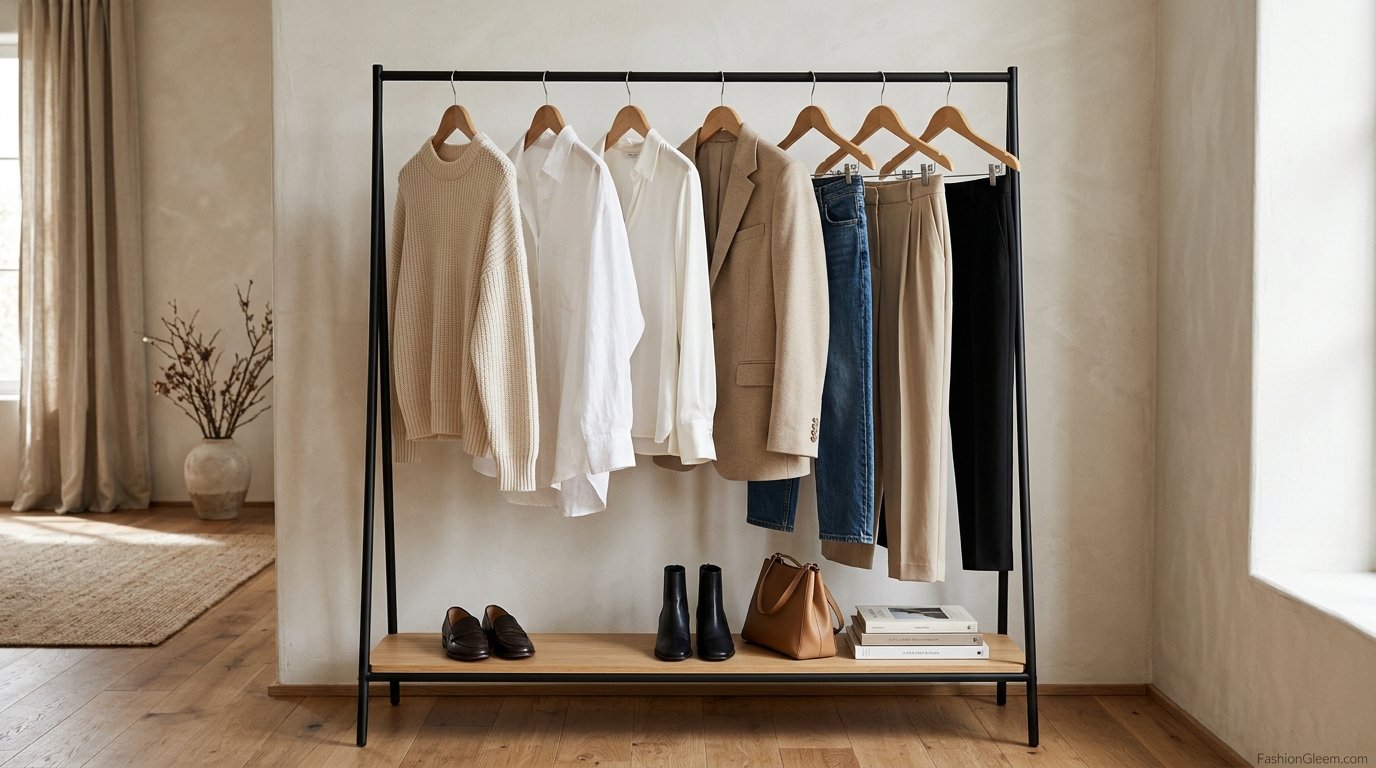
Base Neutrals Do the Heavy Lifting
A capsule’s combinations come from its color discipline, not its piece count. The palette system in the KeptList capsule wardrobe build runs on two or three base neutrals appearing in roughly 70 percent of pieces, the anchors everything else builds on.
Common bases split by temperature. Cool neutrals run black, white, gray, and navy; warm neutrals run cream, camel, and beige. Pick the family your favorites already live in, not the one in a photograph of someone else’s life.
The ShineSheets capsule wardrobe guide works one palette all the way through: cream, camel, white, and black as the base, with blush as the soft accent. Every new piece must fit inside it, which is exactly what makes everything mix.
Accents Are Where Personality Lives
Over the base, add one to three accent colors that flatter you and still sit comfortably beside the neutrals. The KeptList capsule wardrobe build frames accents as the second decision, taken only after the base is locked, and in that order the system stays calm.
Accents belong mostly in tops, scarves, and one or two wildcard pieces, places where a color can appear often without needing to match everything below the waist. Bottoms in loud accents are the classic contract breakers.
Color is allowed in a capsule, and this needs saying because the internet version looks beige. The rule is not neutrality; it is compatibility. A rust top that pairs with your navy, cream, and denim is a better capsule citizen than a beige top that pairs with nothing.
Outfit Math: How 30 Pieces Pass 100 Outfits
The multiplier is arithmetic, not magic. A worked example from the field runs it in public: 10 tops times 5 bottoms makes 50 base outfits, and adding 3 jackets over them makes 150 combinations.
Contract strength compounds the same way. The SimplyFashionOnline 30 pieces guide runs its own version: 30 pieces each pairing with 3 others implies 90 combinations, and at 5 partners each, 150. Different guides, same engine: partners multiply, pieces merely add.
This is why one gap piece can be worth more than five random buys. The right blazer adds an outfit with every top and bottom it completes; five orphans add five outfits total, on their best days.
|
Building block |
Count |
Outfits it creates |
|---|---|---|
|
Tops x bottoms |
10 x 5 |
50 base outfits |
|
Add layer options |
x 3 jackets |
150 combinations |
|
Pieces at 3 partners |
30 pieces |
About 90 combinations |
|
Pieces at 5 partners |
30 pieces |
About 150 combinations |
The Method: Edit Before You Buy
Step One: Audit Your Real Life
Start with your actual week, not your aspirational one. The ShineSheets capsule wardrobe guide opens here for a reason: count your real commitments (work days, school runs, evenings out, workouts) and let those percentages size the wardrobe.
Write the split down. A closet that is 60 percent office, 30 percent casual, and 10 percent dressy cannot be built from a list that is half cocktail dresses, and most nothing to wear mornings are born in exactly that mismatch.
The KeptList capsule wardrobe build agrees on sequencing: the build begins with an honest inventory, and its own timeline allows two to four weeks of planning before the capsule settles. Slow at the start is what makes it fast every morning after.
Step Two: Pull the Favorites Pile
Go through the closet and pull only what you reach for: pieces that fit well, feel comfortable, and make you feel like yourself. The ShineSheets capsule wardrobe guide builds its second step on this pile because it is evidence, not opinion.
Your favorites carry free research. They reveal your real palette (the neutrals that keep showing up), your real silhouettes, and your real fabric tolerances, all measured against your actual life instead of a mood board.
Sort the rest into keep, donate, and maybe piles, the audit structure used across the field. The maybe pile matters most: box it, date it, and let a season of not missing it make the decision your willpower should not have to.
Step Three: Lock the Palette From the Pile
Read the palette off the favorites, then formalize it: two or three base neutrals, one or two accents, written down. Any piece in the closet that fits the palette and the contract stays in contention; anything outside both has explaining to do.
This order is the whole trick. Choosing a palette from your proven clothes means the capsule starts compatible with your life; choosing one from a trend page means your favorites become the orphans.
Step Four: Fill Only the Gaps, Ranked
Compare what you own against a core list, and write down only the true gaps: pieces you would wear at least weekly. The ShineSheets capsule wardrobe guide then ranks them by a single question: which missing piece creates the most new outfits?
That ranking is your shopping list, in order, and it is usually short. Most closets need a third piece that finishes outfits, one bottom that pairs upward, and shoes that stop vetoing combinations, not a new wardrobe.
Buy slowly against the list. The KeptList capsule wardrobe build makes gradual building doctrine: start with essentials, wear them for a few weeks, and add pieces only for gaps you actually notice in use.
Step Five: Test It for a Season
Close the capsule and live in it: the ShineSheets capsule wardrobe guide prescribes a 30 day test, and the seasonal frameworks run the same test for three months. Box or rail everything else out of sight so the test is honest.
During the test, note every friction: the outfit that almost worked, the weather the capsule could not dress, the occasion it missed. Those notes, not the internet, write your refinement list.
Pieces that fail the test are information, not shame. A capsule you have tested and adjusted beats a perfect list you have only read, every single time.
A Note on Travel
Travel is where the system pays cash. A capsule is already a packing list: choose a palette slice, pack by partners, and two weeks of outfits fit in a carry on without a single orphan along for the ride.
Category Budgets: Where the Pieces Sit
|
Category |
Field range |
What the range assumes |
|---|---|---|
|
Tops |
8 to 12 |
The most reached for category carries the most pieces |
|
Bottoms |
4 to 7 |
Each must work with most tops |
|
Layers |
4 to 6 |
Third pieces change an outfit without changing its base |
|
Dresses |
2 to 4 |
One piece outfits for work and evenings |
|
Outerwear |
2 to 3 |
One classic coat, one lighter layer |
|
Shoes |
3 to 6 pairs |
Counted in some frameworks, outside others |
Why Tops Outnumber Bottoms
The category budgets in the Stylin capsule wardrobe guide framework size tops at 8 to 12, because tops are what you reach for most and what other people see change. Keep most of them plain, since patterned tops pair with fewer partners.
Bottoms run 5 to 7 in the same framework, fewer because each must work with most of your tops. Two jeans, two tailored trousers or chinos, and a skirt or dress cover almost everything a week can ask.
Layers, at 4 to 6, do the heavy lifting: cardigans, blazers, and overshirts change an outfit’s register without changing its base, which is the cheapest versatility in the whole system.
These are ranges, not rules, and the framework that publishes them says so itself. A laundry cycle, a climate, or a dress code moves your numbers inside the bands legitimately.
The Starter List, With Partner Counts
A starter core, in the spirit of the core 20 table the ShineSheets capsule wardrobe guide builds, with each piece’s justification and its partner count stated like a contract:
- White t-shirt: layers under everything, works alone with jeans; partners, nearly all bottoms and layers
- Cream fine knit sweater: polished for work, soft for weekends; partners, trousers, jeans, skirts
- White button down shirt: dresses up denim, tucks into skirts, layers under knits; partners, every bottom
- Blush blouse or soft knit top: the gentle accent that still matches the base; partners, all neutral bottoms
- Camel cardigan: the easiest third piece over tees and blouses; partners, every top in the palette
- Dark wash jeans: the casual anchor; partners, tees, knits, shirts, blazer
- Tailored trousers: the work anchor; partners, shirts, knits, blouses
- Versatile dress: a one piece outfit the layers can re register; partners, cardigan, blazer, coat
- Neutral blazer: finishes casual bases into work outfits; partners, jeans, trousers, dress
- Classic coat: the outer layer the whole palette passes under; partners, everything
- White sneakers and loafers: one casual, one polished; partners, jeans and trousers respectively, both forgiving
Read the list as a negotiating draft. Your climate may swap the coat for a trench, your job may trade jeans for a second trouser, and your accents may run rust or olive instead of blush; the partner counts are what must survive the edits.
Frameworks Compared: Project 333, Unfancy 37, 10×10
Choosing Your Pressure Level
Project 333 suits a hard reset: strict inclusions, ninety days, proof by ordeal. Unfancy 37 suits a working wardrobe: seasonal rotation, accessories uncounted, a closet that breathes with the weather.
The 10×10 challenge, ten items making ten outfits for ten days, is the test drive: too small to live in, perfect for learning your contract and palette instincts before committing a season to them.
There is no hierarchy here. The frameworks are the same idea at different pressures, and the right one is the one whose rules you will actually keep for its full duration.
Capsule vs Minimalist Wardrobe vs Uniform
A minimalist wardrobe is defined by a small number; a capsule is defined by combinability. A minimalist can own 25 pieces that do not combine; a capsule owner can own 40 that all do, and get dressed faster.
Uniform dressing fixes the formula and varies nothing; a capsule fixes the inventory and varies the formulas. Choose uniform for decision elimination, capsule for decision reduction with range.
And a capsule beats a plain declutter in one specific way: decluttering removes pieces, while the capsule also adds the contract, so the closet cannot quietly refill with orphans afterward.
Rotation and Maintenance: The Operating System
Seasonal Rotation Is Swaps, Not Second Closets
You do not need a separate capsule per season. The Stylin capsule wardrobe guide frames rotation as one core capsule plus a small set of swaps: boots and heavy knits trade places with sandals and linen when the weather turns.
Their worked example makes it concrete: an autumn winter capsule of about 29 pieces (10 tops, 5 bottoms, 5 layers, 2 coats, 4 shoes, plus occasion pieces), with scarves, gloves, and hats sitting outside the count.
Store the off season pieces boxed and dated, within reach but out of the daily rail. Rotation day, twice or four times a year, is also audit day: anything not missed in its season has told you something.
One In, One Out
After the build, the capsule is maintained, not finished. The operating rule is simple: a new piece enters only when a current piece leaves, and the entrant must still sign the three partner contract.
Shop from the gap list only, and let your wider routine carry the discipline; the healthy lifestyle tips guide makes the same systems point about habits outlasting motivation. A capsule is that principle worn daily.
The self care routine guide treats routines as sized, repeatable systems rather than events, and capsule maintenance is exactly that: small, regular, and unglamorous, which is why it works when dramatic cleanouts do not.
When the Capsule Feels Boring: The Fixes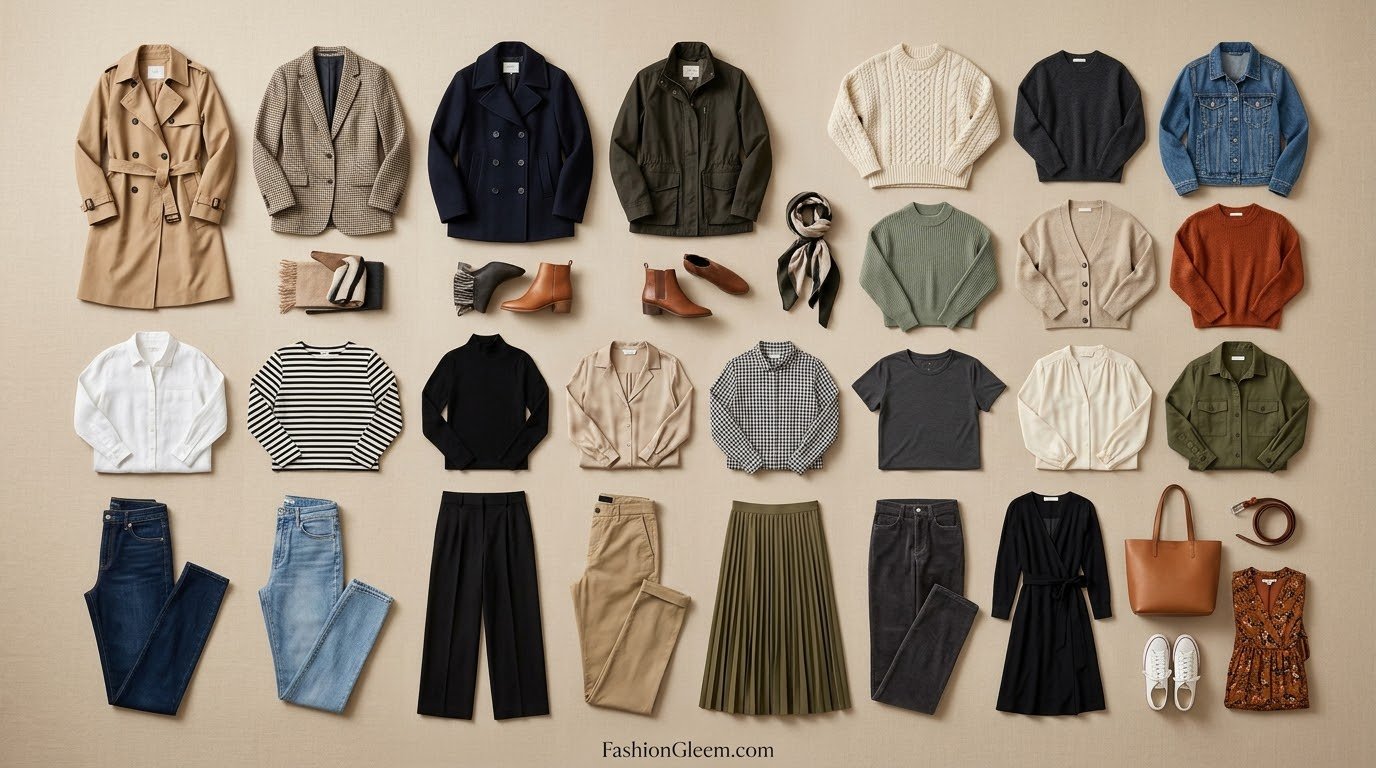
Boredom Is a Styling Problem First
Most boring capsules are texture poor, not piece poor. Add interest in this order: texture (cable knit against smooth cotton), the third piece (a layer changes a base outfit’s whole register), then accessories, which most frameworks leave uncounted anyway.
Repeat outfits without apology. Nobody tracks your rotation like you do, and the field’s own culture, from the lifestyle tips for women guide onward, treats a repeated good outfit as a signature rather than a failure.
If boredom survives those fixes, spend your wildcard slots deliberately: the 37 layout reserves 3 wildcards, and one vivid piece inside a disciplined palette refreshes twenty outfits it can partner with.
The Regret-Safe Way to Shrink a Closet
Fear of regret stops more capsules than laziness does. The fix is mechanical: maybe box, dated, out of sight for a full season; donate only what the season proved unmissed.
Capsule for Bodies and Lives That Change
Sizes change, jobs change, climates change, and a rigid capsule breaks on all three. Build the flex in from the start: forgiving fabrics, adjustable waists, and pieces bought for the body and schedule you have this season.
Life changes are also why the seasonal test matters more than the starting list. Retake the audit whenever the week changes shape; the system is designed to be re-run, not to be defended.
Sentimental pieces get honest storage, not daily rail space and not the trash. A capsule governs what you dress from; it was never a court ruling on what you may keep.
Mistakes to Avoid
Buying the capsule. Shopping for a new wardrobe to start owning less is the founding contradiction. Edit first, test, then fill the ranked gaps; most readers need five pieces, not thirty.
Counting before reading the rules. Comparing your 33 against someone’s 37 without checking inclusions is how good capsules get abandoned for failing a test that never applied to them.
Copying a palette. A borrowed palette orphans your favorites, which were your best evidence. The palette is read off your proven clothes or it fights your life daily.
Skipping the favorites pile. Lists built from scratch ignore the only dataset that matters: what you already wear happily. The pile is the research; everything else is commentary.
Letting orphans in on exceptions. One piece bought for a fantasy life (the gala self, the someday self) breaks the contract and quietly reopens the door to all the others.
Judging on day three. The test exists because the first week of any capsule feels restrictive. Friction notes at day thirty are data; frustration at day three is weather.
Frequently Asked Questions
1. What is a capsule wardrobe?
A capsule wardrobe is a small, edited set of clothes where almost every piece combines with almost every other. It trades a full closet for a working system of versatile pieces.
2. How many pieces should a capsule wardrobe have?
Most land between 20 and 40 pieces per season. The frameworks disagree because their counting rules differ, so treat the number as a ceiling that forces choices, not a score.
3. Why do the frameworks disagree on the number?
Because they count different things. Project 333 counts accessories and jewelry inside its 33; the 37 method counts clothes and shoes only.
Same word, different measurements.
4. What counts toward the number in a capsule wardrobe?
Whatever your chosen framework says, stated upfront. Clothes always count.
Shoes count in most frameworks; accessories count in Project 333 and sit outside the 37 method.
5. Do shoes count in a capsule wardrobe?
In most frameworks, yes. The 37 method includes shoes in its 37; Project 333 includes them too.
A few loose guides leave shoes outside, which is their rule, not the standard.
6. Are accessories counted in Project 333?
**Yes.
Project 333 counts clothing, shoes, outerwear, accessories, and jewelry in the 33.** Only pajamas, workout wear, and underwear sit outside its count.
7. What is excluded from a capsule wardrobe count?
Usually workout clothes, pajamas, and underwear. Some frameworks also exclude accessories and sentimental storage.
Whatever you exclude, write it down so the count stays honest.
8. What is Project 333?
A minimalist challenge by Courtney Carver, from 2010: dress with 33 items or fewer for three months. Accessories and jewelry count; pajamas, workout wear, and underwear do not.
9. What is the 37 piece capsule wardrobe?
A seasonal method of 37 pieces, clothing and shoes, rotated every three months. Published layouts differ by source, which is normal; layouts are starting points, not law.
10. What is the 10×10 challenge?
A ten day test drive: 10 items, 10 outfits, 10 days. Too small to live in, ideal for learning your palette and partner instincts before a full season.
11. Who invented the capsule wardrobe?
Susie Faux, a London boutique owner, coined it in the 1970s. Donna Karan carried it mainstream in 1985 with her Seven Easy Pieces collection.
12. What is the three partner rule for capsule pieces?
A piece must pair with at least three other pieces, preferably five, or it does not belong. Three partners makes it infrastructure; one partner makes it an orphan.
13. How many outfits can a capsule wardrobe make?
Far more than the piece count suggests. A worked example: 10 tops times 5 bottoms makes 50 outfits, and 3 jackets over them makes 150 combinations.
14. How do I start a capsule wardrobe from scratch?
From the closet you own. Audit your real week, pull the favorites pile, read the palette off it, then list only the gaps.
Buying comes last, if at all.
15. Should I declutter before or after building a capsule?
**Before.
Always edit first.** The favorites pile is your research, and the gaps only become visible after the edit.
Buying first rebuilds the problem in a smaller size.
16. What if I regret getting rid of clothes?
Use a dated maybe box. Store doubtful pieces out of sight for a full season and donate only what the season proved unmissed.
Regret has no data until then.
17. What colors should a capsule wardrobe be?
Two or three base neutrals plus one or two accents. Cool bases run black, white, gray, navy; warm bases run cream, camel, beige.
Read yours off your favorites.
18. Can a capsule wardrobe have color, or only neutrals?
Yes, color is fully allowed. The rule is compatibility, not neutrality.
An accent top that pairs with all your neutral bottoms is a better citizen than a beige orphan.
19. How many accent colors should a capsule have?
One to three. Enough to carry personality, few enough to keep everything compatible.
Place accents mostly in tops, scarves, and one or two wildcard pieces.
20. What are the essential pieces in a capsule wardrobe?
The proven core: white tee, button down shirt, knit sweater, blazer, dark jeans, tailored trousers, a versatile dress, a classic coat, sneakers, and loafers or flats. Adjust to your life.
21. How many tops and bottoms does a capsule need?
Tops 8 to 12, bottoms 4 to 7, in the published framework ranges. Tops outnumber bottoms because they change what people see; each bottom must work with most tops.
22. How many pairs of shoes does a capsule wardrobe need?
Three to six pairs, covering casual, polished, weather, and one occasion pair. Whether they count toward your number depends on your framework’s rules.
23. Can I build a capsule wardrobe on a budget?
Yes, editing is free. Build from the favorites pile, swap and tailor what you own, then fill gaps secondhand in ranked order.
The budget version is the honest version.
24. How much does a capsule wardrobe cost?
There is no honest single figure. Guides publish dated price tiers and one fully costed example in another currency.
Your cost is your ranked gap list, bought slowly.
25. How long does it take to build a capsule wardrobe?
Planning alone runs two to four weeks in one guide’s timeline. A full build usually settles over one season of testing, not one weekend.
26. How often do you rotate a capsule wardrobe?
Seasonally, every three months in the framework methods. Rotation swaps a few weather pieces in and out of one core capsule; it is not a second wardrobe.
27. Can one capsule wardrobe work for all four seasons?
Yes, with a core plus swaps system. One year round core, a small box of seasonal swaps, and scarves and hats outside the count in the worked examples.
28. What is the difference between a capsule wardrobe and a minimalist wardrobe?
Minimalism is defined by a small number; a capsule by combinability. Twenty five pieces that do not combine are minimalist.
Forty that all combine are a faster capsule.
29. What is the difference between a capsule wardrobe and Project 333?
A capsule is the concept; Project 333 is one strict challenge inside it. The challenge fixes 33 items, accessories included, for three months.
The concept allows your rules.
30. Is a capsule wardrobe the same as uniform dressing?
**No.
Uniform dressing fixes one formula; a capsule fixes the inventory and varies the formulas.** Capsule dressing keeps range while removing the morning decision load.
31. Can a capsule wardrobe work for a business casual job?
Yes, it is one of the best fits. Weight the budgets toward trousers, shirts, knits, and one blazer, keep a dress or polished option, and let weekends share the casual base.
32. Can a capsule wardrobe work for moms?
Yes, with washable fabrics and forgiving fits weighted in. The system helps most where mornings are shortest; layers and machine washable bases carry the design.
33. Can a capsule wardrobe work if my size changes?
Yes, if you build flex in. Choose forgiving fabrics, adjustable waists, and pieces bought for your current body, with the maybe box holding the rest without pressure.
34. What if my capsule wardrobe feels boring?
Treat boredom as a styling problem first. Add texture, then a third piece, then accessories.
If it persists, spend a wildcard slot on one vivid partner friendly piece.
35. How do I add interest without buying more pieces?
Texture, layers, and proportion changes. A cable knit over a smooth base, a longer layer, a different shoe: the outfit count stays, the read changes completely.
36. Can I keep sentimental clothes in a capsule wardrobe?
Yes, in honest storage. A capsule governs the rail you dress from, not what you may own.
Sentimental pieces live boxed, outside the count and the guilt.
37. Do I need to buy new clothes to start a capsule wardrobe?
**No.
Most readers need a handful of gap pieces, not a new wardrobe.** Edit, test for a season, and buy only what the ranked gap list still demands.
38. How do outfit formulas work in a capsule wardrobe?
A formula names a repeatable combination: base plus layer plus shoe. Formulas turn the capsule into a menu, so mornings become picking, not inventing.
39. Can you travel with just a capsule wardrobe?
Beautifully; it was born for it. A capsule is already a packing list: pick a palette slice, count partners, and two weeks fit in a carry on.
40. How does laundry frequency change a capsule wardrobe?
More laundry means more basics. Weekly washers need fewer tees and underlayers in rotation; fortnightly washers need the top of the budget ranges or a mid week wash.
41. What is the one in one out rule for capsules?
A new piece enters only when a current piece leaves. The entrant must still sign the three partner contract, which keeps the capsule from refilling by drift.
42. How do I maintain a capsule wardrobe after building it?
Rotate seasonally, audit on rotation day, and shop only from the gap list. Small regular maintenance is the whole system; dramatic cleanouts are what it replaces.
Conclusion
A capsule wardrobe is not a number you hit; it is a small set of agreements you keep. The count stays a ceiling, every piece signs the three partner contract, the palette multiplies what the pieces can do, and the edit always comes before the buying.
Keep those four agreements and the closet you already own turns into the wardrobe the lists keep promising: few pieces, many outfits, and mornings that start dressed instead of decided.

Dilawar is a contributing writer at Fashiongleem.com, focusing on beauty, hairstyles, skincare, fashion accessories, and personal grooming. He creates informative, easy-to-follow articles that help readers explore new looks, understand popular beauty trends, and improve their everyday styling routines. His writing emphasizes practical advice, useful product information, and accessible fashion inspiration for modern readers.






2 Comments