
Avocado Face Mask: 12 DIY Recipes, Skin Types, and Safety
Avocado face mask starts with ripe fruit, a clean bowl, and a short contact time, not with a long list of kitchen extras.
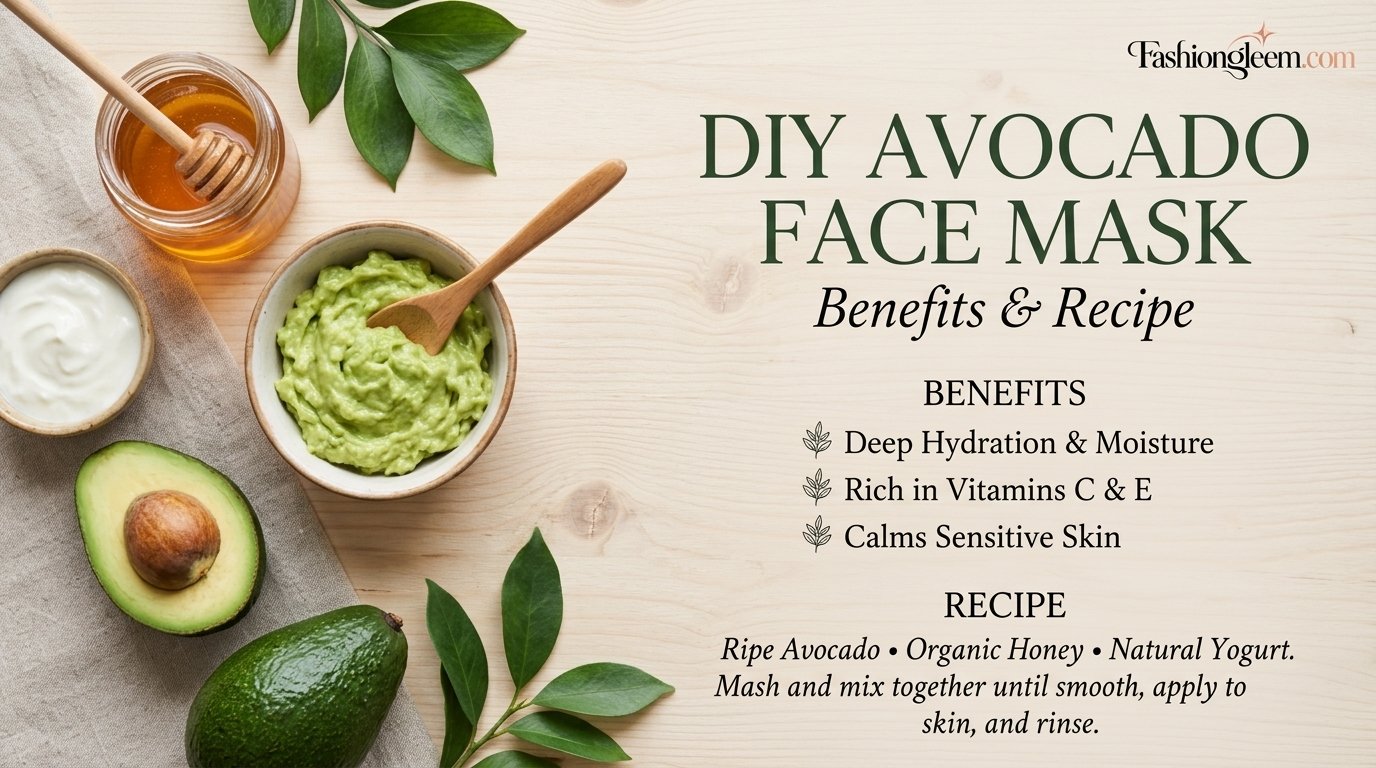
Mashed avocado gives a creamy, lipid rich base that can soften dry skin, while honey, yogurt, oats, clay, or aloe change the mask for a different skin need. General information only, not medical advice, applies throughout, because skin conditions, allergies, and reactions need individual care.
A face mask is a temporary treatment left on skin for minutes, then rinsed off, while daily moisturizer and sunscreen do the long term work. Avocado alone cannot replace acne treatment, eczema care, rosacea care, or sunscreen, and no mashed fruit mask should be presented as a cure.
Patch testing comes before any full face use, especially for sensitive skin, allergy prone skin, or skin already irritated by retinoids or exfoliants.
Dry skin suits avocado with honey and yogurt, oily skin suits a short clay version without extra oil, and sensitive skin suits avocado with oats and aloe.
Most DIY masks stay on for 10 to 20 minutes, once or twice a week, and fresh mixtures should be made for one use only. Store bought avocado masks suit people who want a preserved formula, a stable texture, and a labelled ingredient list instead of fresh fruit.
Quick Match by Skin Type
Dry skin usually wants plain avocado, honey, or a small amount of oil. Rich texture helps skin feel soft, but it does not add water by itself.
Oily skin usually wants a thinner layer, clay, or cucumber. Keep the layer light, rinse on time, and avoid heavy oil on congested areas.
Combination skin often needs zone masking for the best result. Use a richer mix on cheeks, and a lighter mix on the forehead, nose, and chin.
Sensitive skin needs the simplest recipe first. Plain avocado, oat, or aloe gives fewer variables, so a reaction is easier to trace.
Acne prone skin needs caution with rich oils and new actives. A clay or cucumber mix is often safer than a heavy oil mix.
Skin type can change with season, hormones, medication, and climate. Reassess the match when skin feels tight, shiny, or reactive in a new season.
What Avocado Actually Does for Skin
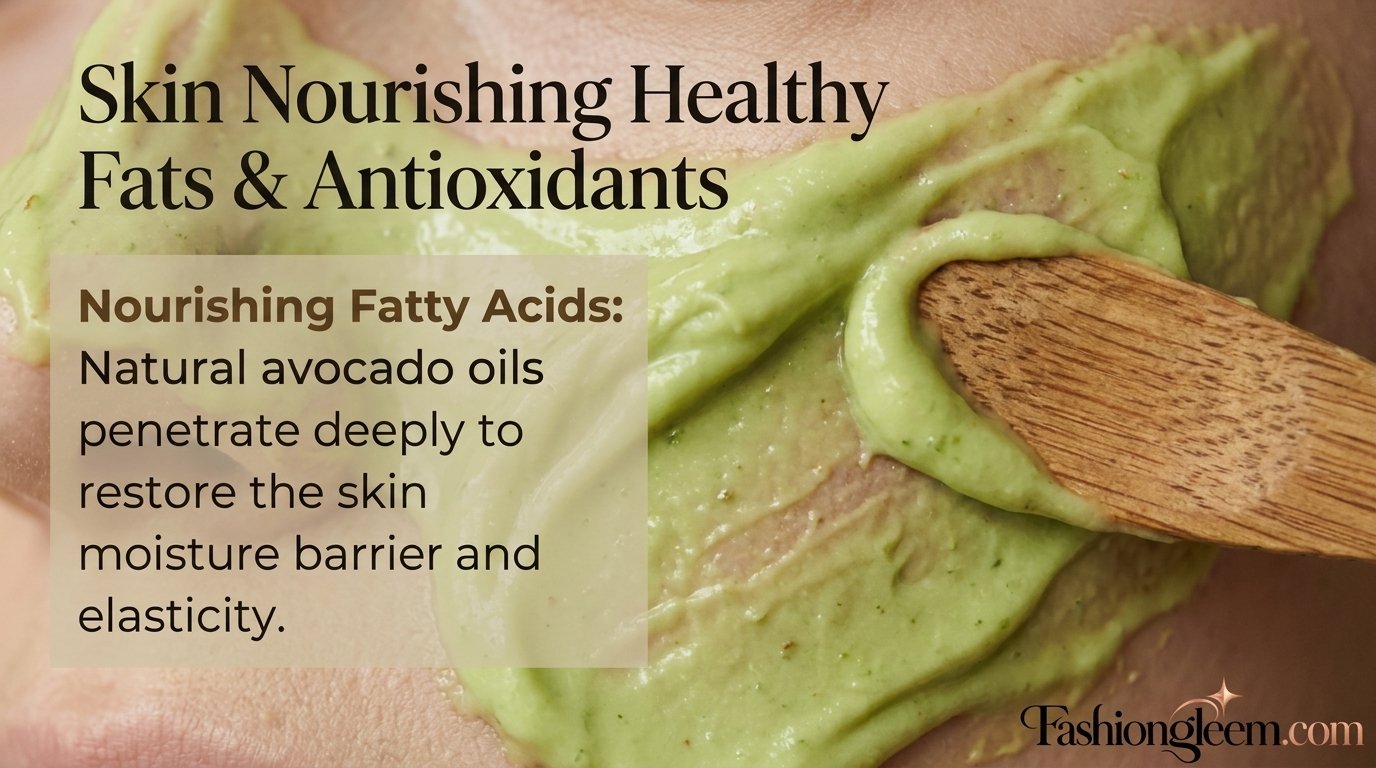
Avocado pulp contains oleic acid, a monounsaturated fat that feels rich and emollient. It helps skin feel smooth by softening the surface, not by sealing it shut.
Avocado also contains vitamin E, vitamin C, potassium, and lutein. These nutrients support general skin health, but a mask is not a proven treatment.
Hydration from a mask is mainly a surface effect. Water based moisture still matters, especially for dehydrated skin that looks dull but feels oily.
Avocado does not replace sunscreen, and it has no labelled SPF. Claims about natural sun protection should not be used as sun advice.
Collagen claims for avocado masks are not proven outcomes. A mask may improve softness and texture, but it does not rebuild collagen in a measurable way.
Honey scar fading claims are also competitor claims, not proven mask outcomes. Treat honey as a humectant and texture aid, not a scar eraser.
Forms of Avocado in Skincare
Fresh avocado is the most direct DIY form. It is soft, perishable, and best used at once, with no preservative system.
Avocado oil is pressed from the fruit and feels lighter than pulp. It works well as a small addition, but rich oil can feel heavy on oily skin.
Avocado butter is thicker and more occlusive than oil. It suits very dry skin, yet it can feel too heavy for congested skin.
Avocado extract appears in formulated products at controlled levels. It is not the same as fresh pulp, and label claims still need checking.
Fresh pulp varies by ripeness, variety, and storage. Formulated products vary less, but they add preservatives, fragrance, and other actives.
How to Pick a Ripe Avocado
A ripe avocado yields to gentle pressure without feeling mushy. Hard fruit will not mash smoothly, and overripe fruit can smell off.
The stem test helps as a second check. Green under the stem often means ripe, while brown under the stem often means overripe.
Cut the avocado just before use for the freshest texture. Air turns exposed pulp brown quickly, and brown pulp looks less appealing.
Use about half an avocado for one face mask. A whole avocado is usually too much, and leftover pulp should not be saved for later.
Wash hands, wash the fruit surface, and use a clean bowl and spoon. Clean tools reduce contamination in a preservative free mix.
Preparation Rules That Protect Skin
Mash avocado until it is smooth and lump free. Lumps can drag on skin, leave patches, and make removal harder.
Mix other ingredients in small amounts first. A small change is easier to test than a large, complex recipe.
Keep fresh masks single use and discard leftovers. Fresh food masks have no preservative, so storage does not make them safe.
Do not add lemon juice, lime juice, or undiluted vinegar to a mask. Acidity can irritate skin, and citrus plus sun can cause a painful reaction.
Poison Control summaries describe phytophotodermatitis after citrus plus sun exposure. Redness may appear within about a day, with dark patches lasting weeks or months.
Dry Skin Recipes
1. Simple Avocado Mask
Simple avocado suits dry skin that wants softness without extra actives. It is the best first test for avocado tolerance.
Ingredients: half a ripe avocado, mashed smooth. No other ingredient is needed for a first use.
Apply a thin, even layer to clean skin, avoiding eyes and lips. Leave it on for 10 to 15 minutes, then rinse with lukewarm water.
Pat dry gently, then apply a water based moisturiser. Avocado oil alone does not replace water based hydration for dehydrated skin.
2. Avocado and Honey Mask
Honey adds humectant feel and a smoother texture for dry skin. It also helps the mask stay in place during wear.
Ingredients: half a ripe avocado and 1 tablespoon honey. Mash until smooth, with no large lumps.
Apply evenly, leave on for 15 to 20 minutes, and rinse well. Honey residue can feel sticky, so rinse twice if needed.
Patch test honey separately if you have a bee allergy history. Stop at once for itching, redness, or swelling.
3. Avocado, Honey, and Yogurt Mask
Plain yogurt adds a creamy texture and a cooling feel for dry skin. Use plain, unsweetened yogurt only, with no added fragrance.
Ingredients: half a ripe avocado, 1 tablespoon honey, and 1 tablespoon plain yogurt. Mix until smooth and even.
Apply for 15 minutes, then rinse with lukewarm water. Follow with moisturiser while skin is still slightly damp.
Skip yogurt if you have a dairy allergy or dairy sensitivity. A dairy reaction can look like irritation, so test separately first.
4. Avocado and Olive Oil Mask
Olive oil adds richness for very dry skin, but a small amount goes far. Too much oil can feel greasy and hard to rinse.
Ingredients: half a ripe avocado and 1 tablespoon olive oil. Some recipes use 2 tablespoons, but 1 tablespoon suits one face better.
Apply a thin layer for 15 minutes, then rinse with a gentle cleanser. Plain water may leave an oily film behind.
Use this mask once a week at most for dry skin. More frequent rich masks can clog pores or trigger breakouts.
Oily and Acne Prone Skin Recipes
5. Avocado and Clay Mask
Clay helps absorb surface oil and gives a lighter finish for oily skin. Bentonite or kaolin clay both work, but kaolin is usually gentler.
Ingredients: half a ripe avocado and 1 tablespoon clay. Add water drop by drop only if the mix feels too thick.
Apply for 10 to 15 minutes, and rinse before the clay feels fully dry and tight. Overdrying clay can irritate skin and worsen redness.
Do not add apple cider vinegar unless you already tolerate it well. Vinegar acidity can irritate acne prone skin and delay healing.
6. Avocado and Cucumber Mask
Cucumber adds watery freshness and a lighter texture for oily skin. It also helps the mask feel cool on warm skin.
Ingredients: half a ripe avocado, 2 tablespoons plain yogurt, 2 tablespoons honey, and one quarter cup cucumber. Blend cucumber first, then mix in avocado.
Apply for 15 minutes, then rinse with cool water. Cucumber pieces must be blended smooth, or they will slide off skin.
This mix is not an acne treatment, even when it feels refreshing. See a dermatologist for inflamed, cystic, or scarring acne.
7. Avocado and Egg White Mask
Egg white gives a temporary tightening feel for oily skin. It is not a pore shrinking treatment, despite the firm feeling.
Ingredients: half a ripe avocado and 1 egg white. Whisk the egg white lightly, then fold in mashed avocado.
Apply for 15 to 20 minutes, then rinse with lukewarm water. Egg residue must be rinsed fully, especially near hairline and jaw.
Skip egg white with an egg allergy, and never use raw egg on broken skin. Stop for redness, itching, or swelling.
Sensitive and Soothing Recipes
8. Avocado and Oat Mask
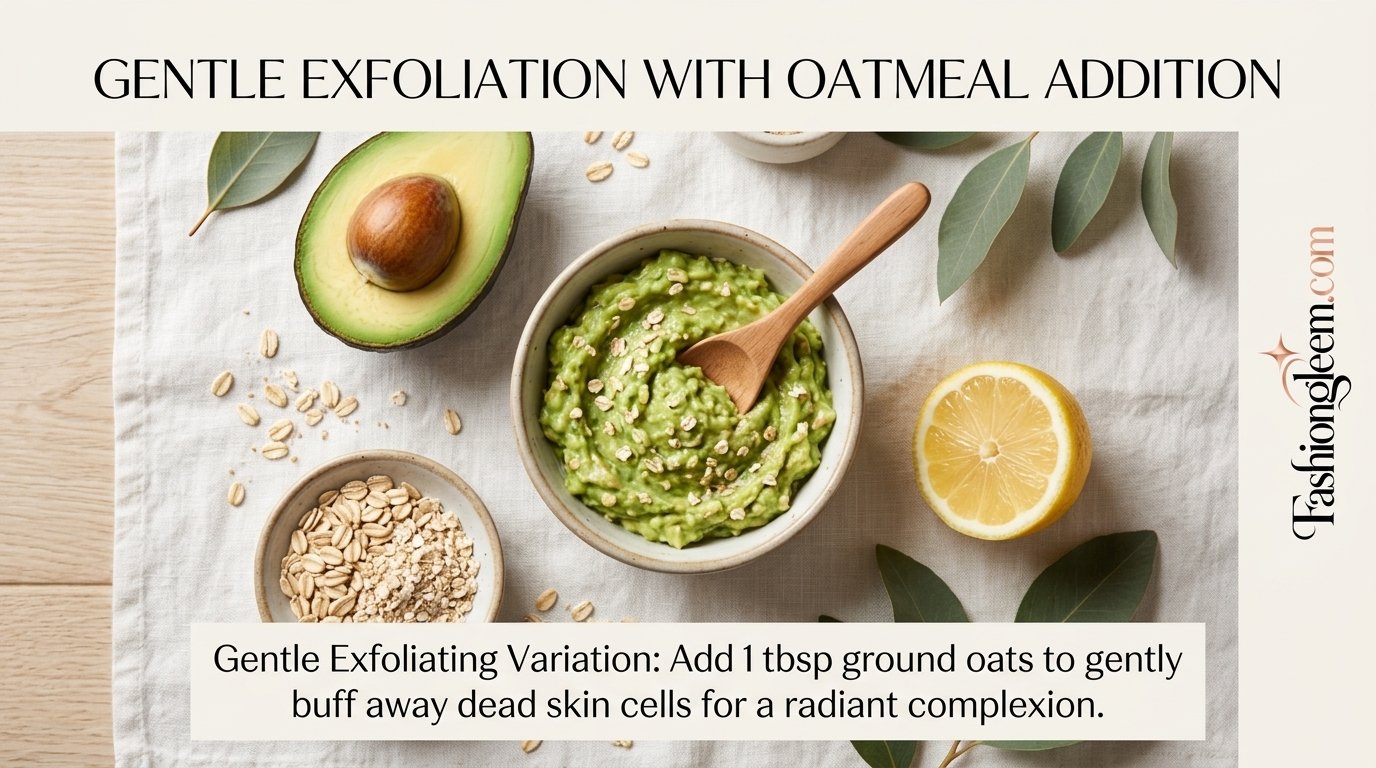
Finely ground oats give a gentle, soothing texture for sensitive skin. Coarse oats can scratch, so grind them very fine first.
Ingredients: half a ripe avocado and 1 tablespoon finely ground oats. Mix until the texture feels smooth, not gritty.
Apply for 15 minutes, then rinse with lukewarm water using soft circles. Avoid scrubbing, even if the mask feels dry at the edges.
Oat masks suit reactive skin best when no fragrance or essential oil is added. Keep the recipe plain for a first test.
9. Avocado, Aloe, and Vitamin E Mask
Aloe gel adds a light, cooling base for sensitive skin. Use plain aloe gel with no added fragrance or alcohol if possible.
Ingredients: half a ripe avocado and 1 tablespoon aloe gel. Vitamin E oil can be added only if already tolerated, in a very small amount.
Apply for 15 minutes, then rinse gently. Vitamin E is fat soluble, so frequent use can feel heavy and may clog pores.
Healthline style guidance warns that vitamin E can build up with frequent use. Limit vitamin E masks to once or twice a week at most.
10. Avocado and Banana Mask
Banana adds a soft, creamy texture for dry or normal skin. It also makes the mask easier to spread in a thin layer.
Ingredients: half a ripe avocado and half a banana. Mash both together until smooth, with no large chunks.
Apply for 15 minutes, then rinse with lukewarm water. Banana residue can feel sticky, so rinse the hairline well.
Skip banana with a banana allergy or latex fruit syndrome history. Avocado cross reacts with latex, banana, kiwi, and chestnut in some people.
Brightening and Texture Recipes With Caution
11. Avocado and Cocoa Mask
Cocoa powder gives a rich texture and a pleasant scent for normal skin. It is not a proven brightening or anti ageing treatment.
Ingredients: half a ripe avocado, 1 tablespoon raw honey, and 2 tablespoons cocoa powder, scaled down for one face. Some recipes use a whole avocado, but half is enough.
Apply for 15 minutes, then rinse well. Cocoa can stain towels, so use a dark towel and rinse the sink after use.
Do not expect collagen or firming results from cocoa. Softness and a smoother feel are realistic, short term outcomes.
12. Avocado and Turmeric Mask
Turmeric must be used in a pinch only, with strong caution. It stains skin, nails, towels, and clothing very easily.
Ingredients: half a ripe avocado and a pinch of turmeric. Do not use a full spoon, and never use it before an event.
Apply for 10 minutes only, then rinse very well. Yellow tint may remain, especially on fair skin or around nails.
Turmeric is not a safe brightening shortcut for sensitive skin. Stop for stinging, redness, or uneven colour, and seek care for a lasting stain reaction.
How to Apply a Mask Step by Step
- Cleanse first with a gentle cleanser and lukewarm water. Clean skin helps the mask spread evenly and rinse cleanly.
- Patch test before a full face use, even for a simple recipe. A small test saves a full face reaction.
- Tie hair back and protect the hairline with a headband. Avocado can stick to baby hairs and feel hard to remove.
- Apply thinly with clean fingers or a flat brush. A thick layer does not work better, and it drips more.
- Avoid eyes, lips, nostrils, and broken skin. Keep at least a small margin around eyes and mouth.
- Relax and wait for the recommended time, without talking or eating. Movement can crack clay and shift the mask.
- Rinse gently with lukewarm water, using soft circles. Avoid hot water, harsh cloths, and strong scrubbing.
- Pat dry with a clean towel, then moisturise promptly. Moisturiser helps lock in the soft feeling after rinsing.
Timing and Frequency
Leave most fresh masks on for 10 to 20 minutes. Clay masks should rinse at 10 to 15 minutes, before they feel fully dry.
Longer wear does not mean better results for fresh food masks. Extended wear can dry skin, increase irritation, and make removal harder.
Use a fresh avocado mask once or twice a week in most routines. Gentle recipes may suit up to 3 times a week, but only if skin stays calm.
Fresh food masks must never be slept in overnight. Only a formulated overnight mask is designed for overnight wear, with preservatives and testing.
Stop the routine for peeling, burning, or new breakouts after a mask. Skin needs rest, not another new ingredient, after a reaction.
Ingredient Partners and Risks
| Partner | Best for | Main risk |
| Honey | Dry skin, texture | Bee allergy, stickiness |
| Plain yogurt | Dry skin, creaminess | Dairy allergy |
| Olive oil | Very dry skin | Heaviness, clogged pores |
| Clay | Oily skin | Overdrying if left too long |
| Cucumber | Oily skin, freshness | Sliding off if not blended |
| Oats | Sensitive skin | Grittiness if coarse |
| Aloe gel | Sensitive skin | Fragrance in some gels |
| Egg white | Oily skin, tightening feel | Egg allergy, raw egg risk |
| Banana | Dry skin, spreadability | Latex fruit cross reaction |
| Cocoa | Normal skin, texture | Staining, no proven firming |
| Turmeric | Experienced users only | Strong staining, irritation |
| Vitamin E | Dry skin, small amounts | Build up, clogged pores |
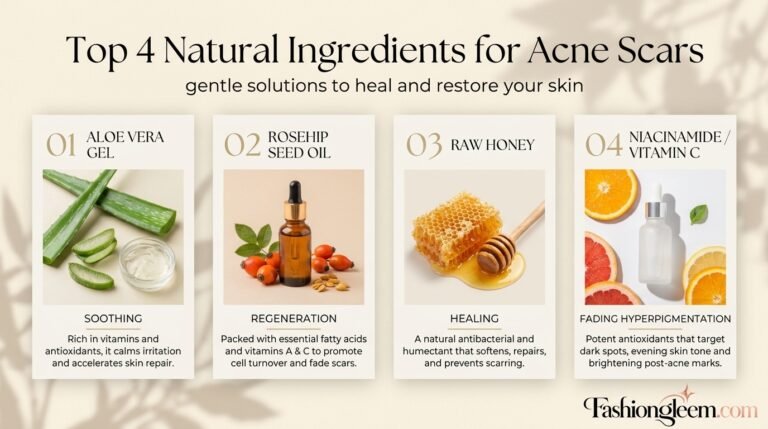
Honey helps texture, but it does not fade scars on its own. Scar fading needs time, sun protection, and often dermatologist care.
Clay helps surface oil, but it does not shrink pores permanently. Pore size is largely genetic, and texture can improve with consistent care.
Olive oil suits dry skin, yet it can feel heavy for acne prone skin. Use less oil, rinse well, and watch for new breakouts.
Essential oils should not be added casually to a fresh mask. Undiluted oils can burn, and even diluted oils can trigger allergy.
Patch Test Protocol
- Test one new ingredient at a time when possible. Testing a full recipe first makes the cause hard to find.
- Apply a small amount to the jawline or behind the ear. These areas show reaction without affecting the full face.
- Wait 24 hours and check for redness, itching, bumps, or swelling. A delayed reaction can appear after the first few hours.
- Repeat oil tests daily for several days when testing a new oil. Some oil reactions build slowly, not at once.
- Do not use the ingredient on the full face after any reaction. A mild tingle is not the same as a safe result.
- Wash off at once for burning, swelling, or spreading redness. Seek urgent care for lip or eye swelling, blistering, or breathing difficulty.
- Record the result in simple notes, with the ingredient and date. Notes help you avoid repeating a failed test later.
Patch testing does not guarantee safety for every use. Skin can react later, especially after sun exposure, illness, or a new medication.
Ingredients to Skip
Lemon juice and lime juice are the highest risk common add-ins. They can irritate skin and, with sun, cause phytophotodermatitis.
Apple cider vinegar is acidic and can sting, especially on acne or broken skin. Dilution does not make it safe for every person.
Baking soda is alkaline and harsh for the skin barrier. Cleveland Clinic and American Academy of Dermatology summaries flag harsh scrubs and strong pH shifts as irritants.
Harsh scrubs with coarse salt, sugar, or nut shells can create microtears. Gentle rinsing beats aggressive scrubbing for most skin.
Undiluted essential oils can burn and trigger allergy, even when labelled natural. Tea tree oil needs dilution and prior tolerance, never undiluted use.
Expired or stored pulp should never be used for a face mask. Browning, sour smell, or slime means discard it at once.
DIY Versus Store Bought Masks
DIY masks give full control over ingredients and freshness. They also lack preservatives, stability testing, and a fixed formula.
Store bought masks give consistent texture, preservatives, and labelled directions. They may add fragrance, which can irritate sensitive skin.
Origins Drink Up Intensive Overnight Hydrating Mask with Avocado and Hyaluronic Acid is a documented US anchor. It was listed at $36 on the Origins US site and $39 at Sephora US for 2.5 oz, or 75 mL, in checks on 2026-10-25.
Origins lists 72 hour hydration as a brand claim, not an independent test result. Use it twice a week or as needed, per Origins directions, not overnight unless labelled for overnight use.
AOS Skincare Honey Avocado Rescue Mask was listed at $68 for 60 mL, with a $22 travel mini for 15 mL, in checks on 2026-10-25. Its product page rating of 4.89 out of 5 from 28 reviews is a product page claim.
Glow Recipe avocado items in Sephora listings are a serum and a cleanser, not a rinse off mask. Kiehl’s avocado item is an eye cream, not a face mask.
Do not use non US prices as US prices for comparison. Freeman Pakistan prices in rupees, MECCA Australia and New Zealand prices, and India sheet mask prices are not US prices.
Consumer ranking scores from low authority sites should not be treated as tested data. Product identity, test method, and sample size are often unclear in those lists.
Routine Placement, Seasons, and Travel
Use a mask after cleansing, before serum and moisturiser. A mask is a treatment step, not a cleanser or a final seal.

Apply serum after rinsing, while skin is slightly damp. Follow with moisturiser, and use sunscreen in the morning after any mask routine.
In winter, choose richer mixes for dry skin and shorter clay wear. Cold air and indoor heat can make skin feel tighter after a mask.
In summer, choose lighter mixes and rinse on time. Heat, sweat, and sun make skin more reactive, especially after citrus or strong actives.
For travel, choose a formulated mask over fresh pulp. Fresh avocado is hard to store, hard to mash, and unsafe after a day without refrigeration.
After flights, a gentle hydrating mask can help skin feel less tight. Avoid a new strong recipe on a travel day, when skin is already stressed.
Post Procedure and Flare Cautions
Do not use a fresh avocado mask after a chemical peel, laser treatment, or microneedling unless a clinician approves it. Healing skin needs simple, approved care only.
Avoid new masks during an eczema flare, rosacea flare, or dermatitis flare. A flare is not the time to test a new food ingredient on skin.
Stop all new masks for open wounds, cold sores, or active infection. Food masks can introduce bacteria and delay healing in broken skin.
See a dermatologist for persistent acne, deep scars, raised scars, or keloids. Natural masks do not treat these conditions, and delay can worsen scarring.
Seek urgent care for swelling of lips or eyes, blistering, spreading rash, or breathing difficulty. These signs need prompt medical attention, not another home remedy.
Hygiene, Storage, and Drain Care
Use clean hands, a clean bowl, and a clean spoon for every mask. Dirty tools can add bacteria to a preservative free mix.
Discard leftover fresh mask at once, even if it looks fine. Competitor fridge claims conflict, with 24 hours as an outer limit in some pages and never store in others.
Fresh each time is the safest rule for DIY masks. A small batch, made just before use, avoids storage risk entirely.
Rinse avocado residue from the sink and drain after use. Thick pulp can stick to pipes, especially with clay or oat mixes.

Wipe counters and towels promptly after a cocoa or turmeric mask. Stains set quickly, and turmeric can stain skin and nails too.
Mistakes to Avoid
- Using lemon as a brightener, despite acidity and sun risk. Lemon can irritate and cause dark patches after sun exposure.
- Sleeping in a fresh food mask, which is not designed for overnight wear. Only formulated overnight masks suit overnight use.
- Saving leftovers in the fridge for days, with no preservative protection. Fresh pulp spoils, even when it still looks green.
- Adding many new ingredients at once, so a reaction cannot be traced. Test one change at a time for clearer results.
- Scrubbing hard during removal, which can irritate skin and worsen redness. Gentle circles and lukewarm water work better.
- Skipping sunscreen after a mask, on the idea that avocado protects skin. Avocado has no labelled SPF and does not replace sunscreen.
- Using a thick layer for a stronger effect, which drips and wastes product. A thin, even layer gives better coverage and rinsing.
- Leaving clay until fully dry, which can tighten and irritate skin. Rinse clay at 10 to 15 minutes, before it feels hard.
- Copying a viral recipe without a patch test, especially with citrus or vinegar. Viral popularity does not prove safety for your skin.
- Treating scars or acne with a mask alone, instead of seeking care. Deep, raised, or scarring acne needs dermatologist input.
Tips That Make Masks Work Better
- Start plain with simple avocado for a first test. Plain avocado gives a clear baseline before adding honey or oil.
- Use ripe fruit for a smooth, lump free texture. Hard fruit drags on skin and leaves uneven patches.
- Apply thinly for even coverage and easy rinsing. Thin layers also reduce dripping onto clothes and towels.
- Set a timer for 10 to 20 minutes, based on the recipe. A timer prevents accidental over wear, especially with clay.
- Rinse with lukewarm water and pat dry gently. Hot water can dry skin further after a mask.
- Moisturise promptly after rinsing, while skin is slightly damp. Damp skin helps moisturiser feel more comfortable.
- Keep a simple log of recipes, dates, and skin response. A log helps you repeat what works and avoid what fails.
- Use a dark towel for cocoa or turmeric masks. Dark towels hide stains and reduce laundry stress.
- Clean tools at once after mixing and rinsing. Clean tools protect the next mask from bacteria and residue.
- Pause after a reaction and return to basic cleansing only. Rest helps skin recover faster than another new product.
Troubleshooting
Mask feels too thick: Add a few drops of water or aloe, and spread thinner. Thick pulp often means too much avocado or too little mixing.
Mask slides off: Blend cucumber or banana fully, and apply a thinner layer. Wet skin can also make a mask slide, so pat skin lightly first.
Skin feels tight after rinsing: Use a richer recipe next time, rinse sooner, and moisturise promptly. Tightness can mean over wear or too much clay.
New breakouts after a mask: Stop the recipe, return to basic care, and check for heavy oil or fragrance. Breakouts after rich masks are common in oily skin.
Redness after a mask: Rinse fully, avoid new products, and use cool water. Seek care for spreading redness, swelling, or blistering.
Yellow tint after turmeric: Rinse again gently, and avoid turmeric before events. Tint fades with time, but strong staining needs patience.
Mask smells off: Discard it at once, even if the avocado looked fine. Off smell means spoilage, and spoiled pulp should never touch skin.
Cost and Value
No fixed US grocery price for avocado was verified for a per mask cost. Avocado prices vary by store, season, and region in the US.

Using half an avocado per mask keeps DIY cost low in most cases. Honey, yogurt, oats, and clay add only a small amount per use.
Formulated masks cost more per use, but they offer consistency and storage. Origins at $36 and AOS at $68 are product prices, not per use costs.
Value depends on skin response, not price alone. A cheap mask that irritates skin has no value, while a simple plain mask can work well.
Do not buy a large set before a patch test. Test one recipe first, then buy more only if skin stays calm.
FAQs about Avocado Face Mask
Can I use an avocado face mask every day?
Daily use is usually too much for fresh masks. Once or twice a week suits most skin, with gentle recipes only if skin stays calm.
Is avocado good for dry skin?
Avocado suits dry skin well for softness and richness. Pair it with a water based moisturiser, since oil alone does not add water.
Is avocado good for oily skin?
Avocado can suit oily skin in a light, thin layer. Use clay or cucumber, avoid heavy oil, and rinse on time.
Does avocado help acne?
Avocado does not treat acne, and rich oil can worsen breakouts. Use light mixes only, and see a dermatologist for inflamed acne.
Can avocado fade acne scars?
Honey and avocado do not fade scars on their own. Scar care needs sun protection, time, and often dermatologist treatment.
Is avocado safe for sensitive skin?
Plain avocado is a good first test for sensitive skin. Patch test first, keep the recipe simple, and avoid fragrance and essential oils.
Should I patch test an avocado mask?
Patch testing is essential before a full face use. Test on the jawline or behind the ear, and recheck after 24 hours.
How long should I leave an avocado mask on?
Leave most masks on for 10 to 20 minutes. Clay masks should rinse at 10 to 15 minutes, before they feel fully dry.
Can I sleep in an avocado mask?
Fresh masks must never be slept in overnight. Only a formulated overnight mask is designed for overnight wear.
Can I store leftover avocado mask?
Discard leftovers at once, since fresh masks have no preservative. Fresh each time is the safest rule for DIY masks.
Is lemon safe in an avocado mask?
Lemon juice is not safe as a brightener in a mask. Acidity can irritate, and citrus plus sun can cause dark patches.
Is apple cider vinegar safe in a mask?
Apple cider vinegar can sting and irritate, especially on acne or broken skin. Skip it unless you already tolerate it well.
Does avocado replace sunscreen?
Avocado does not replace sunscreen and has no labelled SPF. Use sunscreen in the morning, even after a hydrating mask.
What does non-comedogenic mean for avocado oil?
Non-comedogenic does not reliably predict your response. Rich oil may still feel heavy or congesting for some people.
Can I use avocado oil instead of fresh avocado?
Avocado oil works as a lighter addition for dry skin. It is not the same as fresh pulp, and it can feel heavy on oily skin.
Is turmeric safe in an avocado mask?
Turmeric stains strongly and can irritate sensitive skin. Use a pinch only, never before an event, and stop for redness.
Can I use avocado after a peel or laser treatment?
Fresh masks should not be used after a peel or laser unless a clinician approves. Healing skin needs simple, approved care only.
What if I have a latex allergy?
Avocado cross reacts with latex, banana, kiwi, and chestnut in some people. Patch test carefully, and seek care for swelling or breathing difficulty.
Is Origins Drink Up a good store bought option?
Origins Drink Up is a documented US option with avocado and hyaluronic acid. It was $36 on Origins US and $39 at Sephora US for 2.5 oz in 2026-10-25 checks.
Is AOS Honey Avocado Rescue Mask worth trying?
AOS Honey Avocado suits readers who want a formulated honey and avocado mask. It was $68 for 60 mL, with a $22 travel mini, in 2026-10-25 checks.
Can men use an avocado face mask?
Avocado masks suit any gender, with the same skin type rules. Choose by skin type, beard area, and sensitivity, not by gender labels.
Does avocado help with wrinkles?
Avocado masks may improve softness and texture, but they do not prove wrinkle or collagen results. Consistent sun protection matters more for ageing skin.
Can I use avocado on my neck or chest?
Avocado masks can be used on neck or chest with a patch test. Avoid broken skin, and rinse well to prevent residue on clothing.
What should I do after a bad reaction?
Rinse fully, stop new products, and use cool water and basic care. Seek care for swelling, blistering, spreading rash, or breathing difficulty.
Conclusion on Avocado Face Mask
Avocado face mask routines work best when they stay simple, tested, and skin type matched. Plain avocado first, a patch test next, and a short wear time give the clearest result.
Choose a light mix for oily skin, a richer mix for dry skin, and the simplest mix for sensitive skin. Skip lemon, vinegar, and undiluted oils, and never sleep in a fresh mask.
Start with plain avocado this week, or compare a formulated option at a verified retailer price if you prefer consistency. Keep the routine gentle, watch skin response, and adjust only one variable at a time.






One Comment