
Affordable Boho Style: Real Price Caps, a Priced Starter Wardrobe and the Thrift-First Order
Affordable boho style means two different searches wearing one name: flowing outfits on a budget, and layered, collected rooms on a budget. No ranking page admits the split, so this page serves the outfit searcher in full and prices the look honestly.
On the fashion side, affordable is usually asserted, never priced. The leading fashion guide for the term prints no prices at all, so its readers cannot total a single outfit. A word that cannot be totaled is not yet a budget.
Here, every price keeps its source attached. Per-piece caps are printed as strands from named guides, and the starter wardrobe below is totaled from those cited bands. The total is arithmetic on published bands, checked in November 2026, not a retailer’s price.
The sourcing order does the heavy lifting. Thrift stores first, resale apps second, sale racks third and budget retailers last, because where you buy decides what a piece costs. The same order, run backward, is how cheap boho ends up looking cheap.
Room readers are covered too, briefly. One compact section near the end applies the same caps and the same thrift-first order to boho decor. Everything before it is the outfit system, piece by piece.
The Short Answer: What Affordable Boho Style Means
The short answer has two halves. Boho style is flowy shapes, natural fabrics, warm earthy tones and layered pieces that look collected rather than matched. Affordable boho style adds a discipline: a per-piece ceiling you respect and a sourcing order you follow.
Neither half works alone. A flowy dress in a shiny synthetic reads as a costume piece, while a strict budget with no style rules buys plain clothes. The look and the discipline have to arrive together.
- A ceiling per piece. The field’s working cap sits at or under $50 a piece, and dresses carry their own lower bands.
- Thrift first, always. Secondhand natural fibers beat new synthetics on both price and drape.
- One or two signals per outfit. A kimono over denim reads boho, while five signals at once read costume.
What Boho Style Is, in the Sources’ Own Words
The fullest definition comes from a wardrobe guide. Inside the Bargain Sisters bohemian outfits guide, boho means flowy shapes, natural fabrics and earthy tones to layer and mix. Loose silhouettes, soft prints, fringe or crochet details and layered jewelry do the work, with nothing stiff or structured.
The palette is part of the definition. Cream, rust, ochre and olive anchor it, with soft floral prints supplying the pattern. Hold that palette and pieces bought years apart still combine, which is where the budget quietly wins.
A second guide defines boho by piece type instead. The finds in the GigisUnfiltered under $50 boho finds run on an embroidered blouse, a flowy printed kimono, wide-leg pants and a statement necklace. A crochet or open-knit cardigan and a maxi or midi dress complete the set.
The fabric layer comes from a Canadian guide. Thalira’s guide to affordable boho clothing in Canada puts cotton, linen, silk, wool and their blends at the foundation. Its market and retailers are Canadian, so only its fabric and capsule logic is used here, never its prices.
That guide adds the test that separates real boho. Rayon and viscose count as a semi-synthetic stand-in that approximates natural drape, and they carry most accessible boho clothing. Handcraft elements, though, are what distinguish genuine boho from generic flowing silhouettes.
What Affordable Means: The Caps, Source by Source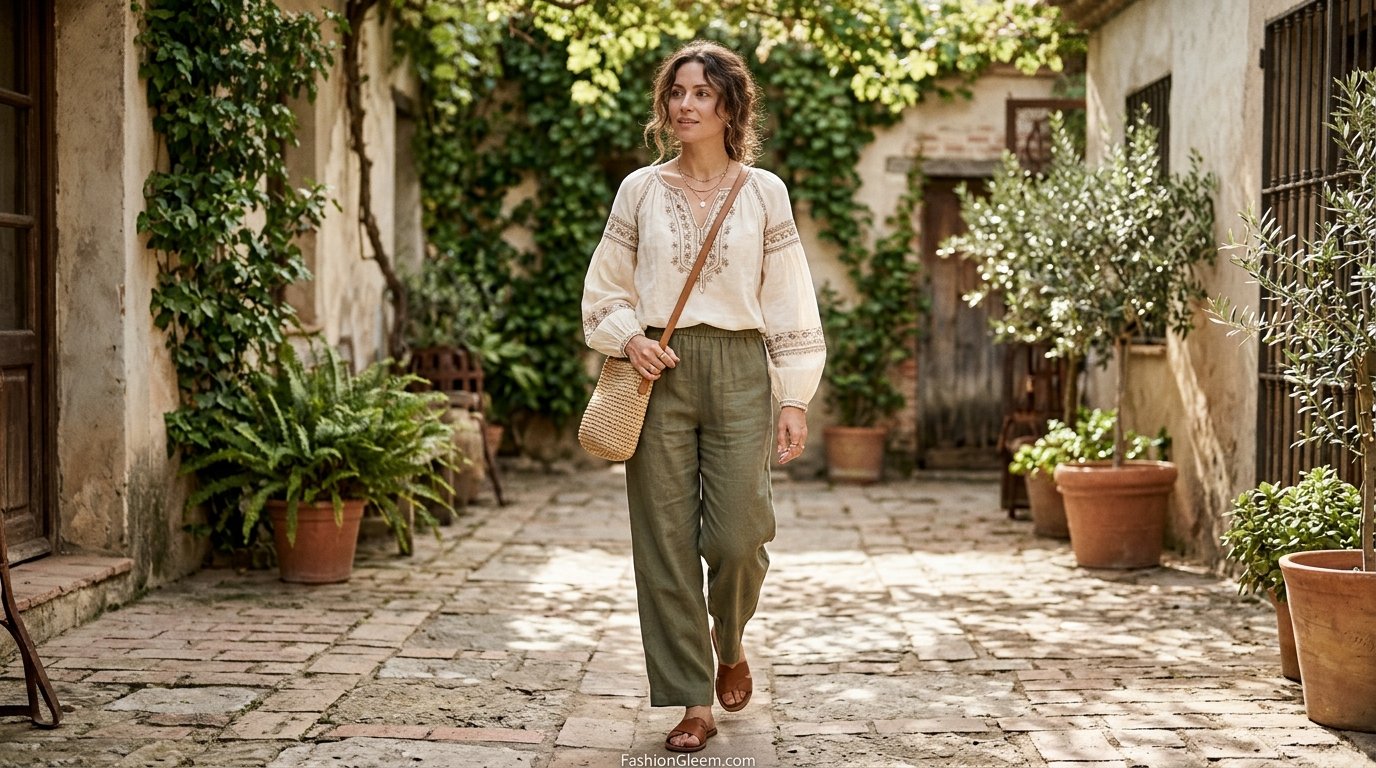
Affordable has no single meaning in this field. Each publisher draws the line somewhere different, and one leading guide never draws it in dollars at all. The table keeps every definition attached to its source, because blending them would invent a consensus nobody published.
|
Source |
Their ceiling or rule |
What it covers |
|---|---|---|
|
The Bargain Sisters |
No prices printed anywhere |
Affordable means a few mix-and-match pieces instead of full outfits |
|
GigisUnfiltered |
Under $50 for every piece |
Amazon finds aimed at women over 60, with a warning that prices change |
|
Have Clothes Will Travel |
A site counts as affordable when most clothing sits around $50 or less |
A roundup of boho retailers, with a dress expected under $50 |
|
Fashibly |
Every dress verified under $50 in October 2026 |
Amazon dress bands by style, from about $20 to $45 |
|
The working consensus |
At or under $50 per piece |
The ceiling the priced sections below are built on |
The dress bands are the clearest numbers in the field. In the Fashibly Amazon dresses under $50 list, a smocked bodice maxi runs $30 to $40 and a tea-length midi $35 to $45. A sleeveless maxi sits at $25 to $35, and a babydoll $20 to $30.
A roundup draws the line at shop level. The test inside the Have Clothes Will Travel boho clothing roundup is whether most clothing on a site sits at $50 or less. By that test a dress costs under $50, making the roundup a filter, not just a list.
Read the caps as a ladder, not a law. Fifty dollars is the outer fence for a new piece, while thrifted and resale pieces should land far under it. The sections below price a starter wardrobe against these bands, then show how the sourcing order beats them.
The Building Blocks of a Boho Wardrobe
The wardrobe itself is a short, agreed list. Fashion guides on both sides of the budget debate name the same building blocks, because boho is a system of pieces rather than a stream of outfits. Buy the blocks in the right order and the outfits assemble themselves.
- A floral midi or maxi dress. The one-and-done piece that carries an outfit alone.
- Peasant, off-shoulder and eyelet tops. The soft tops that pair with every bottom.
- Wide-leg or palazzo pants. Linen when possible, for drape and heat.
- A flowy maxi skirt. The swish that makes plain basics read boho.
- A kimono. The cheapest layering signal in the wardrobe.
- A crochet or open-knit cardigan. Texture that reads handmade.
- A denim jacket. The grounding basic that stops the costume effect.
- Espadrilles or flat sandals. The footwear the palette expects.
- Layered jewelry. Beaded bracelets, a long statement necklace, statement earrings.
- A woven crossbody bag and a straw hat. The accessories that finish the set.
The dress does the most work per dollar. Boho chic framing in the Supabold boho chic outfit ideas treats the dress as the outfit’s center, with layers around it. One dress plus an owned layer is an outfit, which is why the starter wardrobe prices dresses first.
Basics are boho equipment too. The denim jacket, plain tees and simple sandals already in a closet are not fillers between boho pieces. They are the grounding half of every outfit, and they cost nothing because they are already owned.
The Priced Starter Wardrobe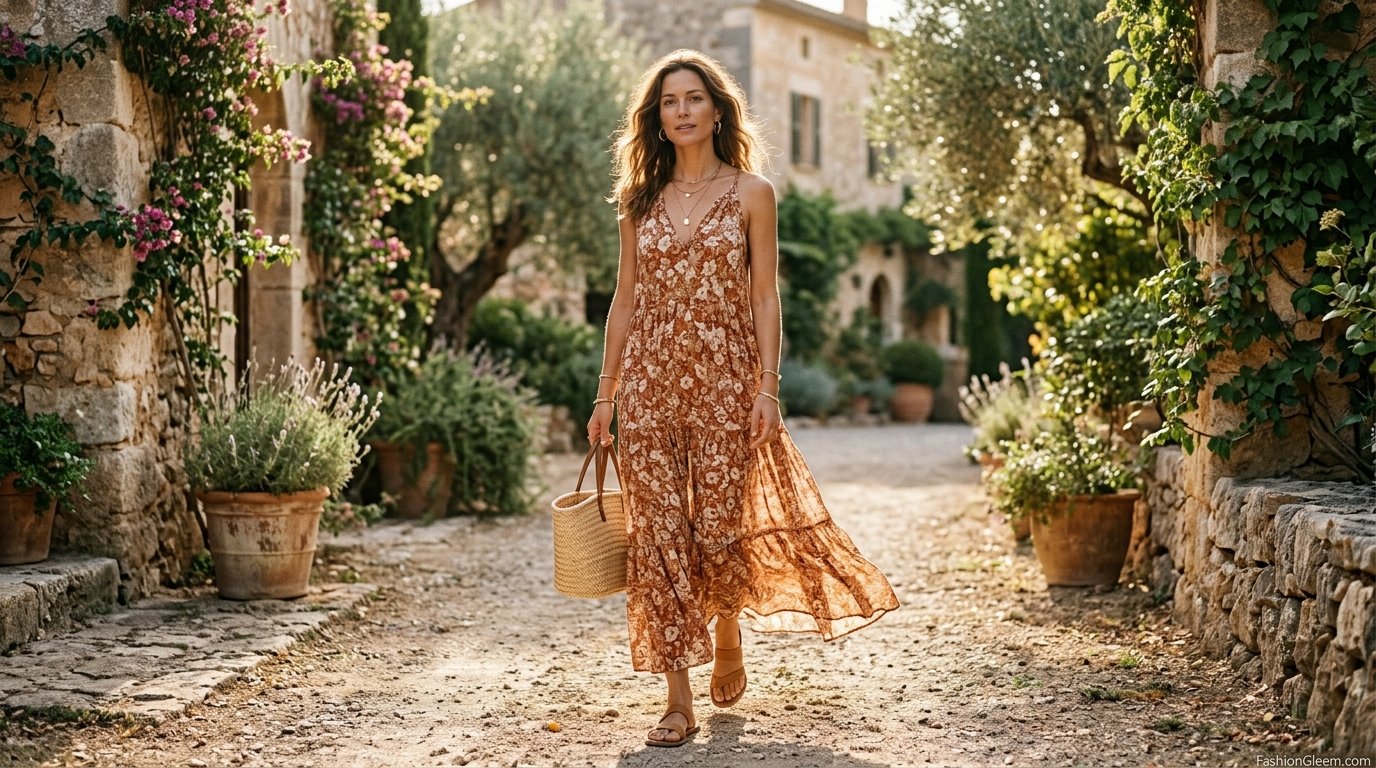
No fashion guide totals a starter wardrobe, so this one is built here. Each piece below is priced from a band a named source published, and the total is simple arithmetic on those bands. It was checked in November 2026 and it is not any retailer’s price.
|
Piece |
First place to look |
Price band and its source |
Why it earns its place |
|---|---|---|---|
|
Tea-length midi dress |
Resale apps, then Amazon |
$35 to $45, Fashibly band, October 2026 |
The one-and-done outfit piece |
|
Sleeveless maxi dress |
Thrift store, then Amazon |
$25 to $35, Fashibly band |
A summer base that layers under kimonos |
|
Babydoll dress or tunic |
Thrift store |
$20 to $30, Fashibly band |
Works over leggings, denim or bare legs |
|
Wide-leg linen pants |
Thrift store, then resale apps |
Under the $50 ceiling, GigisUnfiltered rule |
The bottom half of most outfits |
|
Crochet or open-knit cardigan |
Thrift store, then resale apps |
Under the $50 ceiling, GigisUnfiltered rule |
The layering piece that reads handmade |
|
Denim jacket |
Already owned, or thrifted |
$0 if owned, under $50 if thrifted |
The grounding basic that prevents costume |
|
The total |
Built in the order above |
About $80 to $110 for the three banded dresses, plus two pieces under the ceiling |
Arithmetic on the cited bands, checked November 2026 |
The total is a ceiling story, not a receipt. Bought new at band prices, the three dresses land between about $80 and $110 before the two ceiling pieces. Bought in the thrift-first order, the same wardrobe usually lands lower, because resale prices sit under new bands.
Spend the first money on the dress. It is the piece strangers see, the piece that carries the palette, and the piece the capsule math below multiplies. Pants and layers can arrive a month later without breaking a single outfit.
Three Capsule Versions, Three Logics
A capsule is how the starter wardrobe becomes a rotation. Three published versions exist, and they disagree about what matters most: color coordination, fiber quality or handcraft. The table keeps the three logics separate so you can pick the one that fits your closet.
|
Version |
The pieces |
The logic underneath |
|---|---|---|
|
The Bargain Sisters |
Two tops, two bottoms and one dress in one earthy color family |
Coordinate by color and the set becomes a week of outfits |
|
The Canadian guide |
Two or three thrifted midi dresses, two loose linen or cotton tops, wide-leg trousers, a denim jacket, one cardigan or kimono |
Thrift first, natural fibers, and pieces added slowly over time |
|
Stitched Creations |
One handmade crochet sweater or cardigan, two loose linen or organic cotton tops, one flowy midi skirt or dress, wide-leg pants, one macramé bag or belt |
Handmade and natural-fiber pieces instead of fast fashion |
The method is bigger than boho. The capsule idea behind all three sits in our capsule wardrobe guide, and our guide to creating a capsule wardrobe walks through building one from scratch. Boho is an easy first capsule: the palette is narrow and pieces layer by design.
Pick by what you already own. A closet full of denim suits the color-coordination version, while a thrift habit suits the Canadian version. A reader who sews or crochets gets the most from the handmade version, because its key piece can be made, not bought.
The Thrift-First Sourcing Order
Where you buy matters more than what you buy. The same linen dress costs boutique money new, resale money barely worn, and thrift money with patience. Run the stops in this order and each later stop only fills what the earlier ones missed.
- Thrift and vintage stores first. Boho silhouettes from past decades fill these rails, and natural fibers can be found by feel and by the tag.
- Resale apps second. Poshmark, ThredUp, Depop and Facebook Marketplace carry the same pieces with search filters, at prices above thrift but below new.
- Sale racks third. The reference brands, Free People, Anthropologie and Urban Outfitters, belong here only during sales, a rule the Canadian guide states plainly.
- Budget retailers fourth. New basics and gap-fillers come from the cheap new routes, used sparingly so the wardrobe stays collected rather than matched.
- Amazon boutique brands last. Convenient and fast, but every piece still has to pass the ceiling and the fabric check before it earns a place.
The cheap new routes come with a caution. The survey inside the Have Clothes Will Travel boho clothing roundup lists H&M and ASOS among its affordable new options. They fill gaps, but a wardrobe built only there is the matched, same-day look the diagnostic below warns against.
Hunt by fiber, not by label. Thrift rails rarely sort by style, so run a hand along the rail and stop at cotton, linen and real crochet. The tag check takes two seconds and filters out the shiny synthetics that read cheap at any price.
Fabric Honesty: What Cheap Boho Is Made Of
Fabric is where cheap boho is won or lost. The silhouette can be perfect and the price tiny, yet a shiny, heat-trapping fabric still reads cheap on the body. The table below is guidance built from the fiber strands the guides publish, not from wash-test data.
|
Fabric |
Boho use |
The cheap-version risk |
Wash and care note |
|---|---|---|---|
|
Cotton |
Tops, dresses, skirts |
Thin weaves can go sheer in sunlight |
Machine wash cold, and it holds up well over time |
|
Linen |
Wide-leg pants, loose tops |
Cheap blends feel scratchy and crease hard |
Wash cold, air dry, and expect it to soften with wear |
|
Rayon and viscose |
Flowing dresses and skirts |
Shrinks, wrinkles and weakens when wet |
Hand wash cold or use a gentle cycle, then dry flat |
|
Polyester |
Budget dresses and tops |
A shiny finish reads cheap and traps heat |
Easy to wash, but the heat problem is the real cost |
|
Crochet and cotton knit |
Cardigans, layering pieces |
Acrylic versions pill, stretch and sag |
Wash inside a bag and dry flat to hold the shape |
The heat warning comes from lived experience. The over-60 finds in the GigisUnfiltered under $50 boho finds carry a blunt caution about wearing 100 percent polyester through an Arizona summer. Matte fibers photograph and drape like the expensive versions, while shiny ones announce their price.
A single listing shows why price alone proves nothing. One SHEIN listing in the United States priced a boho lace dress at $27.99 in mid November 2026, inside every band on this page. Its own customer reviews carry quality complaints, which is the fabric check doing its job.
Cheap Versus Cheap-Looking: The Diagnostic
Cheap and cheap-looking are different problems. Cheap is a price, while cheap-looking is a set of signals that can be fixed one at a time. Most signals are free to fix, because they are about combination rather than spending.
The field’s one explicit rule targets costume. The questions under the Bargain Sisters bohemian outfits guide advise one or two boho elements at a time, a calm color palette, and simple basics like denim mixed in. Followed literally, that single rule prevents most cheap-looking outfits.
|
The signal |
Why it reads cheap |
The fix |
|---|---|---|
|
Every piece is boho at once |
Nothing grounds the look, so it reads as costume |
Keep one or two boho elements and rest on basics like denim |
|
Shiny synthetic fabric |
It catches light like plastic at any price |
Choose matte natural fibers or viscose with a soft drape |
|
Everything bought new in one day |
The set looks matched instead of collected |
Buy slowly and mix thrifted pieces with new ones |
|
Patterns layered with no shared palette |
The eye reads mess instead of ease |
Hold the earthy palette across every piece you add |
|
Fast-fashion crochet and lace |
Seams and yarn give out after a season |
Thrift real crochet and check seams before paying |
The collected feel is a timing rule. Boho is supposed to look gathered over years, so a wardrobe assembled in one weekend starts with a handicap. Spreading the same budget across a season of thrift trips produces the look the style is named for.
Cost-Per-Wear: The Math That Reprices Cheap
Cost-per-wear reprices every bargain. The definition used in the Stitched Creations fast fashion alternatives guide is plain arithmetic: the price of a garment divided by the number of times it is worn. A garment worn for years costs less per wear than a bargain replaced every season.
An example shows the flip. Take a $45 linen dress worn 30 times and its cost per wear is $1.50. A $19 dress worn four times costs $4.75 per wear, so the dearer dress is the cheaper clothing. The example is an illustrative calculation, not a sourced figure.
Use the math at the thrift rail. A sturdy linen dress at $18 that fits your palette will out-earn three flimsy tops at $6 each. Cost-per-wear turns the sourcing order into a ranking system for individual rails, not just stores.
Sustainable Boho Without the Price Shock
Sustainable boho exists at honest prices. The brand survey in the Almost Zero Waste sustainable boho brands guide lists Soul Flower at about $20 to $62 and Native Threads at $39 to $97. Tree of Life runs $30 to $130, past the field’s ceiling at the top.
Some sustainable names stretch the word affordable. The same survey lists Whimsy and Row at about $68 to $150 and above, and All The Wild Roses at about $49 to $120. Those are quality arguments, not budget ones, and they are printed here as the strands they are.
The expensive end explains what budget routes replace. Starting prices in the Stitched Creations fast fashion alternatives guide put Spell above $100, Doên above $150 and Arnhem above $80. Toad&Co starts around $50 and Hara the Label around $40, close to the ceiling the thrift order beats.
Boho After 60, Plus Sizes and the Gaps Nobody Fills
Women over 60 are the one audience the field serves directly. The collection at the GigisUnfiltered under $50 boho finds applies an under-$50 rule to Amazon finds for women over 60. Its standard is worth borrowing at any age: expensive-looking and expensive are not the same thing.
Plus-size boho on a budget has no ranking guide. That gap is stated plainly because pretending otherwise would invent coverage that does not exist. The transferable rules still apply in full: the same ceiling, fiber checks and thrift-first order, run through extended-size sections and resale filters.
Men’s boho on a budget is unserved too. No men’s page ranks for the term, so the same discipline is the honest answer there as well. Flowy shirts, wide-leg trousers and layered jewelry follow identical rules: matte natural fibers, one or two signals, thrift first.
Hair, Skin and the Finish
Hair follows the same relaxed logic. Boho outfits assume undone texture rather than polished styling, so loose layers carry the mood best. The shapes in our wolf cut guide and our butterfly haircut guide give that texture on straight and wavy hair.
Curls and edges have their own versions. The adaptation in our curly butterfly cut guide keeps the shape working on curl patterns without fighting them. Readers wanting a sharper finish get the same mood from our modern mullet guide or the crop in our baby mullet haircut guide.
Skin and color stay soft to match. A sheer, skin-like flush from our jelly blush guide suits the palette better than heavy contour, and the overnight prep in our retinol body lotion guide keeps the base calm. The finish should look like the clothes feel: unforced.
The ethos extends past the outfit. The slow, collected approach behind this wardrobe is the same one running through our healthy lifestyle tips and our self care routine guide. It also anchors our lifestyle tips for women, where small repeatable choices beat expensive overhauls every time.
If You Meant the Room: Boho Decor on the Same Rules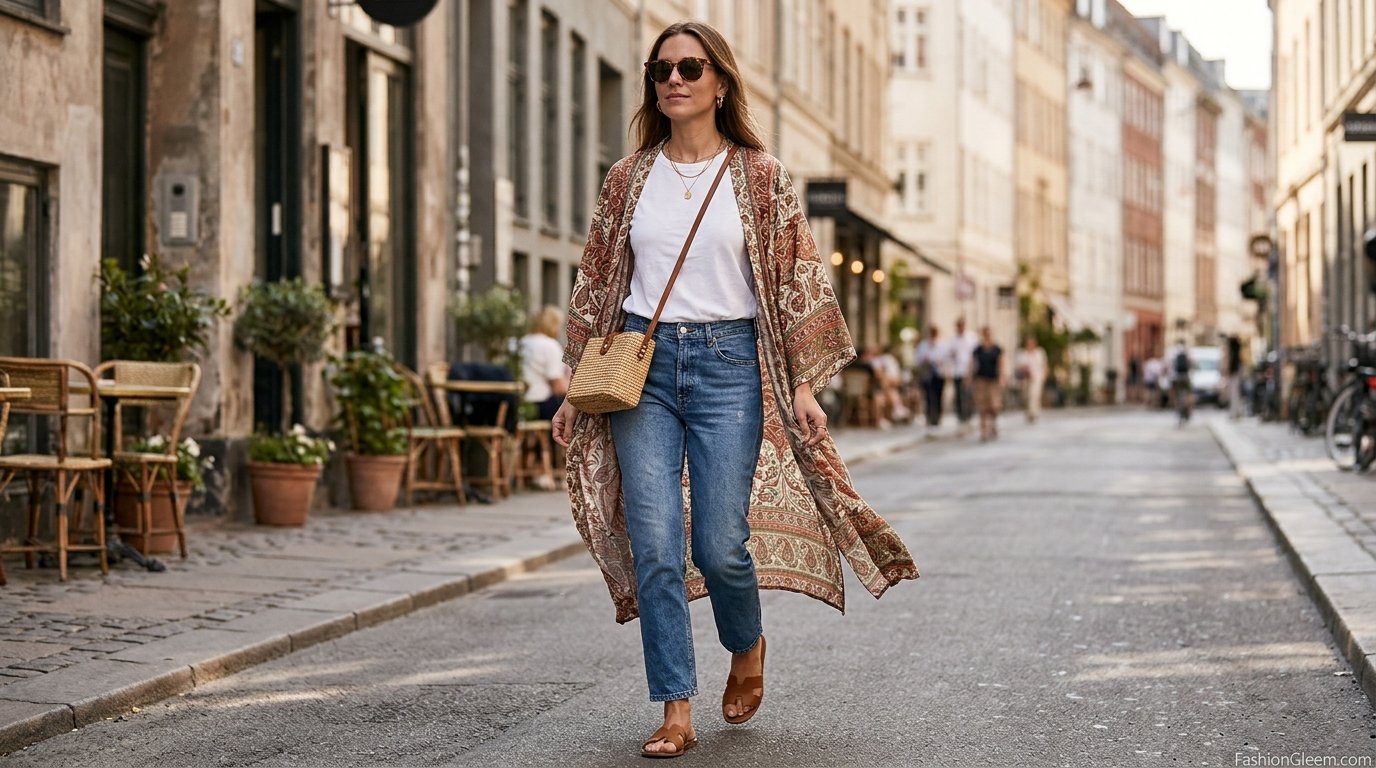
If your search meant the room, the same discipline applies. Four of the seven pages ranking for this term are decor pages, so the split is real and worth one section. The caps, the thrift-first order and the clutter rules below all come from the decor guides themselves.
The strictest decor budget is capped. Inside the DecorUpDaily boho room decor guide, every piece stays under $50, with thrift capped at $20 and flea markets at $30. Its starter kit totals $25: a basket, a textured throw and a plant, in that order, one piece monthly.
Typical ranges fill in the middle of the market. The finds in the Design and Dwelling affordable boho decor finds price woven wall hangings at about $10 to $40 and throw pillow covers at about $10 to $30. Plants run about $5 to $15.
Its own exceptions are printed honestly. The same guide ranges a vintage-style rug at $70 to $150, well past the under-$50 frame its title promises. Ranges that break a ceiling belong in the open, which is why they appear here as exceptions rather than finds.
Clutter is the decor version of costume. Two or three bold pieces beat twenty small ones, and tiny accents read as clutter in small spaces. The guide at the DIY Cozy Living boho living room guide builds the same point in reverse: collected and imperfect beats coordinated.
Renters and dorm rooms get one too. The makeover in the Simply2Moms affordable boho decorating ideas keeps changes removable, from peel-and-stick pieces to textiles that leave with you. One thrift rule protects it all: skip pieces with a smell or a stain that will not wash out.
Frequently Asked Questions
1. What is boho style?
Boho style is relaxed dressing built on flow. Flowy shapes, natural fabrics, warm earthy tones and layered pieces that look collected rather than matched define it.
Fringe, crochet and layered jewelry supply the detail instead of structure.
2. What makes an outfit look bohemian?
Loose silhouettes in an earthy palette do most of it. A flowing dress or wide-leg pants, soft prints, one textured layer and layered jewelry read boho together.
Stiff, sharp or heavily matched pieces pull the other way.
3. What pieces do you need for a boho wardrobe?
A short list of blocks covers it. One floral midi or maxi dress, soft peasant or eyelet tops, wide-leg pants, a maxi skirt, a kimono and a crochet cardigan form the core.
A denim jacket, flat sandals and layered jewelry finish it.
4. What colors are boho?
Warm earthy tones anchor the palette. Cream, rust, ochre and olive lead, with soft floral prints supplying pattern.
Holding that palette lets pieces bought years apart still combine into outfits.
5. What fabrics are best for boho style?
Natural fibers carry the style. Cotton, linen, silk, wool and their blends form the foundation the fabric guides publish.
Rayon and viscose serve as the affordable drape substitute where naturals cost too much.
6. Is rayon or viscose a good boho fabric?
Yes, with handling care. Rayon and viscose are semi-synthetics that approximate natural drape, and they carry most accessible boho clothing.
They shrink, wrinkle and weaken when wet, so cold gentle washing keeps them alive.
7. What is the difference between boho and boho chic?
Boho chic adds polish to the same base. Both use flowing shapes, natural fabrics and earthy tones, but the chic version tidies the finish and edits the layers.
Think one flowing dress styled cleanly instead of three layers at once.
8. Where did boho style come from?
Boho shortens bohemian, the name for artistic, unconventional life. The look grew from folk textile traditions and artistic-bohemian culture, then passed through the free-flowing dressing of the 1960s and 1970s counterculture.
Its collected, traveled feel is the inheritance.
9. Is boho style still in for 2026?
The practical evidence says yes. Wardrobe and decor guides published through 2026 keep building boho looks, and the budget versions keep drawing readers.
Treat it as a standing style with seasonal peaks rather than a one-season trend.
10. How do you build a boho wardrobe on a budget?
Cap each piece and buy in the thrift-first order. Hold new pieces at or under $50, start with thrift stores and resale apps, and buy the dress first.
Add one piece at a time so the wardrobe collects instead of matching.
11. How do I build a capsule boho wardrobe on a budget?
Pick one published capsule logic and follow it. Coordinate two tops, two bottoms and one dress inside one earthy family, or thrift two or three midi dresses with linen tops and a denim jacket.
Either set multiplies into a week of outfits.
12. How much should a boho outfit cost?
One bought piece can carry the whole outfit. With basics already owned, a dress inside its published band of about $20 to $45 is the only spend.
Buying every element new at once is what pushes outfits past the ceiling.
13. What is a good price for a boho dress?
Published bands put most styles between $20 and $45. A babydoll runs about $20 to $30, a sleeveless maxi $25 to $35, and a tea-length midi $35 to $45 in bands verified in October 2026.
Thrifted dresses should land under those bands.
14. Where can I buy affordable boho clothing?
Start secondhand, then move down the order. Thrift and vintage stores come first, resale apps like Poshmark and ThredUp second, and reference brands only on sale racks.
Budget retailers and Amazon boutique brands fill the remaining gaps.
15. Can you get boho style from thrift stores?
Thrift stores are the strongest source in the field. Past decades of boho silhouettes fill their rails, and natural fibers can be found by feel and by the tag.
The guides that price the look hardest start there for a reason.
16. What should I look for when thrifting boho pieces?
Hunt by fiber first, style second. Run a hand along the rail for cotton, linen and real crochet, then check the tag and the seams.
Skip anything shiny, strained at the seams or carrying a smell that will not wash out.
17. Is Shein good for boho clothes?
Its prices pass the ceiling test and its fabrics often fail the other one. One United States listing priced a boho lace dress at $27.99 in November 2026, and its own reviews carry quality complaints.
Read reviews piece by piece and let cost-per-wear decide.
18. Where can I find clothes like Free People but cheaper?
Secondhand and sale racks are the honest routes. Resale platforms carry the reference brands barely worn, and their own stores belong in a budget only during sales.
The retailer roundups apply one test: most clothing on a site around $50 or less.
19. How do you make a boho outfit look put together, not costumey?
Limit the signals and ground the rest. The field’s one explicit rule advises one or two boho elements at a time, a calm color palette, and simple basics like denim mixed in.
Followed literally, it prevents most costume effects.
20. How do you mix boho with clothes I already own?
Use owned basics as the grounding half. A denim jacket, plain tees, simple sandals and straight jeans are already boho equipment when one flowing or textured piece joins them.
Most readers need one or two bought pieces, not a new wardrobe.
21. How do you layer boho clothes for fall?
Add the warm layers in the same palette. A crochet or open-knit cardigan goes over summer dresses, a kimono works under a denim jacket, and wide-leg pants replace skirts as temperatures drop.
Keep each added layer matte and earthy so the set still reads collected.
22. Can you wear boho to a festival on a budget?
Yes, and festivals are where the cheap pieces peak. One flowing dress inside its band, a kimono layer, a straw hat and layered jewelry make the classic festival set.
Thrift the hat and jewelry so the dress can take the budget.
23. How do you make a boho outfit from what you already own?
Start with the loosest pieces you own. A flowing dress or wide-leg pants, one textured layer and layered jewelry from a drawer usually assemble a full outfit.
The grounding basics you wear daily do the rest, so the spend can be zero.
24. Which cheap fabrics should I avoid for boho clothes?
Shiny polyester is the main one. It catches light like plastic and traps heat, a combination one over-60 guide warns about from experience.
Thin acrylic crochet that pills and sags, and sheer cotton weaves that turn see-through, fail next.
25. What boho pieces are worth spending more on?
The pieces worn most often earn the money. A natural-fiber dress, real leather or woven sandals, and a well-made crochet layer repay their price in wears.
Cost-per-wear, not the tag, should rank where extra money goes.
26. What is cost-per-wear and why does it matter for boho?
Cost-per-wear is price divided by wears. A $45 dress worn 30 times costs $1.50 per wear, while a $19 dress worn four times costs $4.75, in an illustrative example.
Boho rewards the math because its pieces are worn for years, not seasons.
27. Are sustainable boho brands affordable?
Some are, inside honest limits. One brand survey lists Soul Flower at about $20 to $62 and Native Threads at about $39 to $97.
Others in the same survey run to $150 and above, which stretches the word affordable past its ceiling.
28. Can women over 60 wear boho style on a budget?
Yes, and one guide is built exactly for that reader. Its finds apply a flat under-$50 rule to pieces chosen for women over 60.
Its standard travels to any age: expensive-looking and expensive are not the same thing.
29. Where can I find plus-size boho clothes on a budget?
No ranking guide covers this yet, so the rules have to travel. Apply the same per-piece ceiling, the same fiber checks and the same thrift-first order through extended-size sections and resale filters.
The discipline is size-blind even where the coverage is missing.
30. Can men wear affordable boho style?
Yes, though no men’s guide ranks for the term. Flowy shirts, wide-leg trousers and layered jewelry follow the same rules as the women’s wardrobe.
Matte natural fibers, one or two signals per outfit and thrift first keep it grounded.
31. Where can I buy boho room decor?
The decor guides start where the fashion guides do. Thrift stores, flea markets and resale platforms lead, with garden centers for plants and craft stores for materials.
One capped guide assigns each venue its own spending limit.
32. What is the cheapest place to buy boho decor?
Thrift stores, by the field’s own caps. The strictest decor guide caps a thrift stop at $20, below its flea market and resale limits.
Free beats even that: regrouping pieces you own and taking plant cuttings costs nothing.
33. How much does it cost to decorate a boho living room?
No guide totals a whole room, so build from the priced kit. The strictest budget starts a room for $25 with a basket, a textured throw and a plant.
Add one capped piece a month and the room total stays a choice, not a surprise.
34. What should I buy first for a boho room?
The priced starter kit answers in order. A big basket first, a textured throw second and a plant third, in cream, rust and olive tones.
Those three pieces set the storage, the texture and the color story for everything after.
35. How many boho pieces does a room need?
Fewer than the lists suggest. Two or three bold pieces beat twenty small ones, and the capped guide advises starting with three to five pieces.
Add slowly and the room looks collected instead of cluttered.
36. How do I make cheap boho decor look expensive?
Scale and texture do the work. Choose fewer, larger pieces in natural materials like cane, jute, wood and cotton over many small accents.
A collected, slightly imperfect room reads expensive, while a matched set reads priced.
37. How do I keep a boho room from looking cluttered?
Give every piece a palette and a job. Hold the warm earthy scheme across additions, group pieces by material, and stop at a few bold anchors.
Buying everything in one day is the habit that turns collected into cluttered.
38. What are the best boho finds under $50?
On the fashion side, dresses inside their bands lead. Verified bands run from about $20 for a babydoll to $45 for a tea-length midi.
On the decor side, woven wall hangings at $10 to $40 and pillow covers at $10 to $30 carry the same value.
39. Can you do boho decor in a dorm or rental?
Yes, if every change stays removable. One published makeover builds a dorm room from peel-and-stick pieces, layered textiles and macramé that leave with the tenant.
Nothing needs paint, nails or a landlord’s permission.
40. Can I DIY boho decor instead of buying it?
Yes, and one guide budgets for it. Its caps allow $20 for a do-it-yourself project, with craft stores supplying macramé cord and materials.
Handmade texture is the one cheap signal that reads more expensive than its price.
41. What plants work best in a boho room?
Trailing, forgiving plants carry the look. Pothos and spider plants are the decor guides’ regular picks, priced at about $5 to $15.
Garden centers sell them cheaper than decor shops because the price covers the plant, not the styling.
42. What boho pieces should I avoid buying cheap?
Anything whose cheapness you can see or feel. Shiny synthetic dresses, printed rugs that are flat prints rather than woven, and crochet with weak seams fail first.
Spend up or thrift instead wherever texture is the whole point of the piece.
Conclusion
Affordable boho style is a discipline before it is a look. A per-piece ceiling, a thrift-first order and a narrow earthy palette do more for the result than any single purchase. The prices here stayed attached to their sources so the discipline stays checkable.
Start smaller than feels necessary. One dress inside its band, one thrifted layer and the denim jacket you already own make the first complete outfit. Add a piece a month and the wardrobe collects itself the way the style intends.
Keep testing cheap against cheap-looking. Matte fibers, one or two signals per outfit and cost-per-wear arithmetic will catch most mistakes before money moves. When a piece fails those tests, the thrift rail will offer a better one soon enough.
The rest of the wardrobe lives nearby. Capsule methods, hair shapes, makeup finishes and the wider style guides all sit at the FashionGleem home page, each following the same rule. Sources stay labeled, prices stay dated, and nothing gets blended into a consensus nobody published.

Dilawar is a contributing writer at Fashiongleem.com, focusing on beauty, hairstyles, skincare, fashion accessories, and personal grooming. He creates informative, easy-to-follow articles that help readers explore new looks, understand popular beauty trends, and improve their everyday styling routines. His writing emphasizes practical advice, useful product information, and accessible fashion inspiration for modern readers.