Boys Short Hair Cut: 25 Styles for Every Age and Hair Type
Boys short hair cut choices shape the school year more than most parents expect. The right cut means easy mornings, fewer battles, and a kid who likes the mirror.
This guide covers 25 short haircuts for boys, organized by age and hair type. You get guard numbers, trim schedules, and exact barber phrases.
Every number below is labeled by source. Competitor-reported figures stay labeled; nothing is presented as official data.
Quick Answer
| Question | Answer |
|---|---|
| Best all-around boys short cut? | Textured crop or crew cut: low effort, grows out well |
| Lowest maintenance cut? | Buzz cut: wash and go, zero styling |
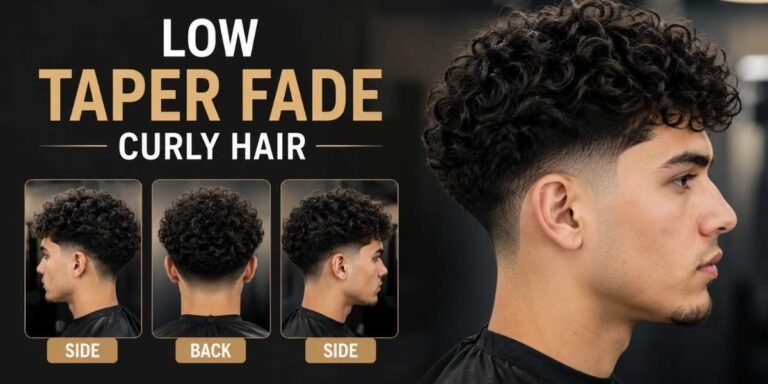
| Best for curly hair? | Curly top with low taper fade: shape without fighting texture |
| How often to trim? | 3 to 6 weeks depending on the cut |
| What guard for a buzz cut? | #2 to #4 for most boys (6 to 13 mm) |
| What to tell the barber? | “Short on the sides, a little length on top, add texture” |
Boys Short Haircut Quick Facts
| Detail | Information | Status |
|---|---|---|
| Guard #1 length | About 3 mm | Reported |
| Guard #2 length | About 6 mm | Reported |
| Guard #3 length | About 10 mm | Reported |
| Guard #4 length | About 13 mm | Reported |
| Buzz trim interval | Every 3 to 4 weeks | Reported |
| Crew trim interval | Every 4 to 6 weeks | Reported |
| Fade trim interval | Every 3 to 4 weeks | Reported |
| First haircut age | When hair blocks eyes, often 12 to 18 months | General guidance |
| 2026 trend direction | Softer texture, natural finish, grow-out friendly | Reported |
Quick Answer: The Best Boys Short Hair Cuts
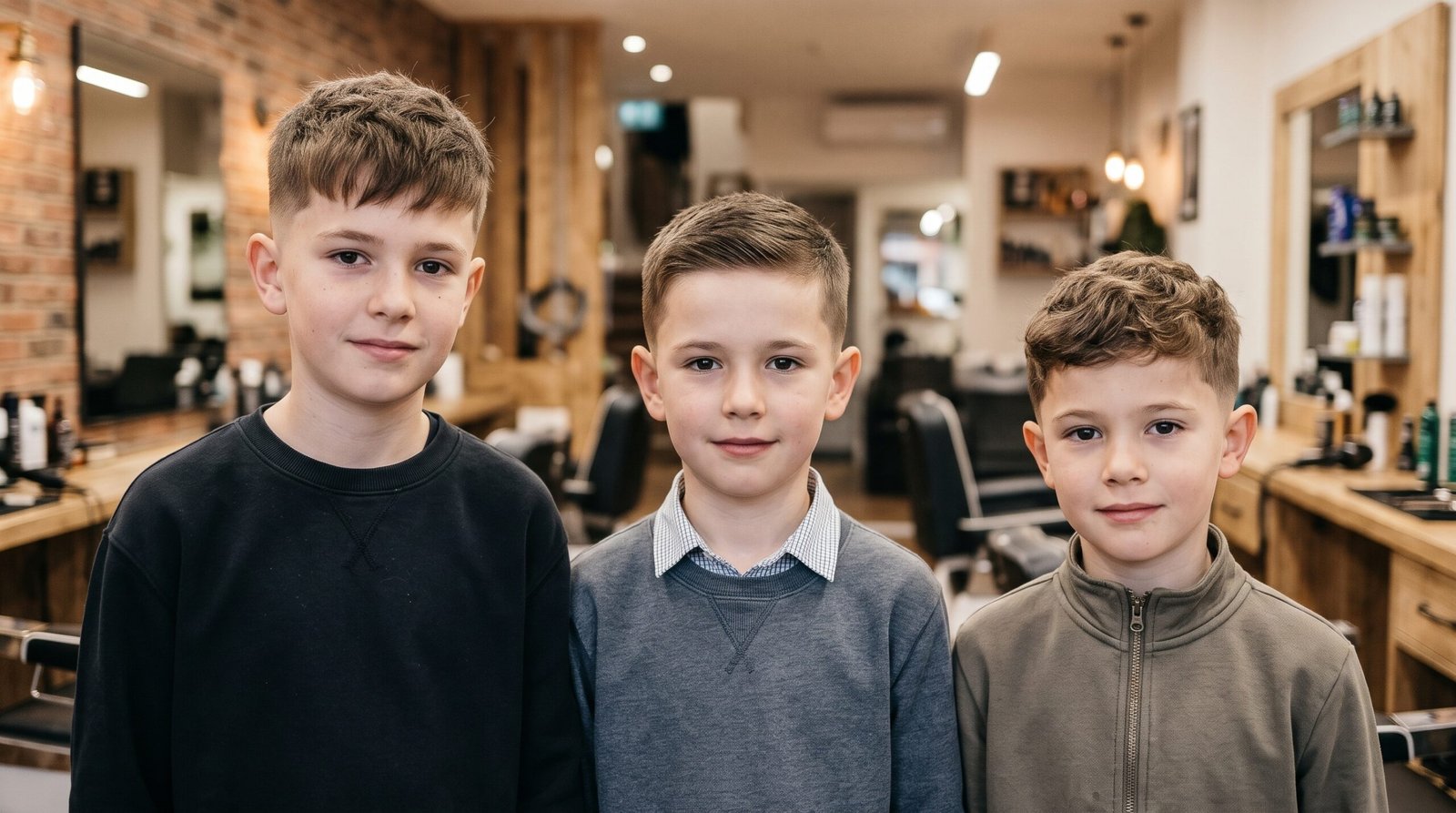
The textured crop wins for most boys in 2026. Short faded sides meet a choppy, forward-styled top.
The crew cut remains the safest classic. It suits every age, every hair type, and every school dress code.
The buzz cut is the ultimate low-effort choice. One guard, five minutes, done for a month.
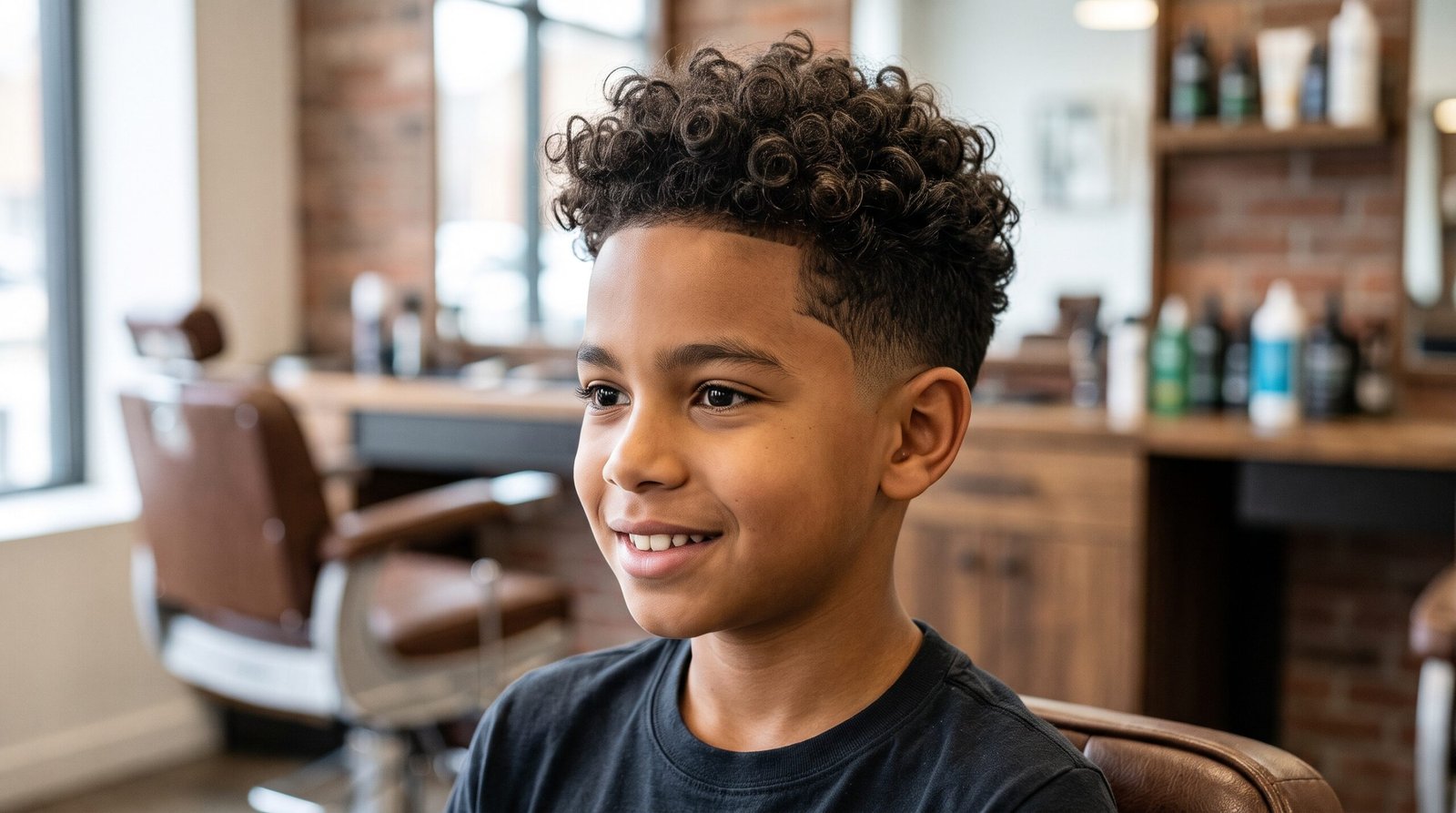
For curly boys, the curly top with taper fade keeps texture on top and clean lines below. It works with the curl instead of against it.
Choose by three factors: face shape, hair type, and real maintenance. A grooming editor’s rule, echoed across the best guides.
New to clipper cuts? Start with our buzz cut for men guide to learn the guard system before your son’s appointment.
Age Guide: The Right Cut for Each Stage
Age changes everything: patience, hair texture, and school rules. Match the cut to the stage, not just the photo.
Toddler Cuts (Ages 1 to 3)
Toddlers need simple, fast, scissor-based cuts. Clippers frighten many small children.
A scissor cut with no clippers works best for ages 1 to 6, per one age-wise guide. It keeps things gentle and quiet.
Keep the first cut short around the ears and neckline with a little length on top. Comfort beats style at this stage.
Book a kids’ barber if possible. They expect squirming and keep the visit under fifteen minutes.
Little Boys (Ages 4 to 7)
At this stage, the buzz cut and crew cut dominate. Both survive playgrounds, naps, and forgotten combs.
The buzz cut needs zero styling and no combing. Parents report it as the complaint-free option.
The crew cut adds a touch more shape on top. It still washes and goes in the morning.
Avoid designs and sharp fades here. They need frequent touch-ups that little kids will not sit for.
School-Age Boys (Ages 8 to 12)
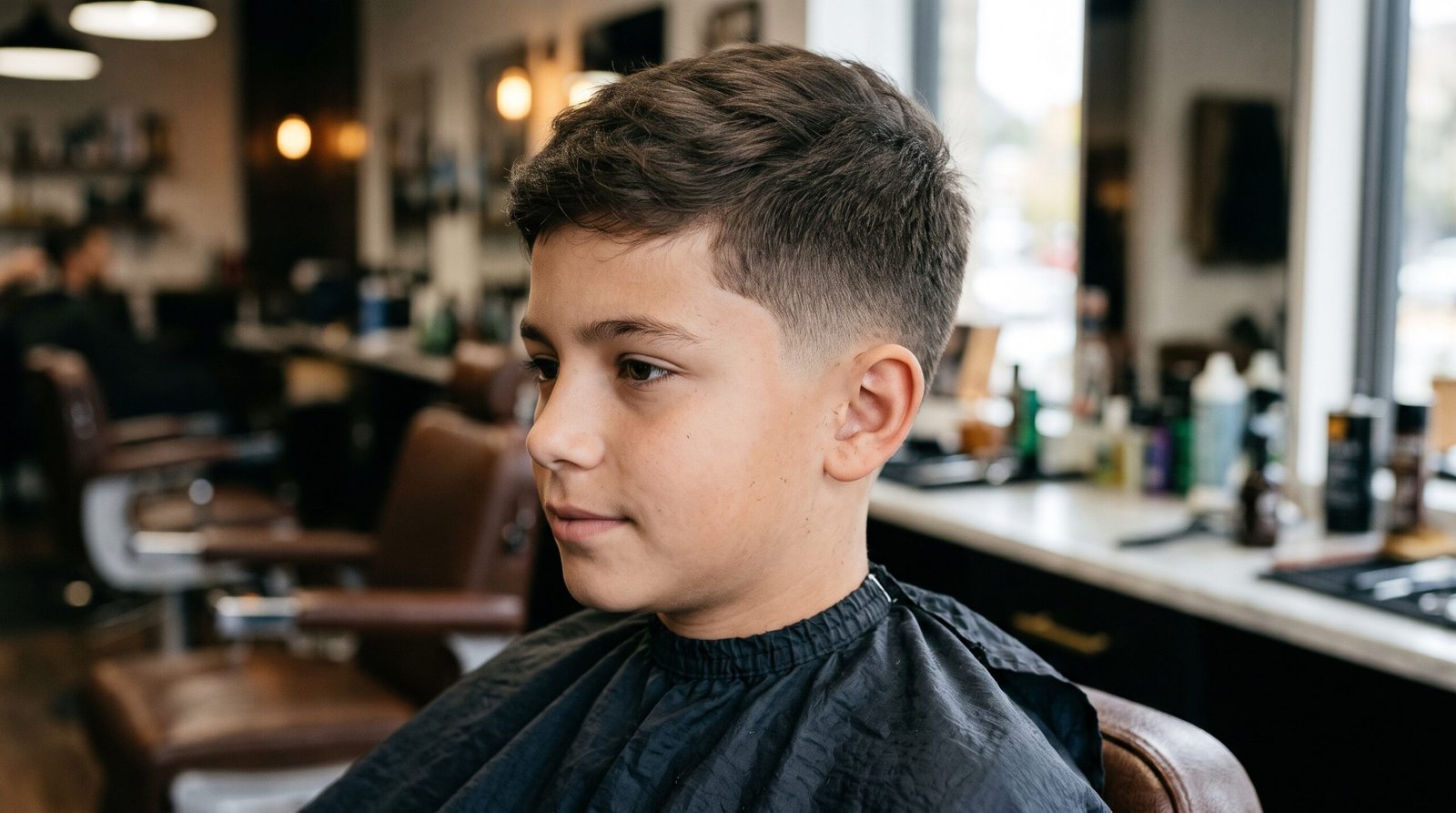
Now fades and textured crops enter the picture. Kids start caring about how they look.
The low taper fade is clean without being flashy. It suits wavy and curly hair especially well.
The textured crop gives modern style with low effort. A little paste on top, done.
Check the school dress code before skin fades or designs. Some schools restrict them.
Teen Cuts (Ages 13+)
Teens want identity, not just neatness. The French crop, curtains, and modern mullet trend here.
The French crop with fringe is short, textured, and social-media approved. It suits straight and thick hair.
The low taper with natural texture works for school and weekends alike. It is the versatile teen pick.
Let teens bring reference photos. A photo beats a thousand words at the barber chair.
The Classics: Buzz, Crew, Butch, and Burr
These four cuts have outlasted every trend cycle. They work because they are simple, cheap, and honest.
Buzz Cut
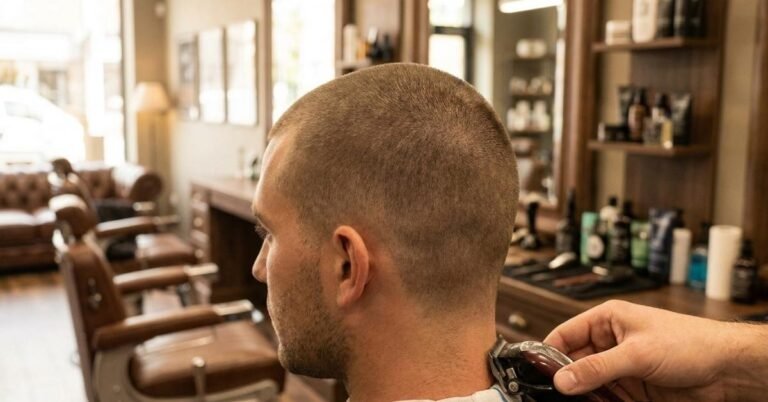
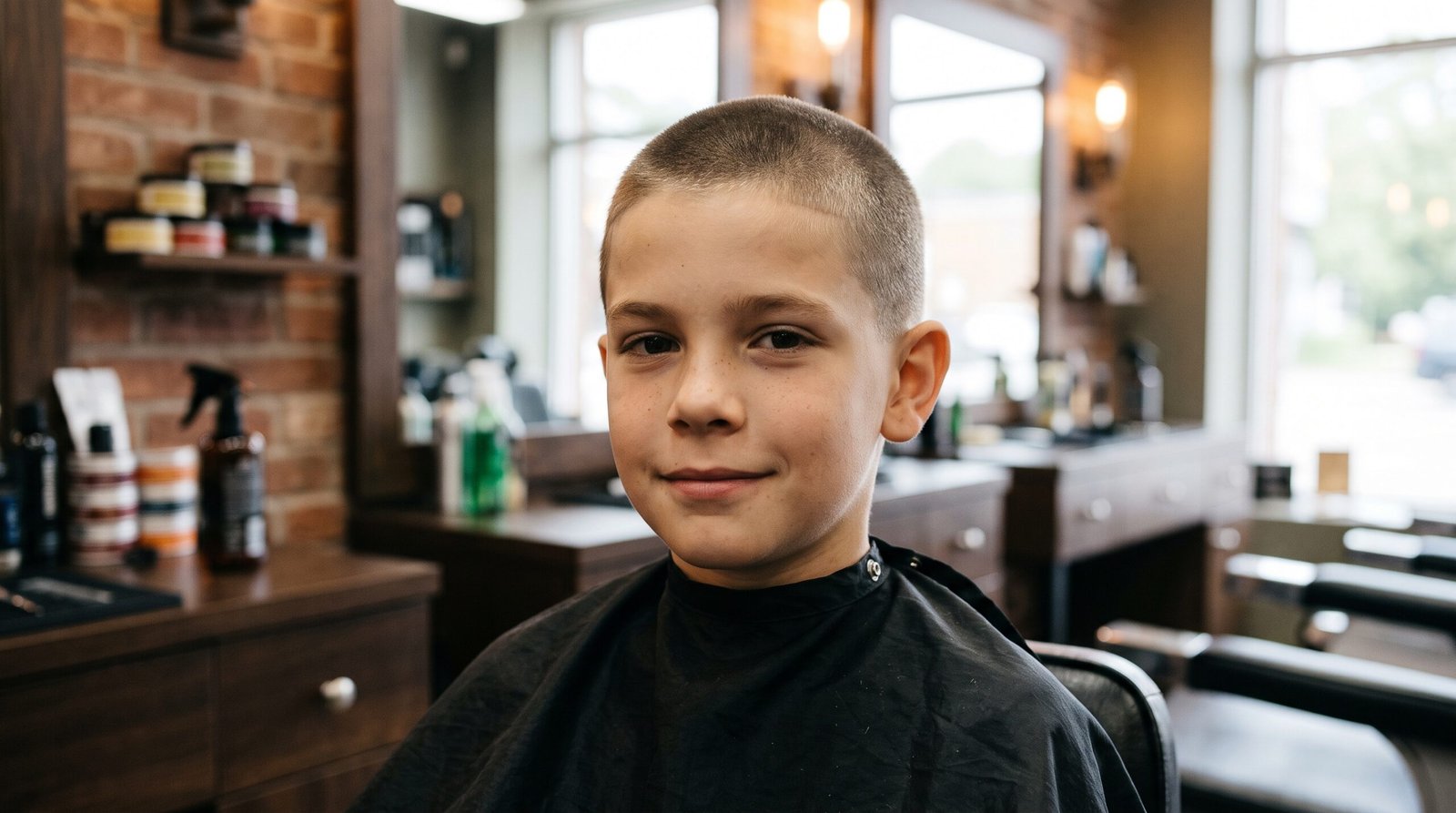
The buzz cut is one guard across the whole head. Barbers create it mainly with electric clippers.
It is the simplest short hairstyle for kids and teenagers. Hair stays short, neat, and easy to manage.
Variants include the burr (very short, #1 to #2), the butch (fuller, #3 to #4), and the fade buzz (short top, faded sides).
A number 2 buzz leaves about 6 mm and gives good coverage. A number 4 leaves about 13 mm for a fuller look.
For the full breakdown of buzz variations, see buzz cut styles for every face shape.
Crew Cut
The crew cut keeps hair short on the sides and back with slightly longer hair on top. Scissors shape the top.
Think of it as the buzz cut’s polished cousin. Same low effort, more structure.
The top can go brushed forward, spiked slightly, or side-swept. One cut, several moods.
It trims every 4 to 6 weeks and suits straight, wavy, and thick hair.
Butch and Burr
The butch cut is a slightly longer buzz, around #3 to #4. Simple, tidy, and drama-free.
The burr cut goes shorter, around #1 to #2. It is the cleanest, closest option.
Both are excellent for sports seasons. Sweat, helmets, and pool water cause zero problems.
Curious about longer guard lengths? Our 10 guard buzz cut and 12 guard buzz cut guides explain the extended range.
Clipper Guard Numbers Explained
Guard numbers tell the barber how much hair stays behind. Smaller numbers mean shorter cuts.
| Guard | Approximate length | Appearance | Best for |
|---|---|---|---|
| #0 | About 1.5 mm or less | Almost shaved | Bold buzz looks |
| #1 | About 3 mm | Very short | Burr cut |
| #2 | About 6 mm | Short with coverage | Classic buzz |
| #3 | About 10 mm | Balanced short | Butch cut |
| #4 | About 13 mm | Fuller buzz | Softer buzz |
| #5 | About 16 mm | Longer clipper cut | Crew-style tops |
These lengths come from a buzz cut guard guide. They vary slightly by clipper brand.
Start with a larger guard if you are unsure. You can always go shorter; you cannot add hair back.
For most boys, #2 to #4 hits the sweet spot. Short enough to manage, long enough to look soft.
Fades: Low, Mid, High, and Taper
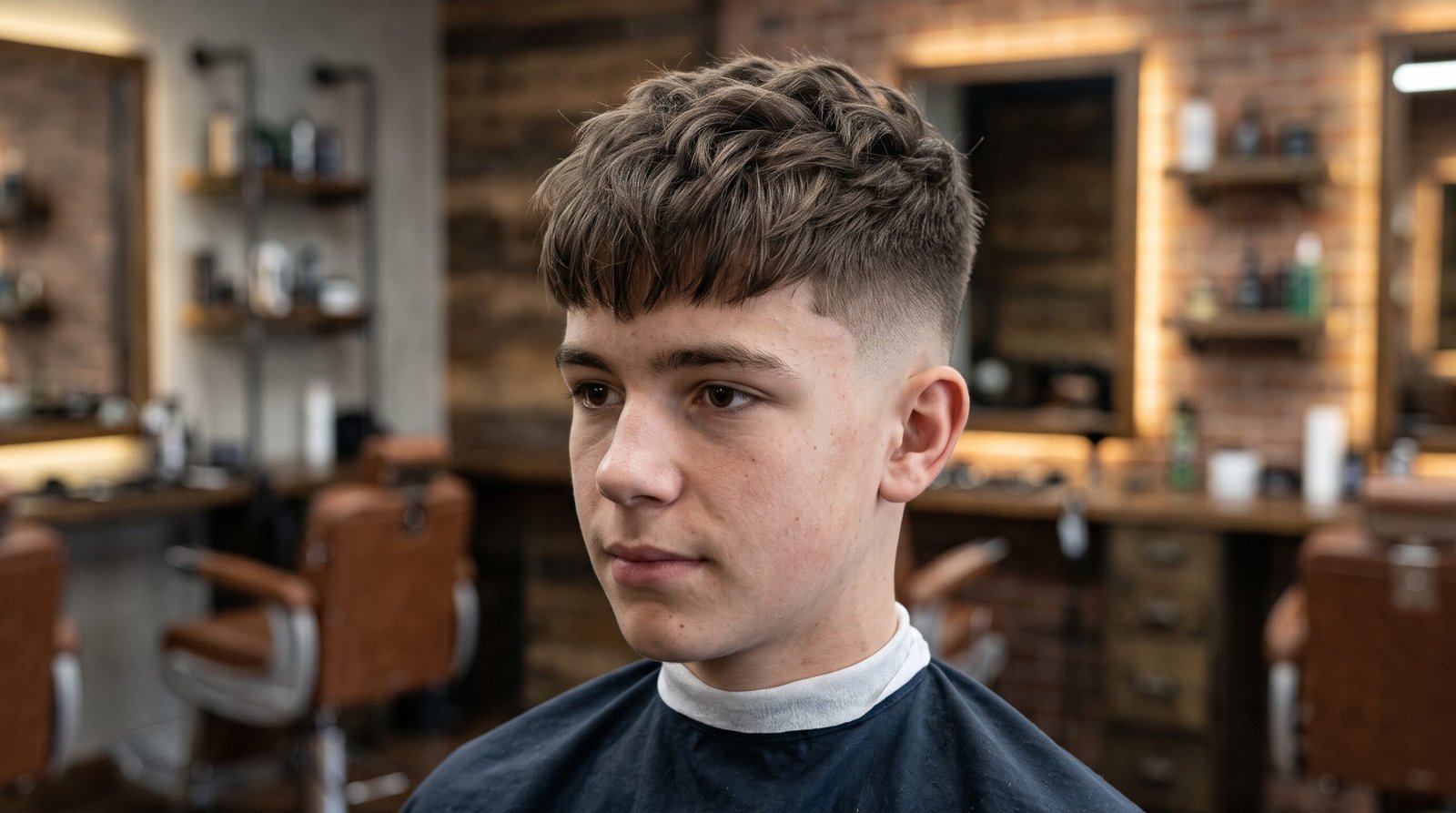
A fade gradually shortens hair from the top down to the neckline and ears. The blend is the whole art.
Low Fade
The low fade starts near the neckline and ears. It is subtle, clean, and school-friendly.
It pairs with almost any top length. The contrast stays gentle and professional.
Best for boys who want modern without drama. Parents and principals both approve.
Mid Fade
The mid fade starts around the temples. It shows more contrast than the low fade.
This is the most requested fade for school-age boys. Sharp but not extreme.
It needs a trim every 3 to 4 weeks to stay crisp. Fades grow out visibly.
High Fade
The high fade starts high on the head. Maximum contrast, maximum statement.
Best for thick, straight hair that can carry the drama. It demands regular upkeep.
Check school rules first. Some dress codes flag high skin fades.
Taper Fade
The taper is a softer, classic version of the fade. It gradually shortens without going to skin.
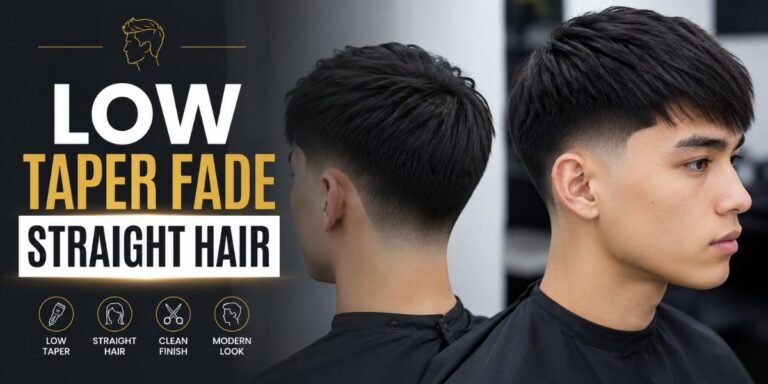
The low taper fade is the 2026 parent favorite. Clean, modern, and grow-out friendly.
It works beautifully on wavy and curly hair. The soft blend respects natural texture.
See how the taper pairs with texture in our low taper fade textured fringe guide.
| Fade type | Starts at | Contrast | Trim every | School risk |
|---|---|---|---|---|
| Low taper | Neckline | Low | 3 to 4 weeks | Very low |
| Low fade | Above ears | Medium | 3 to 4 weeks | Low |
| Mid fade | Temples | High | 3 weeks | Medium |
| High fade | Upper sides | Very high | 3 weeks | Check rules |
| Skin/zero fade | Skin at edges | Extreme | 2 to 3 weeks | Check rules |
Textured Crops, French Cuts, and Caesars
This family of cuts keeps the top short and piece-y with faded or tapered sides. It defines 2026 boys’ style.
Textured Crop
The textured crop uses choppy, forward-styled layers on top. The finish looks deliberately undone.
It suits straight, thick, and wavy hair. The texture manages volume that would puff up otherwise.
Styling takes thirty seconds: a pea of matte paste, pushed forward. That is the whole routine.
Trim every 4 to 6 weeks. The grow-out stays presentable longer than a fade.
French Crop
The French crop pairs short faded sides with a blunt fringe. The fringe sits straight across the forehead.
It is trending hard with teens right now. The look reads confident and current.
The fringe needs occasional trims between full cuts. Bangs grow into eyes fast.
Caesar Cut
The Caesar is named for Julius Caesar, and the fringe proves it. Short, straight, and bold.
The micro Caesar shrinks it further for little boys. Same idea, smaller scale.
The curly Caesar adapts it for curls: short sides, blunt curly fringe. Eyes stay clear, curls stay visible.
Curly and Coily Short Cuts
Curly boys deserve cuts designed for their texture, not cuts that fight it. Most galleries under-serve this segment.
Curly Top with Taper
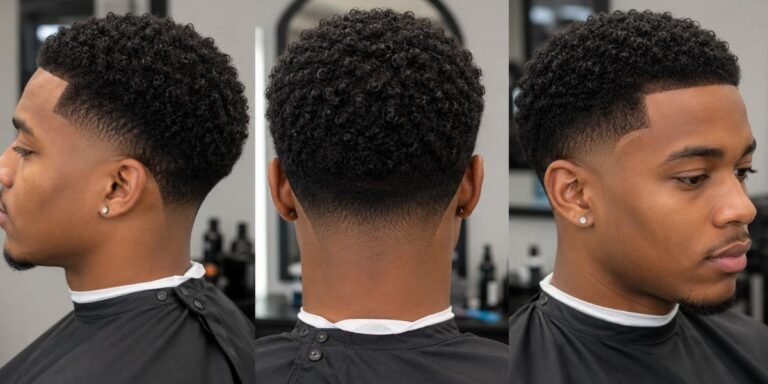
Short tapered sides meet natural curls on top. The taper keeps edges clean while curls do their thing.
This is low maintenance for curly hair. Curls need length to form properly; the top provides it.
A curl cream or leave-in defines the top. Avoid heavy gels that crunch.
Curly Top with Burst Fade
The burst fade creates a dramatic arc around the ear. Curls flourish on the crown and front.
It delivers maximum impact with minimal daily styling. The shape does the work.
Best for confident kids who like attention. The cut is a statement.
Short Curly Bob and Natural Afro
The short curly bob keeps one even length all around. Less tangling, clean grow-out.
A shaped natural afro with a lineup celebrates coily hair. The barber refines the silhouette without removing texture.
Find a barber experienced with textured hair. Technique matters more than the cut name.
Face Shape and Hair Type Matrix
Match the cut to the face and the hair, not just the trend photo. This matrix speeds the decision.
| Face shape | Goal | Best short cuts | Avoid |
|---|---|---|---|
| Round | Add height, slim sides | Textured crop, faux hawk, high fade | Buzz with no top length |
| Oval | Almost anything works | Crew, crop, side part, Caesar | Nothing specific |
| Square | Soften the jaw | Textured top, side-swept, low taper | Flat top, boxy lines |
| Heart | Balance the forehead | Side part, brushed forward, fringe | High volume on top |
| Hair type | Goal | Best short cuts | Notes |
|---|---|---|---|
| Straight | Add texture | Textured crop, French crop, spiky | Needs product for texture |
| Wavy | Control volume | Low taper, crop, side part | Works with natural wave |
| Curly | Define, don’t fight | Curly top taper, curly Caesar | Keep top length |
| Coily | Shape the silhouette | Tapered afro, shape-up | Texture-experienced barber |
| Fine | Add fullness | Crew, butch (#3-#4) | Avoid very short guards |
| Thick | Remove bulk | Textured crop, fade, layers | Thinning/texturizing helps |
An age and face-shape guide confirms the core rule: face shape, hair type, and maintenance decide the cut.
Adults choosing by face shape can also read layered haircuts for men for the grown-up version of this logic.
What to Tell the Barber
Walk in with clear words and a photo. Barbers love both.
- Name the sides first. Say “low taper,” “mid fade,” or “number 3 on the sides.”
- Name the top next. Say “textured crop on top,” “leave an inch,” or “forward fringe.”
- Mention the hair type. “He has thick wavy hair” changes the technique.
- State the maintenance. “We need something that lasts six weeks” rules out skin fades.
- Show a photo. One picture prevents most miscommunication.
The classic parent script works: “Short on the sides, leave a little on top, add some texture.” Barbers hear it daily.
For curly hair, add: “Keep the curl pattern, just clean the shape.” That protects the texture.
Trim Schedules: How Often to Cut
Short hair shows growth fast. The schedule below keeps every cut sharp.
| Haircut | Trim every | Why |
|---|---|---|
| Buzz cut | 3 to 4 weeks | Even length shows growth quickly |
| Crew cut | 4 to 6 weeks | Top grows out softly |
| Textured crop | 4 to 6 weeks | Texture hides growth well |
| Low taper fade | 3 to 4 weeks | Blend softens gradually |
| Mid/high fade | 3 weeks | Contrast fades fast |
| Side part | 5 to 6 weeks | Longer top forgives growth |
| Scissor cut (toddler) | 6 to 8 weeks | Soft shapes grow out gently |
| Curly top | 4 to 5 weeks | Shape matters more than length |
These intervals come from an age-wise boys’ haircut guide. Treat them as ranges, not rules.
Book the next appointment before leaving the barbershop. The best slots go first.
Between cuts, our overgrown buzz cut guide shows how to manage the awkward grow-out phase.
Cutting Boys’ Hair at Home: Safe Basics
Home cuts save time and money with the right approach. Start simple and stay patient.
Preparation
Start with clean, dry or slightly damp hair. Wet hair shrinks when dry, so damp cuts end up shorter.
Seat the child securely and comfortably. A booster seat with a cape works well.
Gather clippers, guards, scissors, and a comb before starting. Hunting mid-cut invites mistakes.
Clipper Work
Use clippers for uniform length on sides and back. Start with a larger guard than you think.
Move clippers against the hair growth direction. Overlap each pass to avoid lines.
Cut less first. You can always go shorter; you cannot undo a too-short pass.
Scissor Work
Use scissors for the top and for blending. Hold hair between fingers, comb as guide.
Point cutting (snipping into hair at an angle) creates softer texture. It beats blunt chopping for beginners.
To blend, comb hair up and trim the longer strands sticking out. This connects clipper lengths to scissor lengths.
Cowlicks and Bangs
Cowlicks need slightly longer hair to lay flat. Cutting them shorter makes them spring up worse.
Trim bangs while dry or barely damp. Wet bangs shrink and end up too short.
Never rush a squirming toddler with running clippers. Stop, calm down, and try later.
School Dress Codes: Check First
Some schools restrict extreme fades, designs, and unnatural colors. Rules vary by district and school.
Check the handbook before a skin fade, shaved design, or bold color. A Monday-morning violation ruins the week.
Low tapers, crew cuts, and crops pass virtually every dress code. When in doubt, choose the safer cut.
Longer styles like curtains or modern mullets face more scrutiny. Ask before growing.
This is check-locally advice, not a universal rule. Your school’s policy is the only one that matters.
How This Guide Was Built
Style names use real barber terminology. Invented gallery names (fantasy labels with no shop meaning) are excluded on purpose.
Guard lengths come from a dedicated buzz cut guide. They are competitor-reported by clipper brand.
Age bands and trim intervals come from an age-wise guide for little boys. Ranges, not prescriptions.
Face-shape logic follows a face, hair, and maintenance framework. Three factors, one decision.
Style variety was cross-checked against a 28-cut idea gallery. Only standard cuts made this list.
Frequently Asked Questions
What is the best short haircut for boys?
The textured crop suits most boys: low effort, modern, and grow-out friendly. The crew cut is the safest classic.
What short haircut is best for little boys?
The buzz cut or crew cut. Both need zero styling and survive active play.
What short haircut is best for teenage boys?
The French crop, textured crop, or low taper fade. Teens get style without high maintenance.
How often should a boy get a haircut?
Every 3 to 6 weeks depending on the cut. Fades need 3 weeks; crops and crews stretch to 6.
What guard should I ask for in a boys buzz cut?
#2 to #4 for most boys. #2 (6 mm) is neat; #4 (13 mm) is softer and fuller.
What do clipper guard numbers mean?
They set how much hair the clippers leave. #1 leaves about 3 mm; each step up adds length.
What is the difference between a buzz cut and a crew cut?
A buzz uses one guard all over. A crew fades the sides and leaves styled length on top.
What is a French crop for boys?
Short faded sides with a blunt fringe across the forehead. Trendy, textured, and teen-approved.
What is a Caesar cut for boys?
A short cut with a straight fringe, named for Julius Caesar. Bold and low maintenance.
What is an Ivy League haircut for boys?
The crew cut’s preppy cousin: short sides with enough top to side-part neatly.
What is a taper fade vs a skin fade?
A taper gradually shortens without exposing skin. A skin fade blends down to bare skin.
Are fades good for school-age boys?
Low tapers and low fades, yes. They look neat and pass most dress codes.
Do schools allow fades and designs?
It depends on the school. Check the dress code before skin fades or shaved designs.
What short haircut suits a boy with a round face?
Cuts with height on top: textured crop, faux hawk, or high fade. They elongate the face.
What short haircut suits curly hair?
The curly top with taper fade. It keeps curls on top and clean lines below.
What short haircut suits thick hair?
Textured crops and fades remove bulk. Ask the barber to texturize the top.
How do I cut my son’s hair at home?
Start with clean, damp hair and a large guard. Cut less first, blend carefully, and stop if he squirms.
How do I fix a cowlick on a boy?
Keep the cowlick area slightly longer so the hair’s weight holds it down. Shorter makes it worse.
What should I tell the barber?
“Short on the sides, a little length on top, add texture” plus a reference photo.
How do boys’ short haircuts grow out?
Crops and crews grow out gracefully. Fades show growth fastest and need the most frequent trims.
When should a boy get his first haircut?
When hair blocks his eyes or bothers him, often between 12 and 18 months. There is no magic age.
Which boys’ haircuts are trending in 2026?
Softer texture over sharp lines: textured crops, low tapers, natural curls, and grow-out friendly cuts.
Conclusion
Boys short hair cut decisions come down to age, hair type, and honest maintenance. The textured crop, crew cut, and buzz cut cover nearly every boy.
Use the guard table at the barber, follow the trim schedule, and keep the three-factor rule in mind. Photos beat descriptions every time.
Ready for the chair? Book a kids’ barber, bring two reference photos, and use the exact phrases from this guide.
For more grooming guides, explore buzz cut for men and popular layered haircuts for men on FashionGleem.