
Boys Hair Cut Styles: Best Haircuts by Age, Hair Type and Upkeep
Boys hair cut styles succeed or fail on three practical questions. Does the cut suit his age and hair type? Can the family keep it up? And can you describe it clearly in the shop?
The versatile center of boys hair in 2026 is easy to state. Short to medium-short sides, faded or tapered, with texture on top. Textured crops, French crops, low taper fades, and natural quiffs all live in that family.
Current guides also agree on a direction of travel. Softer texture and cuts that grow out well are replacing the sharp, hard lined looks of a few years ago. That shift is good news: soft edges stay presentable for weeks longer.
What follows is organized the way the decision actually happens. Age first, hair type second, upkeep third, with the exact words to tell the barber, the guard chart decoded, and the filters that matter: school rules, cowlicks, clipper fear, and grow out.
How to Choose in One Minute
Start with the decision table, then read only the sections matching your row. Every style here is tagged with these same four facts, so shortlisting takes minutes.
|
Style |
Best Ages |
Hair Types |
Trim Every |
|---|---|---|---|
|
Buzz cut |
1 to 12 |
Any |
3 to 4 weeks |
|
Crew cut |
2 to 12 |
Straight, wavy |
4 to 6 weeks |
|
Scissor cut |
1 to 6 |
Fine, soft |
6 to 8 weeks |
|
Textured crop |
4 to 12 |
Straight, wavy, curly |
4 to 6 weeks |
|
Low taper fade |
4 to 14 |
Wavy, curly |
3 to 4 weeks |
|
Mid or high fade |
5 to 14 |
Straight, thick |
About 3 weeks |
|
Side part |
3 to 12 |
Straight |
5 to 6 weeks |
|
Curtains |
7 to 14 |
Straight, wavy |
6 to 8 weeks |
|
Curly fringe fade |
4 to 12 |
Curly, coily |
4 to 5 weeks |
|
Broccoli cut |
8 to 15 |
Curly, wavy |
5 to 6 weeks |
|
Faux hawk |
4 to 10 |
Any |
About 4 weeks |
|
Modern mullet |
8 to 12 |
Straight, wavy |
6 to 8 weeks |
The trim ranges in this article follow the Popees style table, a widely read kids guide that publishes per style intervals. Treat them as planning numbers from one guide, then adjust for how fast your own boy’s hair grows.
Two rules of thumb sit behind the table. Sharper edges mean shorter intervals, because regrowth breaks precise lines first. And a cut a boy likes and ignores beats a sharper cut needing product he will never use.
Styles by Age
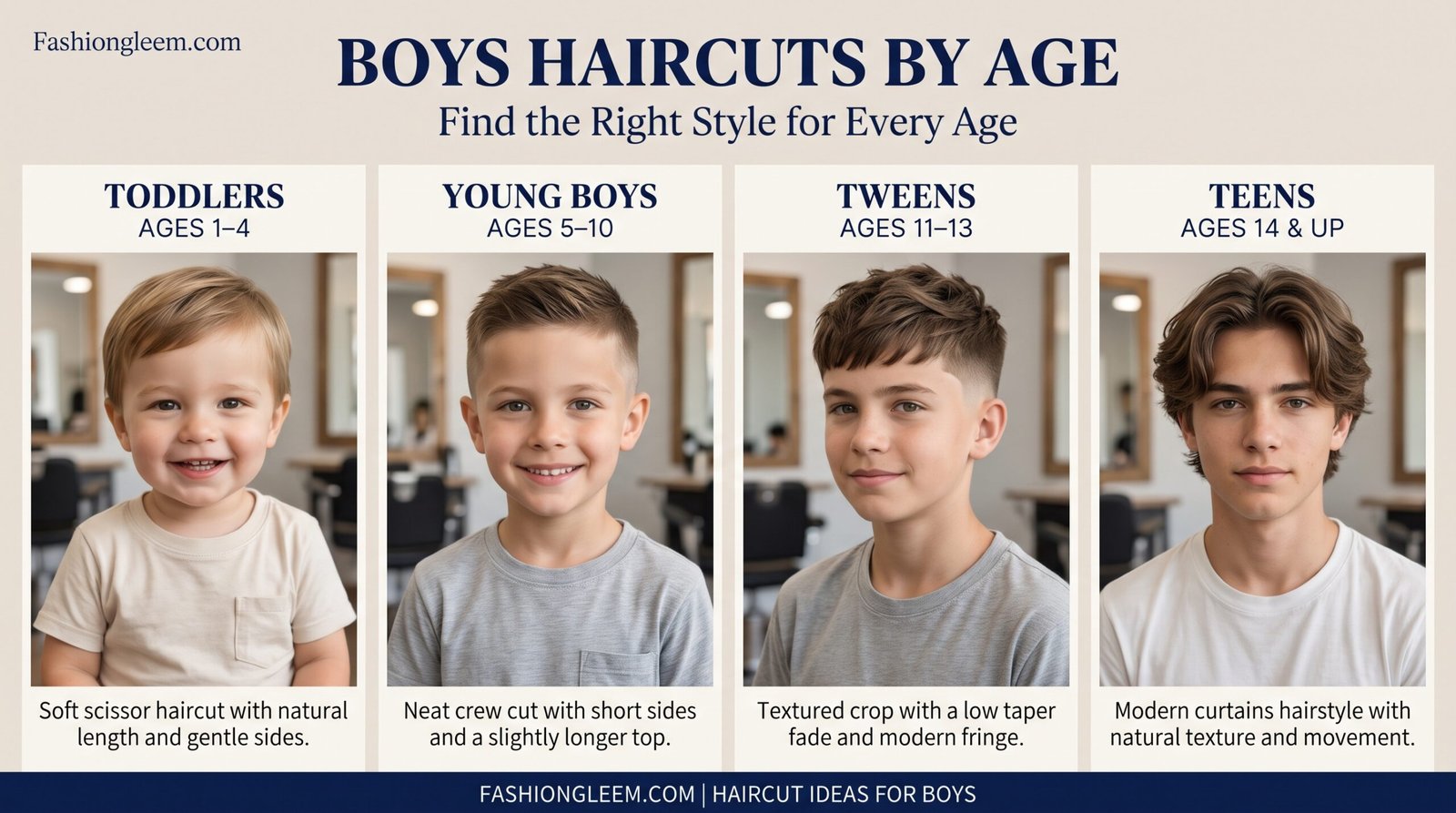
Age changes everything about a haircut: the hair itself, the patience in the chair, and who gets a vote.
H4: Toddlers, Ages 1 to 4
Toddler hair is fine, soft, and still changing, and toddler heads are still growing into their shape. Soft scissor cuts, gentle tapers, and classic short back and sides suit this stage. Keep some length; it forgives the head shape and the wiggles alike.
Skip hard lines and high skin fades for now. They date within days on fine hair and demand a stillness most toddlers cannot sell you. If he has longer hair, a small topknot keeps it out of his face during play.
H4: Young Boys, Ages 5 to 10
School and sport take over the brief. Crew cuts, textured crops, low taper fades, and side parts dominate this band because they need nothing in the morning. The cut itself must do all the work at this age.
This is also where personality requests start: a faux hawk for the weekend, a hard part like an older brother. Grant the soft versions first. They photograph just as happily and carry no dress code or grow out risk.
H4: Tweens, Ages 11 to 13
Middle schoolers start choosing, and the requests get specific: mid fades, fringes, curtains, and the first mullets. The parent role shifts from choosing to checking: school rules, upkeep honesty, and whether the style matches his hair type.
One household rule helps in this band: he can pick any style whose trim interval the family can actually keep. A three week fade on a six week schedule spends half its life looking tired.
H4: Teens, Ages 14 and Up
Teen demand splits in several directions at once: clean fades, longer surfer and curtain cuts, K-pop two block cuts, and retro mullets. Texture is the common thread; the cuts that photograph well all show movement on top.
At this age the deciding voice should mostly be his. The same families continue into the men’s guides: the layered haircuts for men collection and the textured quiff breakdown show how today’s teen textures mature into adult versions.
The Fade Family
The fade is the default side treatment of modern boys hair. It blends the sides through graduated lengths, shortest at the bottom, finishing at skin or at a short guard.
H4: Low, Mid, High, and Skin
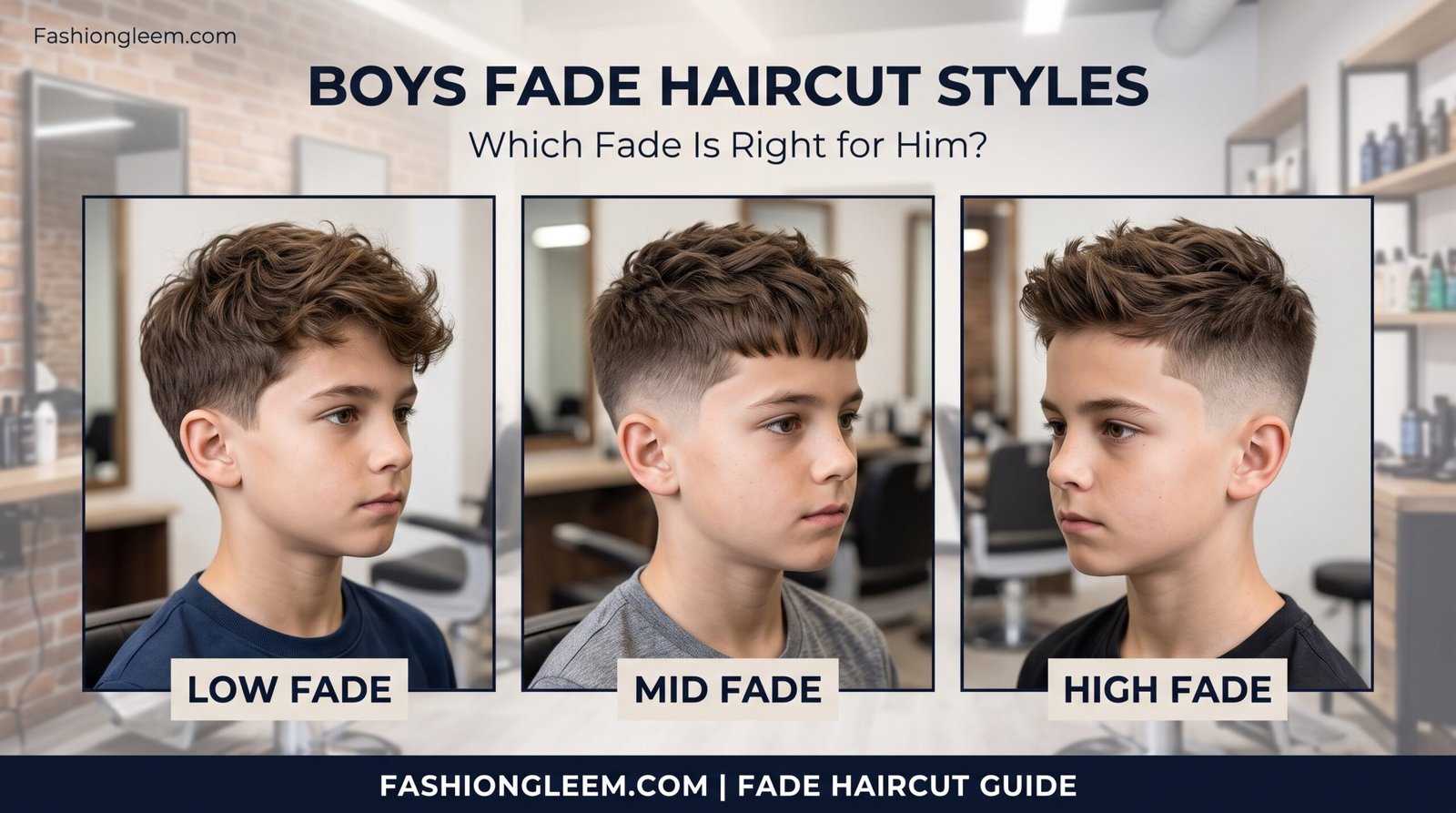
The name tells you where the shortest zone sits. A low fade stays near the bottom of the ear and the neckline. A mid fade starts around the ear. A high fade begins up near the temple, with the strongest contrast of the three.
A skin fade (or bald fade) takes the bottom to bare skin before blending up. It is the sharpest and the fastest to grow out. For most school age boys, low and mid fades hit the balance of fresh look and forgiving upkeep.
H4: Taper vs Fade
Barbers draw the distinction cleanly, and Men’s Journal’s barber guidance states it in one line. A fade blends the whole side of the head and connects it. A taper only tidies the edges, cleaning around the ears and neckline while keeping length on the sides.
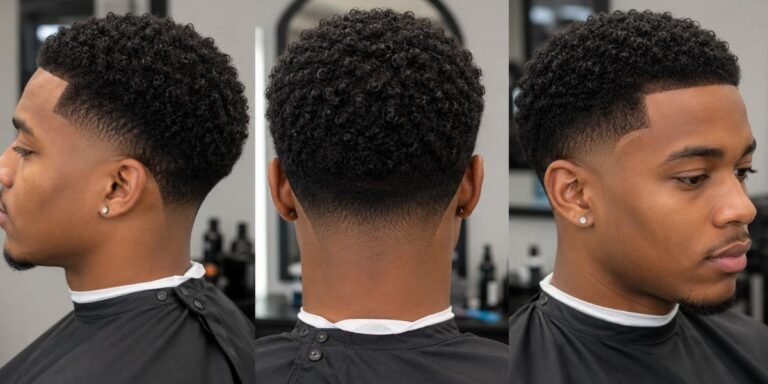
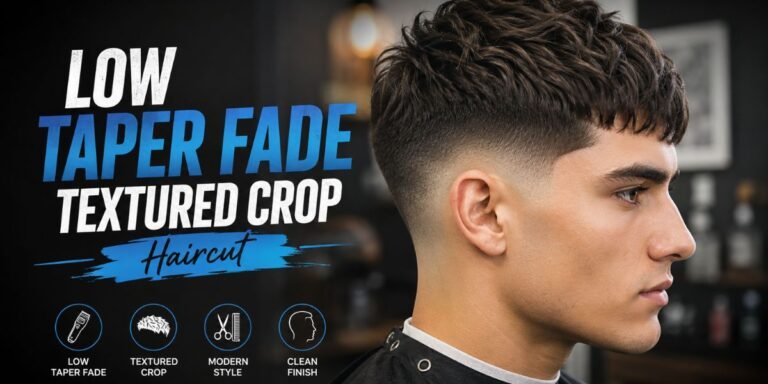
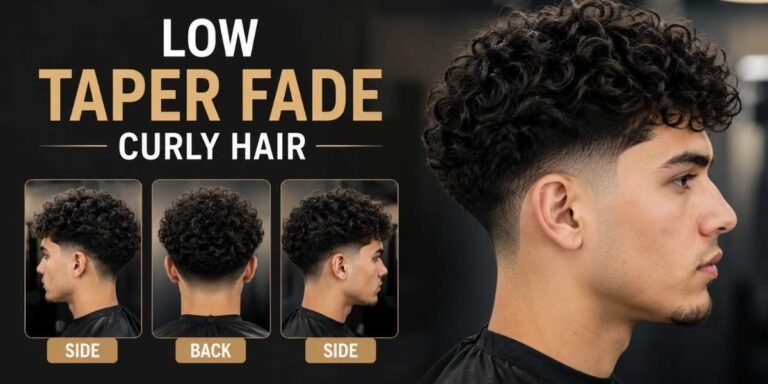
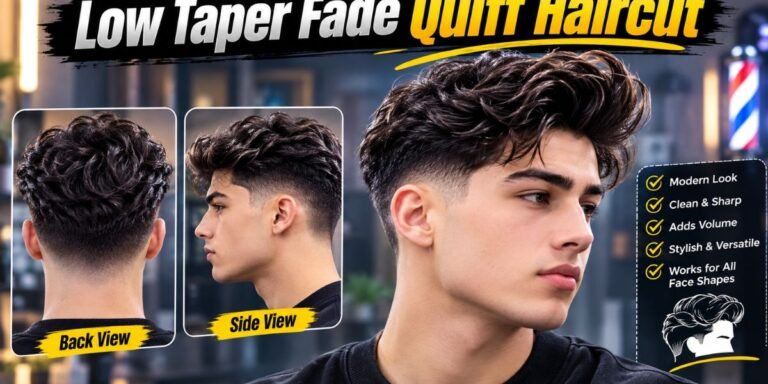
Choose a taper for younger boys, softer looks, and longer intervals. The low taper fade side part hairstyle shows the taper at its most classic, and the low taper fade textured crop haircut pairs it with the crop top most boys wear with it.
H4: Burst and Drop Fades
Two shaped variants complete the family. A burst fade curves around the ear like a sunburst and pairs naturally with curly tops and mohawk shapes. A drop fade arcs downward behind the ear for a tailored finish.
Both are detail work that rewards a barber who cuts them weekly. Check the shop’s photos for the specific variant before booking it.
Short Classics
The classics persist because they solve the whole brief at once: tidy, cheap in time, and nearly impossible to get wrong.
- Buzz cut: one guard all over, zero styling. The buzz cut for men covers the grown up version; for boys, a number 3 or 4 reads softer than a 1 or 2.
- Crew cut: short sides, longer scissor finished top. Reads as a styled haircut, not a uniform one, and grows out gracefully.
- Ivy League: the crew’s polished cousin, long enough on top to part. A favorite for photos and weddings.
- Caesar cut: short all over with a short straight fringe. Excellent on fine hair and cowlicks, since the fringe works with forward growth.
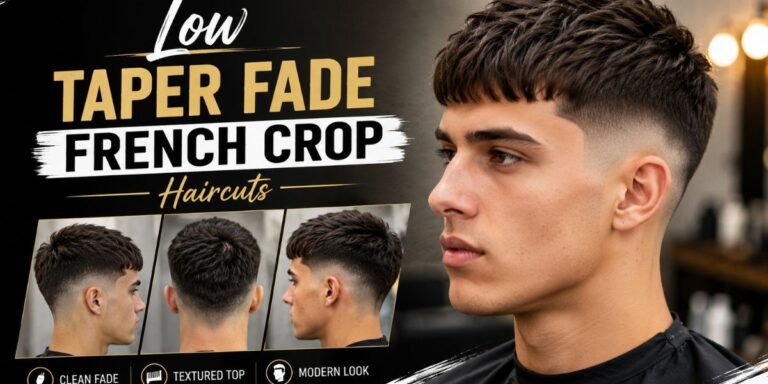
- French crop: the Caesar’s modern relative, textured top, soft defined fringe. The gateway into the textured family.
Ask for these by structure, not just by name: sides guard, top length, fringe direction. Names drift; structure does not.
Textured and Fringe Styles
Texture is the defining idea of current boys hair. Choppy layers on top create movement, hide growth patterns, and need little or no product to read as intentional.
The textured crop leads the family: short choppy top, fringe forward, fade or taper sides. It suits straight, wavy, and lightly curly hair, and it forgives cowlicks better than any flat cut because the layers refuse to lie in one direction anyway.
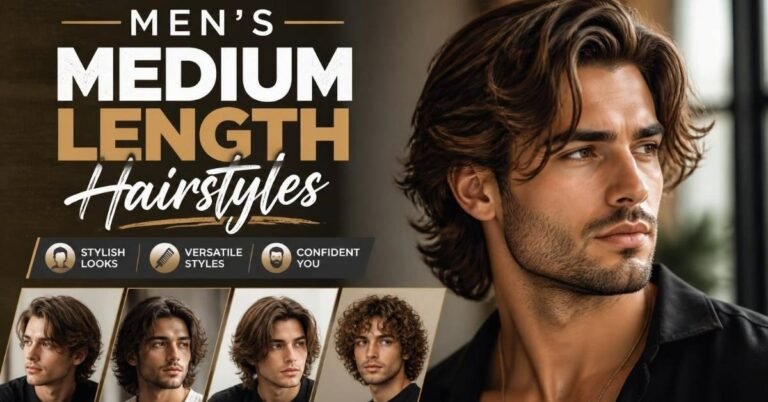
Curtains and the middle part serve straight and wavy hair at medium length, landing best from about age seven up. The two block cut sharpens the same idea with a disconnected shorter zone underneath, straight from K-pop stages to US middle schools.
Fringe direction is the detail to specify: forward for crops and Caesars, swept for quiffs, parted for curtains. It is the sentence parents most often forget to say.
Styles for Curly and Coily Hair
Curly hair plays by different physics, and the best styles feature the curl instead of fighting it. Rule one: the shape is judged dry, because curls spring up shorter as they dry.
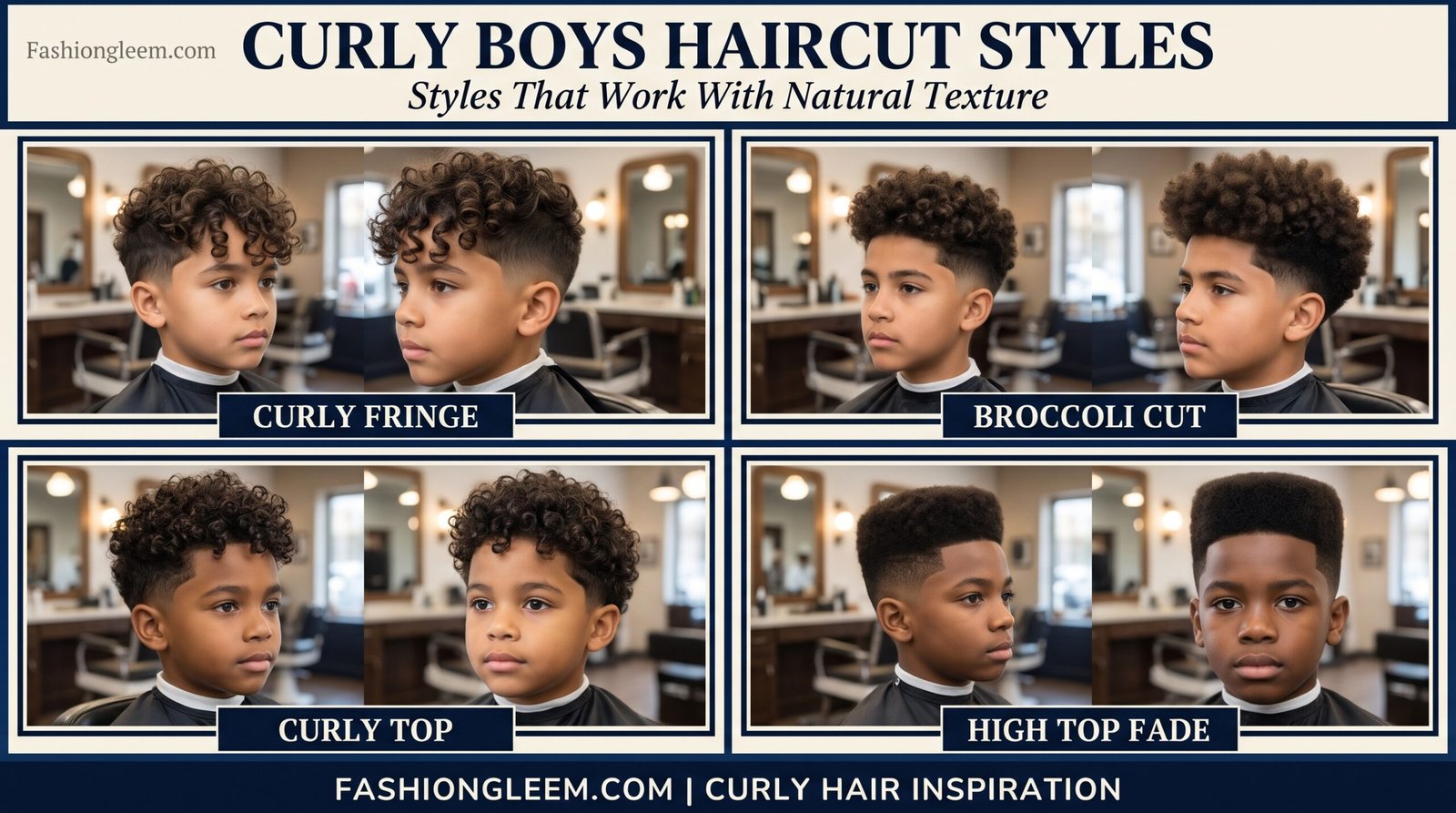
The curly fringe with a low fade keeps a full fringe of curl with clean sides.
The broccoli cut builds a rounded mass of curl on top with tapered sides, the defining curly teen silhouette of the moment. Scissor shaped curly tops with a taper suit boys who want length without bulk at the edges.
For coily hair, the barbershop canon runs deeper: high top fades shaped with height, waves brushed into pattern with a fade, twists and starter locks with a skin fade, and burst fade mohawks built around natural texture. These are protective as well as sharp.
Vet the barber by portfolio, not promises. Curly and coily cutting is a specialty, with different tension, dry cutting judgment, and product knowledge. A chair that shows this work weekly is worth the extra drive.
Longer and Statement Styles
Longer hair and louder shapes are commitments, and the honest way to present them is with their upkeep attached.
The surfer shag and layered long cuts need trims every 6 to 8 weeks and daily detangling.
The modern mullet softens the 1980s original with texture and a taper, landing best from about age eight. Both read as personality, and both collapse into mess when the trim lapses.
The Edgar deserves a description for parents hearing it cold: a sharp crop with a straight, blunt fringe line and a high fade. It is deliberate and bold, higher maintenance than a French crop, and the style most likely to meet a strict school handbook.
Clipper Guard Numbers, Explained for Parents
Guard numbers are the vocabulary of the chair, and they are simpler than they look.
A guard holds the clipper blade a set distance from the scalp. The number follows a plain rule a barber quoted in Men’s Journal states neatly: put the number over eight, and you have the length in inches.
|
Guard |
Inches |
About (mm) |
Typical Look |
|---|---|---|---|
|
0 (no guard) |
1/16 |
1.5 |
Skin showing, fade base |
|
1 |
1/8 |
3 |
Very short buzz |
|
2 |
1/4 |
6 |
Short buzz, tidy sides |
|
3 |
3/8 |
10 |
Fuller buzz, classic sides |
|
4 |
1/2 |
13 |
Crew cut length |
|
5 |
5/8 |
16 |
Taper length |
|
6 |
3/4 |
19 |
Brushable, fuller |
|
7 |
7/8 |
22 |
Full crew territory |
|
8 |
1 |
25 |
Longest standard guard |
The BestBomg clipper length guide and the Hair Everyday guard size guide publish the same chart, which makes the system easy to check. Two cautions keep it honest.
The numbers are a common convention, not a universal standard, and brands vary slightly. And millimeter figures are rounded approximations of the inch fractions.
Barbers smooth the steps between guards with a taper lever and half guards, which is how a fade melts instead of showing stripes. At home, start longer than you think: hair comes off easily and never goes back on.
What to Tell the Barber
A complete request has four parts: the side treatment, the top, the fringe or part, and the neckline. Here are scripts for the styles parents ask for most.
1. Textured crop. Mid fade on the sides. Scissors on top, choppy texture, about two inches. Fringe forward. Natural neckline.
2. Low taper fade. Taper the sides and back, no skin showing. Scissors on top, longer, swept to the side. Keep the edges soft for grow out.
3. Crew cut. Number 3 on the sides. Number 5 or 6 length on top, blended. Short taper at the neckline.
4. Buzz cut. Number 3 all over to start. Line up the front only if he sits still for it. Shorter can come next time.
5. Curly top. Keep the curls on top, cut them dry. Low fade or taper on the sides. Shape the fringe, do not thin it.
6. Side part. Taper sides, scissors on top with a natural part, no hard part line for now. Comb it over softly.
Bring a photo of the target even with a perfect script. Style names drift between shops and regions. A picture is the one instruction that cannot be mistranslated.
The Practical Filters
Four filters quietly decide whether a chosen style survives contact with real life. Run every shortlist through them before the appointment.
School Rules
Most mainstream styles pass most school dress codes: buzz cuts, crews, crops, side parts, tapers, tidy curtains.
The styles sometimes flagged are mohawks, disconnected undercuts, shaved designs, and extremes of length. Rules are written school by school, so the handbook, not the internet, is the authority for your child.
Cowlicks and Double Crowns
A strong cowlick vetoes styles that fight it. Texture and a little length let it lie in its natural direction; a fringe worn forward, a choppy crop, or a part placed on the cowlick’s own side all behave.
Very short cuts over a double crown can make the swirl stand straight up. Tell the barber where it lives before the first cut.
Clipper Fear and Sensory Friendly Cuts
For toddlers and sensory sensitive boys, ask for a scissor cut, no clippers.
It removes the noise and vibration that frighten most reluctant customers, gives a softer finish, and grows out over 6 to 8 weeks. A kids focused salon, a quiet appointment time, and a familiar show on a phone complete the standard playbook.
Grow Out and the Trim Calendar
Hair grows about half an inch a month on the commonly cited average, and a quarter inch of guard difference disappears in roughly two weeks.
Plan backward from fixed dates: cut a week before photos, weddings, or the first day of school, so the style settles. Book the August appointment in July; back to school week fills chairs fast.
Mistakes Gallery
The failures below repeat in every shop. Each one is a decision error, not a talent error, and each is avoidable with one sentence or one week of timing.
- Ordering by name alone. Textured crop means three lengths in three shops. Add guards, inches, and a photo.
- Sharp lines on a six week schedule. High skin fades peak in week one. On a six week cycle, soft edges look better for five of the six weeks.
- Ignoring the cowlick. A slicked style over a double crown fights the head every morning. Texture with the growth, never against it.
- Cutting the day before photos. Fresh cuts look raw and mistakes are permanent for the picture. A week of settle is the standard buffer.
- Copying a style across hair types. A straight hair crop pasted onto curls disappoints everyone. Match the reference photo to his texture first.
- Letting the top get clippered by default. If the style needs scissor length on top, say scissors on top explicitly. Silence is how tops get buzzed.
More Styles and Guides
The boys cluster grows in both directions from this page.
Downward into childhood, the toddler and first haircut guides take the youngest readers. Upward into the men’s collection, the hair style guides gathers the grown up versions of the same families, where teen readers crossing over will find their next cuts.
Frequently Asked Questions
What are the most popular boys hair cut styles in 2026?
The versatile center is short to medium-short with faded or tapered sides and texture on top: textured crop, French crop, low taper fade, natural quiff.
Buzz and crew cuts own the low maintenance end; curtains, the modern mullet, the broccoli cut, and the two block carry the trend end. One teen source calls the textured crop with mid fade the most requested teen cut per barber surveys it cites; treat that as a reported claim, not a measured statistic.
What is the best haircut for a toddler boy?
Soft, scissor-led cuts that keep some length and survive movement: a classic scissor cut, a gentle taper, or a mini textured crop once the hair thickens.
Toddler hair is fine and the head is still growing into its shape, so harsh lines and high skin fades date quickly and grow out badly. Many parents wait until the hair gets into the eyes or tangles badly rather than following an age rule.
When should a boy get his first haircut?
There is no required age. First cuts happen anywhere from a few months, when a baby is born with a lot of hair, to age two or three for slow growers.
The practical triggers are hair in the eyes, uneven growth that looks untidy, tangling, and the family’s own preference. The first haircut is often treated as a keepsake event, with salons offering a saved lock and a certificate.
What haircut is best for a 5 year old boy?
Low fuss cuts that hold their shape through school and play: a crew cut, a textured crop with a low taper, or a classic short back and sides.
At this age most boys will not style anything in the morning, so the cut itself must do all the work. Ask for scissors on top if clipper fear is an issue; the look is nearly the same.
What haircut should a 10 year old get?
This is the age where boys start choosing, and the textured crop, the mid fade with fringe, the side part, and the faux hawk are the common requests.
Match the choice to the school dress code and to how much morning effort is realistic. A cut he likes and can leave alone beats a sharper cut that needs product he will never use.
What haircut should a 14 year old get?
Teen sources converge on low maintenance, school passing styles with current texture: textured crop, French crop, crew cut, low taper fade, curtains on straight or wavy hair, and curly cuts shaped with a taper.
Bolder statements (disconnected undercuts, mohawks) depend on the school’s grooming rules, which vary. At fourteen the deciding voice should mostly be his, with the parent veto reserved for dress code and upkeep realities.
What is the difference between a fade and a taper for boys?
A fade blends the sides through graduated lengths over the whole side of the head and can go down to skin.
A taper is gentler, cleaning up mainly around the ears and neckline without exposing much skin. Barber explanations draw the line exactly there: a fade connects the whole side; a taper tidies the edges.
What do low, mid, and high fade mean?
They name where the fade’s shortest zone sits on the head.
A low fade stays near the bottom of the ear and the neckline, a mid fade starts around the ear, and a high fade begins up near the temple with stronger contrast. Low reads subtle and school safe; high reads bold and needs more frequent upkeep to stay sharp.
What is a textured crop?
A short top cut into choppy layers so the hair shows movement instead of lying flat, usually worn with a fringe forward and paired with a fade or taper on the sides.
It suits straight, wavy, and lightly curly hair, forgives cowlicks better than flat cuts, and needs little or no product. It is the current default recommendation across most 2026 boys guides.
What guard number should I ask for on the sides?
Guard numbers are eighths of an inch: the number over eight gives the length. A number 2 leaves a quarter inch, a number 3 leaves three eighths, a number 4 leaves half an inch.
For boys, number 2 to 3 on the sides is the classic tidy zone, number 1 reads very short, and fades blend from a low number or skin upward. Numbers are a common convention rather than a universal standard, so show a photo alongside the number.
What is a number 3 haircut for a boy?
Three eighths of an inch, about ten millimeters, all over or on the sides depending on the request. All over, it is a neat, fuller buzz that hides the scalp better than a number 2.
On the sides with scissors on top, it is the backbone of the classic short back and sides. It is often called the most versatile all over length in guard guides.
How often do boys need haircuts?
It follows the style’s edge sharpness.
One widely read kids guide publishes these ranges: buzz cuts and fades every 3 to 4 weeks, crew cuts and crops every 4 to 6 weeks, side parts 5 to 6, and longer styles like curtains and mullets 6 to 8. Treat them as one guide’s planning numbers and adjust for the individual boy’s growth rate.
What is the best haircut for boys with curly hair?
Keep the curl on top and manage the sides: a curly fringe with a low fade, a taper with scissor shaped curls, the broccoli cut, or twists with a fade for coily hair.
Curly hair springs up shorter as it dries, so a barber who cuts with the dry shape in mind avoids the too short surprise. Book a barber whose photos show curly work.
What is the broccoli haircut for boys?
A curly or wavy crop with a full, rounded mass of texture on top and tapered or faded sides, named for the floret silhouette.
It suits boys who want their curl to be the feature rather than something flattened away. It needs curl friendly moisture and a trim roughly every 5 to 6 weeks per published kids guides, and it photographs as the defining curly teen style of the moment.
What is an Edgar haircut?
A sharp crop variant with a straight, blunt fringe line and high fade, popular with teens and named through social media culture.
The fringe edge is cut very defined, which makes it higher maintenance than a soft French crop and more likely to clash with strict school grooming codes. It reads bold and deliberate, so it suits a teen who wants a statement cut.
What haircut suits a boy with a round face?
Height on top and tighter sides lengthen the look: textured crops with volume, faux hawks, quiffs, and higher fades all add vertical lines.
Teen style guides give round faces the same advice as men’s guides: build up, not out. Avoid heavy fringes that cut the face shorter and bowl shapes that echo the roundness.
What can be done about a strong cowlick?
Work with it rather than against it. Texture and length on top let a cowlick lie in its natural direction; very short cuts over a double crown swirl can make the hair stand up defiantly.
A fringe worn forward, a crop with choppy layers, or a side part placed on the cowlick’s natural side all behave better than a forced slick back. Tell the barber where it is before the cut starts.
Are buzz cuts good for boys?
They are the lowest maintenance option that exists: one guard all over, no styling, no product, and ideal for summer, sports, and boys who hate hair routines.
The tradeoffs are sun exposure on the scalp, a very uniform look some boys find plain, and a trim every 3 to 4 weeks to stay crisp. A number 3 or 4 reads softer than a number 1 or 2 if the family wants a gentler version.
What is the best haircut for fine or thin boys hair?
Shorter, textured styles that do not ask the hair to perform volume it does not have: a French crop, a Caesar, a short crew, or a scissor cut with light layering.
Long fine hair separates and looks stringy, and heavy products weigh it down. Light texture through the top makes fine hair look thicker than a blunt, longer cut does.
What is the best haircut for thick boys hair?
Thick hair carries the textured styles best, because there is material to carve: textured crops, quiffs, layered faux hawks, and mullets all debulk while keeping shape.
Ask the barber to remove weight with layering or point cutting so the top does not sit like a helmet. Thick hair also forgives higher fades, since the contrast reads cleanly.
Can a boy get a haircut with scissors only?
Yes, and it is a standard request, especially for toddlers, sensory sensitive kids, and longer styles. A full scissor cut gives a softer, more natural finish that grows out gracefully over 6 to 8 weeks.
It usually costs a little more time in the chair. Say scissors only, no clippers when booking so the right barber and slot are assigned.
What should I tell the barber to get the right boys haircut?
Three things: a photo of the target, the guard number or length for the sides, and plain words for the top.
A complete request sounds like: mid fade on the sides, scissors on top leaving about two inches, fringe worn forward, natural neckline. Photos beat vocabulary, because style names drift between shops while a picture is exact.
Do boys haircuts pass school dress codes?
Most mainstream styles do: buzz cuts, crew cuts, crops, side parts, tapers, and tidy curtains appear on school safe lists in teen guides.
Sometimes flagged: mohawks, disconnected undercuts, shaved designs, and extreme length. Rules are set school by school, with no national standard, so check the actual handbook before a bold September cut.
What is a good back to school haircut for boys?
Fresh versions of the school safe core: a low taper fade with a textured top, a crew cut, a side part, or a neat crop, cut a week or two before term starts so it settles and still looks fresh in first week photos.
Barbers book out in late August in many areas, so the appointment matters as much as the style. The settle in week also lets any too short surprise grow back slightly.
How do I help a child who is scared of haircuts?
Choose a kids salon or a barber known for patience, book a quiet time of day, and consider a scissor cut to remove the clipper noise and vibration that frighten many toddlers and sensory sensitive children.
A first visit with no cut, just sitting in the chair, helps some kids. Bringing a familiar show or snack for distraction is standard practice at children’s salons.
What is the difference between a crew cut and a buzz cut for boys?
A buzz cut is one length all over, clipper only. A crew cut keeps the top noticeably longer than the sides, often scissor finished, with a short taper at the edges: think number 3 sides and number 4 to 6 equivalent length on top.
The crew reads as a styled haircut; the buzz reads as a uniform one. Crews also grow out more gracefully.
What boys haircut grows out the best?
Scissor cuts, tapers, and textured crops with soft edges.
Hard lines, high skin fades, and sharp line ups look best in week one and shaggiest by week three, because regrowth breaks their geometry. If the family stretches appointments to six weeks or more, choose soft edges and natural necklines and the cut will look intentional for most of its life.
Can I cut my boy’s hair at home?
Yes for simple styles, with realistic expectations. A one guard buzz is the most forgiving home cut; a basic crew is achievable with a guard set and patience.
Fades are the hardest to blend at home and the most visible when they go wrong. Guard guide advice for beginners: start with a longer guard than you think you need, because hair can always come off and never goes back on.
What hair products do boys actually need?
Most boys need none daily. For styles that ask for hold, a pea sized amount of matte paste or light gel on dry hair is the whole routine for crops and quiffs.
Curly and coily hair benefits more from leave in conditioner and gentle detangling than from hold products. Heavy, shiny products are what make kids hair look styled by an adult, which most families want to avoid.
What is a two block haircut for boys?
A K-pop influenced cut with two distinct zones: the sides and back cut shorter or blocked, and the top left long, often with curtains or a long fringe.
The contrast is the point, so it reads deliberate and fashion led. It suits straight and wavy hair, needs the top kept tidy to pass school scrutiny, and grows out in visible stages.
What are good haircuts for Black boys?
The barbershop canon for coily hair: high top fades, waves with a fade, twists or starter locks with a skin fade, burst fade mohawks, curly tops with tapers, and clean line ups.
These styles are built around the hair’s natural curl pattern and are protective as well as sharp. Choose a barber whose portfolio shows coily work; technique and product knowledge differ from straight hair cutting.
What is a modern mullet for boys, and is it school appropriate?
The modern version is softer than the 1980s original: shorter, textured front and sides with moderate length at the back, often blended with a taper.
Kids guides place it around ages 8 and up with trims every 6 to 8 weeks. School acceptance varies; in many schools a short, tidy modern mullet passes, while longer or more extreme versions may not, so the handbook check applies.
What haircut is best for boys with long hair who want to keep it?
Surfer inspired layers, a shag with light layering, or a scissor cut that cleans the ends and shapes around the ears while keeping length.
For young boys, a topknot keeps long hair out of the face during play. Long boys hair still needs trims every 6 to 8 weeks to remove split ends, and detangling becomes the main daily job.
How much does a boys haircut cost?
Prices vary widely by city, by barbershop versus kids salon, and by complexity, so no honest national average exists; published figures conflict by source and region.
Kids salons with entertainment and first haircut packages price above standard barbers in most markets. Check two or three nearby shops online for the real local number.
What is a hard part, and should boys get one?
A hard part is a shaved line etched into the parting, making a side part look crisp and deliberate.
It grows out within two to three weeks and must be re etched to stay sharp, which raises the upkeep of an otherwise easy cut. For older boys who want a defined look it works well; for young boys the softer natural part usually ages better between appointments.
What should a boy wear or bring to the barbershop?
A shirt that does not need to go over the head afterward avoids dragging cut hair across the face, and a photo of the target style on a phone is the single most useful item.
For toddlers, a snack, a favorite video, and a change of shirt for the ride home are the parent standard kit. Arriving with clean, detangled hair also shortens the appointment.
Do boys need special shampoo or hair care?
Not really. A gentle regular shampoo suits most boys; very curly and coily hair does better with less frequent washing and a conditioner focused routine.
The bigger practical issues are tangles in longer hair, chlorine in summer (rinse before and after swimming), and sun on buzzed scalps. Expensive kids branded products are marketing more than necessity for most families.
What is a good haircut for a boy in a wedding party?
The gentleman set: a side part, an Ivy League, a neat taper with a combed top, or a classic short back and sides, cut about a week before the event.
These photograph formally without looking costumed, and they carry none of the grow out risk of a fresh fade on the day. Match the formality of the outfit rather than chasing a trend.
How fast does boys hair grow?
The commonly cited average for human scalp hair is about half an inch per month, though individual rates vary with age, season, and the child.
That is why a quarter inch guard difference disappears in about two weeks and why fades, which depend on precise length steps, lose their blend first. Parents planning photos should count backward from the event using that rough half inch figure.
What age is the broccoli cut and Edgar appropriate for?
Both live in the tween and teen zone in current guides: broccoli cuts appear from about age 8 in kids style tables, and the Edgar is essentially a teen style.
The real gates are school rules and the boy’s own commitment to upkeep, since both styles read best when freshly maintained. For younger boys, their softer cousins (curly fringe for broccoli, French crop for Edgar) give the same family look with less edge.
My son wants a mohawk. What are the options?
The spectrum runs from a faux hawk, where the top is styled up from a normal crop with no shaved commitment, through a burst fade mohawk that keeps the strip with faded sides, to a full mohawk with shaved sides.
Starting with a faux hawk lets a boy test the look for a week before anything irreversible happens. School rules decide how far along the spectrum is available during term time.
What is the best summer haircut for boys?
Short and breathable: buzz cuts, crew cuts, crops with fades, and short tapers dominate summer recommendations because they dry fast after swimming and feel cooler.
The tradeoff to plan for is sun protection on exposed scalps and the faster looking regrowth on very short cuts. Many families cut slightly shorter in June and let it grow through the season.
Conclusion
The best boys hair cut styles are rarely the most dramatic ones in the gallery. They are the ones matching his hair type, respecting the family’s real trim schedule, and describable in the shop in one clear sentence plus a photo.
Keep the system simple and it keeps working as he grows.
Decide by age band, filter by texture and upkeep, order with guards and inches, and let soft edges carry the weeks between appointments. When he is ready for the grown up versions of these same families, fashiongleem.com keeps the full hair collection in one place.

One Comment